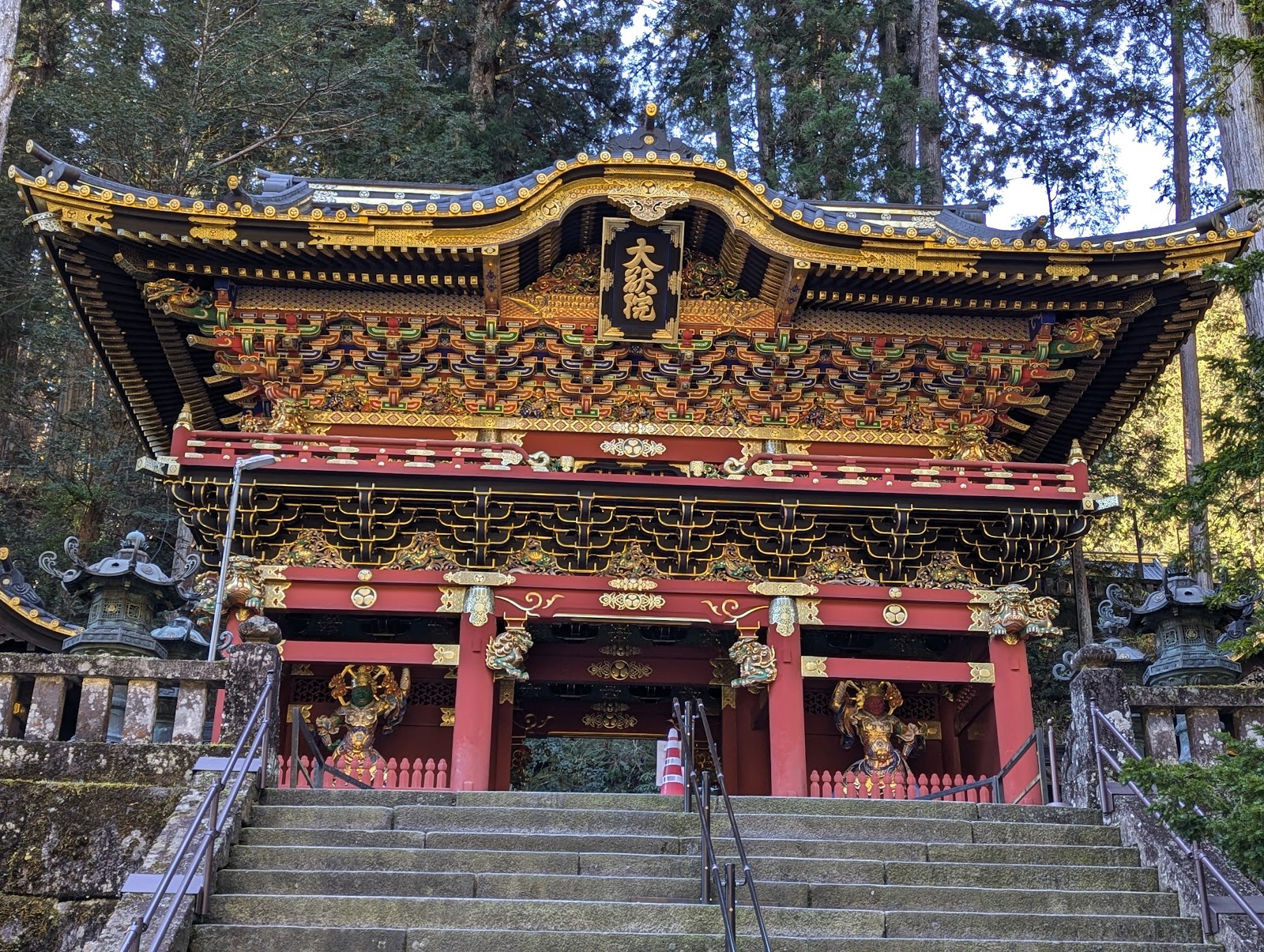
The elegant forest mausoleum of shogun Tokugawa Iemitsu, quieter and more refined than his grandfather's Toshogu.
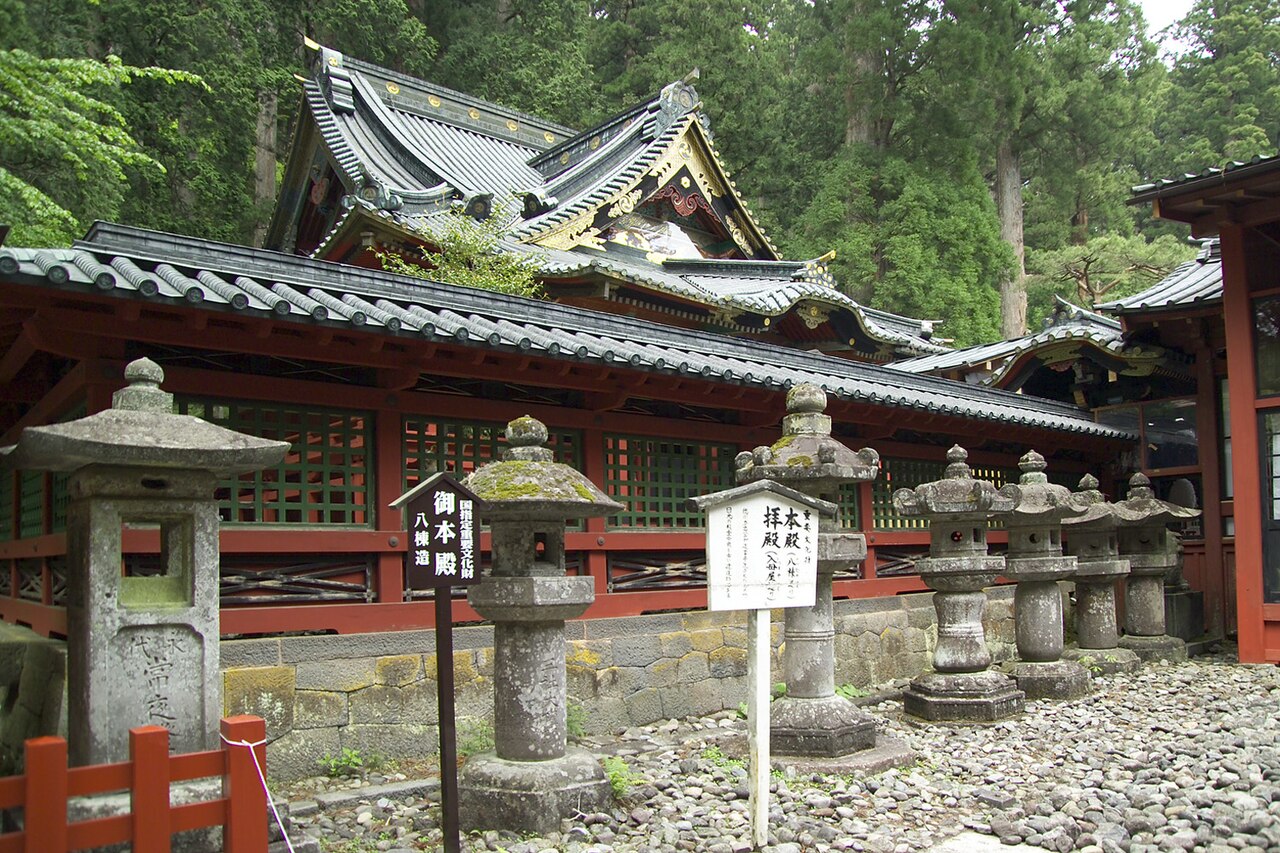
Taiyuinbyo is the mausoleum of Tokugawa Iemitsu, the third Tokugawa shogun and the grandson of Ieyasu, whose own shrine Toshogu he so greatly expanded. Completed in 1653, a year after Iemitsu's death, it was deliberately designed to be magnificent yet respectful — never surpassing the grandeur of his grandfather's shrine, toward which it symbolically faces. Part of Rinno-ji Temple and included in the UNESCO World Heritage listing, it is for many visitors the most rewarding site in Nikko precisely because it is so much calmer than Toshogu.
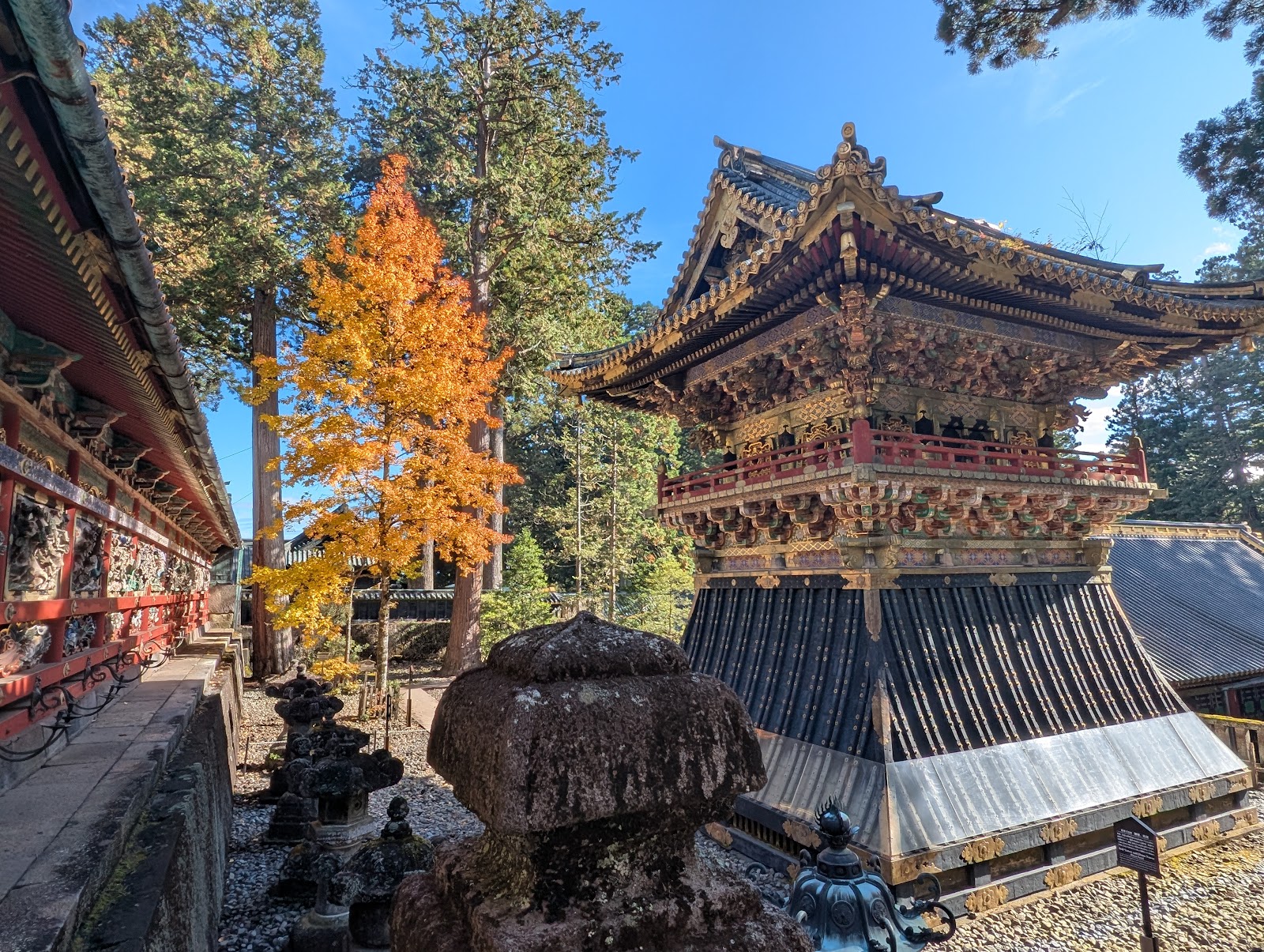
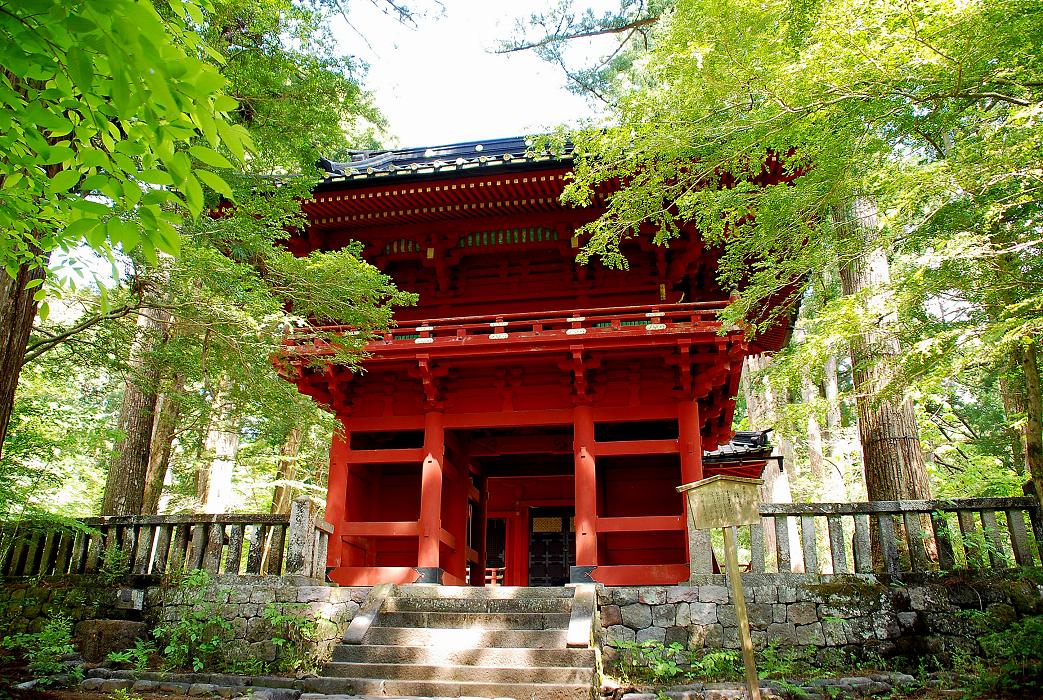
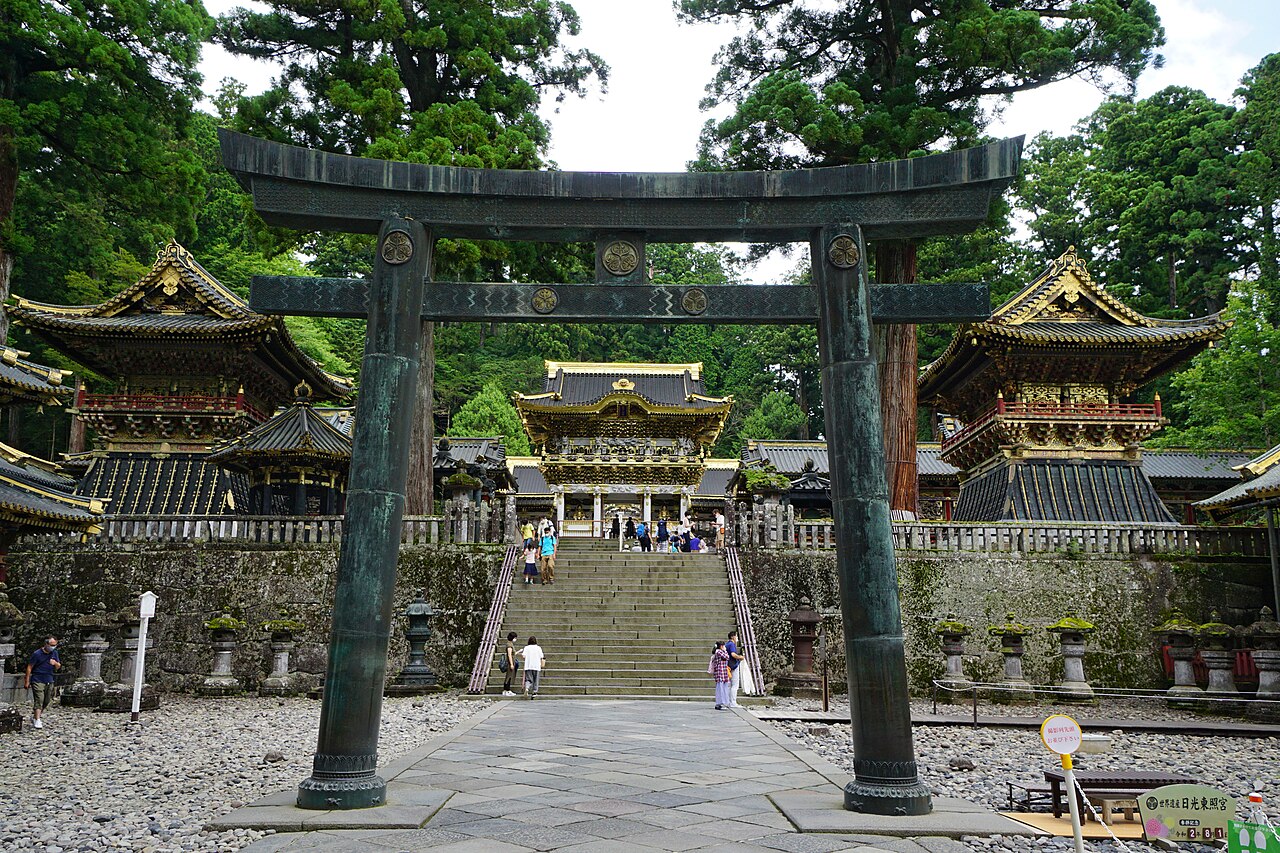
The approach is a graduated procession through a series of increasingly ornate gates, climbing gently through a grove of ancient cedars. First comes the Nitenmon, the largest gate in Nikko, guarded by the deities of wind and thunder on one side and two protective kings on the other. Beyond it, stone lanterns donated by feudal lords line the mossy path before the Yashamon Gate, gilded and set with four fierce yaksha demon guardians — one of them, holding a bow, gives the gate its nickname 'Botanmon' for the peony carvings around it. Finally the Karamon and the main hall (Honden) glow with black lacquer, gold leaf and delicate polychrome carving in a colour scheme more subdued and, to many eyes, more tasteful than Toshogu's exuberance.
Inside the worship hall visitors can see painted dragons on the ceiling and coffered panels, and the intimate scale makes the craftsmanship easy to appreciate. The whole complex is woven into the hillside so that each level reveals a new gate framed by cedars, an artful sequence that rewards slow walking and photography. Because Taiyuinbyo sits at the far western end of the precinct, beyond Futarasan Shrine, comparatively few of Toshogu's crowds make it this far, and you may find yourself almost alone before its gates.
The visiting experience is contemplative: the play of gold against dark timber and deep green forest is especially striking under soft morning light or when the maples turn scarlet in mid-November. The site involves a series of stone steps between gate levels, so some climbing is required, but the ascent is gradual and shaded.
Taiyuinbyo is easily combined with Toshogu, Rinno-ji and Futarasan on a single visit to the World Heritage complex, and a modest separate admission is charged. Nikko lies about two hours north of Tokyo; Japan Rail Pass holders travel via the shinkansen to Utsunomiya and the JR Nikko Line, while the Tobu line from Asakusa runs direct. From either Nikko station the World Heritage sightseeing bus reaches the Nishisando stop, the closest to the mausoleum, in around fifteen minutes.
A local's tip
Because it lies past Futarasan at the far end of the complex, Taiyuinbyo is often blissfully uncrowded — linger at the Yashamon Gate to admire its four guardian demons without a queue.
Best time to visit
Morning; autumn for maples
Getting there
At the western end of the shrine complex beyond Futarasan Shrine; take the World Heritage bus to Nishisando and walk a few minutes, or continue on foot from Toshogu.
Good to know
- Restrooms
Plan the whole trip offline
Taiyuinbyo Mausoleum is one of many places in the Real Japan app — with turn-by-turn directions, nearby spots and full offline maps you can use with no signal.