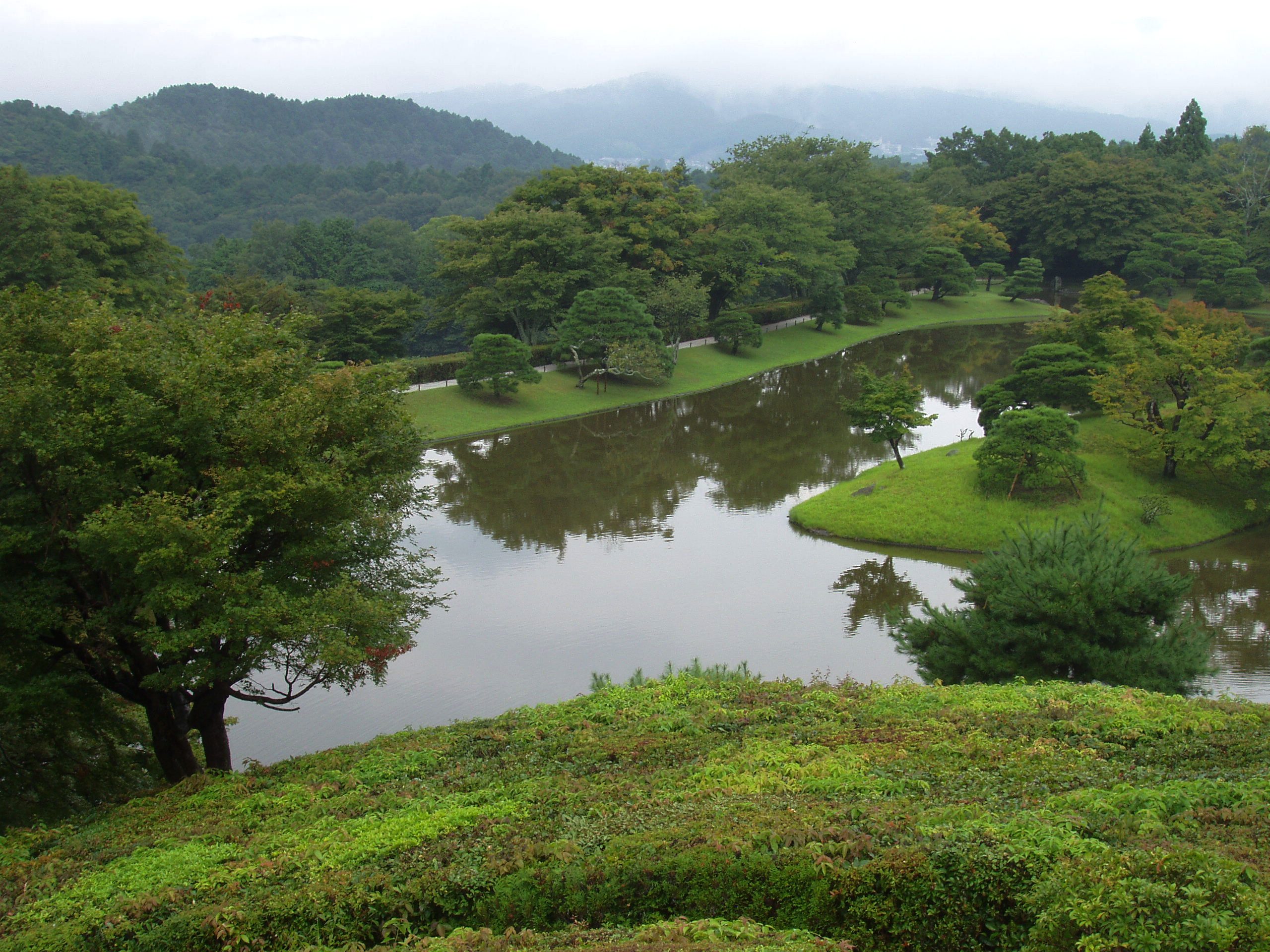
A grand seventeenth-century imperial retreat in the eastern hills, famous for its sweeping borrowed-scenery garden.
Shugakuin Imperial Villa (Shugaku-in Rikyu) is one of Japan's most ambitious garden creations, a sprawling seventeenth-century retreat set into the wooded slopes of Kyoto's northeastern hills. Commissioned by the retired Emperor Go-Mizunoo and largely completed by 1659, it was conceived not as a single garden but as three separate villa complexes, the Lower, Middle and Upper Gardens, linked by pine-lined paths that run between terraced rice fields still farmed today. Together with Katsura, it is considered among the finest large-scale cultural treasures in the country.
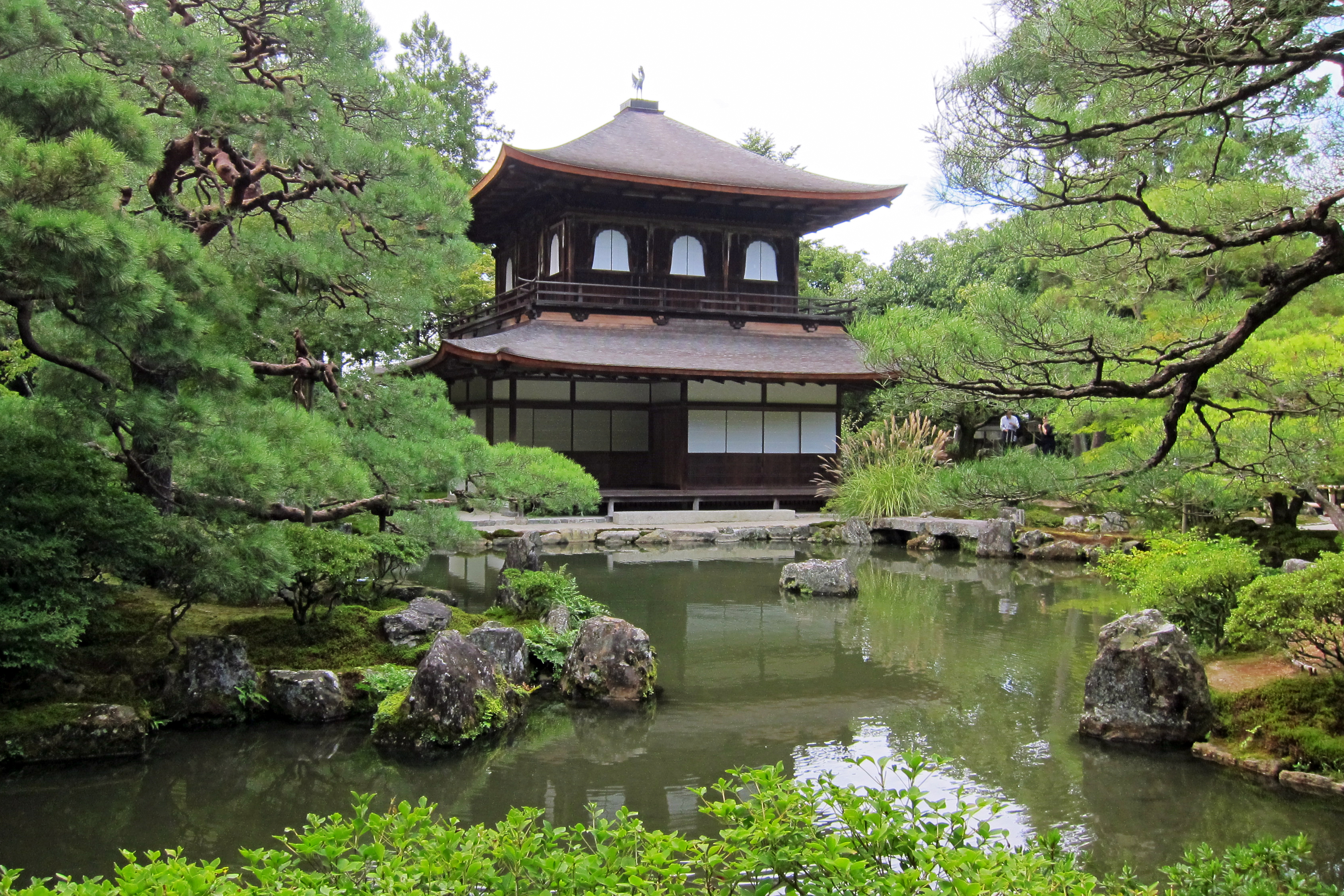
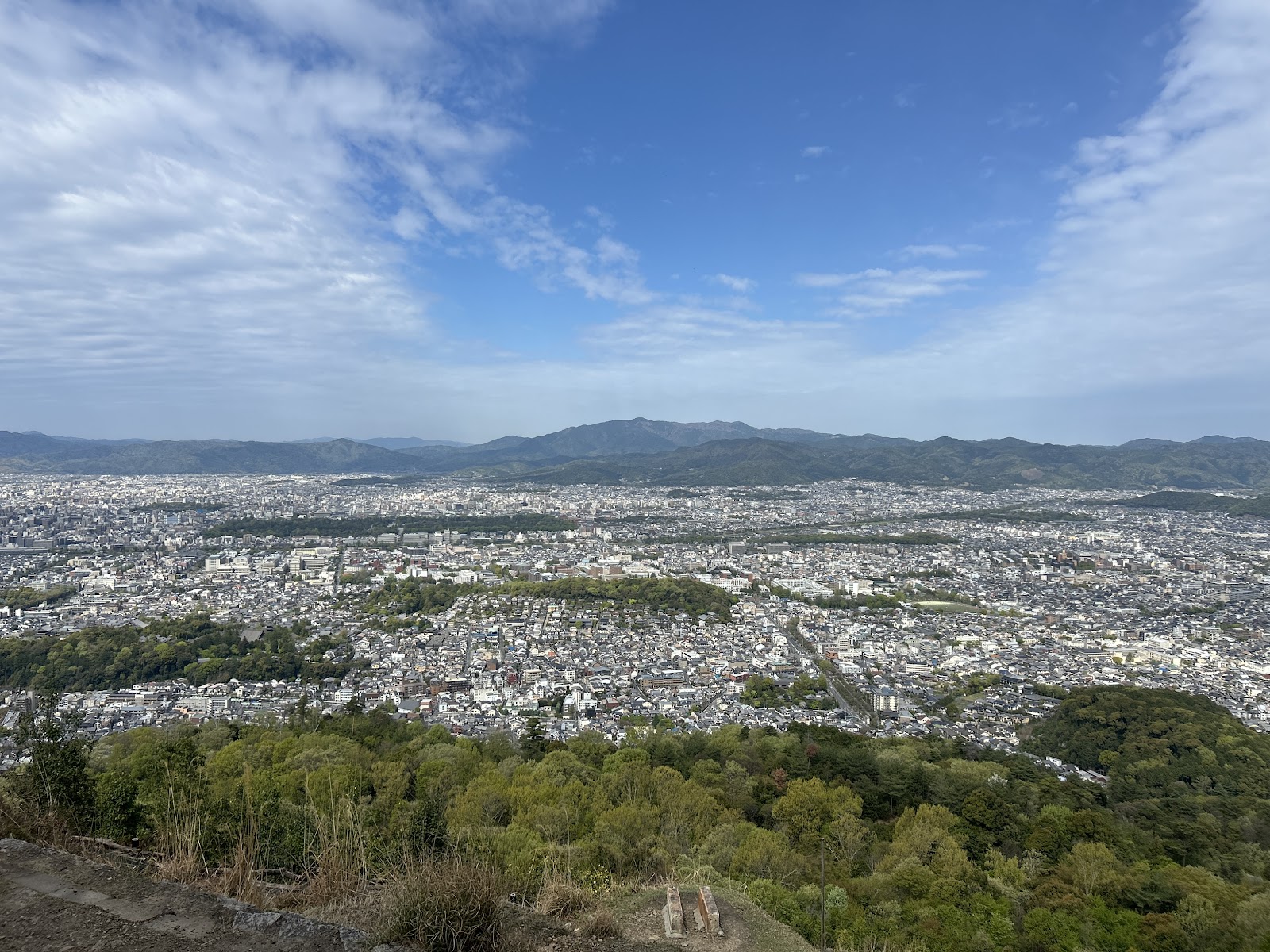
The villa's defining idea is scale and the masterful use of shakkei, or borrowed scenery. Where many Kyoto gardens turn inward to a small, perfect pond, Shugakuin opens outward. The Upper Garden climbs to a hilltop where the Rin'un-tei pavilion looks out over a large artificial pond, the Yokuryuchi, held back by a great grassed dam, and then far beyond to the rooftops of Kyoto and the mountains ringing the basin. The surrounding hills and sky are effectively pulled into the composition, so the garden feels boundless. Islands, stone bridges, a maple-lined stream and a small waterfall complete the scene.
Each of the three gardens has its own character. The Lower Garden centres on the Jugetsukan pavilion and its modest pond; the Middle Garden, added later, holds the exquisite Kyaku-den guest hall, famous for its shelves of staggered lacquered wood, the Kasumidana or shelves of mist, and painted sliding doors. The Upper Garden is the climax, with its commanding views and expansive pond. Walking between them along the raised paths, past terraced paddies and pine avenues, is part of the experience and gives Shugakuin a rural, open feeling quite unlike the enclosed temple gardens of central Kyoto.
As an active imperial property, Shugakuin can only be visited on a guided tour arranged in advance through the Imperial Household Agency, either online or in person. Admission is free, tours follow a fixed route with staff, and group sizes are limited, so the gardens remain peaceful. The full circuit involves a fair amount of walking, some of it uphill on unpaved paths, so comfortable shoes are essential and the route is more demanding than most city gardens.
A tour lasts roughly eighty to ninety minutes and covers all three gardens and the key pavilions, viewed largely from the exterior. Late November is the signature season, when maples blaze around the ponds and the borrowed mountain views turn red and gold, but spring cherries and the fresh green of early summer are also beautiful. To visit, book your timed slot well ahead, then take the Eizan Line to Shugakuin Station or a bus to the Shugakuin Rikyu-michi stop and walk about twenty minutes uphill to the entrance. Arrive in good time for your reservation, be prepared for the climb, and note that the villa is closed on Mondays.
A local's tip
Save the Upper Garden for last: the moment you climb to the Rin'un-tei pavilion and the whole Kyoto basin opens up beyond the pond is the single best view of any imperial garden in the city.
Best time to visit
Late November for autumn colour framing the borrowed mountain views
Getting there
Take the Eizan Line to Shugakuin Station and walk about 20 minutes uphill to the entrance, or ride a city bus to the Shugakuin Rikyu-michi stop. A guided tour reservation with the Imperial Household Agency is required.
Good to know
- Restrooms
- Guided tour
- Reservation required
Plan the whole trip offline
Shugakuin Imperial Villa is one of many places in the Real Japan app — with turn-by-turn directions, nearby spots and full offline maps you can use with no signal.