A short hike above Ginkaku-ji to the giant bonfire site, with one of Kyoto's best free city panoramas.
Daimonji-yama is the mountain whose flank bears the enormous Chinese character 大 (dai, meaning "great") that blazes across the Kyoto skyline each August during the Gozan no Okuribi, the Bon festival ceremony that sees off the spirits of the dead. For most of the year the character is invisible, marked only by the network of cleared stone fire beds that scar the hillside. Hiking up to those fire beds rewards you with what may be the most beloved free viewpoint in the city.
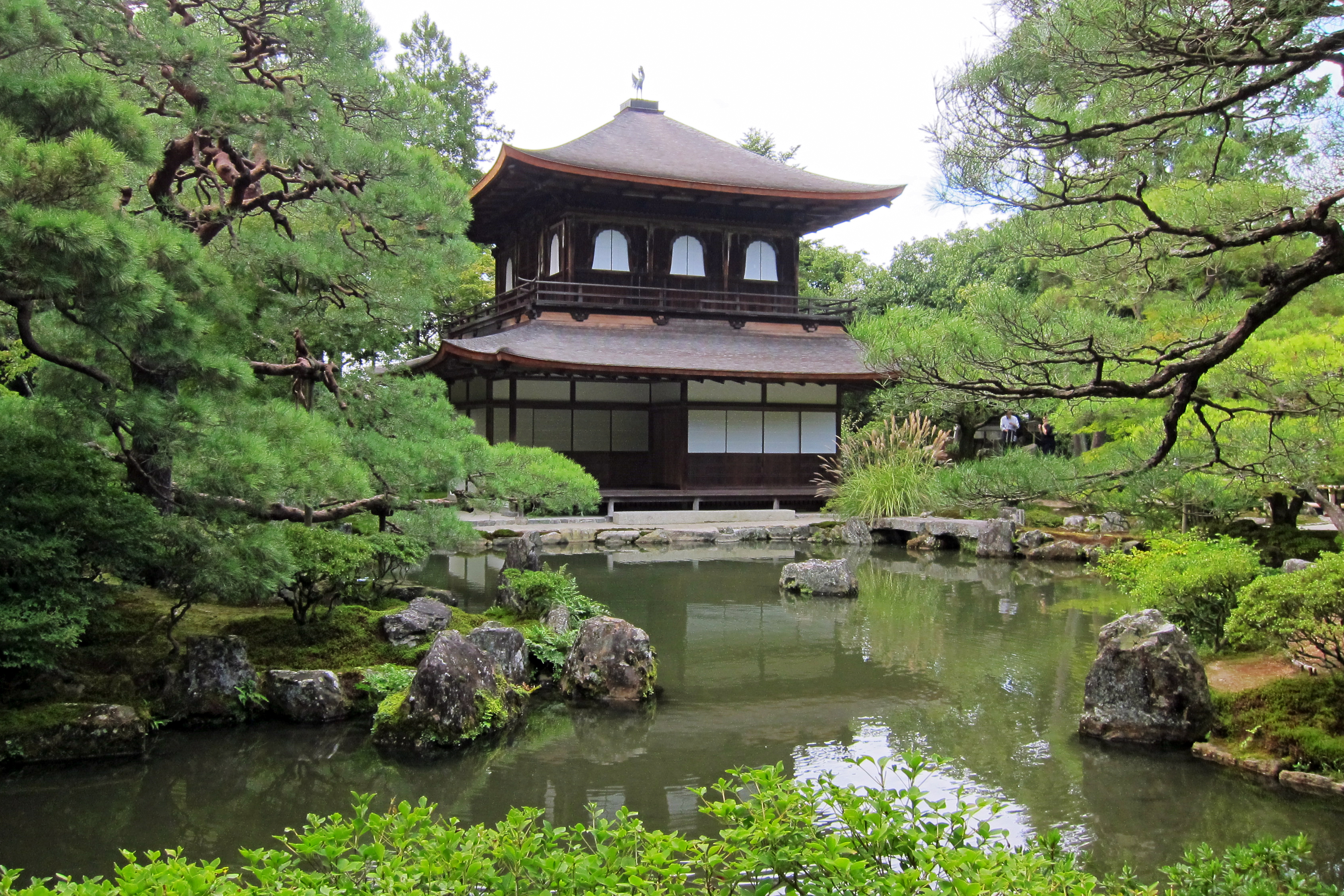
The trail begins beside Ginkaku-ji, the Silver Pavilion, in the northeast of Kyoto. From the temple gate a few minutes' walk north leads to a clearly signposted trailhead, after which the path climbs steadily through cedar and broadleaf forest. The ascent takes most walkers 45 to 50 minutes and involves stone steps and packed earth; it is moderate rather than punishing, and children and casual hikers manage it regularly. Along the way the forest opens in glimpses before delivering you, quite suddenly, onto the broad concrete platform of the fire bed itself.
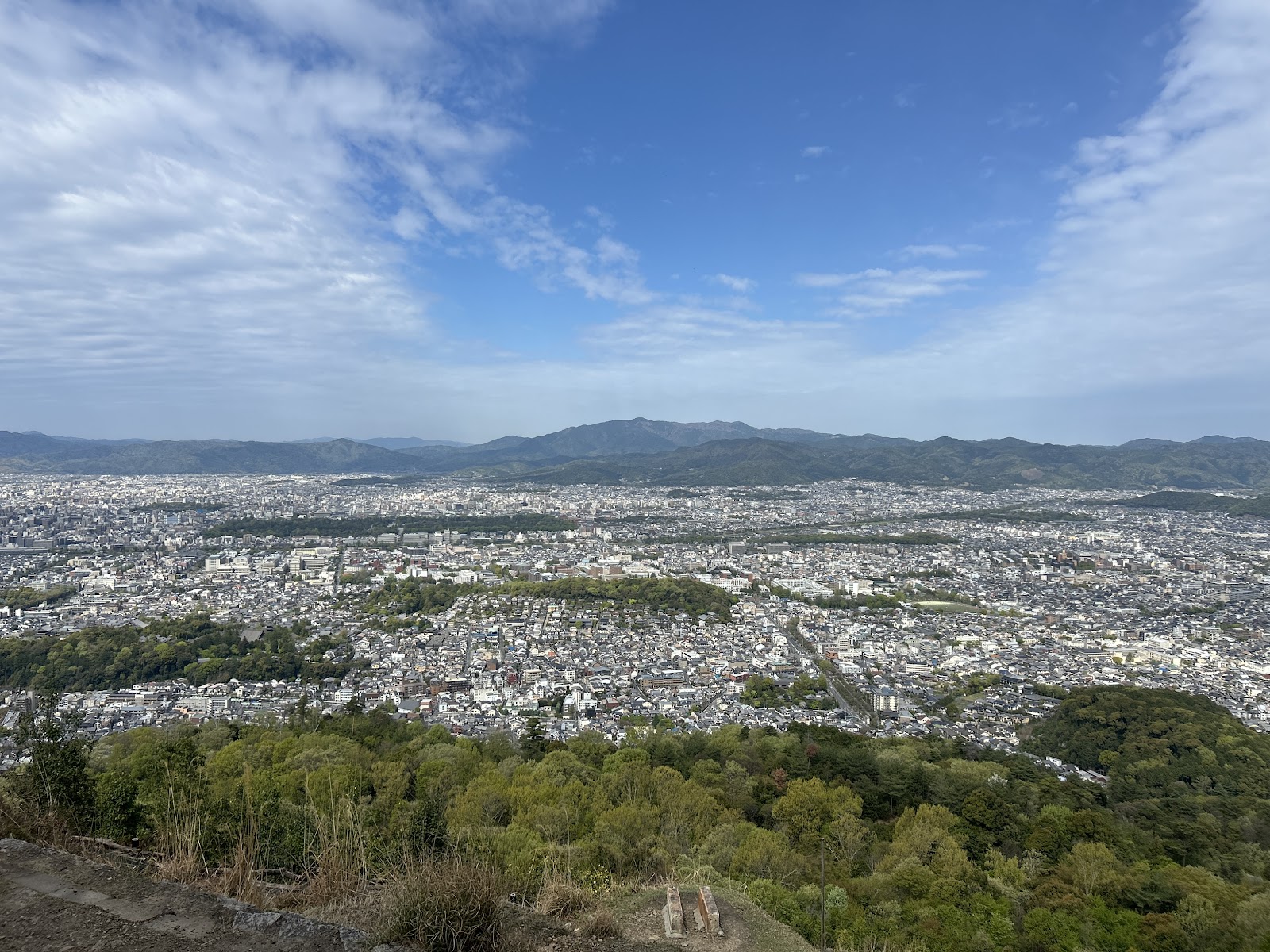
The reward is immediate and expansive. The whole western half of Kyoto spreads out below — the Kamo River threading north to south, the Gosho imperial park a green rectangle at the centre, Kyoto Tower's needle marking the station, and the wall of the Arashiyama and Nishiyama hills closing the far horizon. On clear winter days the visibility is superb, and at sunset the basin fills with warm light before the streetlamps flicker on. It is a favourite spot for locals, students from nearby Kyoto University, and photographers, yet it never feels overrun.
There is a real sense of standing inside living tradition here. The flat concrete slabs underfoot are the very hearths where bundles of pine are stacked and set alight on the night of 16 August, when the giant 大 flares against the dark mountainside and tens of thousands watch from the streets below. Sitting on those slabs with the city at your feet, it is easy to imagine the flames and the crowds. Small stone Buddhist markers dot the site, lending it a quiet, sacred atmosphere.
The hike is best undertaken in the cooler months. Spring and autumn are ideal, and crisp winter mornings offer the sharpest views, though the summit can be cold and occasionally dusted with snow. Summer is hot and humid, so start early if you go then. Because there is no lighting on the trail, hike only in daylight and allow time to descend before dusk.
To reach the trailhead, take the Keihan or Eizan line to Demachiyanagi and a bus east toward Ginkaku-ji, or ride a city bus directly to the Ginkakuji-michi stop. Bring water, wear proper shoes, and carry out all your rubbish — the mountain is treated with reverence by the people of Kyoto, and its cleanliness is part of its magic.
A local's tip
The concrete slabs where the giant bonfire is lit make natural benches — bring a rice ball, sit where the huge character burns each August, and enjoy the view over the city from the very spot.
Best time to visit
Clear mornings for crisp views; late afternoon for sunset over the city
Getting there
Start at Ginkaku-ji (Silver Pavilion). The signposted trailhead is a few minutes north of the temple gate; a steady climb of about 45-50 minutes up stone steps and dirt path brings you to the fire bed.
Good to know
- Water
- Restrooms
Plan the whole trip offline
Daimonji-yama Fire Bed Viewpoint is one of many places in the Real Japan app — with turn-by-turn directions, nearby spots and full offline maps you can use with no signal.