A quiet forested hill by Kyoto University with an easy climb to a clearing facing the Daimonji mountain.
Yoshida-yama is one of Kyoto's best-kept secrets: a small forested hill, barely 1.5 kilometres across, tucked between the tourist magnets of Heian Shrine and Ginkaku-ji and rising immediately east of Kyoto University's main campus. Where the great viewpoints of the city demand a serious hike or an admission fee, Yoshida-yama asks almost nothing — a gentle 15 to 20 minute walk up shaded paths delivers you to breezy clearings with a lovely, framed outlook, and you will very likely have them to yourself.
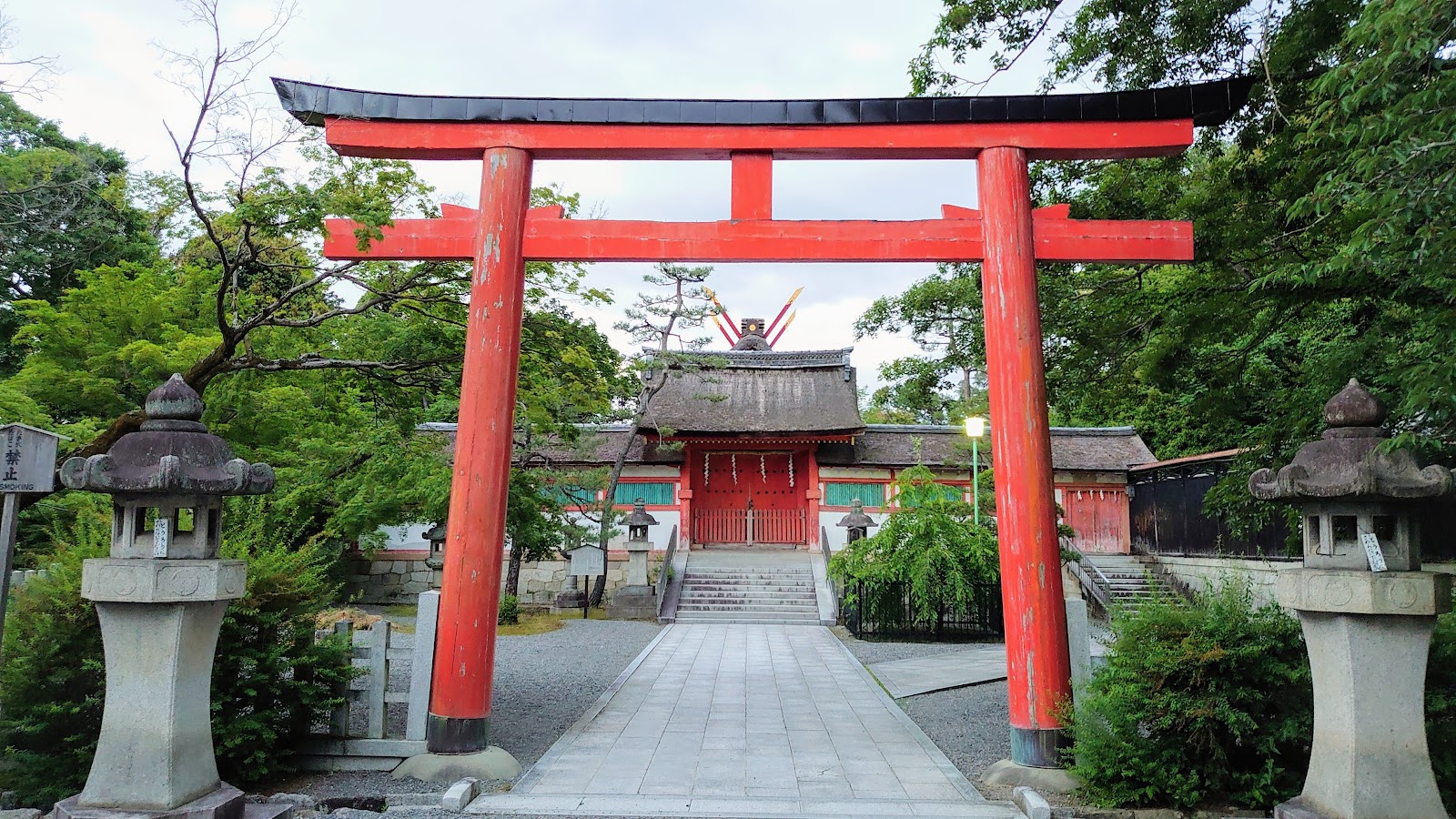
The hill is crowned and encircled by shrines and temples that give the climb a quietly spiritual flavour. At its foot stands Yoshida Shrine, founded in 859 by the powerful Fujiwara clan to protect the newly established capital. It is famous above all for its Setsubun festival, held over three days in early February, when hundreds of thousands of visitors pour in to drive away evil spirits for the coming year and a great bonfire of old amulets blazes on the grounds — the one time of year the hill is genuinely busy. On the northern high point sits the atmospheric Takenaka Inari Shrine, a miniature echo of the famous Fushimi Inari to the south, its small vermilion torii and fox statues threading through the trees in a way that many find even more evocative for being so hushed and empty.
Scattered around the slopes are further quiet gems — the meditation halls of Kurodani (Konkai-Komyo-ji) with its imposing gate and pagoda, and Shinnyo-do temple with its celebrated autumn maples — so a circuit of Yoshida-yama easily becomes a half-day of low-key exploration far from the crowds. The paths are earthen and easy, winding through cedar and broadleaf woodland alive with birdsong, and benches and small clearings invite you to pause.
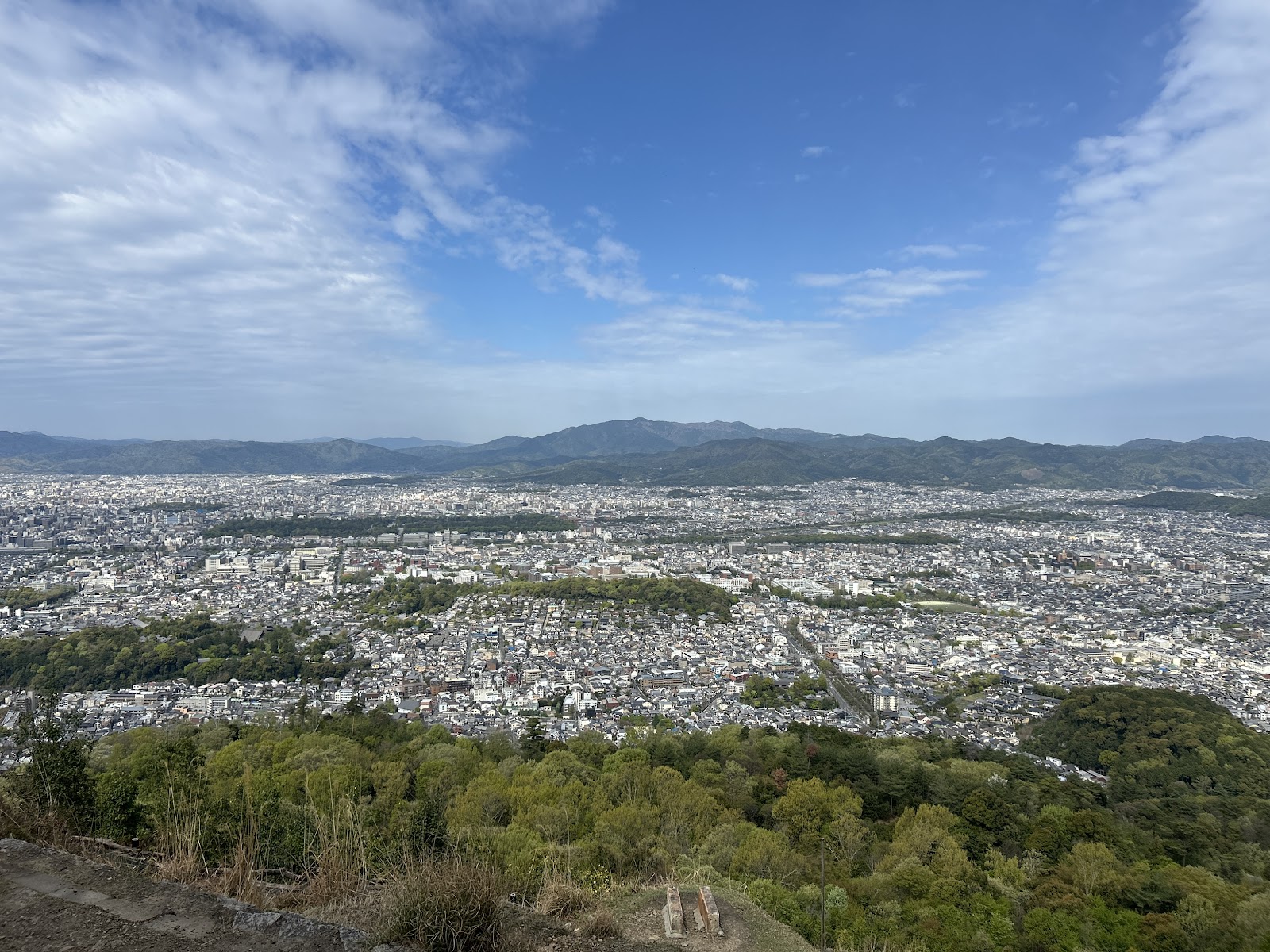
The viewpoint payoff comes at the top, where the trees open toward the east and the enormous 大 character of Daimonji-yama stands clear on the mountain directly opposite, its cleared fire-bed slopes unmistakable against the green. It is one of the finest places to contemplate the Gozan no Okuribi mountain, and in mid-August some locals climb Yoshida to watch the great bonfire flare across the valley. To the west, gaps in the canopy give glimpses over the university district and the rooftops of the city toward the far hills. Spring brings cherry blossom to the shrine grounds and slopes, autumn sets the maples of neighbouring Shinnyo-do ablaze, and crisp winter afternoons offer the sharpest air and light.
This is a viewpoint for travellers who want to feel the everyday texture of Kyoto rather than jostle for a famous photo. Students cut across the hill between lectures, locals walk their dogs, and the surrounding streets are full of the cheap cafes, bookshops and noodle bars of a university neighbourhood — an ideal place to grab a takeaway coffee before the climb. To reach it, take the Keihan or Eizan line to Demachiyanagi and walk east across the Kamo River, or ride a city bus to the Kyodai-seimon-mae or Yoshida-jinja-mae stops. Entry is free, the effort is minimal, and the reward is a rare quiet corner with a memorable view.
A local's tip
Almost no tourists climb it — from the top you get a clear, framed view of the giant Daimonji character on the mountain opposite, best appreciated with a takeaway coffee from the student cafes below.
Best time to visit
Late afternoon; February for the Setsubun festival at Yoshida Shrine
Getting there
A small hill just east of Kyoto University, between Heian Shrine and Ginkaku-ji. Enter via Yoshida Shrine and follow the wooded paths up to the summit clearing and Takenaka Inari Shrine.
Good to know
- Restrooms
Plan the whole trip offline
Yoshida-yama Viewpoint is one of many places in the Real Japan app — with turn-by-turn directions, nearby spots and full offline maps you can use with no signal.