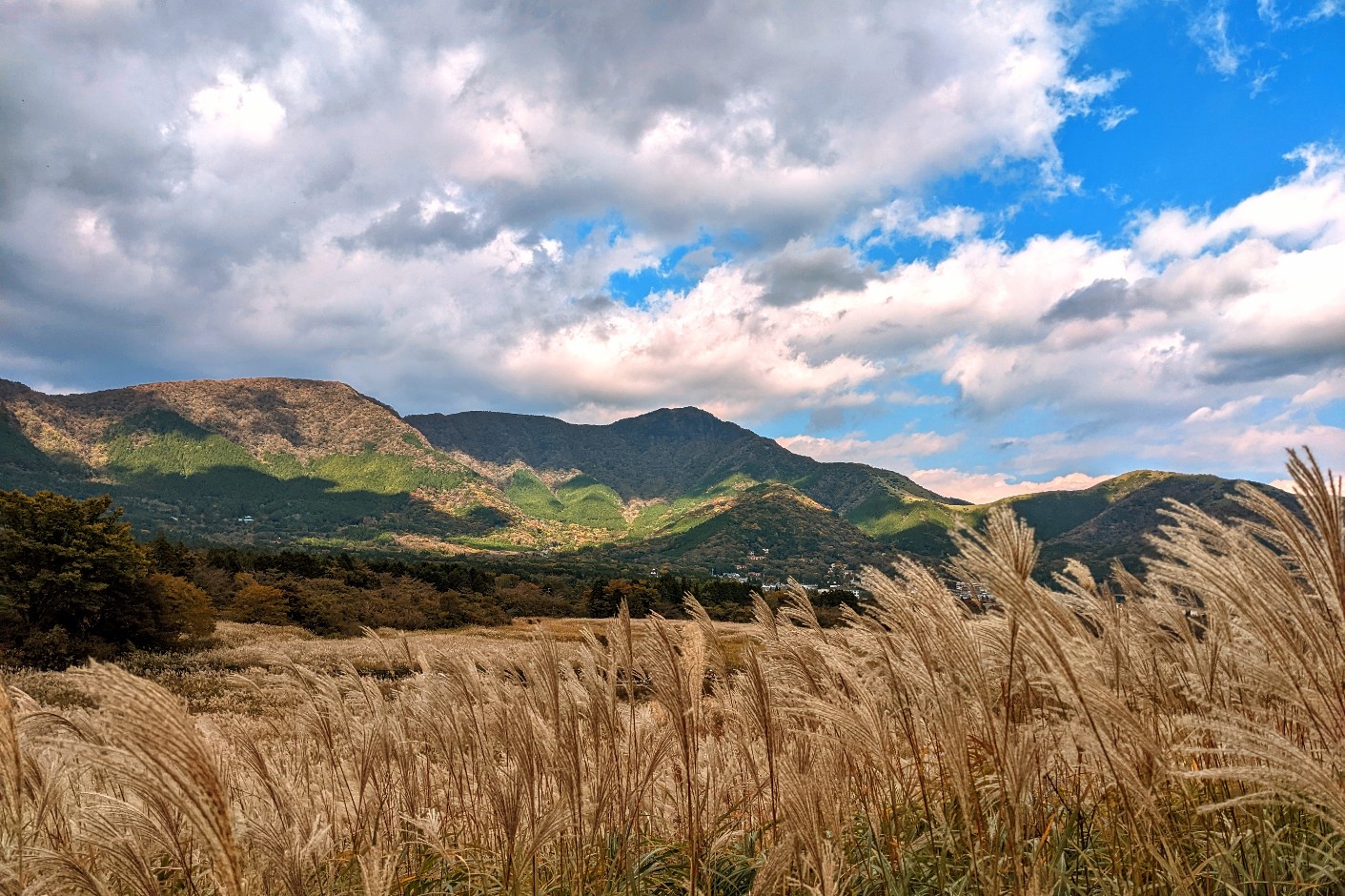
An 18-hectare hillside of silver-gold susuki grass that shimmers across the Sengokuhara highlands each autumn.
Every autumn a whole hillside of the Sengokuhara highlands turns to shimmering silver-gold as its susuki, or Japanese pampas grass, comes into plume. The Sengokuhara Pampas Grass Field covers roughly 18 hectares of the western slope of the Hakone volcano, and when the low autumn sun catches the seed heads the entire expanse ripples like brushed metal - one of the most photographed seasonal sights in the whole Hakone region and a scene that draws a steady stream of visitors from late September into early November.
Susuki (Miscanthus sinensis) is one of the seven traditional grasses of Japanese autumn, long celebrated in poetry and painting, and here it grows tall and dense enough to close over head height. A single wide gravel path runs straight up into the field from the base of the slope, drawing you into the sea of grass toward a higher vantage point where the walkway ends. From there the view opens back across the plumes to the encircling peaks of the outer Hakone crater, and on clear days the light and the mountains together make for a genuinely cinematic panorama. The out-and-back stroll takes about 30 minutes at an easy pace, on level to gently rising ground that suits almost anyone.
The timing is everything. The grass greens through summer, begins to feather and pale from mid-September, reaches its full silvery peak through October, and fades to a soft tawny brown by mid-November before the slope is burned off in late winter to regenerate for the following year. Golden hour - the first light of morning or the last of the afternoon - is when the plumes are most luminous, and photographers plan their visit around it. Outside autumn the field is simply a green hillside, so this is very much a seasonal destination.
Because it is so popular and access funnels everyone onto that one central path, the field can get crowded on fine autumn weekends, with queues building along the walkway. A weekday visit, or arriving right at the start or end of the day, makes for a far calmer experience and better light. There is no admission and the field is open around the clock, though the practical window is daylight.
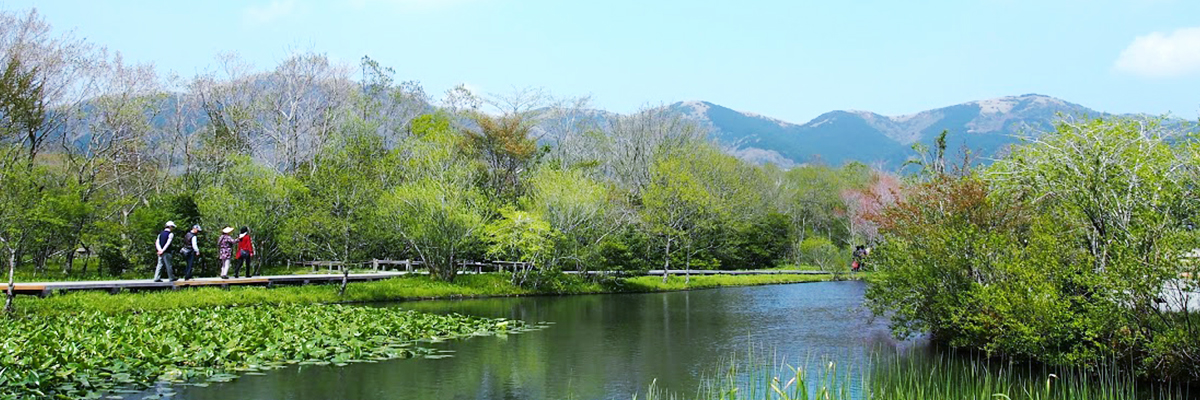
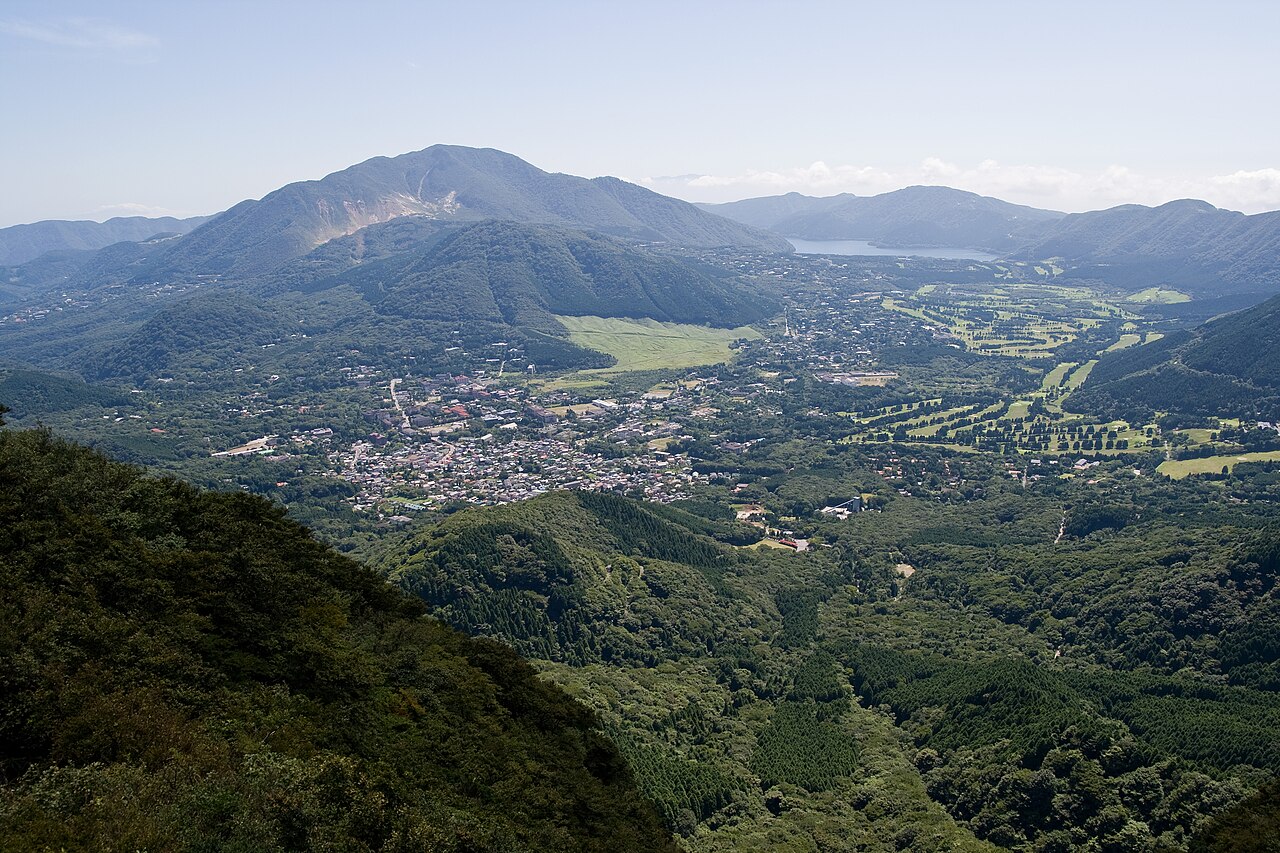
Sengokuhara is the coolest and most open corner of Hakone, a broad highland basin that also holds the Hakone Botanical Garden of Wetlands and the Sengokuhara marsh just a short walk away, so the pampas field pairs naturally with them for a half-day exploring the region's quieter northern side. It is also well away from the ropeway and Open-Air Museum crowds, giving a real sense of highland space.
Getting there could hardly be simpler: Hakone Tozan and Odakyu Hakone buses running between Hakone-Yumoto and Togendai stop at Sengoku-kogen, a couple of minutes from the trailhead, roughly 30 minutes and about 1,100 yen from Yumoto. IC cards are accepted on the buses. As throughout Hakone the services are Odakyu-run and not covered by the Japan Rail Pass, so the Hakone Freepass is the economical choice for chaining the field together with the rest of a Sengokuhara loop.
A local's tip
Come on a weekday at the very start or end of the day - in peak autumn the single path gets congested, and late-afternoon sun through the silver plumes is when it truly glows.
Best time to visit
Late September to early November, golden hour for the light
Getting there
From Hakone-Yumoto take a Hakone Tozan Bus toward Sengokuhara/Togendai and get off at Sengoku-kogen; the trailhead into the field is a couple of minutes' walk. About 30 minutes and 1,100 yen from Yumoto.
Good to know
- Restrooms
- Walking path
- Seasonal parking
Plan the whole trip offline
Sengokuhara Pampas Grass Field is one of many places in the Real Japan app — with turn-by-turn directions, nearby spots and full offline maps you can use with no signal.