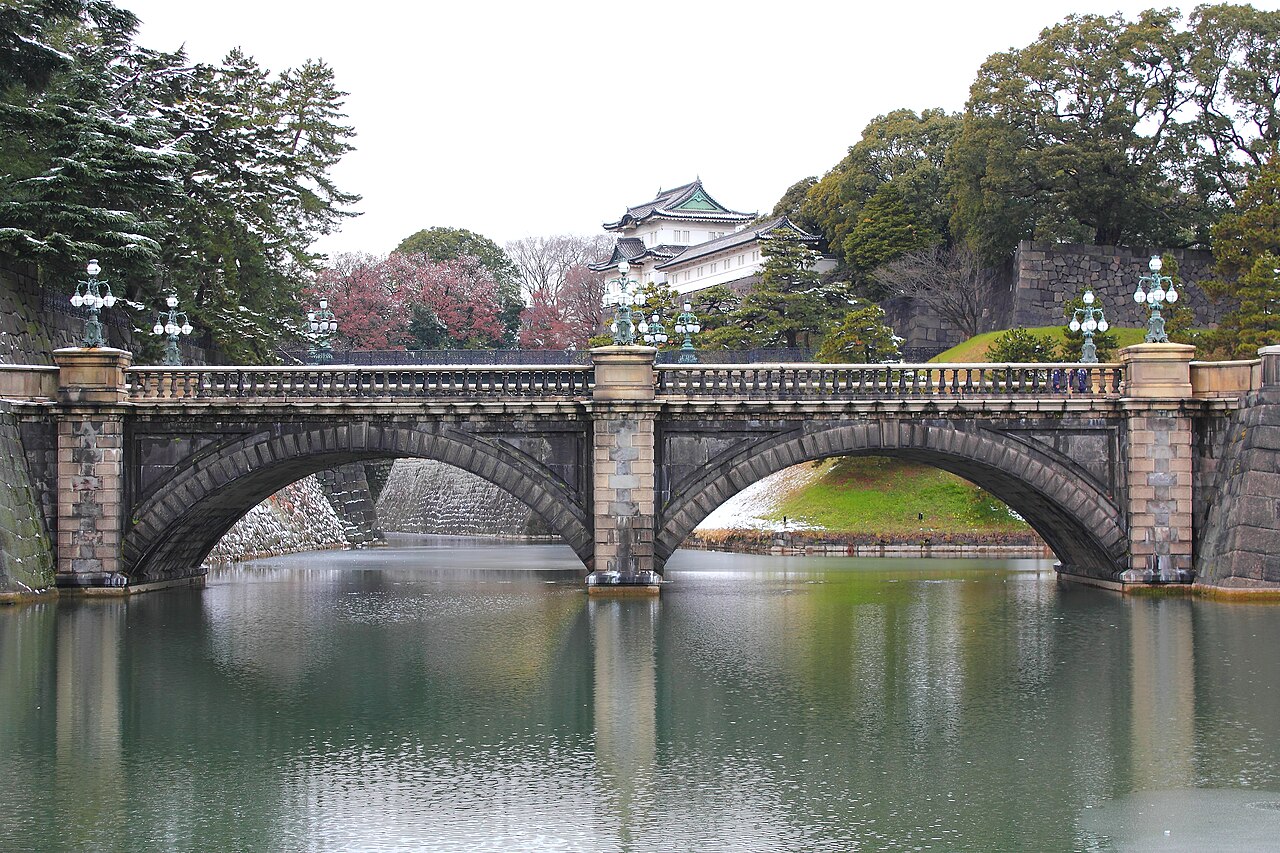
The iconic stone-and-iron double bridge and the vast pine-dotted plaza before the Imperial Palace's main gate.
Nijubashi is the most photographed spot on the Imperial Palace grounds and one of the enduring images of Tokyo. The name, meaning 'double bridge', refers to the pairing of two spans that cross the inner moat toward the palace's main gate: the front Seimon Ishibashi, a graceful arched stone bridge, and behind it the Seimon Tetsubashi, an iron bridge whose reflection in the still water completes the picture. Framed by the white Fushimi-yagura watchtower rising from the pines behind, the composition has appeared on postcards and in schoolbooks for over a century.
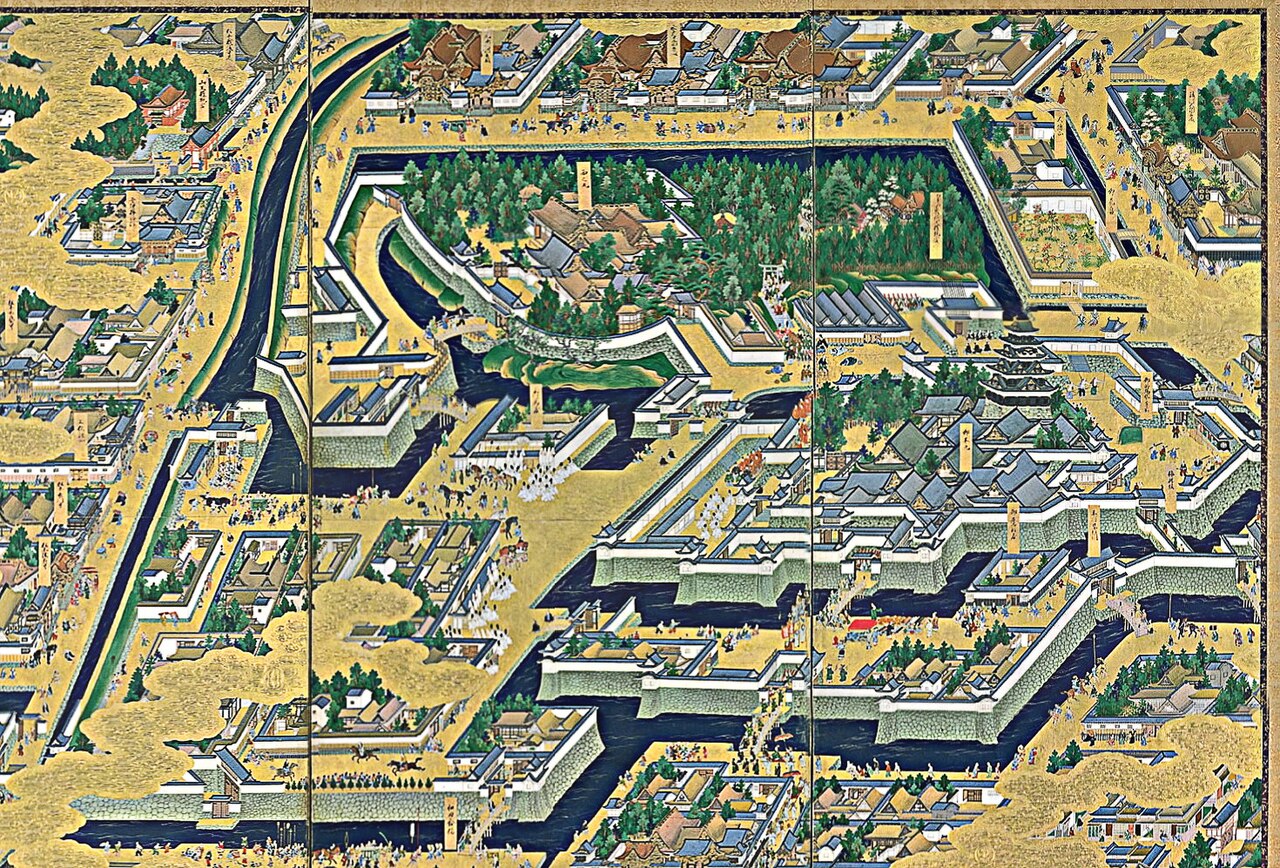
The bridges guard the ceremonial entrance to the Kokyo, the residence of Japan's emperor, built on the western citadels of the former Edo Castle. When the Meiji Emperor relocated from Kyoto in 1868, the shogun's old fortress became the imperial palace, and this gate became the formal threshold between the public city and the private world of the imperial household. Ordinary visitors cannot cross the bridges — they lead to the inner grounds, which open to the public only twice a year, on 2 January for the New Year's greeting and on 23 February for the Emperor's birthday, when crowds gather to see the imperial family appear on a palace balcony.
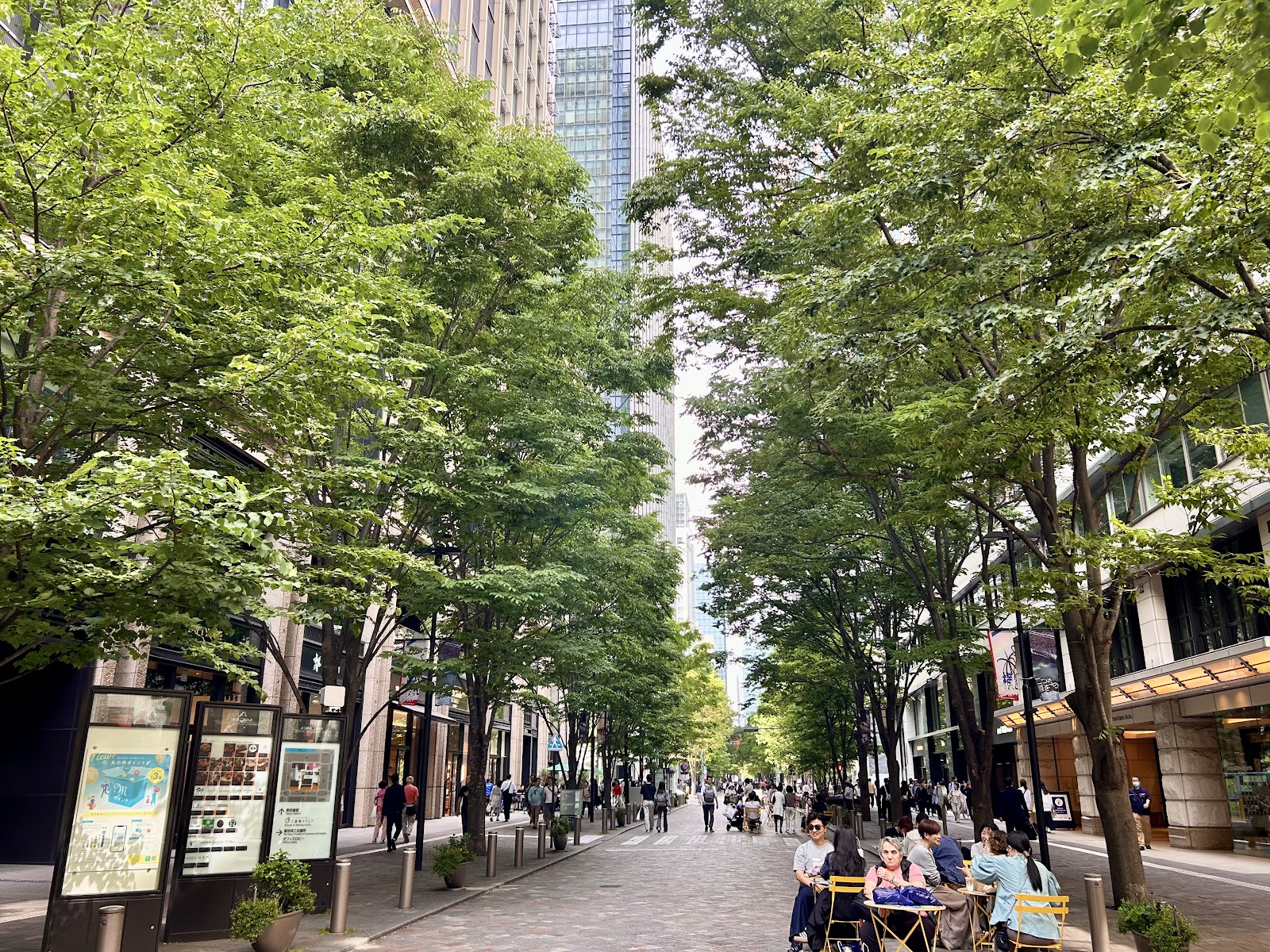
Spreading out in front of the moat is the Imperial Palace Plaza (Kokyo Gaien), a huge open expanse of raked gravel dotted with more than two thousand meticulously pruned black pines. The trees were planted after the Meiji era to give the approach a dignified, timeless character, and gardeners still shape each one by hand. Standing here, with skyscrapers of Marunouchi at your back and the castle walls ahead, you feel the odd doubleness of Tokyo: a working financial capital wrapped around a green imperial heart.
The experience is simple and free. There is nothing to enter and no ticket to buy — you come to walk the plaza, photograph the bridges, and sense the scale of the old castle's defences. The ground is flat and easily accessible, though the gravel can be tiring over distance and there is little shade, so summer visits are best kept short. Mounted and foot police keep a quiet presence near the gate.
Come on a clear morning when the low sun lights the stone bridge and the moat is mirror-still for the classic reflection shot. Winter offers the sharpest air and clearest views; the pines look their most sculptural against a blue sky. To reach it, take the Chiyoda Line to Nijubashimae Station and walk about five minutes, or cross the plaza on foot from Tokyo Station's Marunouchi side in around twelve minutes. Most visitors pair Nijubashi with the nearby Imperial Palace East Gardens to piece together the full story of Edo Castle in a single easy outing.
A local's tip
The two most famous stone and iron bridges only align into the classic 'double bridge' photo from a specific spot on the plaza — look for the low viewing rail where the crowds gather.
Best time to visit
Clear mornings for photos; early January for the New Year palace opening
Getting there
A 5-minute walk from Nijubashimae Station (exit 6) or about 12 minutes from Tokyo Station's Marunouchi exit across the plaza.
Good to know
- Benches
- Restrooms
Plan the whole trip offline
Nijubashi Bridge and Imperial Palace Plaza is one of many places in the Real Japan app — with turn-by-turn directions, nearby spots and full offline maps you can use with no signal.