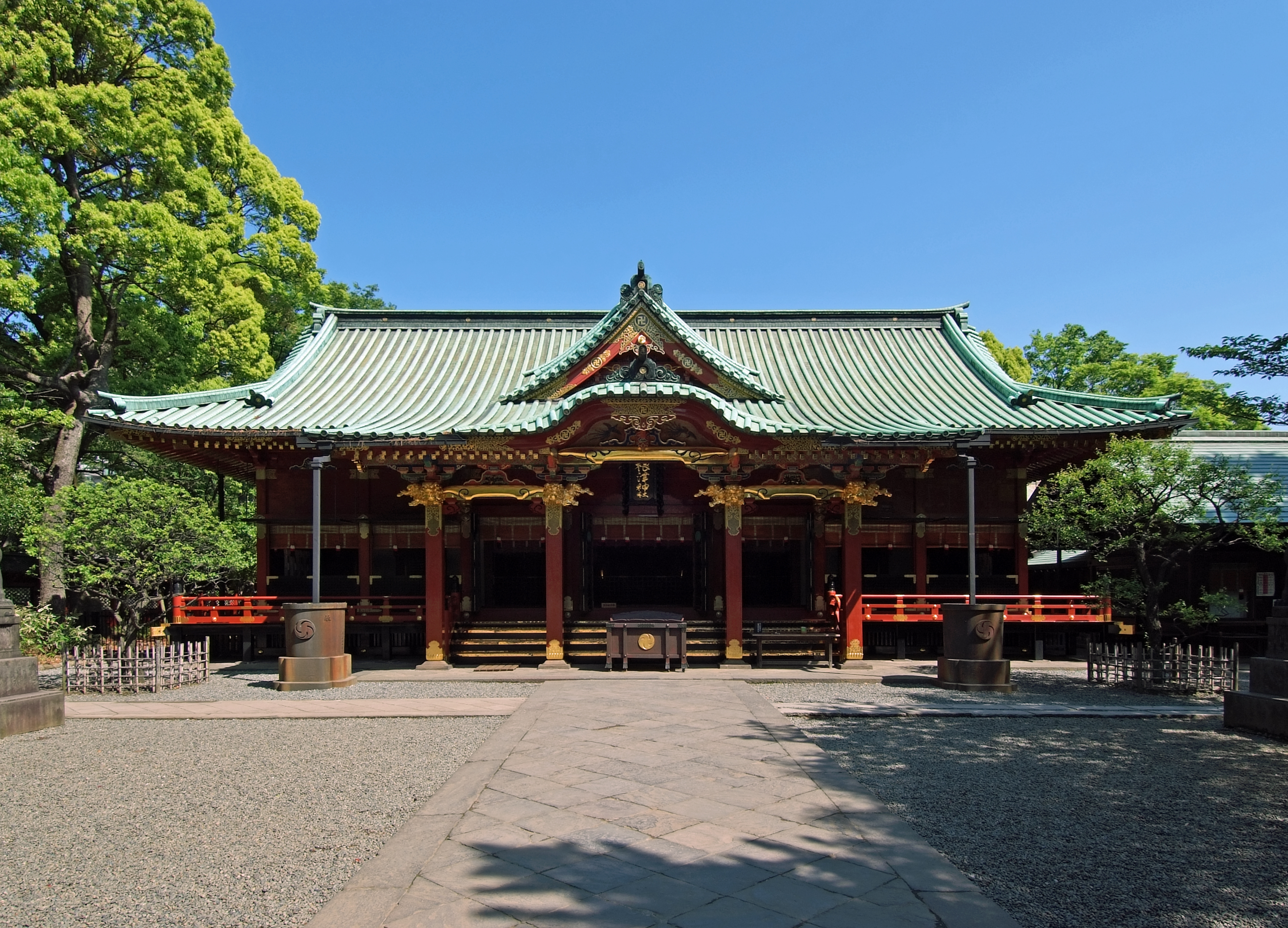
A 300-year-old shrine famous for its tunnel of red torii gates and springtime azalea hillside.
Tucked into the atmospheric Yanesen district of old Tokyo, Nezu Shrine is one of the capital's oldest and loveliest Shinto sanctuaries — and one of the few that survived war and earthquake with its Edo-period buildings intact. Established according to legend by the mythical hero Yamato Takeru and rebuilt in its current form in 1705 by the fifth Tokugawa shōgun, Tsunayoshi, it enshrines Susanoo-no-Mikoto and remains a serene counterpoint to the crowds of Sensō-ji.
The shrine's architectural heart is a complex built in the elaborate Ishi-no-ma-zukuri style, in which the main hall (honden), offering hall and worship hall are joined under interconnected roofs. The honden, gate (rōmon) and curved fences are all designated Important Cultural Properties, their black lacquer, gold fittings and vivid painted eaves preserved from 1706 — a rare chance to see gongen-style shrine architecture that elsewhere in Tokyo was lost to the 20th century.
Most visitors, however, come for two spectacular features. The first is the Otome Inari sub-shrine, reached through a tunnel of dozens of small vermilion torii gates that curve up a low hillside — a miniature echo of Kyoto's Fushimi Inari, and gloriously photogenic without the two-hour journey. The second is the tsutsuji (azalea) garden, planted on the slope with around 3,000 azalea bushes of roughly 100 varieties. When they bloom in mid-to-late April the hillside erupts in waves of pink, crimson, white and purple, and the shrine hosts its famous Bunkyō Azalea Festival with food stalls, antiques and plant markets filling the grounds.
A notable piece of history: the shrine was the tutelary sanctuary of Tokugawa Ienobu, the sixth shōgun, whose birth-house stood nearby, which is why the shogunate lavished such craftsmanship on the 1705 rebuild. Look for the small carp pond and the elegant arched bridge, both frequent subjects for photographers.
The visiting experience is calm and uncommercial for most of the year — a place locals come to for hatsumōde at New Year and quiet weekday prayer. Entry to the shrine grounds is free; only the azalea garden charges a small fee during the festival. The main precinct is largely flat and accessible, though the torii tunnel and garden slope involve gentle steps and uneven paths. Early morning offers the best light and the emptiest gates.
Getting there is part of the pleasure: from Nezu or Sendagi Station on the Chiyoda Line it is a seven-minute stroll through the low wooden houses, sento bathhouses and small cafés of Yanaka and Nezu, the best-preserved slice of shitamachi (old downtown) Tokyo. Pair the shrine with a wander down Yanaka Ginza shopping street, a bowl of soba in one of the district's wooden noodle houses, or the graves and cats of nearby Yanaka Cemetery for a perfect half-day away from the neon. Photographers should note that the torii tunnel faces the morning sun, so arrive early for the cleanest light and the emptiest gates.
A local's tip
Come on a weekday morning during the late-April Azalea Festival to walk the vermilion torii tunnel and photograph 3,000 blooming azaleas before the tour groups arrive.
Best time to visit
Mid-to-late April for the azaleas
Getting there
From Nezu or Sendagi Station on the Tokyo Metro Chiyoda Line, walk about 7 minutes through the quiet Yanesen backstreets to the shrine.
Good to know
- Garden
- Restrooms
- Souvenir stalls
Plan the whole trip offline
Nezu Shrine is one of many places in the Real Japan app — with turn-by-turn directions, nearby spots and full offline maps you can use with no signal.