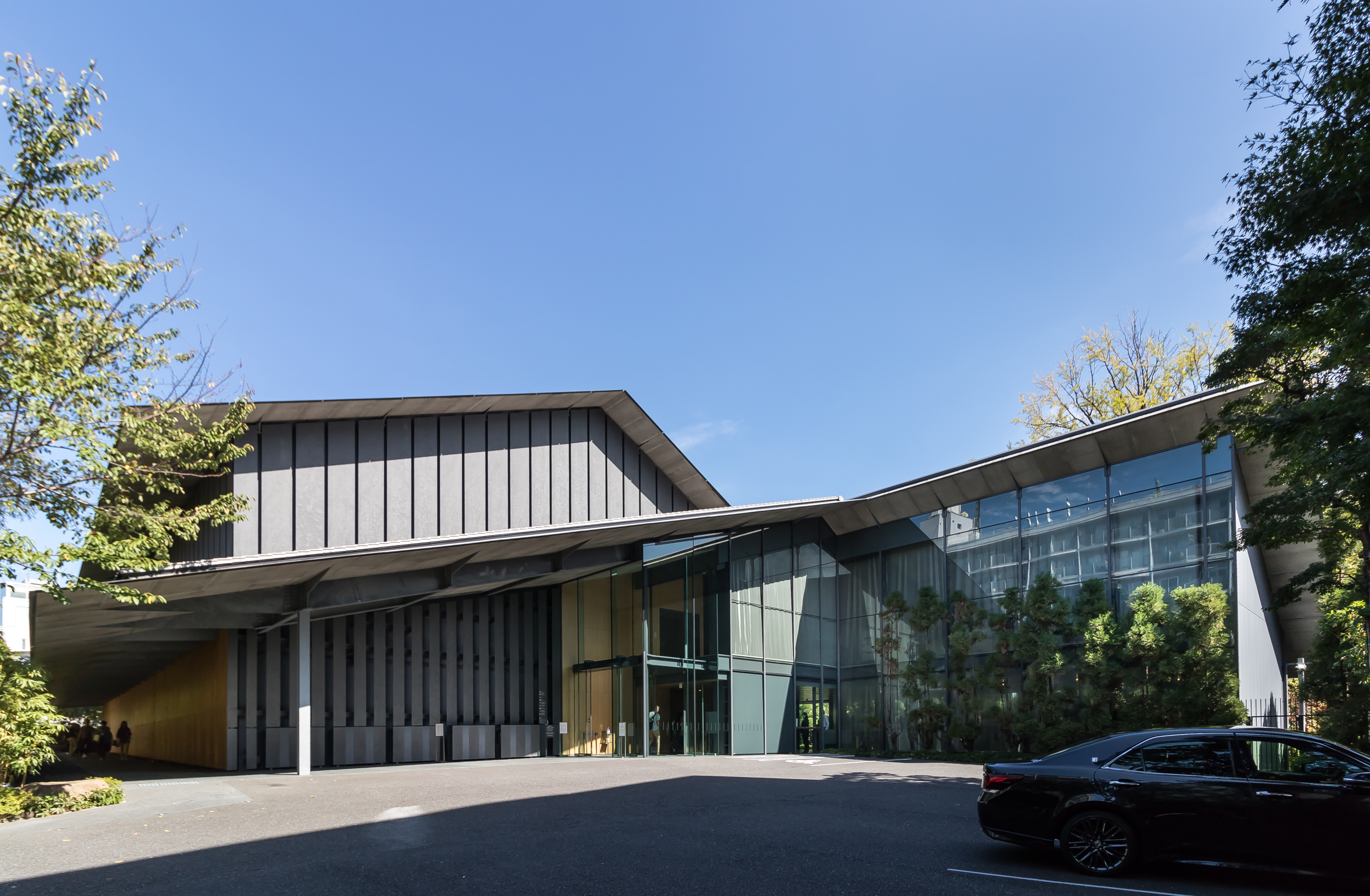
An exquisite pre-modern Asian art collection behind a Kengo Kuma facade, wrapped around a hidden strolling garden.
The Nezu Museum is one of Tokyo's most refined cultural experiences, a serene sanctuary of pre-modern Japanese and East Asian art hidden a short walk from the designer boutiques of Omotesando. It was founded on the private collection of Kaichiro Nezu, a railway magnate and tea-ceremony devotee, and today holds more than 7,400 works including seven National Treasures and dozens of Important Cultural Properties. What makes it unforgettable, though, is the marriage of that collection with a masterful modern building and a secret woodland garden, a combination found nowhere else in the city.
The approach sets the tone: a long, bamboo-flanked corridor under a deep sweeping eave leads from the street into a hushed lobby, an entrance sequence designed by the architect Kengo Kuma when he rebuilt the museum in 2009. Kuma's building uses natural wood, stone and glass to blur the line between gallery and garden, and it is admired as one of his finest works. Inside, the galleries present rotating selections from the collection: ancient Chinese bronzes, Buddhist sculpture and sutras, tea-ceremony ceramics and lacquer, calligraphy, and above all Japanese painted screens. The museum's single most celebrated treasure is the pair of gold-ground folding screens of Irises by the Edo master Ogata Korin, a National Treasure traditionally displayed each spring to coincide with the blooming of real irises outside.
That outside is the museum's other glory. Behind the galleries lies a surprisingly large strolling garden, a hillside of moss, stone lanterns, ponds and winding paths dotted with teahouses that Nezu collected and relocated. Descending into this green ravine, with birdsong replacing the roar of the city, feels like stepping into a temple mountainside, an astonishing pocket of calm in the heart of fashionable Minami-Aoyama. A glass-walled cafe overlooks the garden and serves tea and light meals, making a visit as much a moment of repose as an art appointment.
The visiting experience is intimate and unhurried; the museum caps numbers through timed advance tickets, so galleries never feel crowded and you can linger over each object. Captions cover the essentials in English, and the scale allows a satisfying visit in about ninety minutes including garden time. The main galleries and cafe are wheelchair accessible, though the garden's stone paths and slopes are uneven. There is an elegant shop stocked with craft and stationery. The museum closes on Mondays and between exhibitions, so check the calendar before going.
The finest times to visit are late April, when the irises bloom to echo Korin's screen, and late autumn, when the garden's maples flame red and gold. General admission covers the current exhibition, with a small surcharge for special shows, and advance online booking is strongly advised. Getting there takes you through one of Tokyo's most stylish districts: from Omotesando Station on the Ginza, Chiyoda and Hanzomon subway lines, use Exit A5 and walk about eight minutes down Omotesando avenue. These lines are not covered by the Japan Rail Pass, so budget a small IC-card fare for one of the city's most rewarding cultural stops.
A local's tip
Buy timed tickets online in advance, especially in late April when the museum's Kakitsubata irises bloom in the garden to match its most famous painted screen; the strolling garden alone is worth the admission.
Best time to visit
Late April for the irises; autumn for maple colour
Getting there
An 8-minute walk from Exit A5 of Omotesando Station; head down Omotesando avenue away from the crossing and turn as the boutiques give way to a bamboo-lined approach at the museum's entrance.
Good to know
- Cafe
- Garden
- Restrooms
- Wheelchair
- Museum Shop
Plan the whole trip offline
Nezu Museum is one of many places in the Real Japan app — with turn-by-turn directions, nearby spots and full offline maps you can use with no signal.