A vast grassy hilltop park on the site of Japan's first Western-style racecourse, ringed by cherry trees.
Negishi Forest Park is one of Yokohama's largest and most beloved green spaces, a wide sweep of gently rolling lawn set on a plateau above the Negishi district in Naka Ward. Opened as a public park in 1977, it occupies the grounds of what was once the Negishi Racecourse — Japan's first Western-style horse-racing track, laid out in 1866 during the early years of Yokohama's foreign settlement. For decades the thunder of hooves drew crowds of merchants, diplomats and locals to the hillside; today the same open ground is given over to picnicking families, joggers, kite-flyers and dogs bounding across the grass.
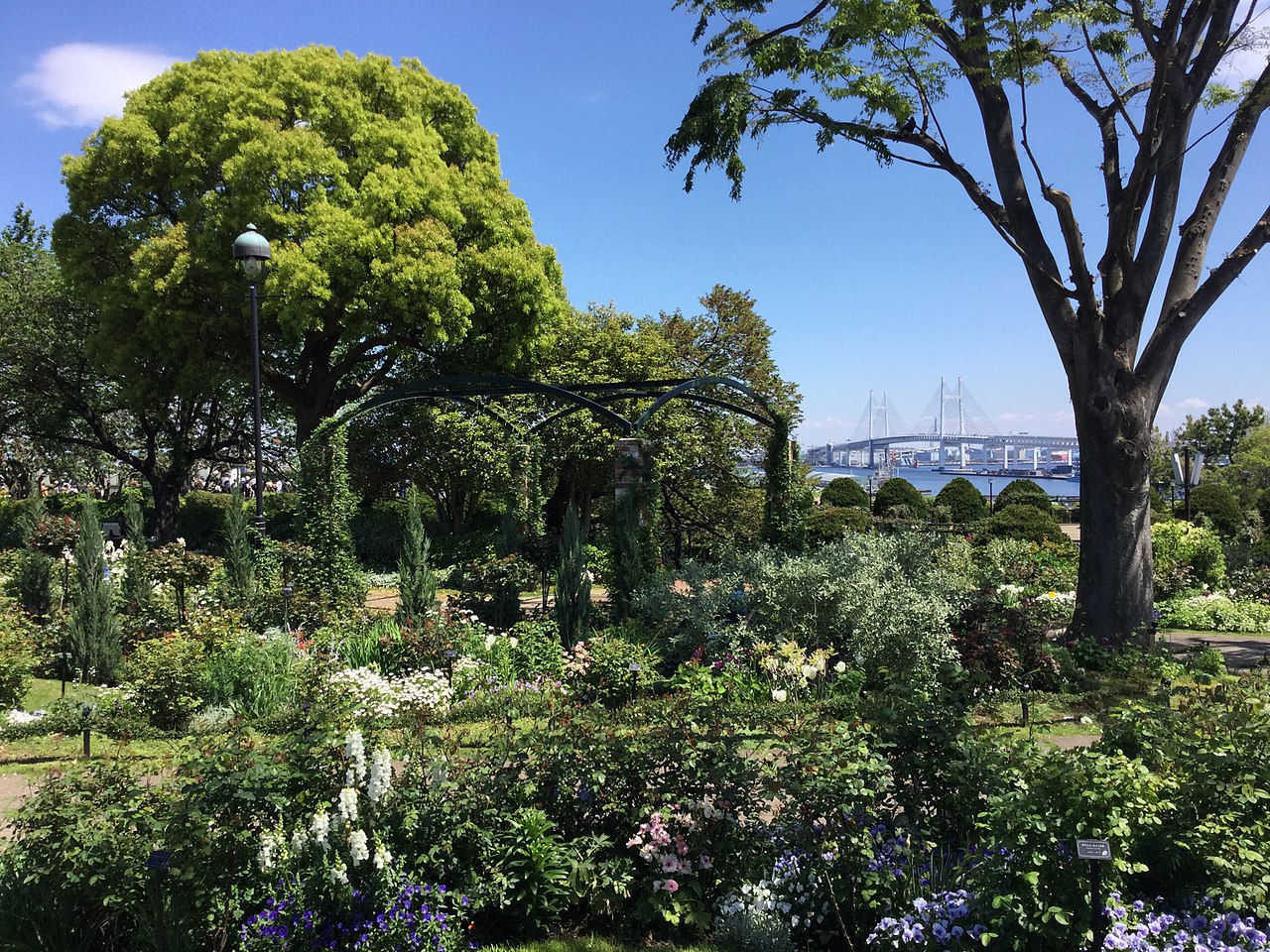
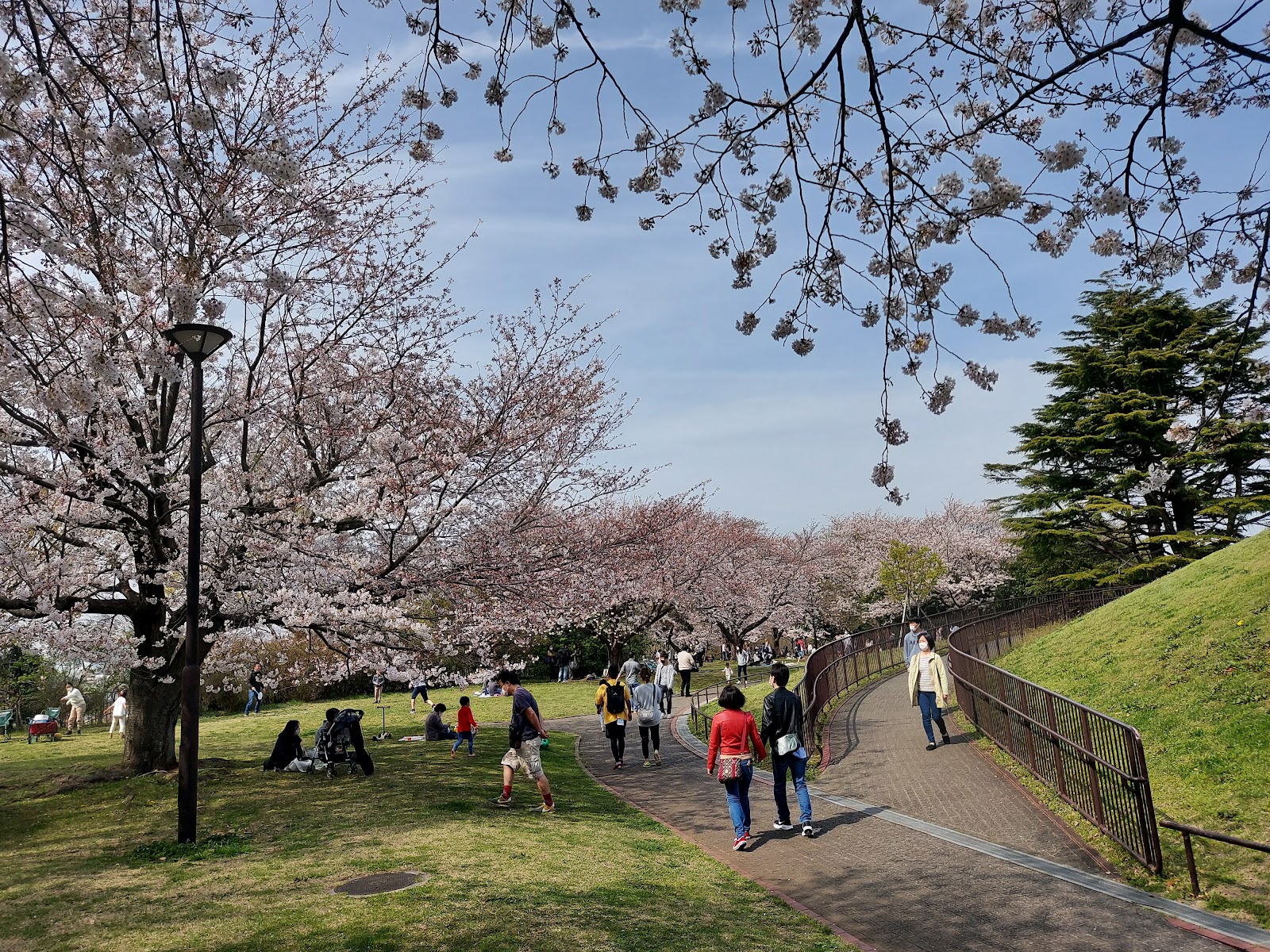
The park's defining feature is its enormous central meadow, an uninterrupted expanse of turf that feels almost European in scale and is a rarity in a dense city like Yokohama. Ringed by mature trees and dotted with flowering shrubs, it changes character with the seasons: a haze of pink in early April when roughly a thousand cherry trees bloom, deep green through summer, and warm russet and gold in November. Because the park sits on high ground, breezes sweep across the lawn even on humid days, making it a favourite spot for flying kites and, in autumn, for quiet afternoons under the maples.
The most striking reminder of the park's origins is the ghostly concrete grandstand that still rises at the northern edge — a trio of towering stands designed in the 1920s by American architect J. H. Morgan. Weathered and off-limits inside, the ruin lends the meadow a haunting, romantic backdrop and is a magnet for photographers. Nearby, the small Equine Museum of Japan and a pony centre keep the horse heritage alive, letting children meet and sometimes ride gentle ponies on weekends.
For visitors the appeal is simple: space to breathe. There is no admission fee and no strict schedule; people come to spread a blanket, toss a ball, or walk the perimeter paths that wind through wooded slopes. Convenience stores and a few casual eateries sit near the entrances, but many regulars simply pack a bento and settle on the grass. Restrooms and drinking fountains are scattered through the grounds, and the wide, mostly flat lawn makes it easy for strollers and less mobile visitors, though the approach from Negishi Station is an uphill climb best done by bus.
Spring is the headline season, when hanami crowds gather beneath the cherries, but the park rewards a visit year-round — plum blossoms in late winter, fresh green in early summer, and koyo colour in autumn. Come on a weekday morning to have the great lawn almost to yourself, with only the crumbling grandstand and the distant hum of the city for company. To reach it, ride the JR Negishi Line to Negishi Station and take a short bus up the hill, or combine the visit with nearby Sankeien Garden for a full day in Yokohama's quieter, greener south.
A local's tip
The preserved grandstand from the old racecourse sits at the top of the meadow — walk up for the best sweep of open lawn and, on clear days, a glimpse of the bay beyond the trees.
Best time to visit
Spring for cherry blossoms; clear weekday mornings
Getting there
From Negishi Station take a municipal bus toward Asahidai and get off at the park, or walk about 15 minutes uphill. Also reachable by bus from Sakuragicho or Yokohama stations.
Good to know
- Parking
- Restrooms
Plan the whole trip offline
Negishi Forest Park is one of many places in the Real Japan app — with turn-by-turn directions, nearby spots and full offline maps you can use with no signal.