The Bluff's largest surviving prewar Western mansion, designed by J.H. Morgan for a British trader.
Berrick Hall is the grandest and best-preserved of the Western residences that still stand on Yamate, the breezy ridge above Yokohama's old foreign settlement that English-speakers have long called "the Bluff." Completed in 1930 to a design by the American architect Jay Hill Morgan, it was built as the family home of B.R. Berrick, a British trader who prospered in the cosmopolitan port city. Of the dozens of grand foreign houses that once lined these lanes, Berrick Hall is the largest prewar example to have survived earthquakes, war and redevelopment intact, which makes it the single best place to understand how Yokohama's merchant elite actually lived.
The house is a confident blend of Spanish and Mediterranean revival styles, its cream stucco walls, red-tiled roof and arched loggias evoking a villa transplanted from southern Europe to a Japanese hillside. Morgan paid unusual attention to comfort and craft: the ground floor centres on a spacious living room and dining room finished with fine plasterwork, patterned tilework in the bathrooms, and clever mechanical touches such as a dumbwaiter and an early central-heating system. Upstairs, the bedrooms and a light-filled children's room have been furnished to suggest 1930s family life, and the arched Palladian-style windows frame views over the surrounding greenery.
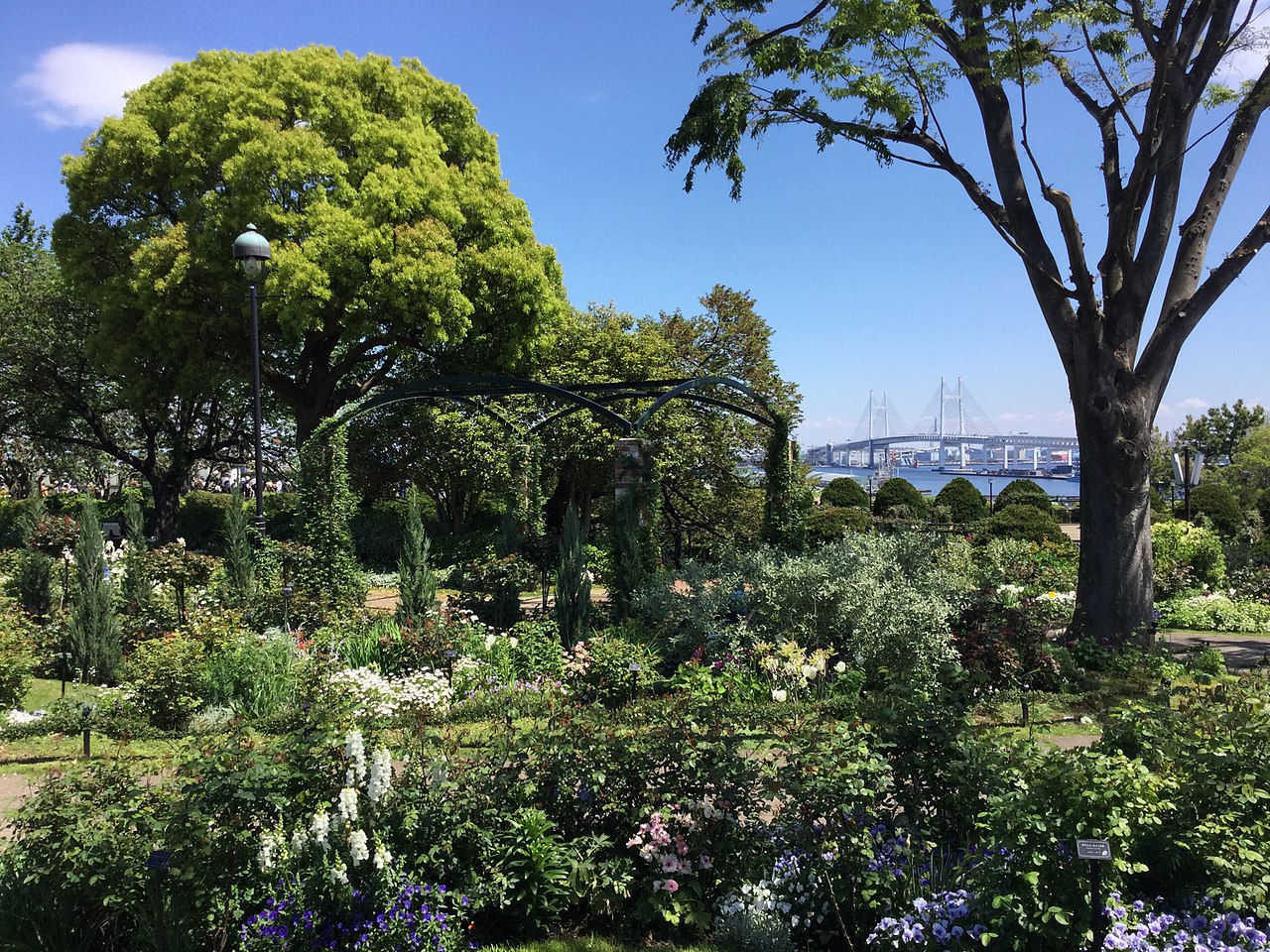
What gives Berrick Hall its atmosphere is not just the architecture but the setting. It stands amid the leafy Yamate district alongside sister buildings such as the Diplomat's House and Bluff No. 234, all within an easy stroll, so a visit here naturally becomes a walking tour of the whole historic quarter. The gardens around the house are planted with roses and seasonal flowers, lovely in spring and again in autumn when the maples turn.
There is a genuine story behind the survival of these houses. After the catastrophic 1923 Great Kanto Earthquake levelled much of the original settlement, the foreign community rebuilt on the same hill, and it is largely these second-generation homes from the 1920s and 1930s—Berrick Hall among them—that endure today. The City of Yokohama now owns and maintains the hall as a designated historic building, opening it free of charge.
The visiting experience is relaxed and uncrowded. Admission is free, the rooms are well captioned in English, and the pace is entirely your own; allow around forty minutes here, more if you continue to the neighbouring residences. The building is largely accessible on the ground floor, though the upper floor involves stairs. Concerts and small exhibitions are sometimes held in the living room, taking advantage of its warm acoustics.
The best time to come is a clear late morning, when light pours through the arched windows, or during the spring and autumn garden seasons. To get here, ride the Minatomirai Line to Motomachi-Chukagai Station, leave from exit 6, and climb into the Yamate hills—about twelve minutes on foot past Motomachi's shops and up the bluff. JR users can reach it in a similar time from Ishikawacho Station. Combine it with the Foreign General Cemetery, the Italian Garden and Harbour View Park for a half-day immersion in old treaty-port Yokohama.
A local's tip
It is the largest surviving prewar Western residence on the Bluff—go upstairs to see the children's room and the Palladian-influenced arched windows most visitors miss.
Best time to visit
Late morning; spring for the surrounding gardens
Getting there
From Motomachi-Chukagai Station take exit 6 and climb into the Yamate hills via Daimachi Bridge; Berrick Hall sits at 72 Yamate-cho, roughly 12 minutes uphill. From JR Ishikawacho Station it is a similar walk up the Motomachi side.
Good to know
- Admission
- Restrooms
- Wheelchair
Plan the whole trip offline
Berrick Hall is one of many places in the Real Japan app — with turn-by-turn directions, nearby spots and full offline maps you can use with no signal.