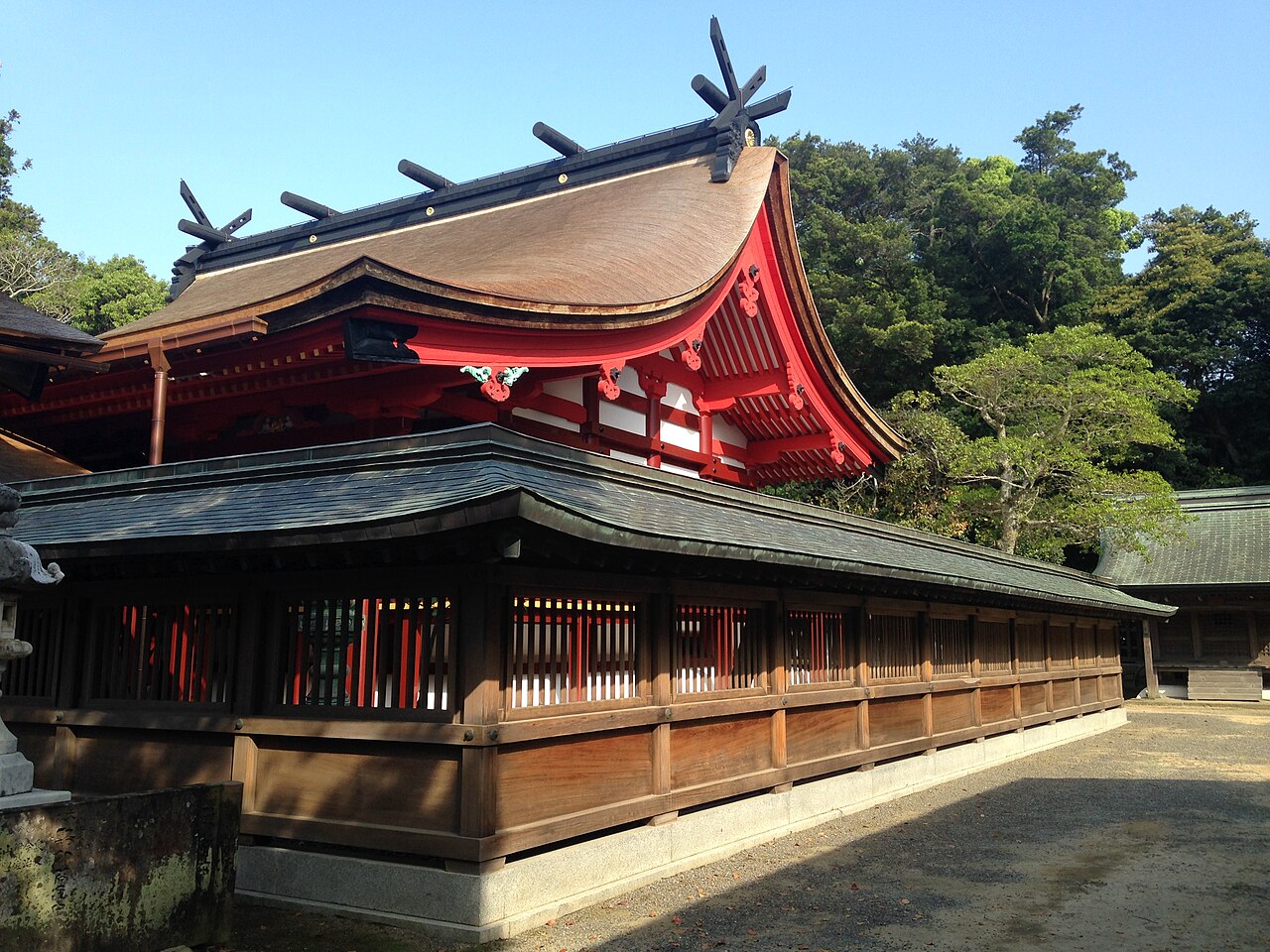
A UNESCO World Heritage shrine complex worshipping three sea goddesses, guardian of ancient sea routes to the Asian mainland.
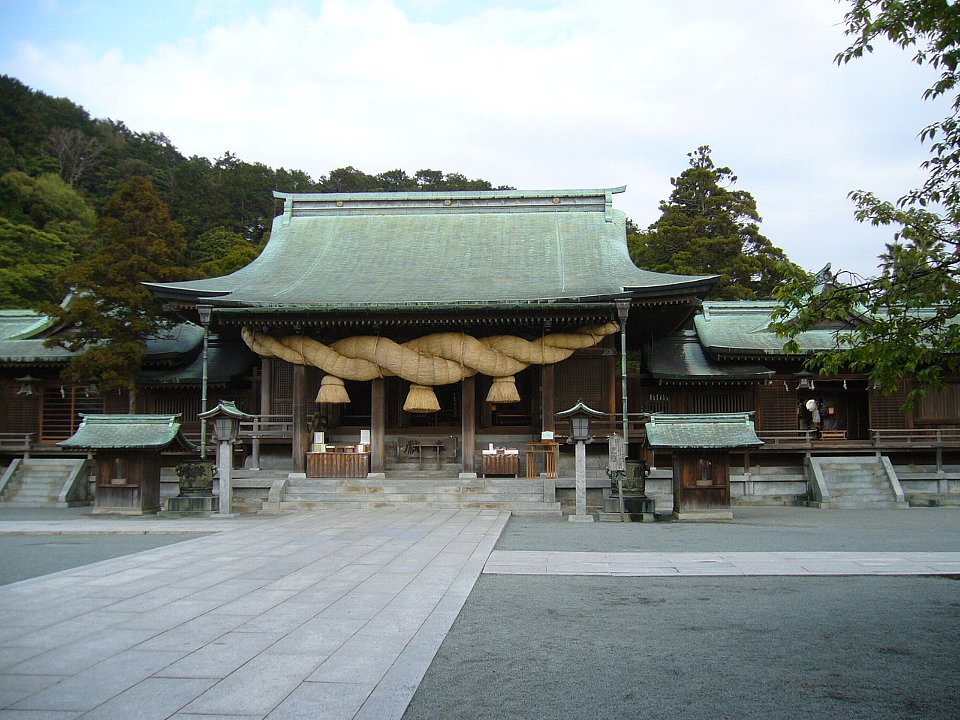
Munakata Taisha is one of Japan's oldest and most historically significant shrines, and since 2017 part of a UNESCO World Heritage Site recognising the sacred island of Okinoshima and its related sites. The shrine venerates the three Munakata goddesses, Tagorihime, Tagitsuhime and Ichikishimahime, daughters of the sun goddess Amaterasu, who according to the ancient chronicles Kojiki and Nihon Shoki were born when Amaterasu chewed and broke her brother Susanoo's sword. For well over 1,500 years these goddesses have been worshipped as protectors of sea routes, and Munakata's fortunes were bound to the vital sea lanes linking Japan with Korea and China.
What makes Munakata unusual is that it is not a single shrine but three, spread across the sea in a line pointing towards the continent. The Hetsugu, the main shrine on the Kyushu mainland, is where visitors go and where the great festivals are held. The Nakatsugu stands on the island of Oshima, reachable by ferry, and the Okitsugu occupies the remote, forbidden island of Okinoshima far out in the Genkai Sea. Okinoshima is so sacred that for centuries it has been off-limits to almost everyone; women are barred entirely, visiting men were traditionally required to purify themselves naked in the sea, and nothing, not a blade of grass or a stone, may be removed. Because of these taboos the island preserved an extraordinary archaeological record of state rituals conducted there from the fourth to the ninth centuries, and it is often called the Shosoin of the Sea.
The fruits of that history fill the Shimpokan, the shrine's treasure museum at Hetsugu, where some 80,000 ritual objects excavated from Okinoshima are held, many of them designated National Treasures: gilt-bronze fittings, Persian glass, Chinese mirrors and gold rings that testify to Japan's ancient reach along the maritime Silk Road. Even for visitors who cannot set foot on the sacred islands, the museum makes the World Heritage story vivid and tangible, and it alone justifies the trip. The peaceful mainland precinct, with its wooded grounds, sacred groves and elegant halls, rewards an unhurried walk, and the shrine hosts major festivals through the year, most famously the Miare-sai in early October, when a flotilla of decorated fishing boats escorts the goddesses across the water.
Munakata Taisha lies on the coast northeast of Fukuoka, easily reached by taking the JR Kagoshima Main Line to Togo Station and a short bus ride to the Hetsugu shrine, all covered by the Japan Rail Pass. Allow at least an hour and a quarter to combine the shrine grounds with the treasure museum, and more if you intend to take the ferry across to Oshima and its middle shrine. For anyone interested in the deep origins of Japanese religion and the country's ancient links to the wider world, this quietly powerful place is one of the most rewarding day trips in the whole Fukuoka region.
A local's tip
Do not miss the Shimpokan treasure hall, where thousands of ancient ritual objects excavated from the sacred island of Okinoshima are displayed, many designated National Treasures.
Best time to visit
Any season; October 1-3 for the Miare Festival
Getting there
Take the JR Kagoshima Main Line to Togo Station, then a roughly 12-minute bus ride to the Hetsugu main shrine; it lies on the coast northeast of Fukuoka city.
Good to know
- Wi-Fi
- Museum
- Restrooms
Plan the whole trip offline
Munakata Taisha is one of many places in the Real Japan app — with turn-by-turn directions, nearby spots and full offline maps you can use with no signal.