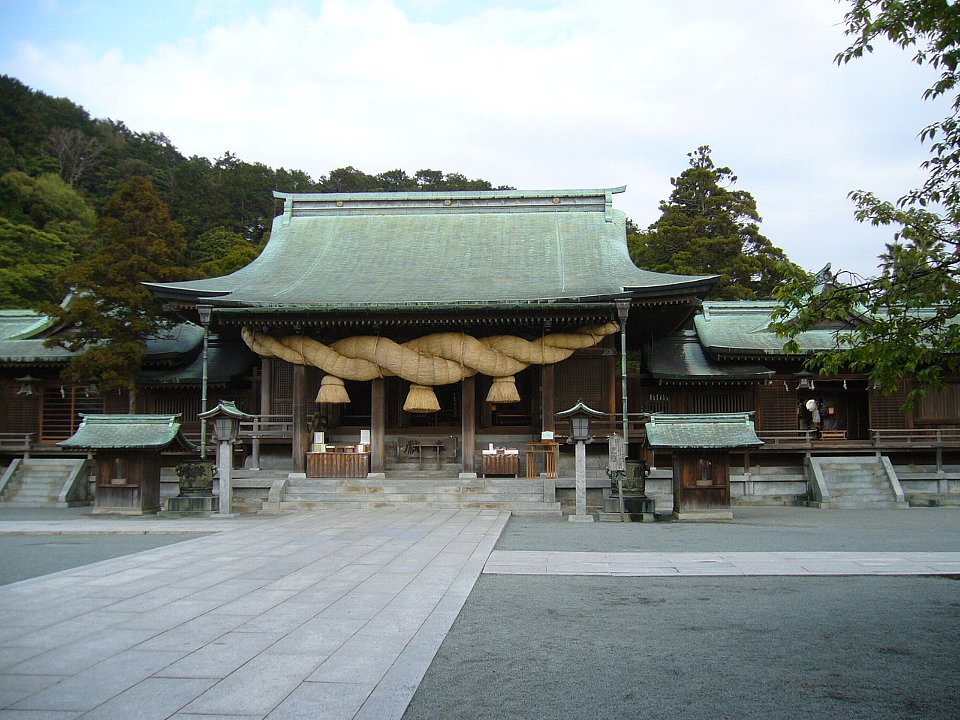
Famous for Japan's largest sacred straw rope and the twice-yearly Path of Light, when the sunset streams straight down its steps.
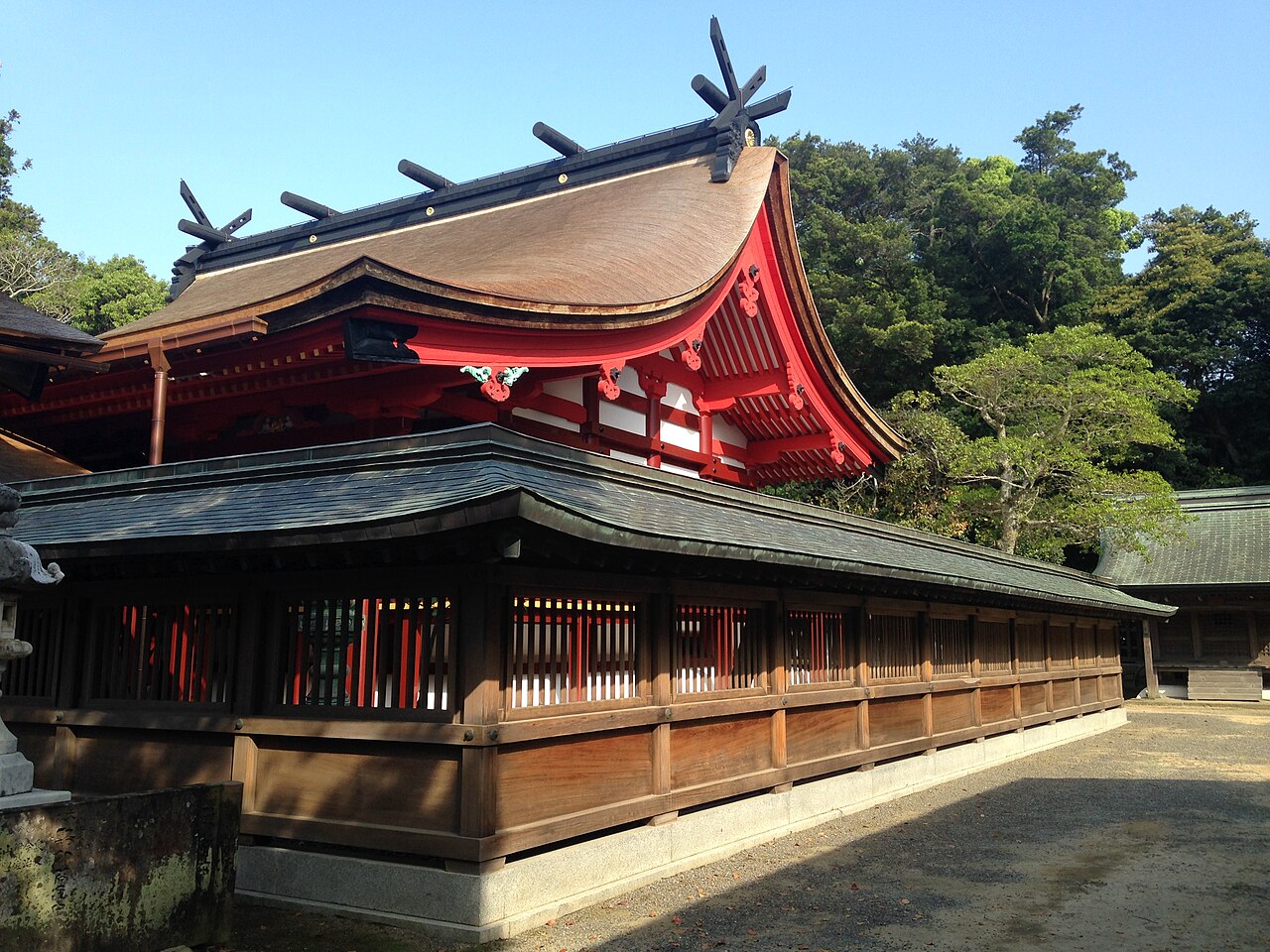
Miyajidake Shrine, in the coastal town of Fukutsu between Fukuoka and Kitakyushu, is one of the most photographed shrines in Kyushu, and for two reasons that could hardly be more different. The first is its sheer physical scale: the shrine is dedicated to the legendary Empress Jingu, credited with a semi-mythical expedition to the Korean peninsula around the fourth century, and it wears superlatives proudly. Its main hall is hung with an enormous shimenawa, the twisted sacred straw rope that marks holy ground, said to be the largest in Japan at some 11 metres long, 2.6 metres in diameter and weighing around three tonnes. Alongside it the shrine boasts a giant taiko drum and a great bronze bell, all on a scale designed to inspire awe.
The second and more magical reason is the Path of Light, or Hikari no Michi. The shrine's main approach is a long, perfectly straight avenue of stone steps that runs downhill in a dead-straight line towards the Genkai Sea. Twice a year, for about a week in late February and again in late October, the setting sun sinks precisely at the far end of this axis, and for a few minutes the entire approach glows as if a river of golden light were flowing down the steps to the ocean. The effect became nationally famous after appearing in a television commercial, and during these weeks the shrine holds evening events and stays open late while crowds gather on the steps to watch. Sunset viewing is by timed entry during the peak periods, so checking the schedule in advance is essential.
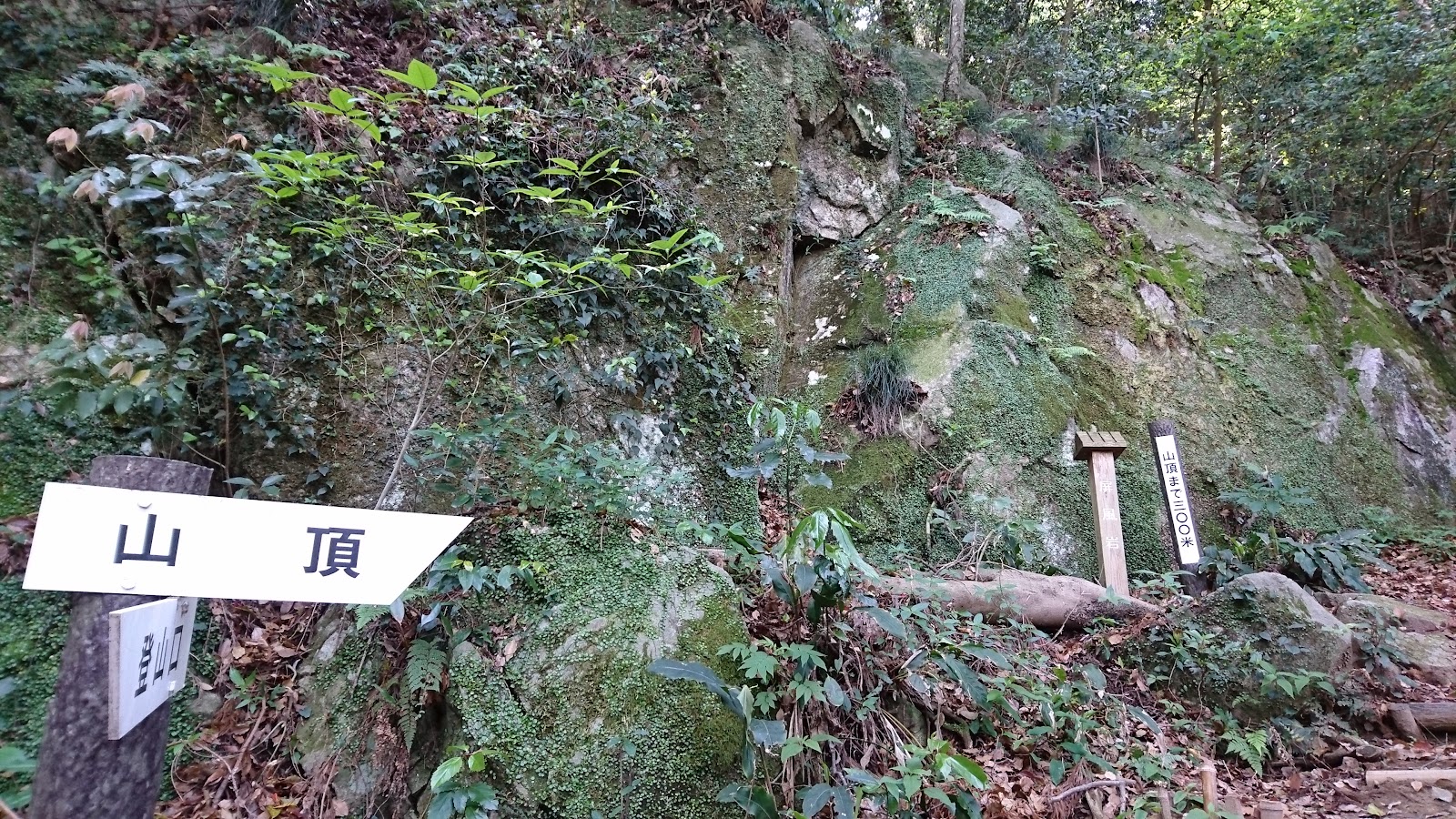
There is more to the shrine than these two headline attractions. Behind the main hall a path leads to the Oku-no-in, a cluster of eight smaller shrines each associated with a particular blessing, and to an ancient burial mound, the Miyajidake Kofun, a rare stone chamber tomb from around the seventh century whose excavation yielded a hoard of gilded and glass treasures now designated National Treasures. In spring the grounds are famous for cherry blossom and later for wisteria and hydrangeas, so there is colour through much of the year. The overall mood is welcoming and lively rather than austere, with tea houses and shops along the approach selling local sweets.
Miyajidake is easy to combine with a coastal day trip north of Fukuoka. Take the JR Kagoshima Main Line to Fukuma Station, from where the shrine is a short bus ride or a walk of around twenty-five minutes, and the journey is covered by the Japan Rail Pass. Allow about an hour for a normal visit, or plan your whole day around sunset if you come during a Path of Light season. Either way you will understand why this cheerful, grand and slightly theatrical shrine has become one of the signature images of the Fukuoka coast.
A local's tip
Time your visit to the two annual Path of Light weeks, when the setting sun aligns perfectly with the shrine's straight approach and appears to pour down the steps to the sea.
Best time to visit
Late February and late October for the Path of Light sunset
Getting there
Take the JR Kagoshima Main Line to Fukuma Station, then a short bus ride or a 25-minute walk to the shrine; it lies between Fukuoka city and Kitakyushu on the coast.
Good to know
- Parking
- Restrooms
Plan the whole trip offline
Miyajidake Shrine is one of many places in the Real Japan app — with turn-by-turn directions, nearby spots and full offline maps you can use with no signal.