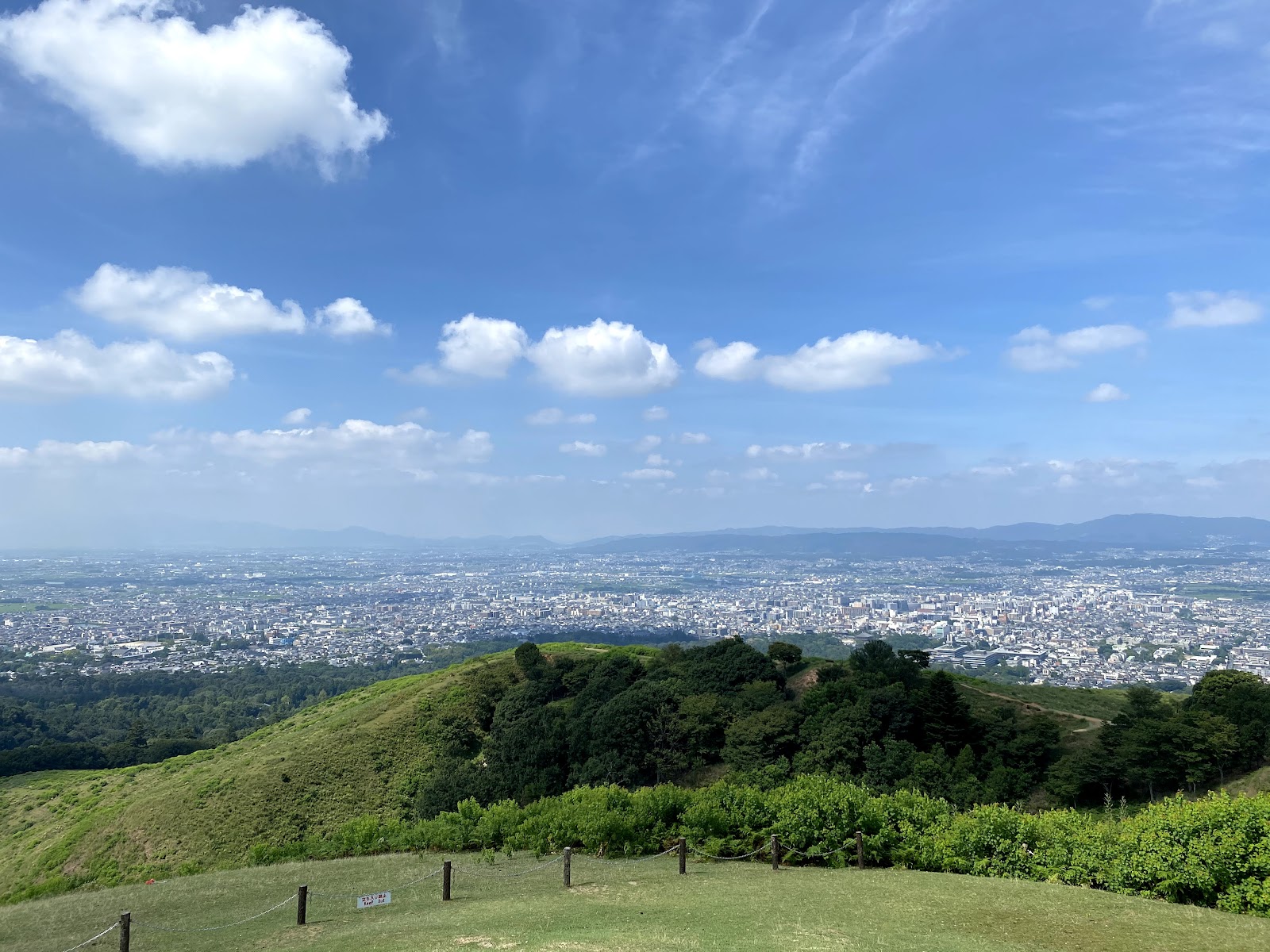
A grassy hill above Nara Park offering sweeping sunset views over the ancient city, and the stage for the famous winter grass-burning festival.
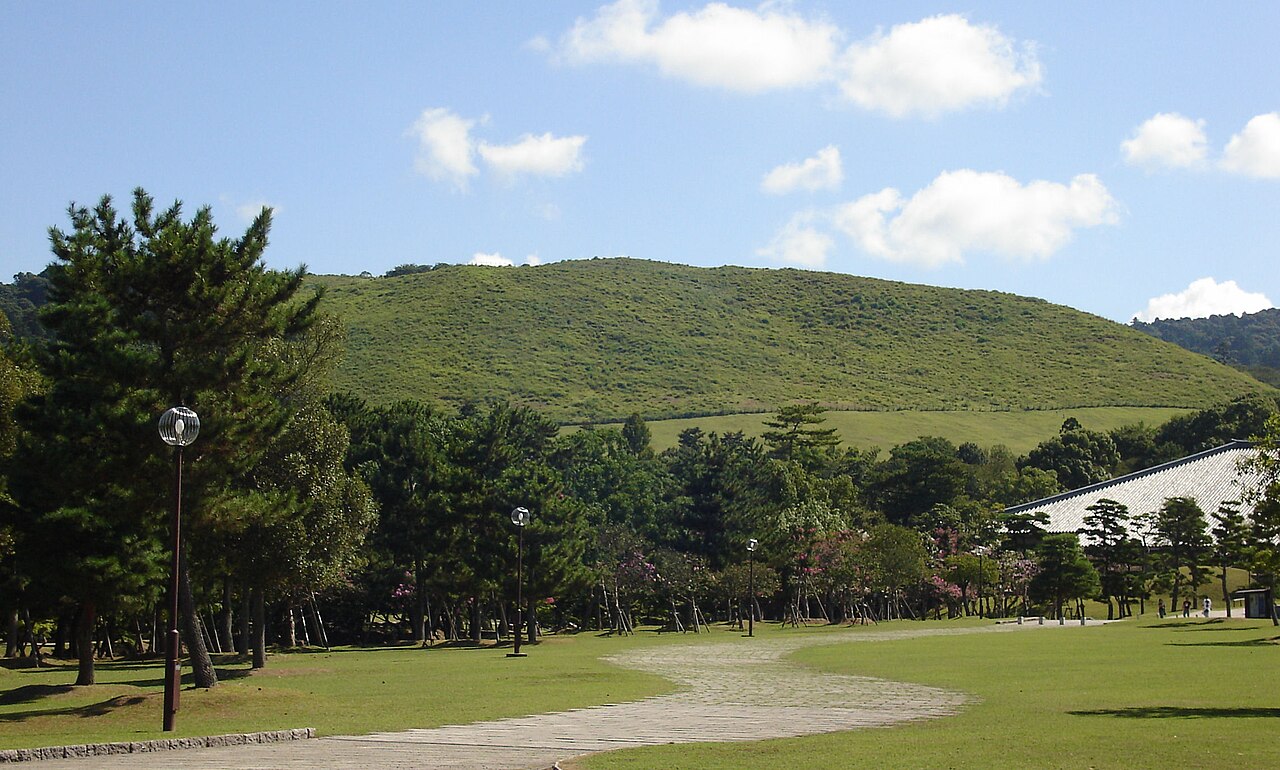
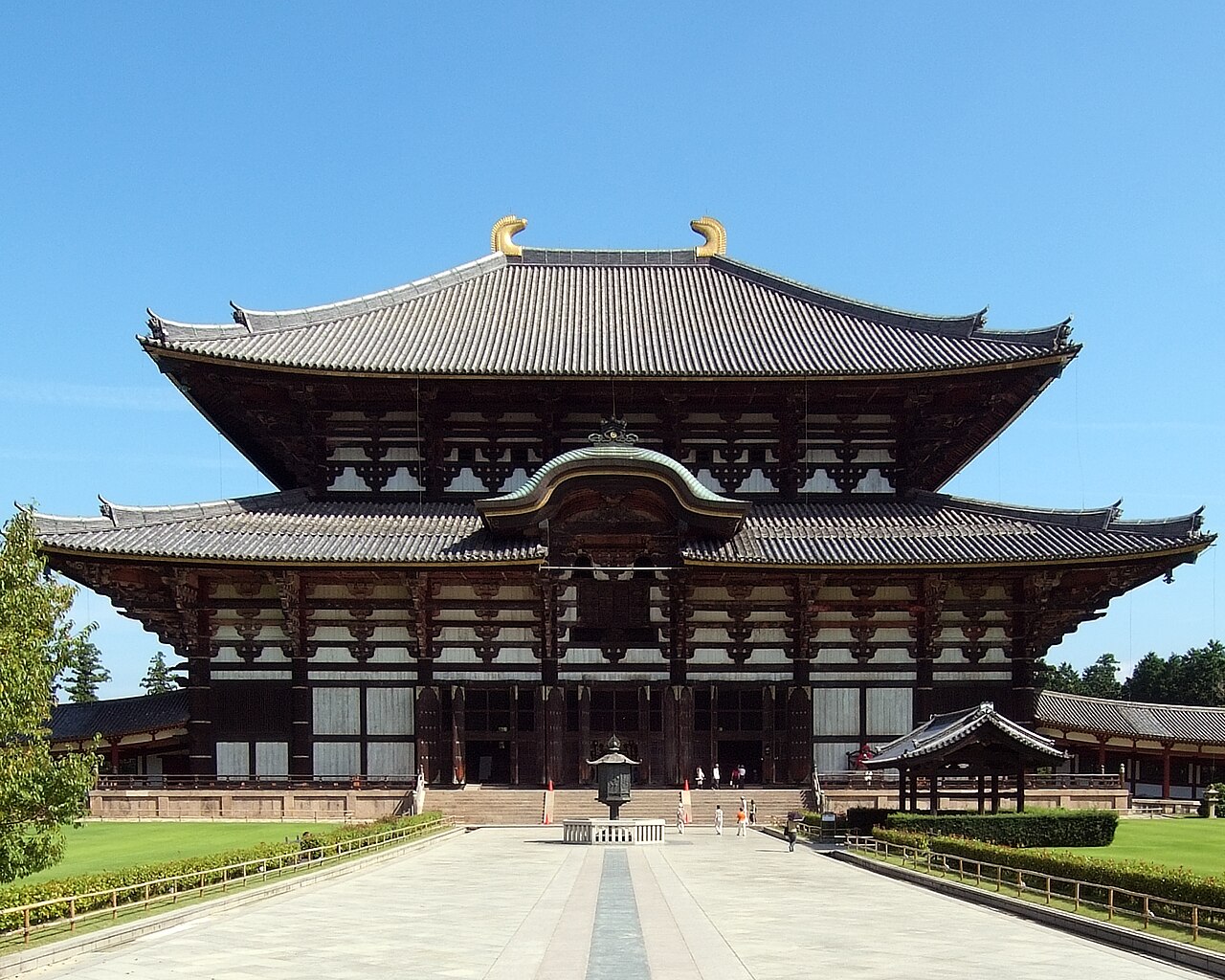
Mount Wakakusa, known in Japanese as Wakakusayama, is the grassy hill that rises directly behind Nara Park, forming a soft green backdrop to Todai-ji and Kasuga Taisha and offering the finest panoramic views over the ancient capital. Unlike Nara's forested peaks, Wakakusa is covered in open turf, its bald, rounded slopes rising in three tiers, and this gives climbers uninterrupted sightlines across the city, the temples below and the wide Yamato plain beyond.
The climb is moderate and richly rewarded. During the open season, from mid-March to early December, a small entrance fee grants access to the trail that switchbacks up the grassy slope. From the first terrace the view already opens up, but those who continue to the higher tiers, and ultimately toward the summit at around 342 metres, are treated to an ever-widening panorama. On clear days the vista stretches across the roofs of Nara, the great hall of Todai-ji, the pagodas of the old city and the distant mountains, and the scene is at its most magical in the late afternoon, when the lowering sun bathes the plain in gold and the city lights begin to twinkle. Sunset here is one of Nara's most memorable experiences.
Adding to the charm are the wild sika deer that wander freely up onto the lower slopes from Nara Park, grazing on the open grass and often approaching visitors. Sitting on the hillside with deer nearby and the ancient city spread below is a quintessential Nara moment, gentle, timeless and quietly moving.
Wakakusa is also the setting for one of Japan's most spectacular annual events, the Yamayaki grass-burning festival, held on a night in late January. On this evening the entire dry hillside is deliberately set alight, and the flames sweep dramatically up the slope while fireworks burst overhead, watched by huge crowds from the city below. The origins of the tradition are tied to old boundary disputes and rituals of renewal, and today it marks the coming of spring with a blaze that is unforgettable to witness. Note that on and around the festival the hill itself is closed to climbers, who instead admire the burning from vantage points in the park.
To reach Mount Wakakusa, walk about thirty to thirty-five minutes from Kintetsu Nara Station through Nara Park, passing Todai-ji on the way, or take a park-bound bus and continue on foot to the base of the hill. Admission during the open season is modest, and the slopes are closed in winter outside the festival. Allow ninety minutes or more to climb, linger over the view and descend, and time your visit for late afternoon to catch the golden light. Comfortable shoes and a little energy are all you need for one of the most beautiful viewpoints in all of Japan.
A local's tip
Climb up in the late afternoon and stay for sunset, when the city and the Yamato plain glow gold, and watch for wild deer grazing on the open slopes around you.
Best time to visit
Late afternoon for sunset; late January for the grass-burning festival
Getting there
From Kintetsu Nara Station walk about 30-35 minutes through Nara Park past Todai-ji, or take a bus toward the park; the grassy hill rises directly behind the temple and shrine area, with a gated trail to the summit.
Good to know
- Deer
- Restrooms
- Panoramic View
Plan the whole trip offline
Mount Wakakusa (Wakakusayama) is one of many places in the Real Japan app — with turn-by-turn directions, nearby spots and full offline maps you can use with no signal.