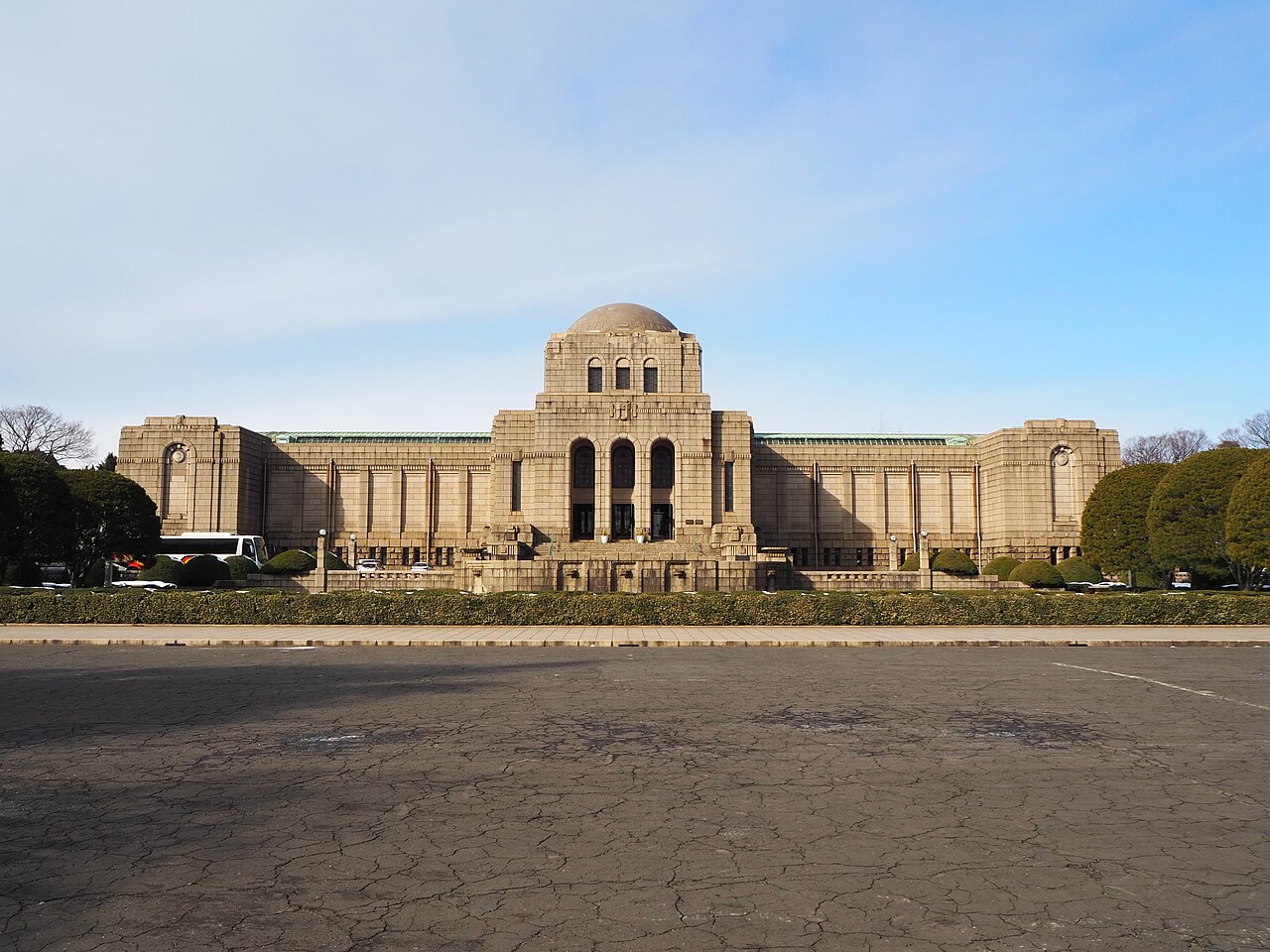
A domed 1926 granite gallery on the Meiji Emperor's funeral site, telling his reign's story in 80 grand murals — reached by Tokyo's iconic golden ginkgo avenue.
The Meiji Memorial Picture Gallery is at once a historic building, an art museum, and a monument to the emperor whose reign transformed Japan from a feudal, isolated country into a modern industrial power. Completed in 1926, it stands in the Meiji Jingu Gaien, the 'outer garden' of Meiji Shrine, on the very site where the funeral of the Meiji Emperor was held in 1912. The gallery was built to commemorate the 'imperial virtues' of that emperor and his consort, Empress Shoken, and to fix the story of the Meiji era in the national memory.
The building itself is a striking piece of early Showa architecture: a symmetrical, granite-clad hall crowned by a central dome, its restrained Western classicism reflecting the same fusion of foreign and native ideas that defined the age it commemorates. It is one of the oldest surviving purpose-built gallery buildings in Japan and is designated an Important Cultural Property.
Inside, the gallery displays a single, remarkable collection: eighty large mural paintings arranged chronologically around the halls, telling the life story of the Meiji Emperor and the sweeping history of his reign from 1852 to 1912. Forty are executed in traditional Japanese nihonga style and forty in Western-style oil painting, mirroring the cultural duality of the era. Painted by leading artists of the day and based on careful historical research, the murals depict pivotal moments of modern Japanese history: the boy emperor's accession, the abolition of the feudal domains, the promulgation of the Meiji Constitution, the opening of the first parliament, and the great wars and diplomatic events that established Japan as a world power. Walking the halls in sequence is like turning the pages of an illustrated national history, and the paintings are a valuable visual record of nineteenth-century dress, ceremony, and architecture.
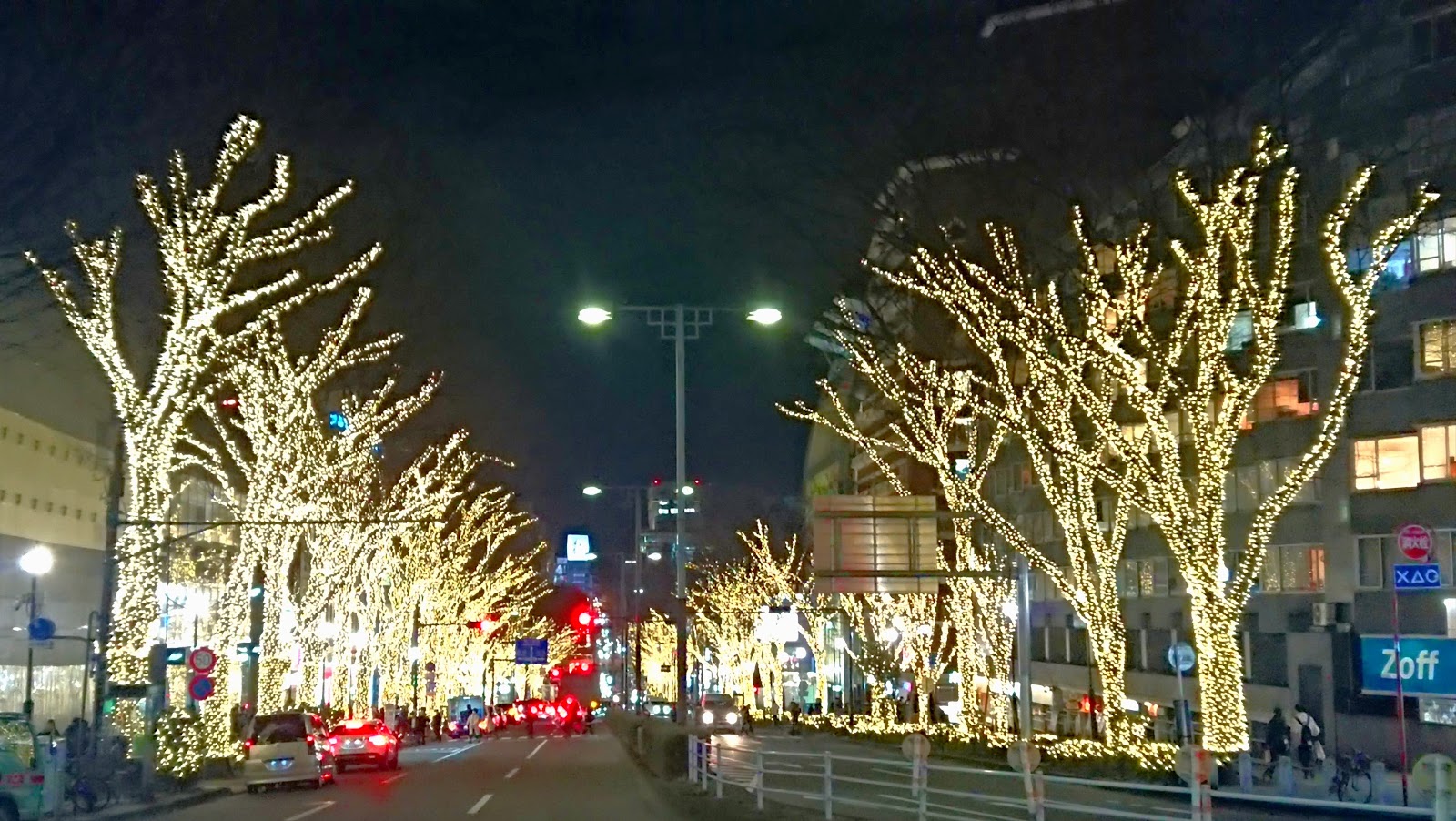
What draws most visitors, however, is the approach. The gallery sits at the head of the Icho Namiki, Tokyo's most celebrated ginkgo avenue: four rows of trees planted in a careful perspective that leads the eye straight to the gallery's dome. In the third week of November the avenue erupts into a tunnel of brilliant gold, carpeting the path with fallen leaves, and crowds gather for one of the capital's signature autumn scenes. The gallery's pale dome, framed at the end of the golden corridor, completes the picture.
Visiting is straightforward and affordable, with a modest entry fee. The building is largely accessible on the ground floor, and the murals can be viewed at a gentle, contemplative pace in about an hour. Photography inside is generally restricted, so this is a place to look rather than shoot — save the camera for the ginkgo avenue outside.
Come in late November to combine the murals with the golden trees, though the gallery rewards a visit in any season for anyone interested in how modern Japan tells its own origin story. It is an eight-minute walk from JR Shinanomachi Station or about ten minutes from Gaiemmae on the Ginza Line, set within the spacious sports-and-greenery precinct of the Meiji Jingu Gaien.
A local's tip
Time your visit for the third week of November, when the ginkgo avenue (Icho Namiki) leading toward the gallery turns brilliant gold — one of Tokyo's most famous autumn views, with the gallery's dome as its backdrop.
Best time to visit
Late November for the golden ginkgo avenue leading to the gallery
Getting there
An 8-minute walk from JR Shinanomachi Station, or about 10 minutes from Gaiemmae Station on the Ginza Line through the Meiji Jingu Gaien park.
Good to know
- Shop
- Restrooms
Plan the whole trip offline
Meiji Memorial Picture Gallery (Seitoku Kinen Kaigakan) is one of many places in the Real Japan app — with turn-by-turn directions, nearby spots and full offline maps you can use with no signal.