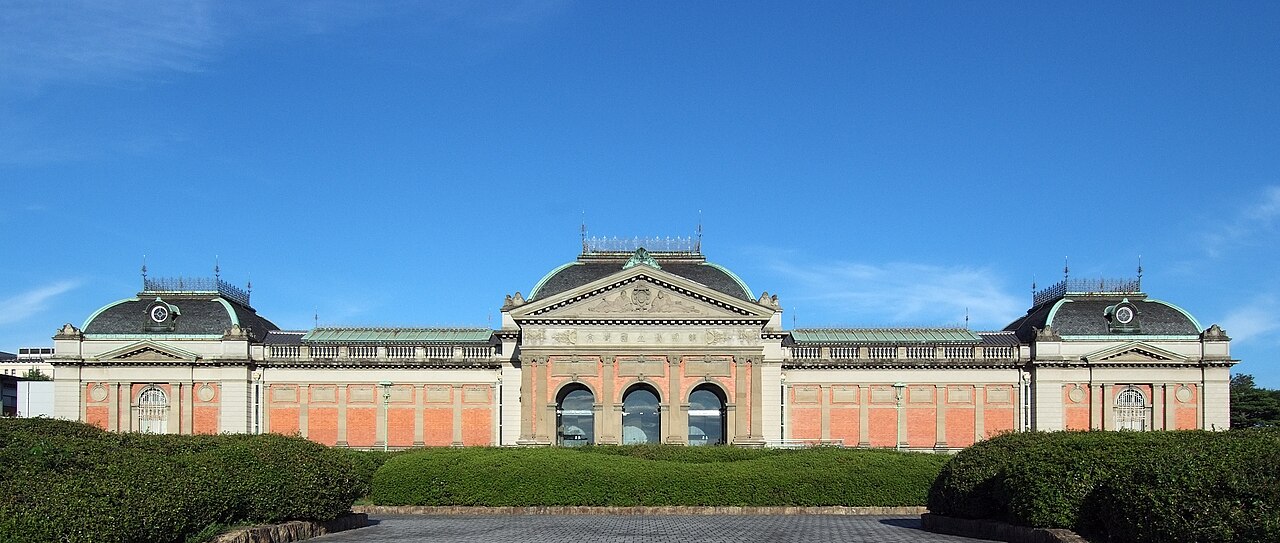
Kyoto's premier art museum, home to national treasures of Japanese and Asian art in the Higashiyama temple district.
The Kyoto National Museum is one of Japan's four great national museums and the guardian of the old capital's artistic soul. Founded in 1897 as the Imperial Museum of Kyoto, it was created to protect the paintings, sculptures, textiles and ceramics streaming out of the region's temples and shrines during the upheavals of the Meiji era, when centuries-old institutions were suddenly stripped of their patronage. Today its collection numbers well over ten thousand objects, including dozens of registered National Treasures and Important Cultural Properties.
The grounds are a study in contrasts. Facing Higashiyama-dori stands the original 1895 Meiji Kotokan, a stately French Renaissance-style brick hall designed by court architect Tokuma Katayama, now itself an Important Cultural Property and used for special events. Behind it rises the sleek Heisei Chishinkan, opened in 2014 to a design by Yoshio Taniguchi, the architect of New York's MoMA expansion. Its cool grey stone, reflecting pools and floor-to-ceiling glass create one of the most serene gallery experiences in Japan.
Inside, the collection sweeps across Buddhist sculpture, medieval ink painting, gorgeous Momoyama-era gilded screens, lacquerware, Kyo-yaki ceramics, calligraphy and archaeological finds. Highlights that rotate through the galleries include works attributed to the great screen painters of the Kano and Rinpa schools and important Buddhist statuary borrowed from nearby temples. Because much of the display is drawn from Kyoto's own religious institutions, a visit here doubles as a decoder ring for the temples you will see across the city.
A quiet pleasure most visitors miss is the outdoor sculpture garden and the pieces scattered around the fountain court, including a cast of Rodin's The Thinker. In autumn the maples along the museum's edges turn a deep crimson, and the whole compound takes on the hushed, golden quality that Kyoto is famous for.
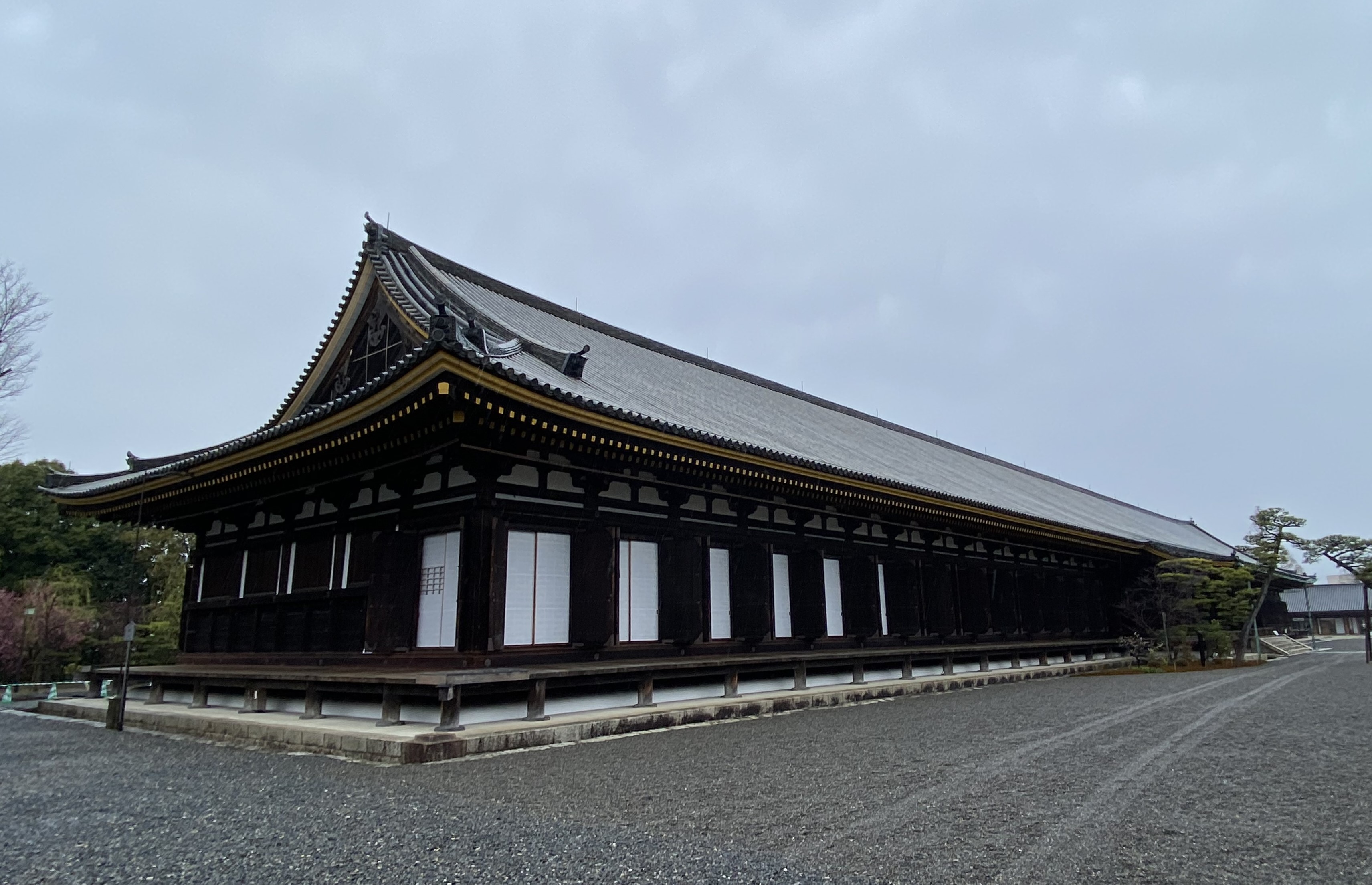
The museum sits in the heart of the Higashiyama museum-and-temple belt, directly across the street from Sanjusangen-do with its 1,001 Kannon statues, and within an easy walk of Kiyomizu-dera and the Chishaku-in temple gardens, so it slots neatly into a cultural day on the eastern side of the city. Give yourself at least two hours; special exhibitions, which the museum stages several times a year and which often draw national attention, can easily fill a half-day on their own.
Getting there is straightforward. From Kyoto Station, city buses 206 and 208 reach the Hakubutsukan-Sanjusangendo-mae stop in about ten minutes, or you can ride the Keihan Main Line to Shichijo Station and stroll seven minutes east. The permanent collection gallery costs around 700 yen, while special exhibitions are ticketed separately. The museum is closed on Mondays (or the following weekday when Monday is a holiday) and over the New Year period, so plan around that.
A local's tip
Skip the crowded special-exhibition queues and head straight to the permanent Heisei Chishinkan wing, whose calm, top-lit galleries are almost always quiet.
Best time to visit
Weekday mornings; autumn for the garden
Getting there
From Kyoto Station take city bus 206 or 208 to Hakubutsukan-Sanjusangendo-mae (about 10 minutes), or ride the Keihan Line to Shichijo Station and walk 7 minutes east.
Good to know
- Cafe
- Wi-Fi
- Restrooms
- Museum Shop
Plan the whole trip offline
Kyoto National Museum is one of many places in the Real Japan app — with turn-by-turn directions, nearby spots and full offline maps you can use with no signal.