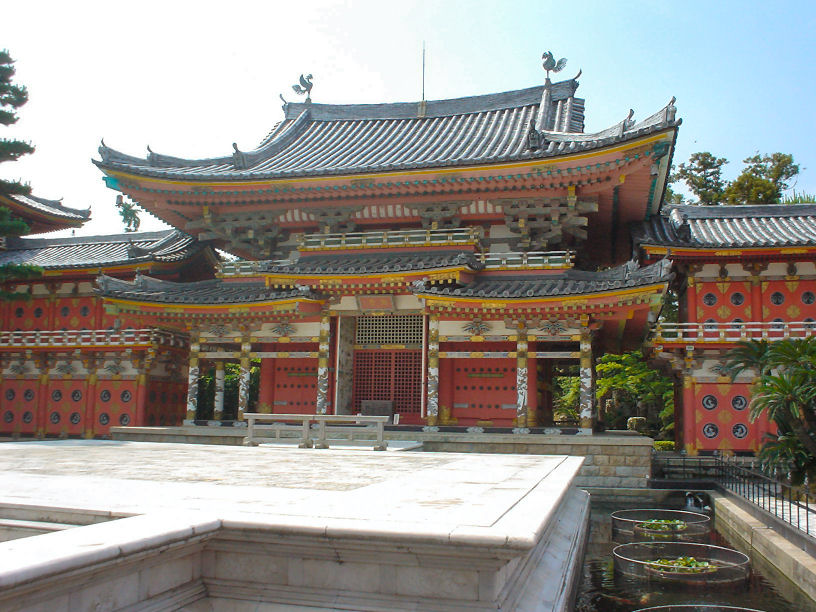
A flamboyant 20th-century temple of gilded replicas and a hilltop of white Carrara marble on Ikuchijima island.
Kosan-ji is like no other temple in Japan: a dazzling, deliberately over-the-top complex on the island of Ikuchijima in the Seto Inland Sea, where gilded and gaudily painted replicas of the country's most famous religious buildings stand cheek by jowl, crowned by a surreal hilltop carved entirely from gleaming white Italian marble. Part temple, part theme park, part act of filial devotion, it is one of the most memorable and photogenic stops on the Shimanami Kaido island-hopping route.
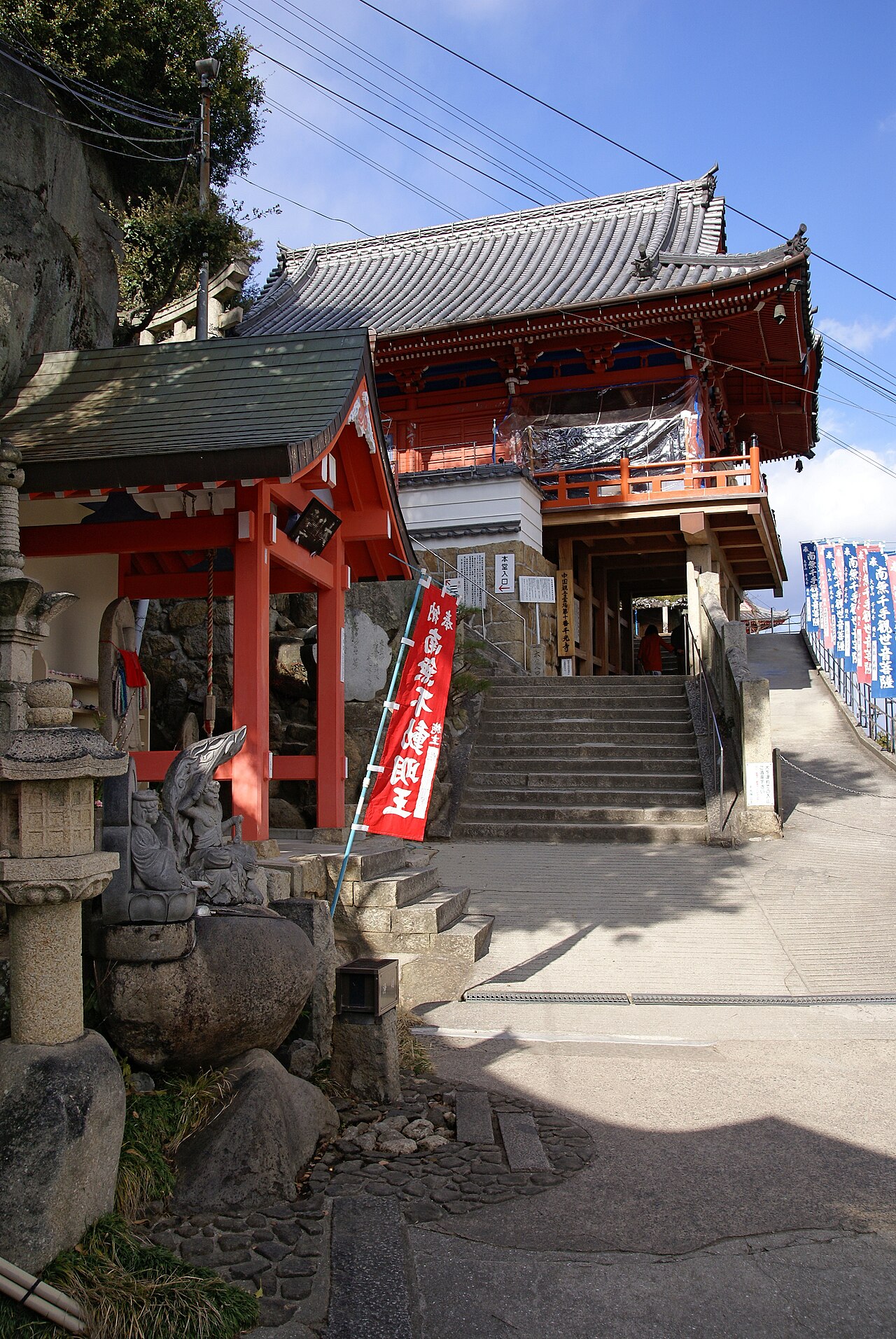
The temple was founded in 1936 by Kozo Kanamoto, a wealthy steel-tube industrialist who, grief-stricken after his mother's death, became a Jodo Shinshu priest under the name Kosanji and devoted his fortune to building this shrine to her memory. Over some thirty years he commissioned lavish reproductions of celebrated structures from across Japan: the main gate echoes the Yomeimon of Nikko's Toshogu, and there are versions of halls and pagodas inspired by Kyoto, Nara and beyond, executed in brilliant colour and gold leaf. The effect is unabashedly spectacular, a whole anthology of Japanese religious architecture gathered on one island hillside.
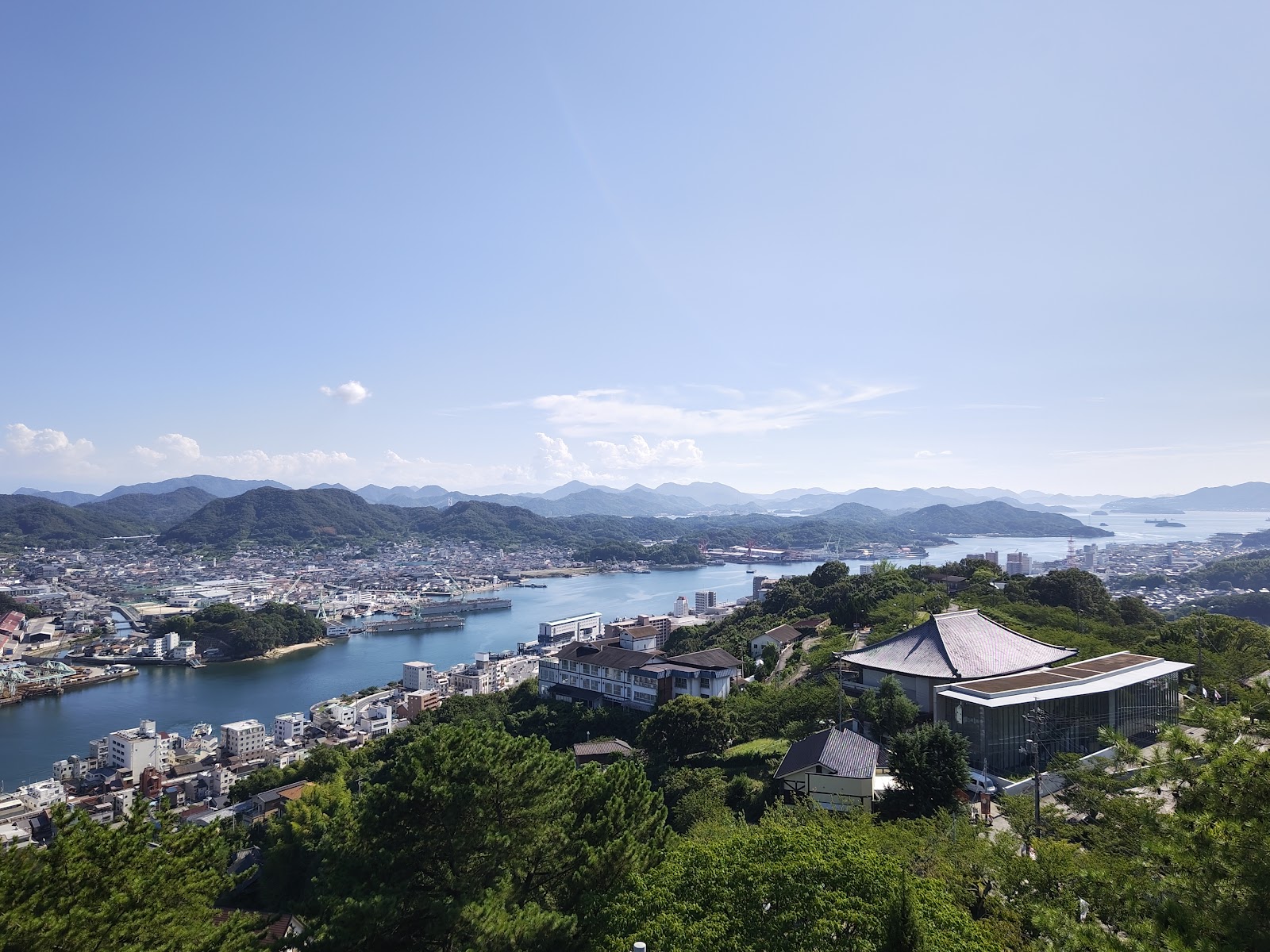
Beneath the temple runs the Jigoku (Hell) Cave, a winding tunnel of vivid, sometimes lurid depictions of the Buddhist underworld and its torments, leading through to a serene statue of Kannon, a journey from suffering to salvation designed to make you reflect. The complex also holds a museum of Buddhist art and Kanamoto's collections. But the true showstopper is above: the Miraishin no Oka, or 'Hill of Hope', a sprawling summit terrace of around 5,000 square metres sculpted from dazzling white Carrara marble by the artist Kuetani Itto over more than a decade. Its abstract forms, arches and viewing platforms, blindingly bright against the blue sea and sky, feel more like a Mediterranean art installation than a Japanese temple, and reward visitors with wonderful views over the Inland Sea. A cafe up here lets you linger over the panorama.
While purists sometimes raise an eyebrow at its exuberance, Kosan-ji is genuinely beloved for its sincerity, craftsmanship and sheer joyful spectacle, and it makes a brilliant counterpoint to the austere, ancient temples elsewhere in Hiroshima Prefecture. Families enjoy it, photographers adore the marble hill, and the surrounding town of Setoda, with its gelato, lemon groves and the nearby Kosanji Museum and Ikuo Hirayama art museum, makes for a lovely half-day on the island. There is an admission fee, which supports the upkeep of this extraordinary place.
Getting there is an adventure in itself. Ikuchijima lies along the Shimanami Kaido, the famous cycling and driving route that leaps between islands from Onomichi to Shikoku. From Onomichi you can reach Setoda by ferry or bus, or approach from the Shinkansen stop at Mihara; cyclists often roll up mid-ride. Note that these island connections are not covered by the Japan Rail Pass. Allow at least ninety minutes to take in the halls, the Hell cave, the museum and the marble summit, and longer if you want to explore Setoda's laid-back seaside streets.
A local's tip
Do not stop at the golden halls; climb behind them to the Miraishin no Oka, a vast hilltop sculpted entirely from dazzling white Carrara marble, with sea views and a cafe, one of the most surreal photo spots in Japan.
Best time to visit
Any clear day; spring for colour
Getting there
Kosan-ji is on Ikuchijima island along the Shimanami Kaido. From Onomichi take a ferry or bus to Setoda; from the Shinkansen at Mihara, buses and ferries also serve the island. The temple is a short walk from Setoda port.
Good to know
- Cafe
- Museum
- Restrooms
Plan the whole trip offline
Kosan-ji Temple is one of many places in the Real Japan app — with turn-by-turn directions, nearby spots and full offline maps you can use with no signal.