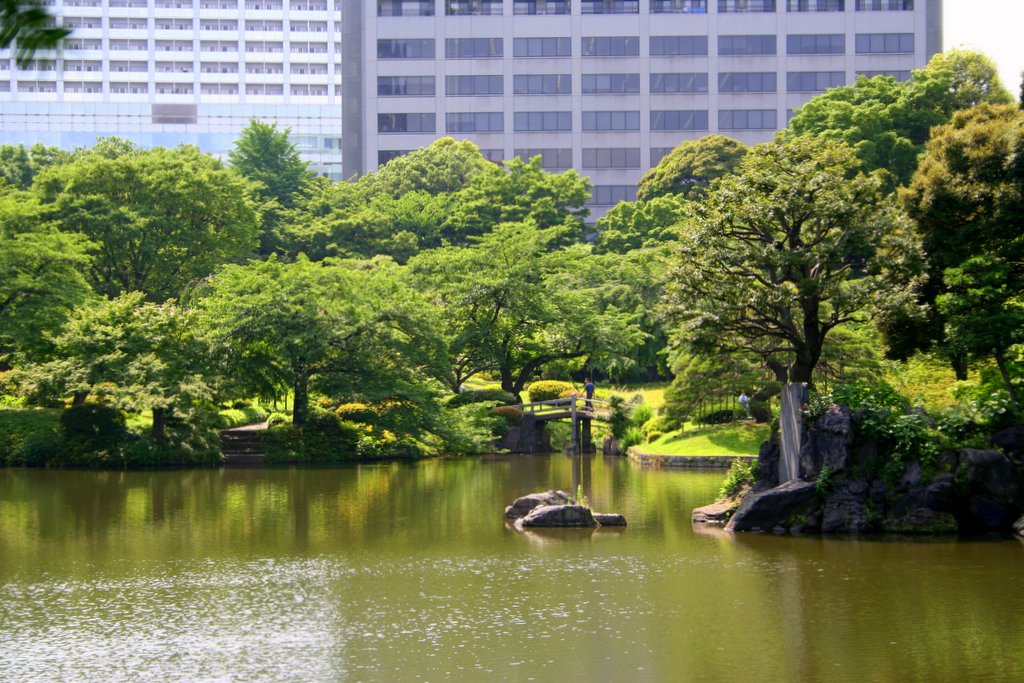
One of Tokyo's oldest and finest daimyo gardens, recreating famous Chinese and Japanese scenes beside Tokyo Dome.
Koishikawa Korakuen is the oldest surviving landscape garden in central Tokyo and, together with Rikugi-en, one of the two most important. Begun in 1629 by Tokugawa Yorifusa, lord of the Mito branch of the ruling family, and completed by his son Mitsukuni, it is a Special Place of Scenic Beauty and Special Historic Site—one of only a handful of gardens in Japan to hold both designations. That its manicured hills and mirror-still ponds survive at all, wedged against the roaring stands of Tokyo Dome, feels almost miraculous.
The garden's name comes from a line of Chinese verse urging a ruler to "grieve before the people and take pleasure after" (koraku), reflecting the Confucian ideals of its scholarly creators. Mitsukuni was advised by a refugee Chinese scholar, Zhu Shunshui, and the garden accordingly blends Japanese and Chinese aesthetics. Miniature reproductions of celebrated scenery appear throughout: a small Mount Rozan, a Kiso River, a rice paddy still planted each year, and above all the graceful arched Full Moon Bridge, whose reflection completes a full circle in the water below.
A large central pond, meant to evoke Japan's Lake Biwa, anchors the design, with wooded hills, stone lanterns, and a vivid vermilion Chinese-style bridge, the Tsutenkyo, spanning a maple-filled ravine. Paths wind past plum groves, iris beds, azaleas, and cherry trees so that some part of the garden is in bloom through most of the year. The plum grove in late February and the maples in late November are the two great highlights, drawing photographers to the same corners each season.
Visiting Koishikawa Korakuen is a study in contrasts: step through the gate and the modern city recedes behind a screen of trees, yet a roller-coaster on the neighbouring amusement park occasionally arcs into view above the treetops, a reminder of exactly where you are. The grounds are broad and the paths mostly level gravel, with a rest house and restrooms near the entrance and clear English signage explaining each recreated scene. A few hillside sections have steps, but the main loop is gentle and accessible.
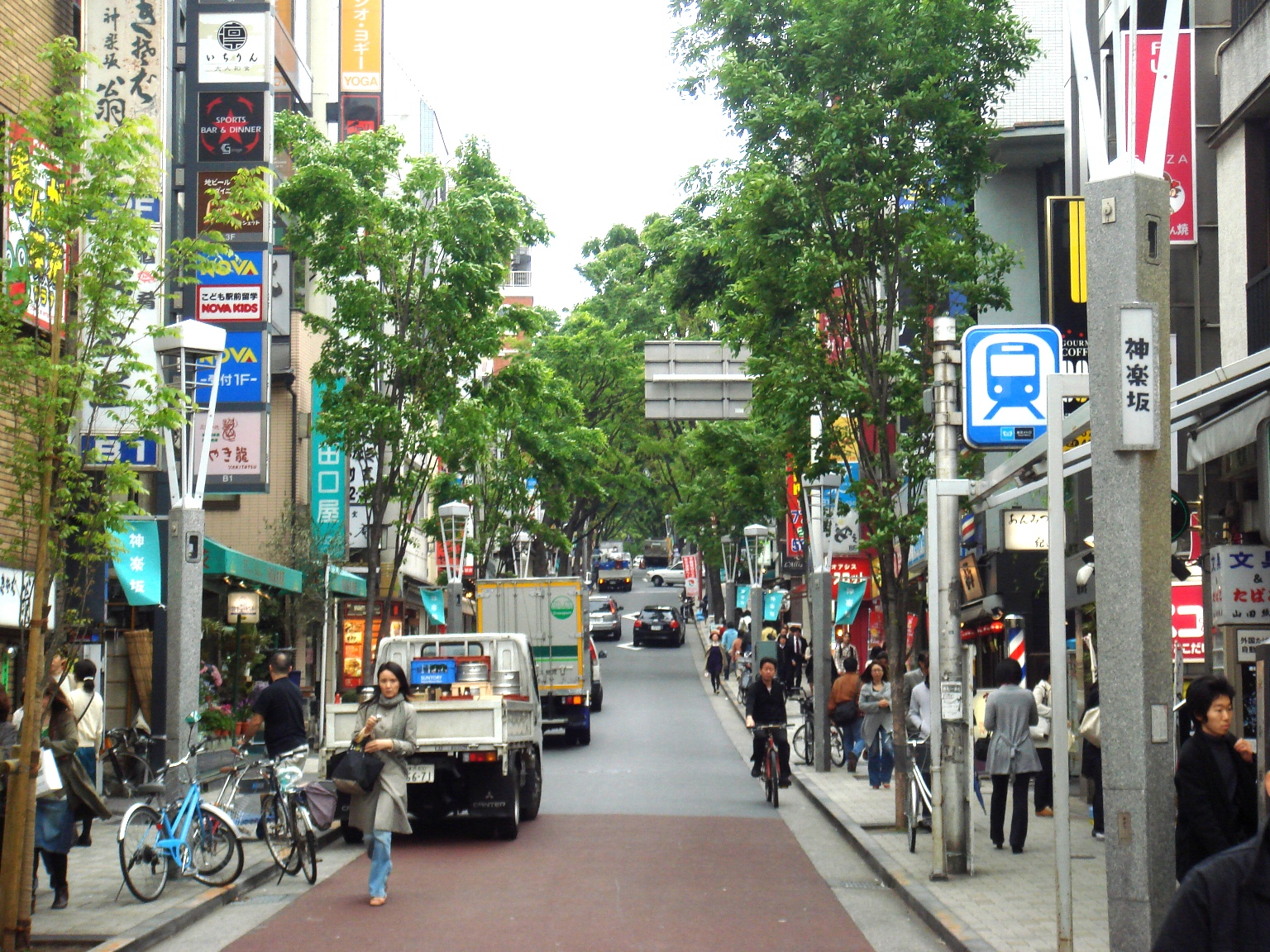
The garden is at its best on a weekday morning soon after opening, when the light is soft and the reflections in the ponds are undisturbed. Autumn afternoons are spectacular but busy. To reach it, take any of several lines to Iidabashi Station and walk about eight minutes, or come from Korakuen Station past Tokyo Dome. Because it sits so centrally, it combines easily with a visit to the Tokyo Dome complex or a walk east toward Kagurazaka's atmospheric backstreets, making it one of the most convenient introductions to Japan's classical garden art in the entire city. For all its refinement, the garden remains warmly alive: herons stalk the shallows, turtles bask on the rocks, and each June the iris beds and the working rice paddy—still planted and harvested by local schoolchildren in a centuries-old tradition—remind visitors that this was always meant to be a living landscape rather than a museum piece.
A local's tip
Enter early and walk the far western path first: the Full Moon Bridge (Engetsukyo) reflects into the water to form a perfect circle, and morning light before the tour groups arrive is when that reflection is cleanest.
Best time to visit
Late February for plum blossom; late November for autumn colour
Getting there
From Iidabashi Station (JR Chuo-Sobu, Namboku, Yurakucho, Tozai or Oedo lines) the garden entrance is about an 8-minute walk. From Korakuen Station (Marunouchi and Namboku lines) it is a similar distance past Tokyo Dome.
Good to know
- Restrooms
- Rest house
- Wheelchair
Plan the whole trip offline
Koishikawa Korakuen Garden is one of many places in the Real Japan app — with turn-by-turn directions, nearby spots and full offline maps you can use with no signal.