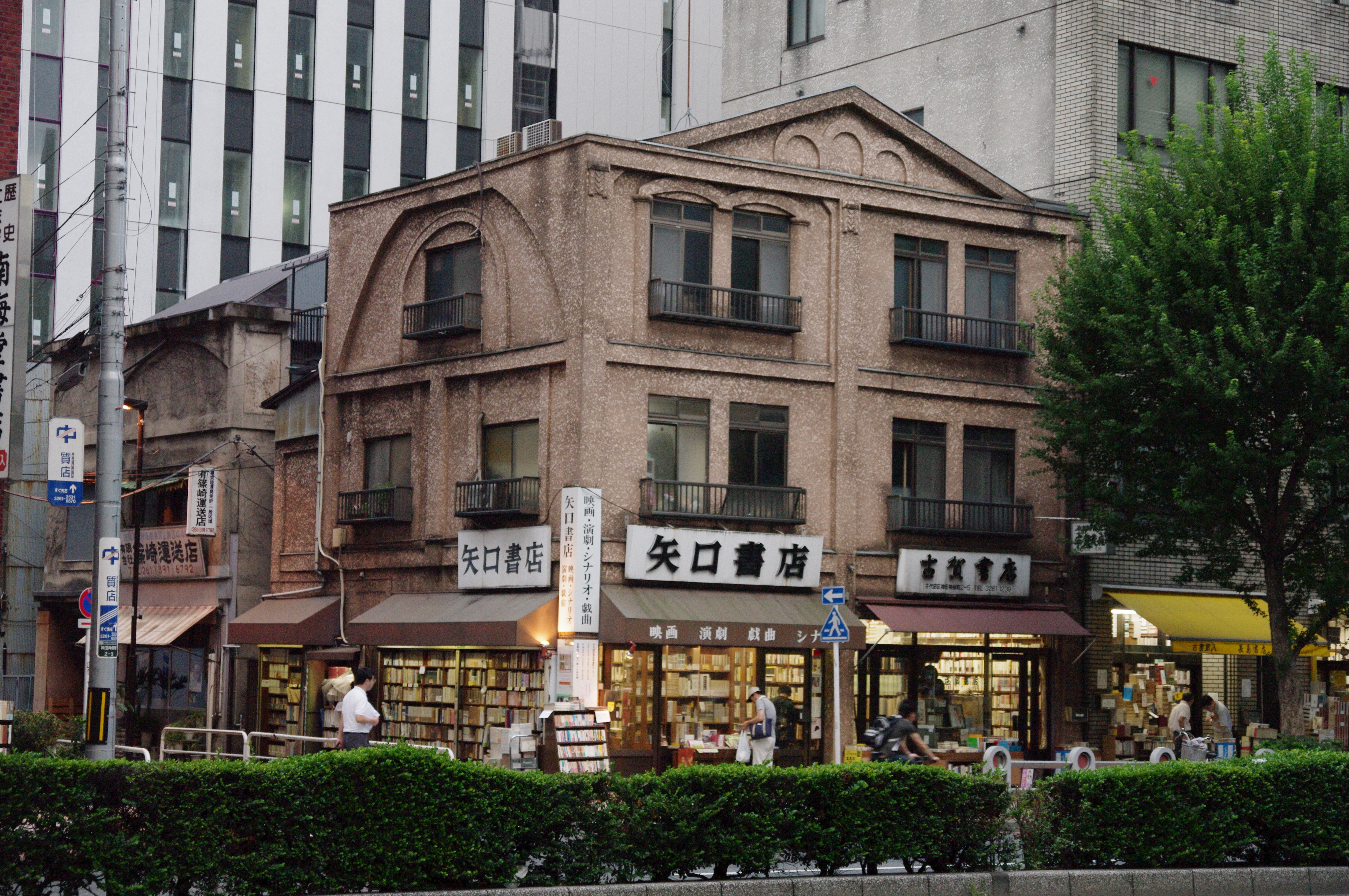
The world's largest concentration of used and antiquarian bookshops, plus a legendary cluster of curry houses.
Jimbocho (also spelled Jinbocho) is Tokyo's book town, home to what is widely regarded as the largest concentration of second-hand and antiquarian bookshops anywhere in the world. Roughly 130 to 180 booksellers cluster within a few blocks around the intersection of Yasukuni-dori and Hakusan-dori, their shelves and pavement bargain bins overflowing with everything from crumbling Edo-period woodblock books and pre-war first editions to vintage manga, ukiyo-e prints, film posters, and foreign-language rarities. For bibliophiles it is nothing short of a pilgrimage site.
The district grew up alongside the universities that surround it, Meiji, Nihon, and others, in the late nineteenth century, when the concentration of students and academics created a natural market for used textbooks and scholarly works. Devastating fires and the growth of the publishing trade shaped it further, and Jimbocho became the heart of Japan's book industry; several major publishing houses still have their headquarters nearby. A charming piece of local lore explains the district's layout: because ultraviolet light damages paper, most of the antiquarian shops deliberately face north, lining the shaded side of Yasukuni-dori so the sun never falls directly on their stock. Browse that side and you will find the best-preserved treasures.
Beyond books, Jimbocho is famous for two other things. The first is curry: the district has an extraordinary density of curry restaurants, a tradition tied to the student population, and 'Jimbocho curry' is a genuine culinary draw, with beloved old shops serving rich, European-style Japanese curry to loyal queues. The second is its old-school cafe culture, atmospheric kissaten where writers and editors have nursed coffee and manuscripts for generations, several of them Showa-era institutions with dark wood interiors and a hush that suits the neighbourhood perfectly.
A highlight for many is the annual Kanda used-book festival each autumn, when the sidewalks vanish under kilometres of book stalls and the whole district turns into an open-air library. But even on an ordinary weekday the pleasure is real: browsing shop after shop, discovering a shelf of vintage travel posters or a beautifully bound century-old volume you did not know you wanted, then retiring to a curry house or kissaten to recover.
Accessibility is easy. The area is flat, the shops sit shoulder to shoulder along a couple of main streets, and everything is within a short walk of the station. There is no admission; browsing is free, and many shops keep affordable bargain bins out front.
The best time to visit is daytime, ideally a weekday, since many of the traditional booksellers close by 18:00 and some shut on Sundays. Autumn is especially rewarding if your trip coincides with the book festival.
Getting there is simple. Jimbocho Station sits directly beneath the district and is served by three subway lines, the Toei Mita, Toei Shinjuku, and Tokyo Metro Hanzomon; exit A7 opens straight onto the main bookshop stretch of Yasukuni-dori. Note the station is on the subway rather than the JR network.
A local's tip
Most of the antiquarian shops line the north side of Yasukuni-dori because their owners angled the storefronts away from the sun to protect the books; browse that shaded side for the best-preserved stock.
Best time to visit
Daytime; most shops close by early evening
Getting there
Jimbocho Station is served by three subway lines (Mita, Shinjuku and Hanzomon); exit A7 opens onto the main bookshop street, Yasukuni-dori.
Good to know
- Wi-Fi
- Cashless
- Restrooms
Plan the whole trip offline
Jimbocho Book Town is one of many places in the Real Japan app — with turn-by-turn directions, nearby spots and full offline maps you can use with no signal.