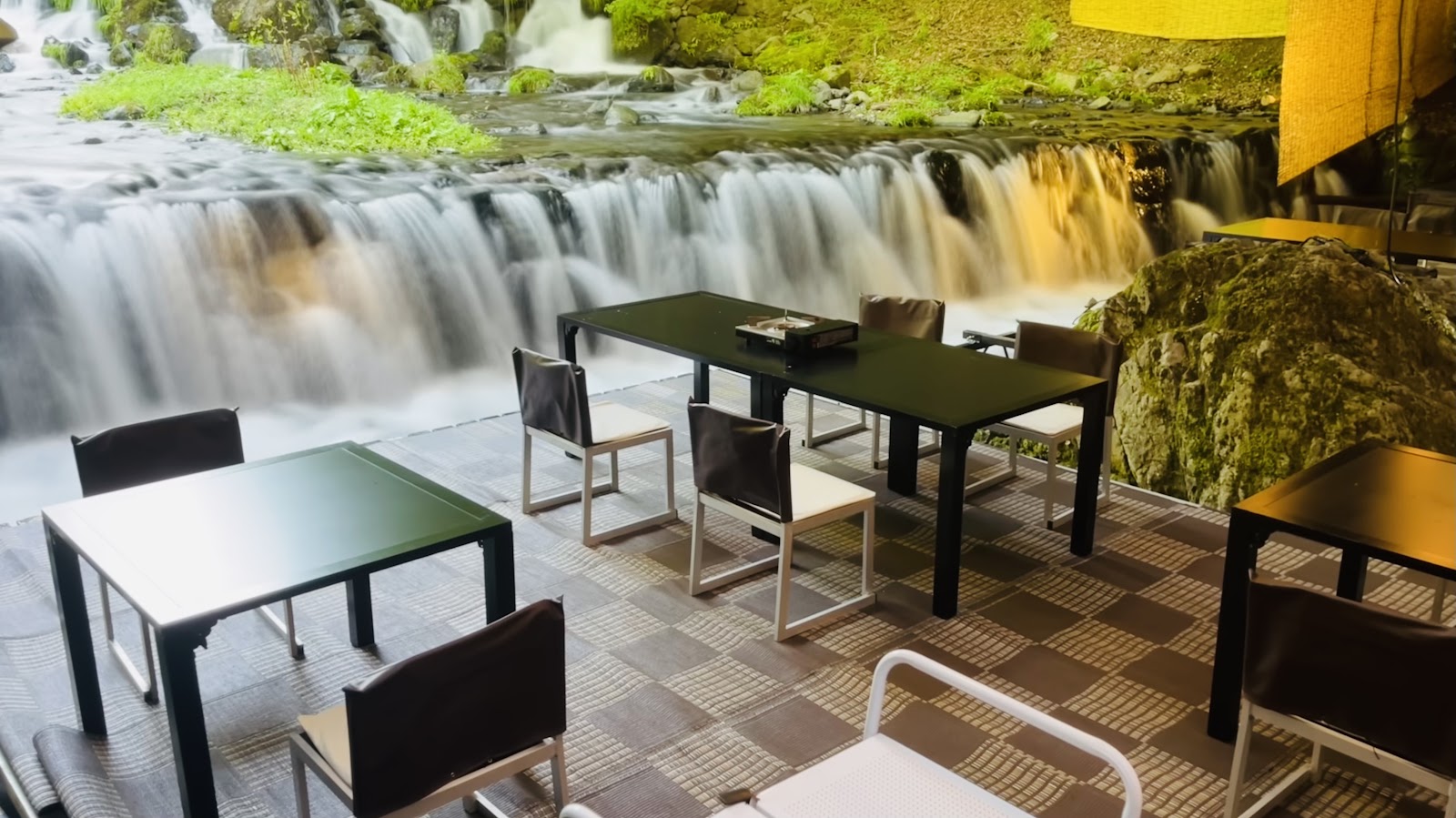
Summer dining on platforms suspended over a cool mountain river in Kibune, north of Kyoto.
Kibune is a tiny mountain village tucked into a forested valley in the far north of Kyoto, strung along a rushing stream and centred on the ancient Kifune Shrine, guardian of water. In the hot months it becomes the setting for one of Japan's most magical dining traditions: kawadoko, in which restaurants build wooden platforms directly over the river so that guests eat suspended above the cool, tumbling water.
The practice, sometimes called kawayuka or noryo-yuka, exists because of Kibune's microclimate. The narrow, tree-shaded valley and the constant flow of the mountain stream keep the air markedly cooler than the sweltering city below — often by around ten degrees Celsius — offering natural relief in a Kyoto summer famous for its heat and humidity. From roughly May through September, the ryokan and restaurants lining the single village road extend their dining rooms out over the water on stilted platforms, and the sound of the river becomes the soundtrack to lunch and dinner.
The food is as much a part of the experience as the setting. Most establishments serve multi-course kaiseki or nagashi-somen and seasonal river cuisine — delicate seasonal vegetables, sweetfish (ayu) grilled over charcoal, chilled somen noodles, tofu and mountain fare — presented with the care Kyoto cooking is known for. Some venues offer the playful nagashi-somen, where noodles are sent sliding down a bamboo flume of cold water for diners to catch with chopsticks. Meals run from more affordable set lunches to lavish evening courses, and because tables are limited and demand is high, reservations are strongly advised, often well in advance.
The atmosphere is unforgettable: green light filtering through maples, spray drifting up from the rapids, lanterns glowing as evening falls, and the ever-present rush of clear water just beneath your feet. It is a rare chance to dine literally within nature, and it draws Kyotoites and travellers alike as a cherished summer ritual. Outside the kawadoko season the village is quieter but still beautiful — fresh green in spring, and famous fiery maple colour in autumn, when the surrounding slopes and the walk up to Kurama-dera blaze red and gold.
A visit takes a little effort, which is part of its charm. From central Kyoto, ride to Demachiyanagi and take the scenic Eizan Kurama line to Kibuneguchi, then continue by short bus or a pleasant thirty-minute walk uphill along the river to the village. The valley road is gentle but the platforms and older buildings involve some steps, so it is less suited to those needing full step-free access. Summer is the definitive time to come for kawadoko, but autumn rewards leaf-peepers, and many combine Kibune with a hike over the ridge to the mountain temple of Kurama-dera and the hot-spring baths of Kurama Onsen, making a superb day trip into the cool green hills above Kyoto.
A local's tip
Reserve a kawadoko lunch in high summer — you dine on a platform built right over the rushing Kibune River, where the air can be 10°C cooler than central Kyoto.
Best time to visit
Summer (May–September), when riverbed dining platforms operate
Getting there
From Kyoto's Demachiyanagi Station take the Eizan Kurama line to Kibuneguchi, then a short bus or 30-minute walk uphill along the river to Kibune village.
Good to know
- Restrooms
- Reservations
Plan the whole trip offline
Kibune Kawadoko Dining is one of many places in the Real Japan app — with turn-by-turn directions, nearby spots and full offline maps you can use with no signal.