A short volcanic gorge on the Daiya River lined with a haunting row of about 70 red-capped Jizo statues.
Kanmangafuchi Abyss is a small, atmospheric gorge carved into the Daiya River just a short walk from the great shrines of central Nikko. It was created around 7,000 years ago by a lava flow from Mount Nantai, whose hardened rock the river has since cut and shaped into churning green pools, jagged black boulders and rushing rapids. Only a few hundred metres long, it is easily explored on a quiet riverside path shaded by maples and pines - a complete contrast to the gilded grandeur of the nearby Toshogu shrine.
The abyss is most famous for its Jizo statues. Along the path stands a long row of stone figures of Jizo, the bodhisattva who watches over children, women and travellers, each draped in a red bib and cap by devotees. There are said to be around seventy, but local legend insists you can never count the same number twice - walk in and walk back and the total will differ - which earned the row the nickname Bake-Jizo, the ghost or phantom Jizo. Weathered and moss-covered, standing in a hushed line above the water, they give the gorge a gentle, slightly eerie beauty that photographers love.
The setting changes with the seasons. Fresh green softens the black rock in spring, while summer keeps the ravine cool and shaded. Autumn is the highlight, when maples along the banks turn deep red and gold above the emerald pools, usually in late October. Early morning is the best time to visit any time of year - mist often hangs over the water, the light is soft, and you may have the Jizo entirely to yourself before other visitors arrive.
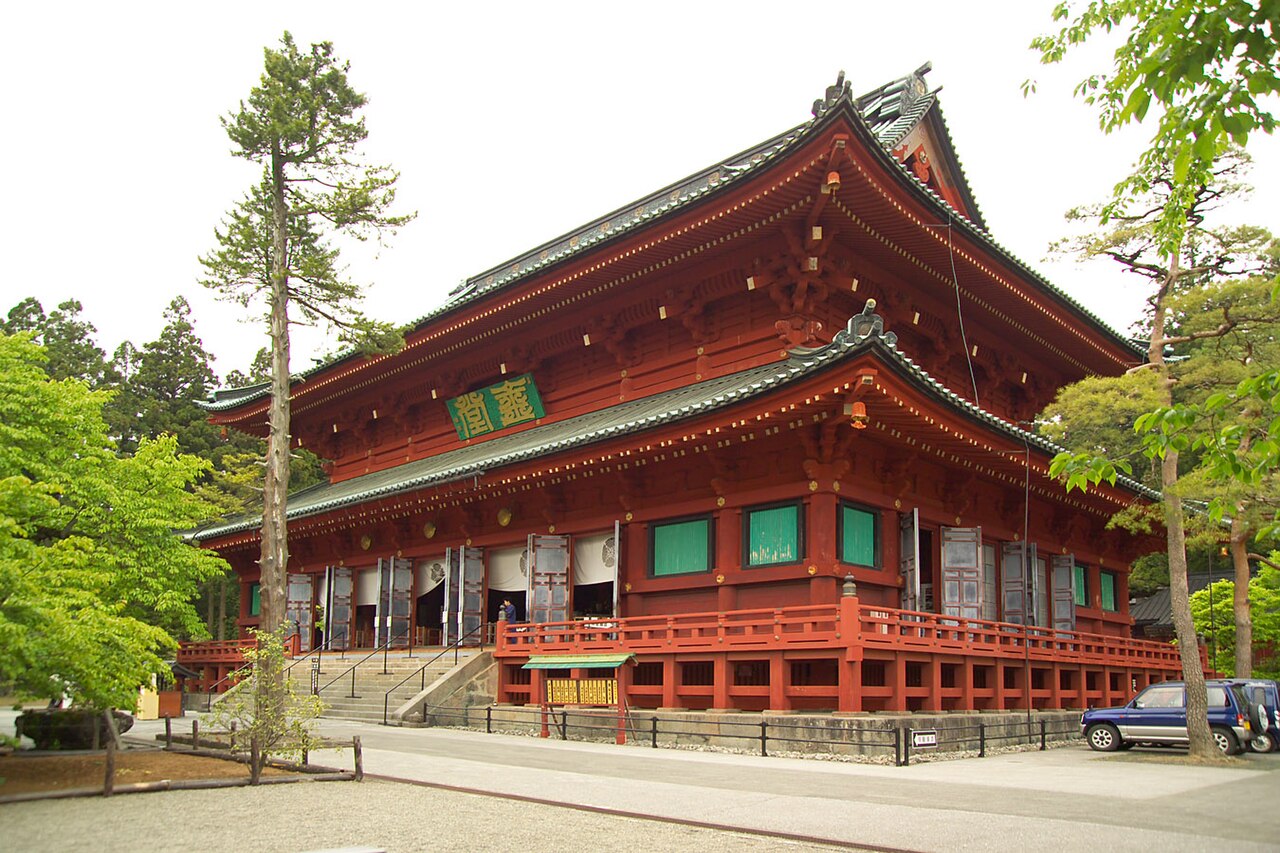
Because it lies so close to Nikko's UNESCO World Heritage shrines and temples, Kanmangafuchi makes an easy and rewarding add-on to a shrine visit, offering a dose of quiet nature and folklore after the crowds and ornament of Toshogu. The path is flat and short, suitable for almost anyone, and there is a small parking area for drivers. A historic teahouse and the remains of a temple once stood nearby, adding to the area's spiritual atmosphere.
The gorge sits at the edge of Nikko National Park, part of the volcanic landscape shaped by Mount Nantai that also produced Lake Chuzenji and Kegon Falls higher up the mountain. It pairs naturally with the shrine complex and the Shinkyo sacred bridge in town, and with a trip up to the Okunikko lakes and waterfalls.
To reach it, walk about 30 minutes from Tobu-Nikko Station, heading up toward the shrine area and then down to the Daiya River; alternatively take a short bus toward the shrines and walk the last 20 minutes past the Toshogu complex. The riverside trail then follows the gorge and its line of Jizo. Wear decent shoes for the uneven path and come early for the best light and the quietest mood.
A local's tip
Count the Jizo statues on the way in and again on the way out - locals say you will never get the same number twice, which is how the row earned its nickname the Bake-Jizo, or ghost Jizo.
Best time to visit
Early morning for mist and solitude; late October for maples over the gorge
Getting there
From Tobu-Nikko Station it is about a 30-minute walk, or a short bus ride toward the shrine area followed by a 20-minute walk past the Nikko Toshogu shrine complex to the Daiya River. A riverside path runs the length of the gorge.
Good to know
- Parking
- Restrooms
Plan the whole trip offline
Kanmangafuchi Abyss is one of many places in the Real Japan app — with turn-by-turn directions, nearby spots and full offline maps you can use with no signal.