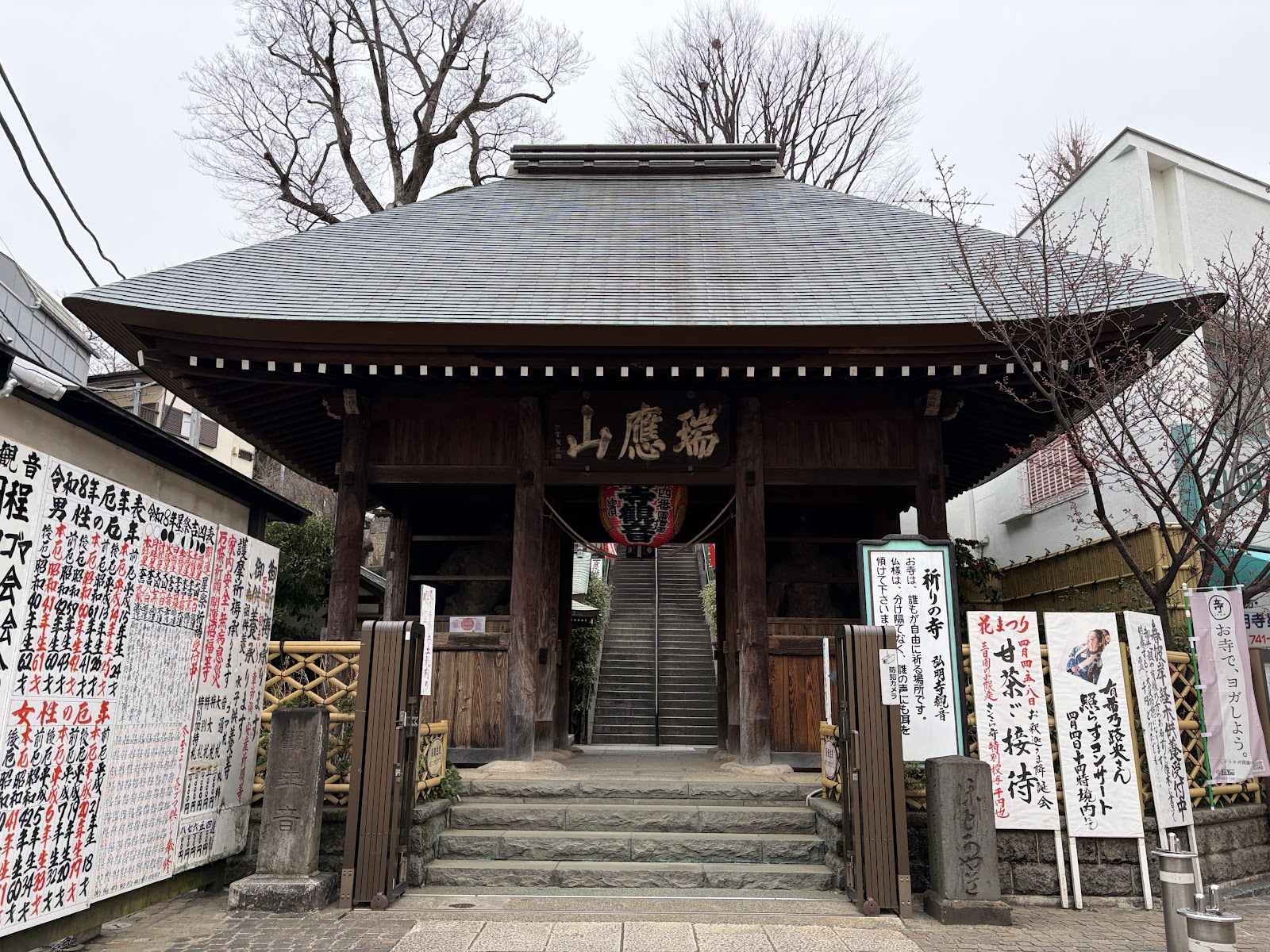
Yokohama's oldest temple, home to an eleven-faced Kannon and reached through a nostalgic old shopping arcade.
Gumyoji is Yokohama's oldest temple, a modest but deeply venerable Buddhist sanctuary in the Minami ward whose history reaches back nearly a thousand years - long before the fishing village of Yokohama grew into the great international port it is today. For anyone who thinks of Yokohama only as a modern harbor city of skyscrapers and Chinatown, Gumyoji is a revelation: a living link to the region's ancient past, tucked into an old neighborhood and approached through one of the city's most atmospheric shopping streets.
There is documentary evidence that the temple's main hall was completed on the tenth day of the third month in 1044, and while the hall was rebuilt in 1766, the temple's treasured principal image - a wooden statue of the eleven-faced Kannon, the Bodhisattva of Compassion - is believed to date from around the time of the temple's founding. Standing over 180 centimeters tall and intricately carved, this figure is recognized as both a National Treasure and an Important Cultural Property of Japan, a masterpiece of early Buddhist sculpture that has been an object of devotion for close to a millennium. The eleven faces of Kannon symbolize the deity's ability to look in all directions to perceive and relieve the suffering of all beings, and pilgrims have long come to Gumyoji to pray before this compassionate presence.
Though the grounds are comparatively small, they are richly rewarding to those who look closely. The precinct is filled with fine details - carvings, statues and religious features that slowly reveal themselves as you explore - and the temple retains the intimate, worked-in atmosphere of a place that has served its community continuously for centuries. It belongs today to a Shingon lineage and remains an active neighborhood temple, busy with local worshippers rather than tour groups, which gives a visit here a refreshing authenticity.
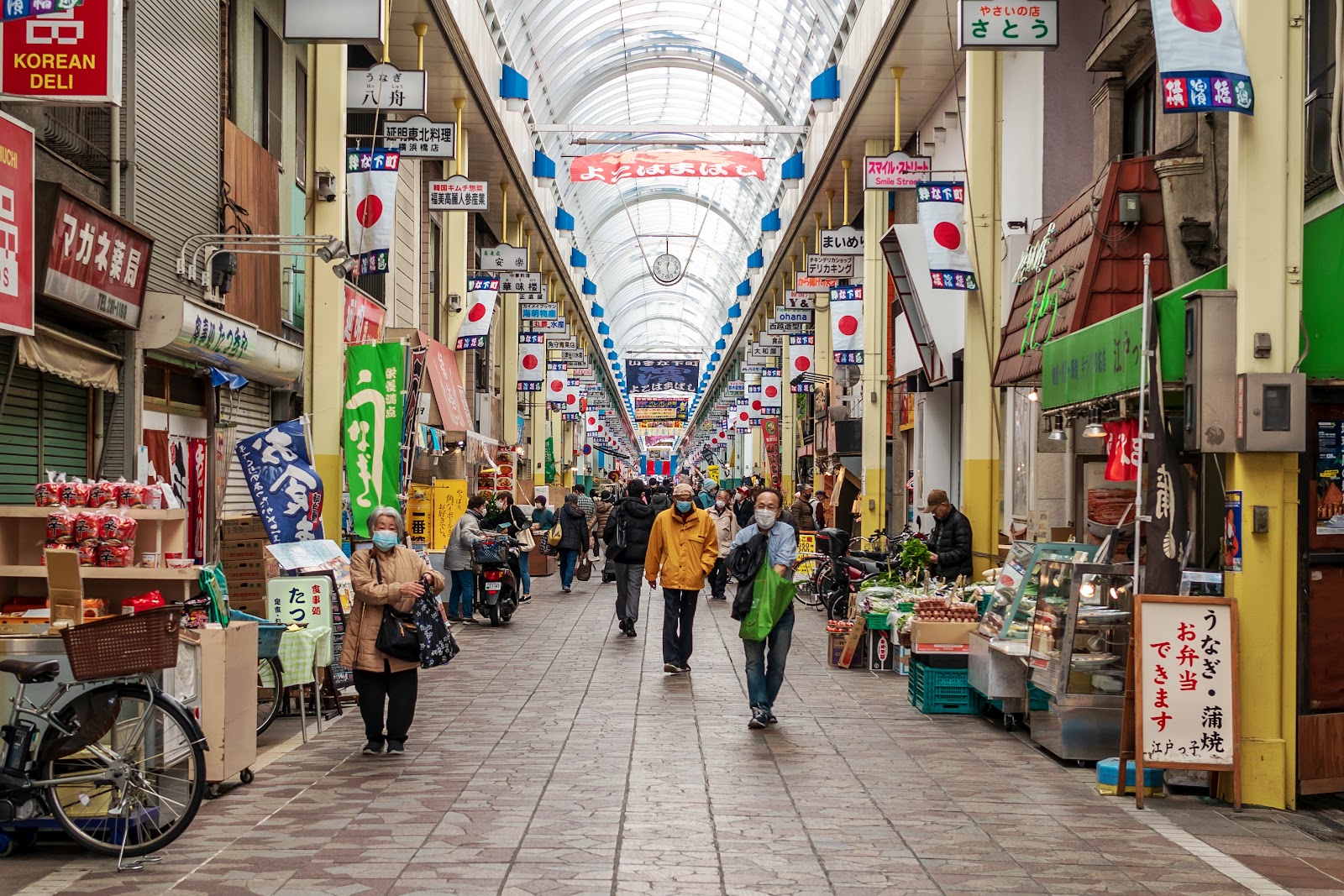
One of the great pleasures of Gumyoji is its setting. The temple sits directly beside the Gumyoji shopping arcade, a wonderfully nostalgic covered shotengai lined with small shops, greengrocers, sweet-sellers and eateries that feels like a step back into an older, more human-scaled Japan. Arriving at the temple through this bustling, unpretentious street - rather than from a sterile station forecourt - is part of the experience, framing the ancient sanctuary within the everyday life of the district it has always served.
The visit is short and easy, ideal for half an hour: pass through the gate, stand before the hall that has held the eleven-faced Kannon for a thousand years, study the carvings, offer a prayer, and then browse the arcade for street food or souvenirs. Cherry blossoms lend spring an added charm.
Accessibility could hardly be better - the temple is a three-minute walk from Gumyoji Station, served by both the Keikyu Main Line and the Yokohama Municipal Subway, making it an effortless detour from central Yokohama. Entry is free. For travelers who want to understand that Yokohama has roots far deeper than its nineteenth-century port, and who enjoy pairing history with the living texture of an old shopping street, Gumyoji is a quietly essential stop - the city's ancient heart hidden in plain sight.
A local's tip
Enter through the retro Gumyoji shopping arcade beside the temple - one of Yokohama's most authentic old shotengai.
Best time to visit
Any season; the adjoining shopping street is liveliest by day
Getting there
Three minutes on foot from Gumyoji Station on the Keikyu line or the subway, in the Minami ward of Yokohama.
Good to know
- Omamori
- Restrooms
- Shopping street
Plan the whole trip offline
Gumyoji Temple is one of many places in the Real Japan app — with turn-by-turn directions, nearby spots and full offline maps you can use with no signal.