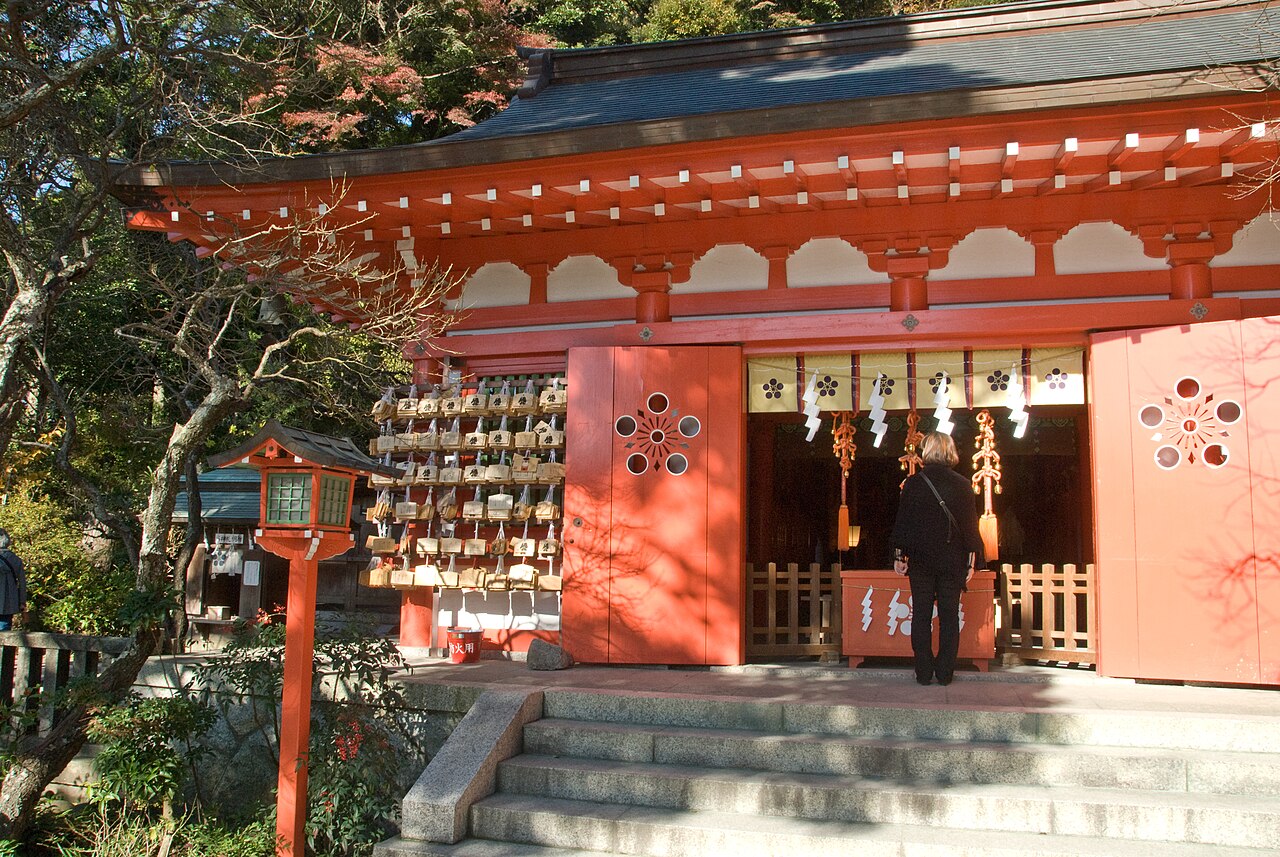
One of Japan's three great Tenjin shrines, founded in 1104 and dedicated to the deified scholar Sugawara no Michizane.
Egara Tenjin is one of the oldest shrines in Kamakura and one of the three most important Tenjin shrines in all of Japan, ranked alongside the famous Dazaifu Tenmangu in Kyushu and Kitano Tenmangu in Kyoto. Like them, it is dedicated to Sugawara no Michizane, the brilliant ninth-century scholar, poet, and statesman who, after being unjustly exiled and dying in disgrace, was posthumously deified as Tenjin, the god of learning and scholarship. To this day, students across Japan pray to Tenjin for success in their studies and examinations.
The shrine's founding is wrapped in legend. It is said that in 1104, during a violent thunderstorm, a burning object fell from the sky onto this spot, and upon it appeared an image of Tenjin. The awestruck locals built a shrine on the site to enshrine the deity, and Egara Tenjin has stood here ever since — predating the Kamakura shogunate itself by some eighty years. When Minamoto no Yoritomo established his government nearby, the shrine came under the protection of the ruling warriors, and it has remained a revered institution through the centuries.
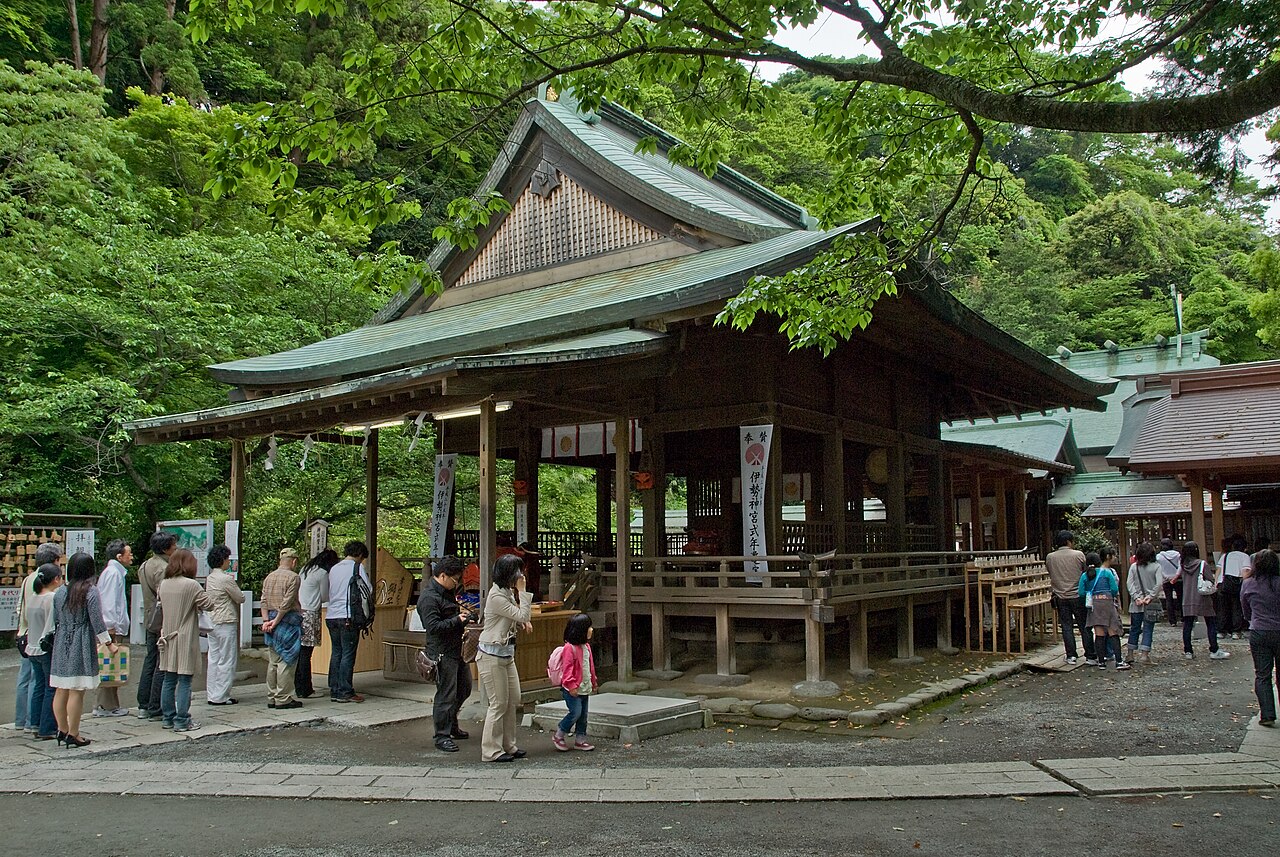
The approach sets the tone: a steep flight of stone steps leads up beneath a torii to the shrine grounds, where an ancient ginkgo tree, said to be around nine hundred years old and one of the great trees of Kamakura, towers over the compound. The main shrine building is a handsome vermilion structure, and the atmosphere is quietly devout rather than touristy. Because Tenjin is the god of scholarship, the grounds are hung with countless ema — wooden votive plaques — on which students have written their hopes of passing entrance exams, a moving testament to the anxieties and dreams of generations.
The shrine is most beautiful in late winter and early spring, when its plum trees blossom. The plum was Michizane's favourite flower, beloved of the scholar in life, and every Tenjin shrine plants them in his honour; at Egara Tenjin their pink and white blooms in February coincide with the peak of exam season, filling the grounds with both fragrance and hopeful prayers. A charming feature is the fudezuka, a mound where worn-out writing brushes and pens are ceremonially laid to rest, honouring the tools of learning.
Visiting is free and open to all, though the stone steps at the entrance require a short climb; the main grounds above are level and easy to enjoy. Facilities are simple. Because the shrine lies a fair walk from the station, out in the eastern valleys, it sees mostly locals and pilgrims rather than sightseeing crowds, and it pairs naturally with a visit to the nearby Kamakura-gu shrine and the eastern temples.
Come in February for the plum blossoms and the atmosphere of exam-season devotion, or any time to stand beneath the ancient ginkgo at one of Japan's foremost shrines of learning — a place that has offered comfort to the studious for more than nine centuries.
A local's tip
Look for the 'pen mound' (fudezuka), where used writing brushes and pens are ceremonially retired — a charming touch at a shrine devoted to the god of scholarship.
Best time to visit
Late January to February for plum blossoms and exam-season prayers
Getting there
A 25-minute walk from Kamakura Station, or a short bus ride toward Daitonomiya, then a few minutes on foot; close to Kamakura-gu shrine.
Good to know
- Restrooms
Plan the whole trip offline
Egara Tenjin Shrine is one of many places in the Real Japan app — with turn-by-turn directions, nearby spots and full offline maps you can use with no signal.