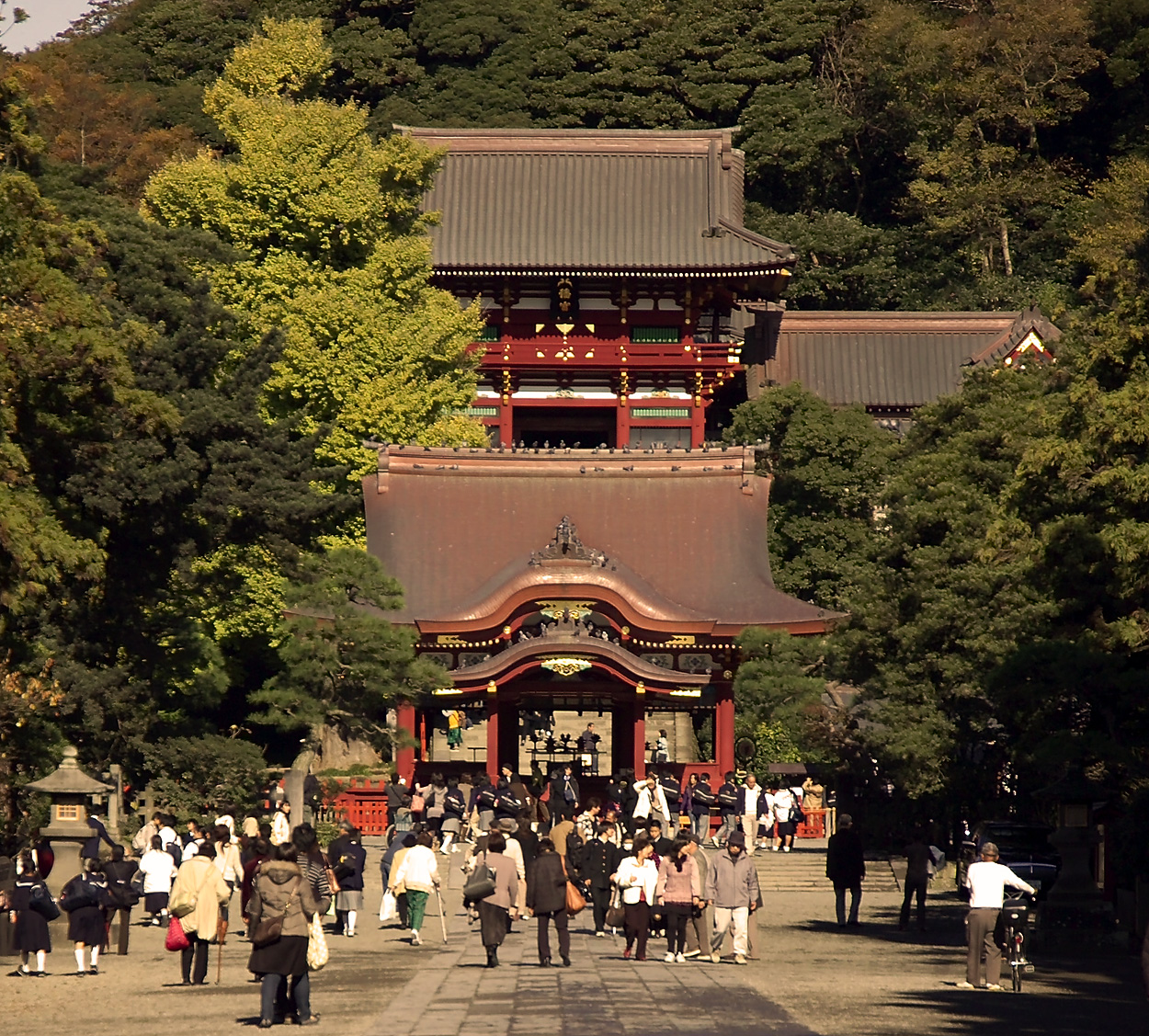
Kamakura's grand samurai-era shrine, spiritual heart of the medieval capital.
Tsurugaoka Hachimangu is the most important Shinto shrine in Kamakura and the ceremonial heart of the city. Dedicated to Hachiman, the deity of war and tutelary god of the Minamoto clan, it was founded in its present hilltop position in 1180 by Minamoto no Yoritomo, the warrior who established the Kamakura shogunate and effectively made this seaside town the political capital of Japan for a century and a half. To walk its approach is to trace the founding geography of the samurai age.
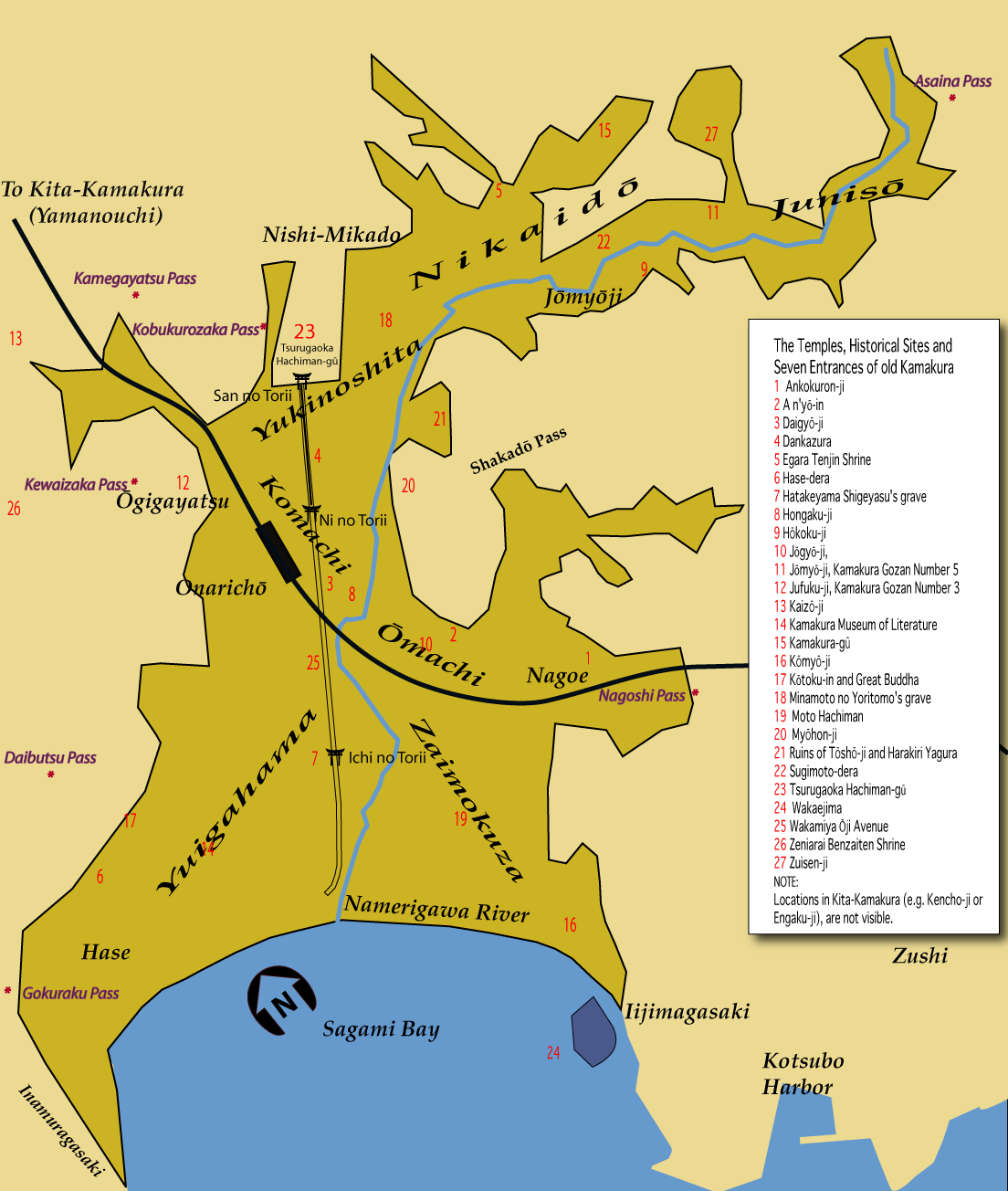
The shrine is reached along a grand ceremonial axis. From the beach, three great torii gates step up through the town along Wakamiya-oji, the central stretch of which, the Dankazura, is a raised stone causeway lined with cherry trees that erupt into pink tunnels each spring. This deliberately narrowing path was said to trick enemies into misjudging distance, and today it delivers visitors to the shrine with a sense of mounting ceremony. At the top, a broad plaza, arched vermilion bridges over lotus ponds, and a steep flight of stone steps lead to the main hall (hongu) perched above the town.
At the foot of those steps once stood a giant ginkgo tree, more than a thousand years old, behind which, according to legend, an assassin hid before killing the shogun Minamoto no Sanetomo in 1219. The ancient tree toppled in a storm in 2010, but a shoot from its base has been carefully nurtured and now grows beside the original stump, a living link to that violent chapter of Kamakura's history. The elevated main hall rewards the climb with a fine view straight back down the avenue to the distant sea.
The grounds are large, free to enter, and pleasant to wander. Twin ponds flanking the approach, the Genpei ponds, are planted with white and red lotus said to symbolise the rival Minamoto and Taira clans. A small museum on site displays shrine treasures for a modest fee. Throughout the year the shrine hosts vivid festivals: the September Reitaisai includes yabusame, horseback archery in which riders in medieval dress gallop down a track loosing arrows at targets, a thrilling spectacle that draws large crowds and vividly evokes the samurai world that shaped this place.
Seasons transform the grounds. Plum blossom opens the year, cherry blossom follows along the Dankazura and around the ponds, summer fills the ponds with lotus, and autumn brings warm colour to the maples on the surrounding slopes. Because it sits at the end of the town's main avenue, the shrine is effortless to reach: from Kamakura Station's east exit, simply walk up Wakamiya-oji for about ten minutes, browsing the shops and snack stalls along the way. Entry is free and the site is largely flat apart from the final staircase, making it welcoming to all. Allow around 50 minutes, and treat it as the natural starting point for exploring the temples that ring the old capital.
A local's tip
Approach along the central Dankazura raised path, lined with cherry trees, for the classic ceremonial arrival.
Best time to visit
Early spring for plum and cherry; September for the yabusame festival
Getting there
From Kamakura Station east exit, walk straight up Wakamiya-oji avenue for about 10 minutes to the shrine.
Good to know
- Museum
- Gift Shop
- Restrooms
Plan the whole trip offline
Tsurugaoka Hachimangu is one of many places in the Real Japan app — with turn-by-turn directions, nearby spots and full offline maps you can use with no signal.