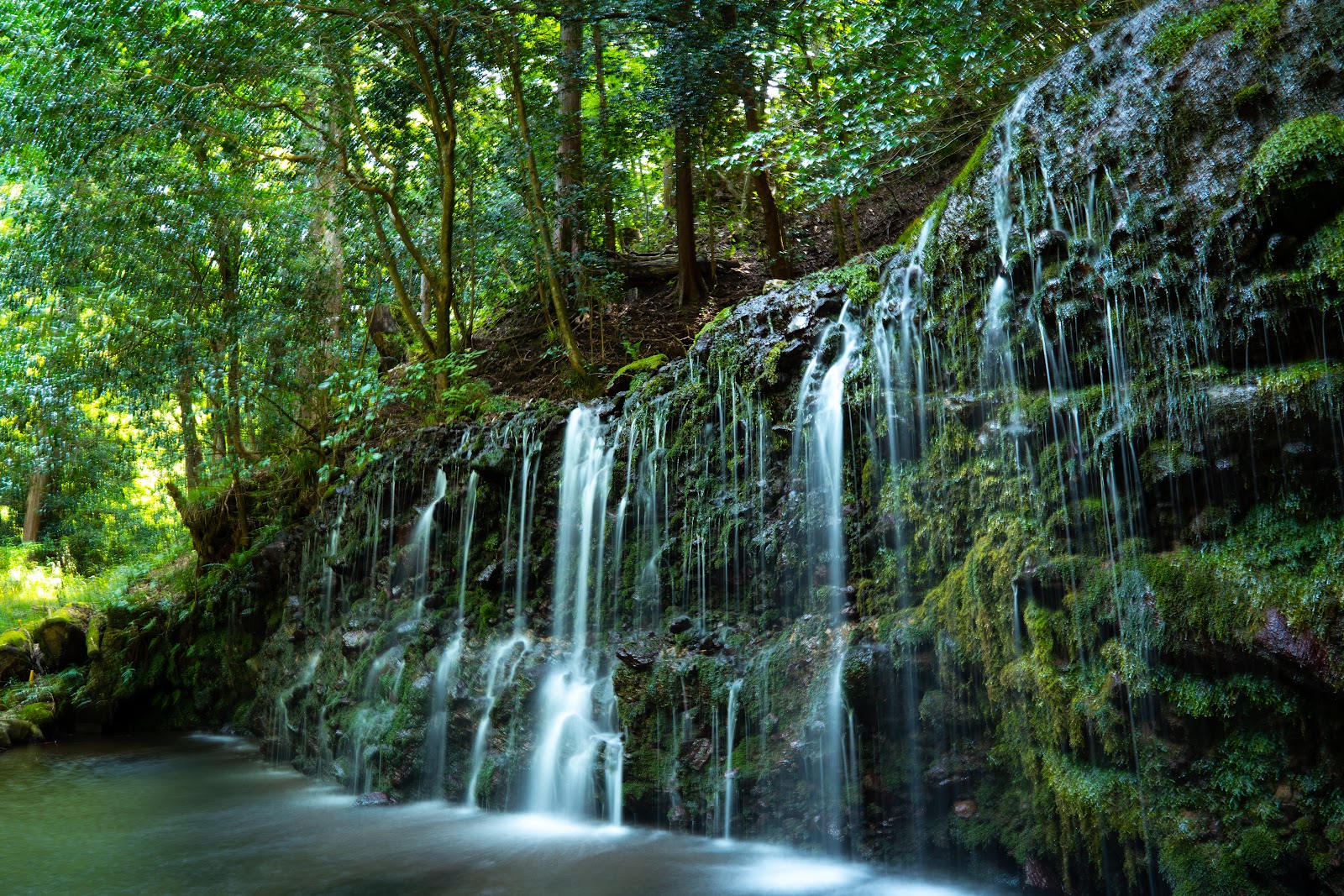
A delicate curtain of a waterfall where spring water threads in a thousand strands over a moss-covered lava ledge.
Chisuji Falls - the name means 'the waterfall of a thousand strands' - is one of Hakone's quietest and most delicate natural sights, hidden in the forest of the Kowakidani valley. It is unusual among waterfalls in that its water does not fall from a river but seeps out from between two ancient layers of lava, so instead of a single powerful cascade it spreads into countless individual threads that slip down a broad, moss-covered ledge. The falls are around twenty metres wide but only about three metres tall, and the effect is less a torrent than a shimmering, gently trembling curtain of water over green stone.
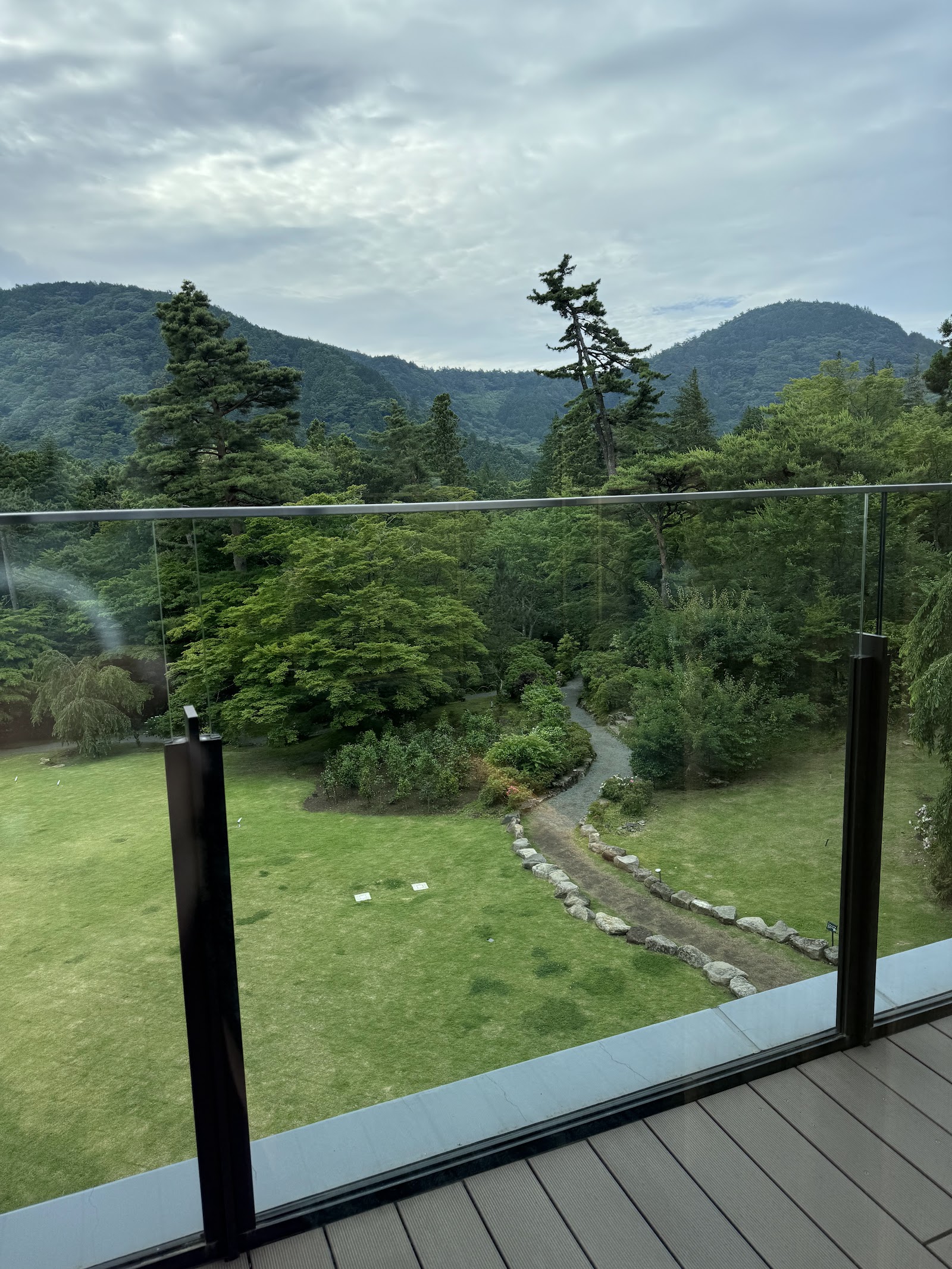
That gentleness is exactly the point. Where Japan's grander waterfalls impress by force, Chisuji charms by subtlety - the thin strands catching the light, the deep green of the surrounding moss and ferns, the soft sound of water and birdsong in a wooded ravine on the upper reaches of the Jakotsu River. A small viewing bridge crosses the stream in front of the ledge, giving a clean, head-on view of the whole width of the falls, and the setting feels tucked away and untouched despite being only a short walk from a railway station.
Getting there is itself part of the pleasure. From Kowakidani Station on the Hakone Tozan Railway a signposted footpath leads down and along the stream to the falls in about fifteen minutes, an easy, mostly level woodland walk that makes a refreshing contrast to the busier attractions of the valley. For those who want to keep going, the trail continues beyond the falls and climbs toward Mount Sengen, turning a quick detour into a proper half-day forest hike; the return route to Kowakidani is signed at roughly 1.9 kilometres.
The falls are at their best in two seasons. In the fresh-green weeks of early summer, especially after rain when the seepage runs full, the strands are at their most abundant and the moss at its most vivid, and the whole ravine seems to glow. In November the maples and other broadleaves lining the stream turn, framing the water in red and gold. Winter can occasionally see the fine threads freeze into a lacework of ice, while high summer offers cool, shaded relief from the heat. Because the flow depends on ground seepage rather than a river, the falls are gentler in dry spells - a visit a day or two after rain rewards you with the fullest display.
This is open, free-to-visit nature with no gates or hours, so it can be enjoyed at any time in daylight; sturdy shoes are wise for the forest path, which can be damp and rooty. It slots easily into a day working along the Hakone Tozan line between Gora, the Open-Air Museum and Miyanoshita, offering a short, restorative walk in the trees between the region's headline sights.
Access is simple: ride the Hakone Tozan Railway to Kowakidani and follow the signs on foot. IC cards are accepted on the railway, which is run by Odakyu and not covered by the Japan Rail Pass, so the Hakone Freepass is the practical ticket for the wider region.
A local's tip
Visit after rain and in the fresh-green weeks of early summer, when the thousand strands run full over the moss and the whole ravine glows - it is one of Hakone's most peaceful, crowd-free corners.
Best time to visit
Fresh green in early summer; autumn foliage in November
Getting there
From Kowakidani Station on the Hakone Tozan Railway a signposted path of about 15 minutes leads down through forest along the stream to the falls; the walk continues on toward Mount Sengen for those who want more.
Good to know
- Forest path
- Viewing bridge
Plan the whole trip offline
Chisuji Falls is one of many places in the Real Japan app — with turn-by-turn directions, nearby spots and full offline maps you can use with no signal.