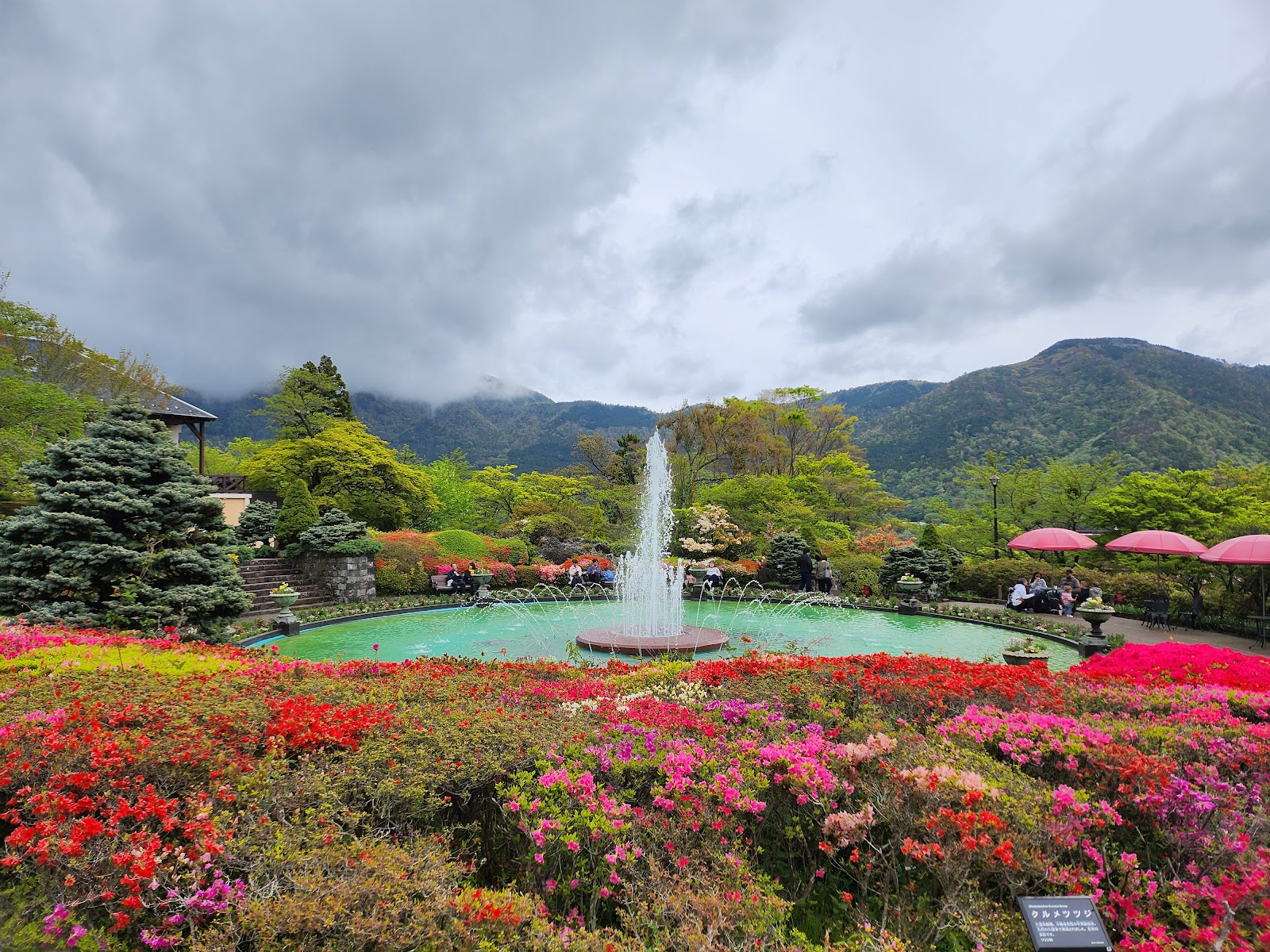
Japan's first French-style formal garden, terraced up the Gora hillside with a fountain, greenhouses and craft ateliers.
Opened in 1914, Hakone Gora Park was the first Western-style formal garden built in Japan, and more than a century later it remains one of the most photographed corners of the Gora highlands. Laid out in the symmetrical French manner by the landscape designer Shichigoro Isshiki, it climbs a terraced hillside at roughly 600 metres above sea level, with a circular stone fountain and central pond forming the geometric heart of the composition. From the upper terraces the view opens across Mount Sounzan and the steaming volcanic ridge of Owakudani beyond.
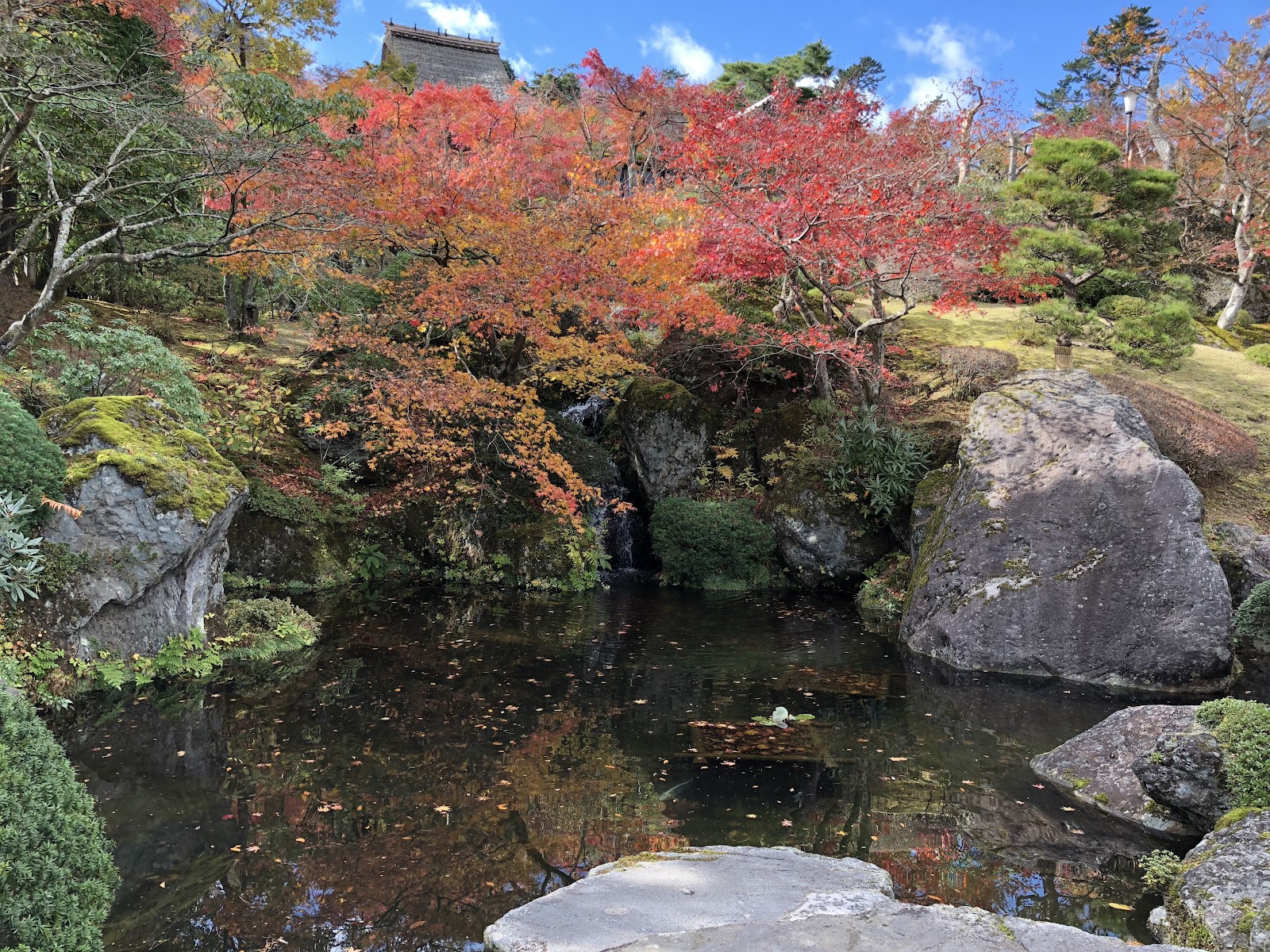
The park's charm lies in the way a rigid European framework has been softened by a century of Japanese planting. Rose beds bloom in a wide arc around the fountain in spring and again in autumn, azaleas flush the slopes in late April, and hydrangeas line the paths in the rainy season. Two greenhouses anchor the grounds: the Tropical Botanical Garden, a glass hothouse dense with orchids, hibiscus and tropical foliage, and the Hakubakan hall, where seasonal flower displays and a heather garden are staged. A grove of cherry trees makes the park a quieter alternative to the crowded blossom spots down the mountain.
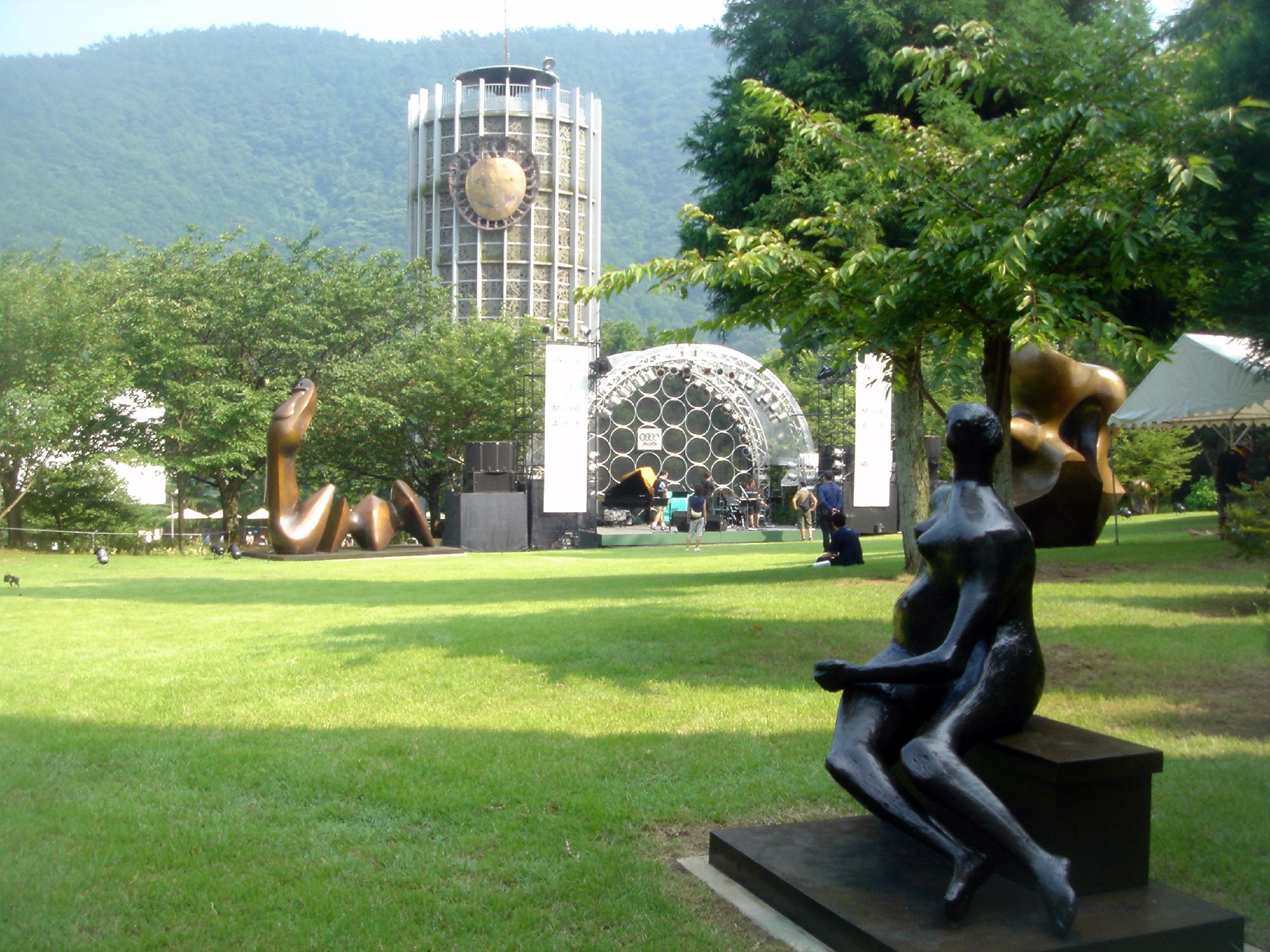
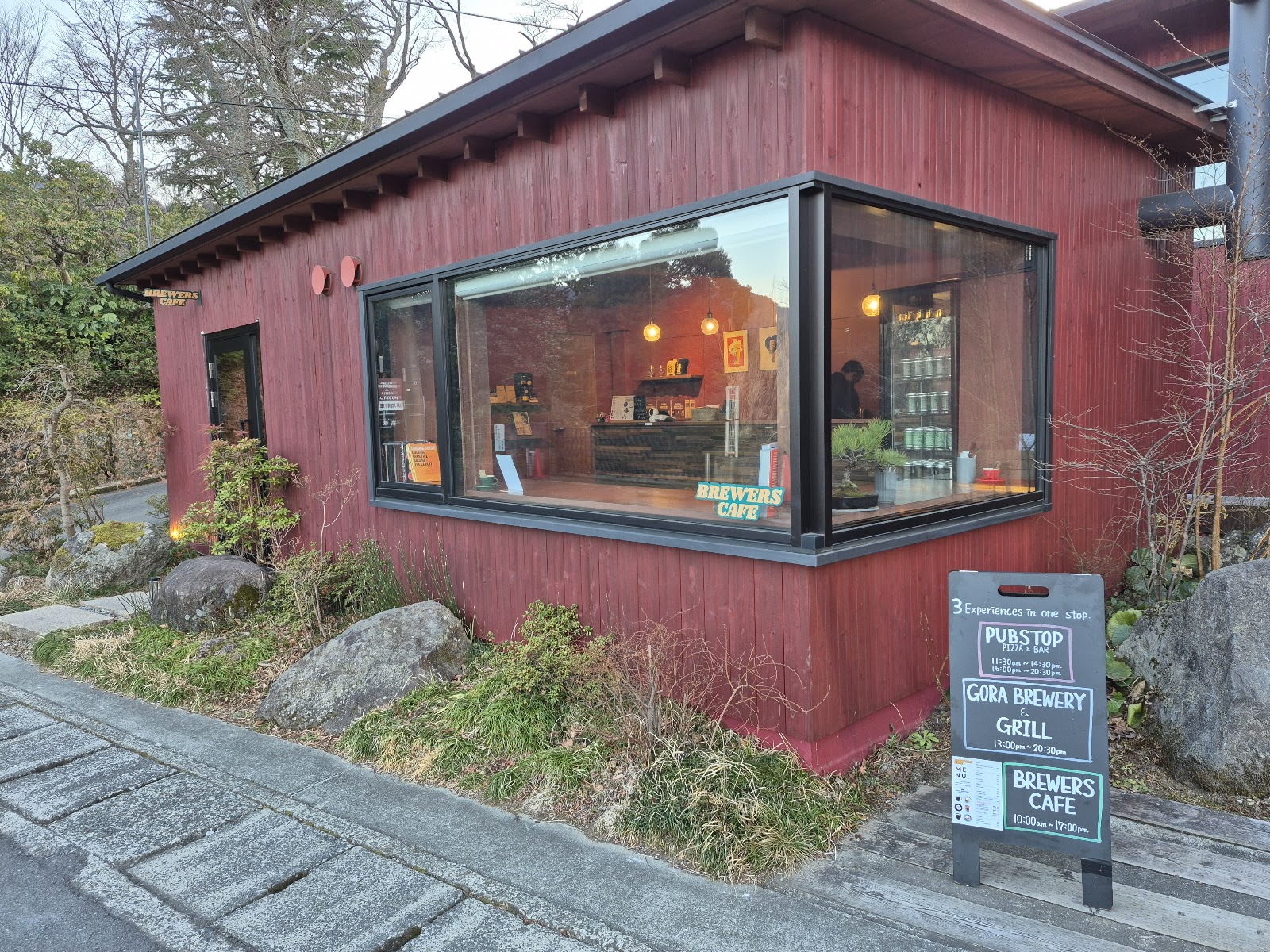
Gora Park is also unusual among Japanese gardens for being a place to make things as much as to look at them. The Craft House complex on the grounds runs hands-on ateliers in glass-blowing, sandblasting, pottery, and dried-flower arranging, and the results can be finished and taken home the same day - a genuinely useful option on the many days when Hakone's low cloud or wind shuts the ropeway. A tea house serving matcha and a relaxed cafe give somewhere to pause between the terraces.
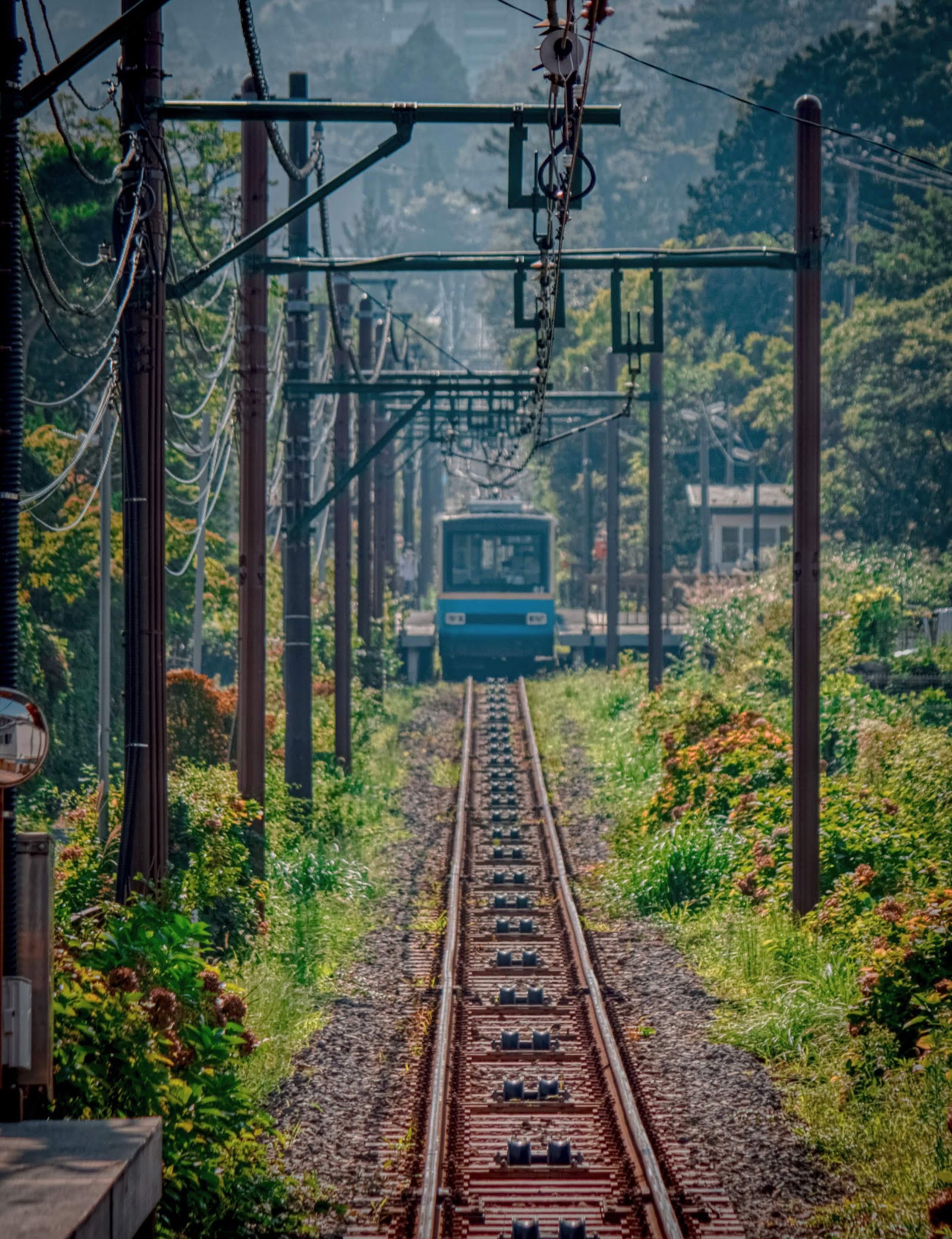
Historically the park belonged to the golden age of Gora as a mountain resort, when the newly opened Hakone Tozan Railway and its cable car brought Tokyo's wealthy up to summer villas cooled by the highland air. That railway heritage is part of the visit: the funicular Hakone Tozan Cable Car stops at Koen-shimo and Koen-kami stations, one at each gate, so you can enter at the bottom and stroll uphill to leave at the top without doubling back.
The garden is compact - an unhurried loop takes under an hour - which makes it easy to fold into a day working up the classic Hakone circuit toward the Open-Air Museum, the ropeway and Lake Ashi. It is at its best in late April and May when the azaleas and early roses overlap, and again in the second autumn rose season, while the maples give a modest but pretty koyo display in November. Because it sits directly on the cable-car line and is almost flat once inside the gates, it is one of the more accessible gardens in the mountains for visitors with limited mobility or young children.
Getting there is simple: ride the Hakone Tozan Railway from Hakone-Yumoto to Gora, transfer to the cable car for a single stop to Koen-shimo, and the lower entrance is a few steps away. An IC card works on both. Note the Hakone Tozan lines are run by Odakyu and are not covered by the Japan Rail Pass, so the Hakone Freepass is the economical way to string the park together with the rest of the region's transport.
A local's tip
Buy the park ticket and it can be paired with the Kubo-Sozan pottery, glass-blowing or dried-flower workshops in the craft houses inside - a rainy-day favourite when the ropeway is closed.
Best time to visit
Late April for azaleas and roses; autumn for foliage
Getting there
From Hakone-Yumoto take the Hakone Tozan Railway to Gora, then the Hakone Tozan Cable Car one stop to Koen-shimo; the lower gate is directly beside the station. The upper gate sits next to Koen-kami Station.
Good to know
- Cafe
- Restrooms
- Craft workshops
- Wheelchair access
Plan the whole trip offline
Hakone Gora Park is one of many places in the Real Japan app — with turn-by-turn directions, nearby spots and full offline maps you can use with no signal.