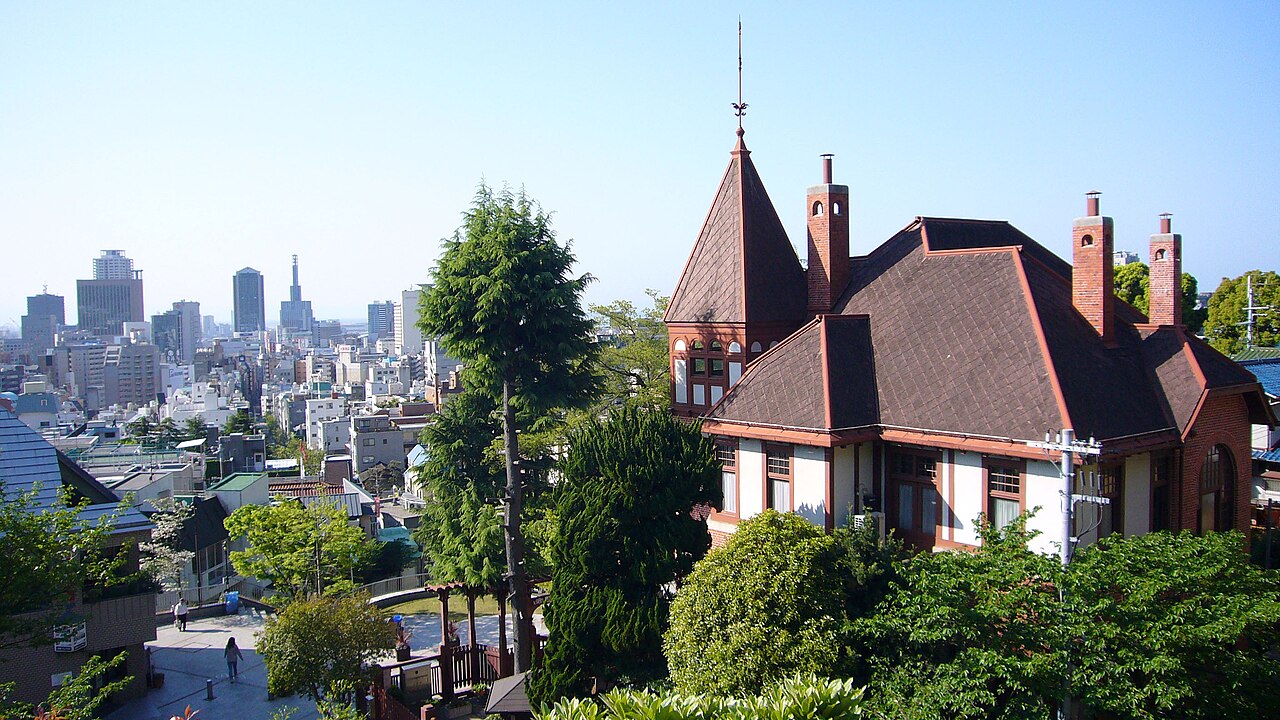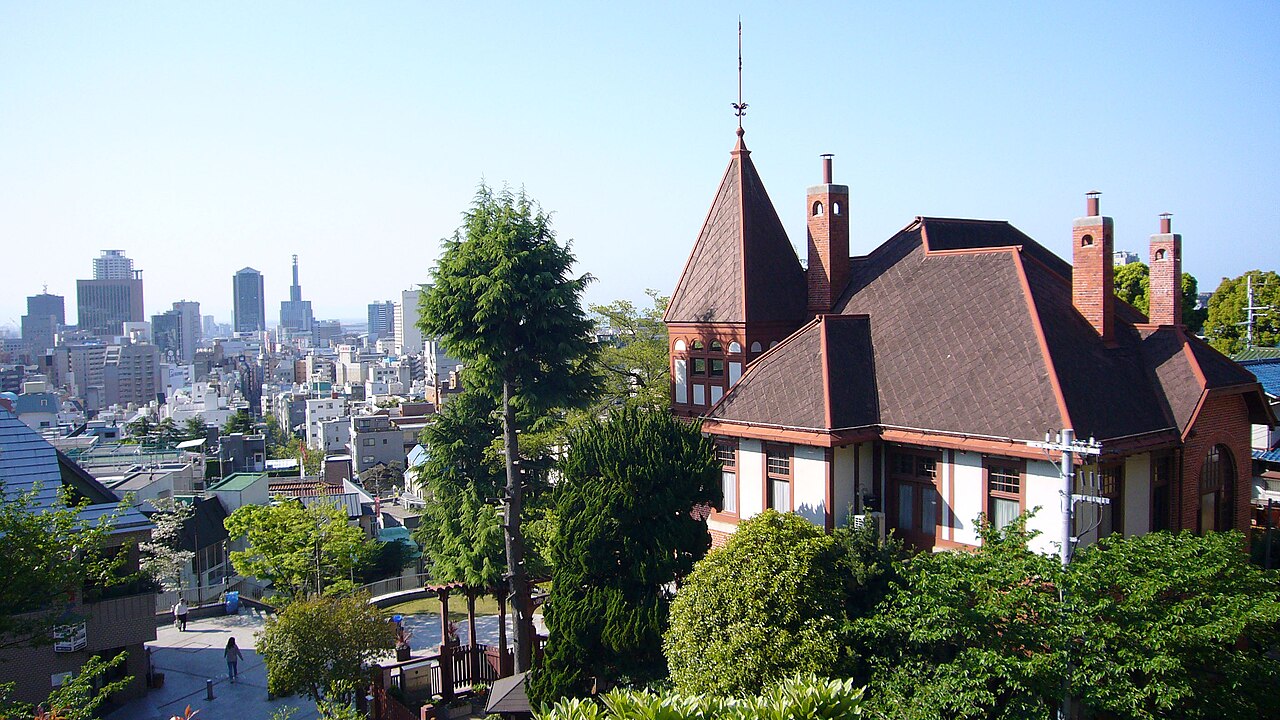
The brick-built emblem of Kobe's Kitano district, a 1909 German merchant's mansion crowned by a rooster weathervane.
The Weathercock House, known in Japanese as Kazamidori no Yakata, is the most famous of the ijinkan — the Western-style former foreign residences — that give Kobe's hillside Kitano district its distinctive, cosmopolitan character. Crowned by the copper rooster weathervane that has become the symbol of the whole neighbourhood and of Kobe itself, it is a designated Important Cultural Property and the natural starting point for exploring one of Japan's most atmospheric heritage quarters.
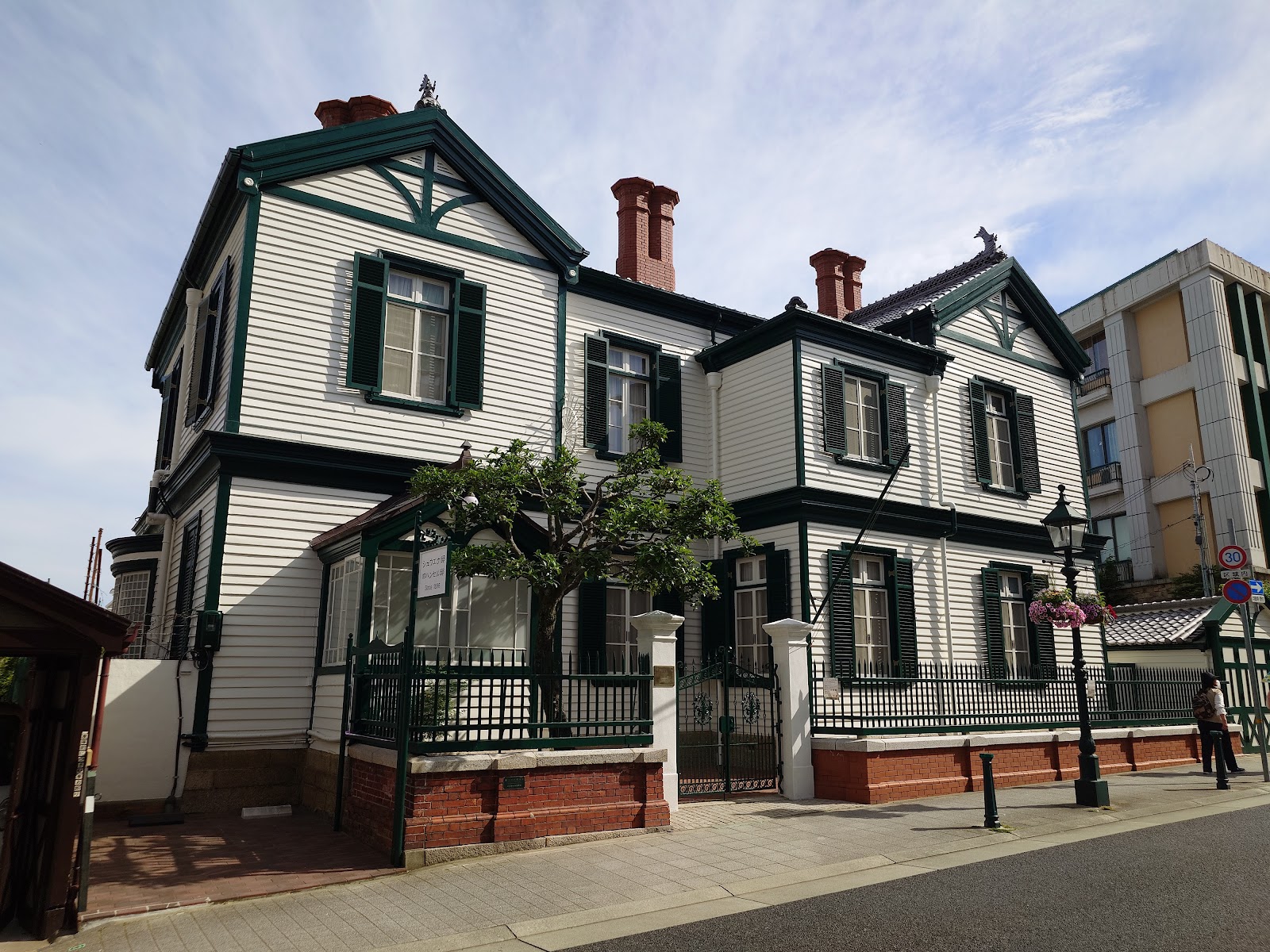
Kobe was one of the ports opened to foreign trade when Japan ended its long seclusion in the second half of the 19th century, and Western merchants, diplomats and their families settled on the slopes of Kitano, above the harbour, building elegant homes in the styles of their own countries. The result was an enclave of gabled, verandaed, brick-and-timber mansions unlike anything else in Japan, and although many have been lost, a remarkable number survive along the steep lanes of Kitano-cho, several open to visitors.
The Weathercock House was built in 1909 for a German trader named Gottfried Thomas, and it stands apart from its neighbours in one important respect: while most of the ijinkan are timber-framed, this one is constructed of brick, giving it a solidity and a distinctly European weight. Its design blends the robust masonry of a German merchant's home with romantic touches — a rounded tower, decorative gables and, at the very top, the wrought-iron rooster weathervane that gives the house its name and that has come to represent Kobe on countless emblems and souvenirs.
Inside, the house has been restored and furnished to evoke the life of a prosperous foreign family in early 20th-century Kobe. Visitors move through a sequence of period rooms — a formal reception room, a dining room, a study, bedrooms and a children's room — decorated with furniture and fittings in the styles of the age, from art nouveau flourishes to sturdy German craftsmanship. Information panels explain the history of the Thomas family, the building's construction and its role in the story of Kobe's foreign settlement. From the windows and the small garden there are views down over the district and the city beyond.
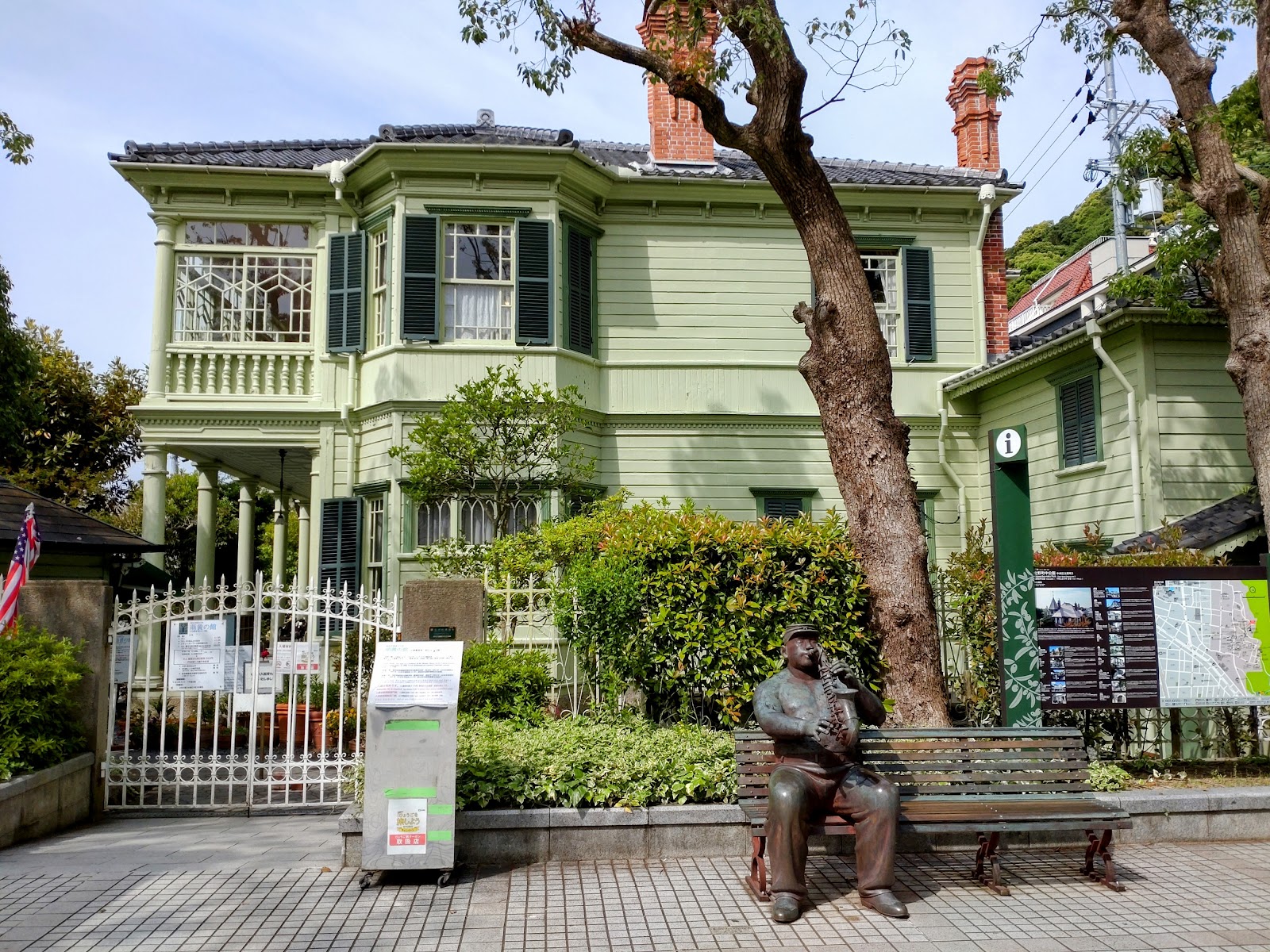
The Weathercock House sits at the top of Kitano-zaka beside Kitano Square, at the heart of the district, so it pairs naturally with the other ijinkan nearby, including the green-painted Moegi House, the ornate Uroko House and various themed residences. Wandering the sloping, cafe-dotted lanes between them, with their European architecture and harbour views, feels quite unlike anywhere else in Japan and gives a vivid sense of the international energy that shaped modern Kobe.
Getting there: the house is about a twelve-minute uphill walk from Shin-Kobe Station, served by the Sanyo Shinkansen and the subway, or roughly fifteen minutes north from the bustling Sannomiya district. It keeps daytime hours and charges a modest admission. Begin here beneath the famous weathervane, then let the rest of Kitano's foreign quarter unfold along the hillside lanes.
A local's tip
The rooster weathervane on the roof is the emblem of the whole district and of Kobe itself. This is the only brick-built ijinkan in Kitano — most are timber — so notice the difference in construction.
Best time to visit
Any season; the hillside is pretty in autumn
Getting there
A 12-minute uphill walk from Shin-Kobe Station or about 15 minutes north from Sannomiya, into the Kitano-cho district; the house stands at the top of Kitano-zaka beside Kitano Square.
Good to know
- Restrooms
- Cafe nearby
- Ticketed interior
Plan the whole trip offline
Weathercock House (Kazamidori no Yakata) is one of many places in the Real Japan app — with turn-by-turn directions, nearby spots and full offline maps you can use with no signal.