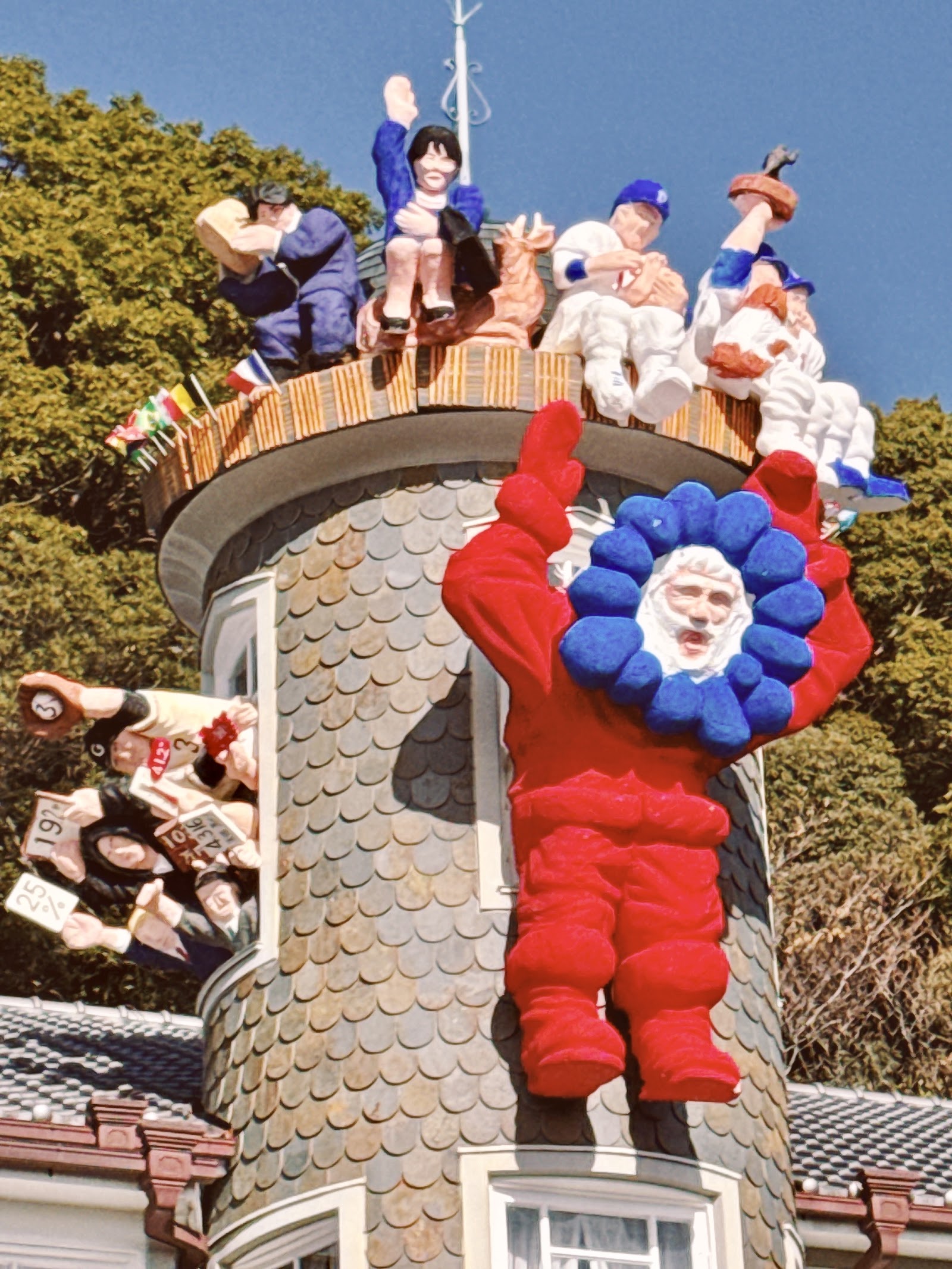
Kitano's landmark 'Scale House', its slate-tiled facade shimmering above the city, with an art collection and grand interiors.
The Uroko House, or Uroko no Ie, is the most immediately recognisable of all the Western-style former foreign residences in Kobe's Kitano district, and one of the grandest to visit. Its nickname, meaning 'Scale House,' comes from the thousands of overlapping slate tiles that clad its exterior like the scales of a fish or the armour of a dragon, catching the light and shifting in colour as the sun moves. Standing near the top of the Kitano slope, it is both a striking piece of architecture and a small museum, and it commands the finest views in the district.
Kobe opened to foreign trade in the late 19th century, and the hillside of Kitano-cho, above the harbour, became an enclave of merchants and diplomats who built homes in European and American styles. The Uroko House was originally constructed in the foreign settlement lower down and later moved to its present commanding position in Kitano. It is registered as a cultural property and is prized both for its unusual exterior and for the richness of what lies inside.
The scale-tiled facade is the great signature: sheathed in natural slate cut into rounded, overlapping pieces, the building glimmers silver-grey and green, an effect quite unlike the painted timber and brick of its neighbours. A pair of bronze boar statues flanks the approach, and by tradition visitors rub the snout of one for good luck. Turrets, gables and a rounded bay give the house a romantic, almost fairy-tale silhouette against the hillside.
Inside, the Uroko House is furnished as an opulent turn-of-the-century residence, its rooms filled with European antiques — fine furniture, chandeliers, porcelain, stained glass and decorative objects — that evoke the wealth and taste of Kobe's foreign community. Attached to the house is a small art museum displaying a collection of Western paintings, including works by noted European artists, which gives the visit an added cultural dimension beyond the period interiors. Throughout, the craftsmanship of the fittings and the atmosphere of genteel comfort reward unhurried exploration.
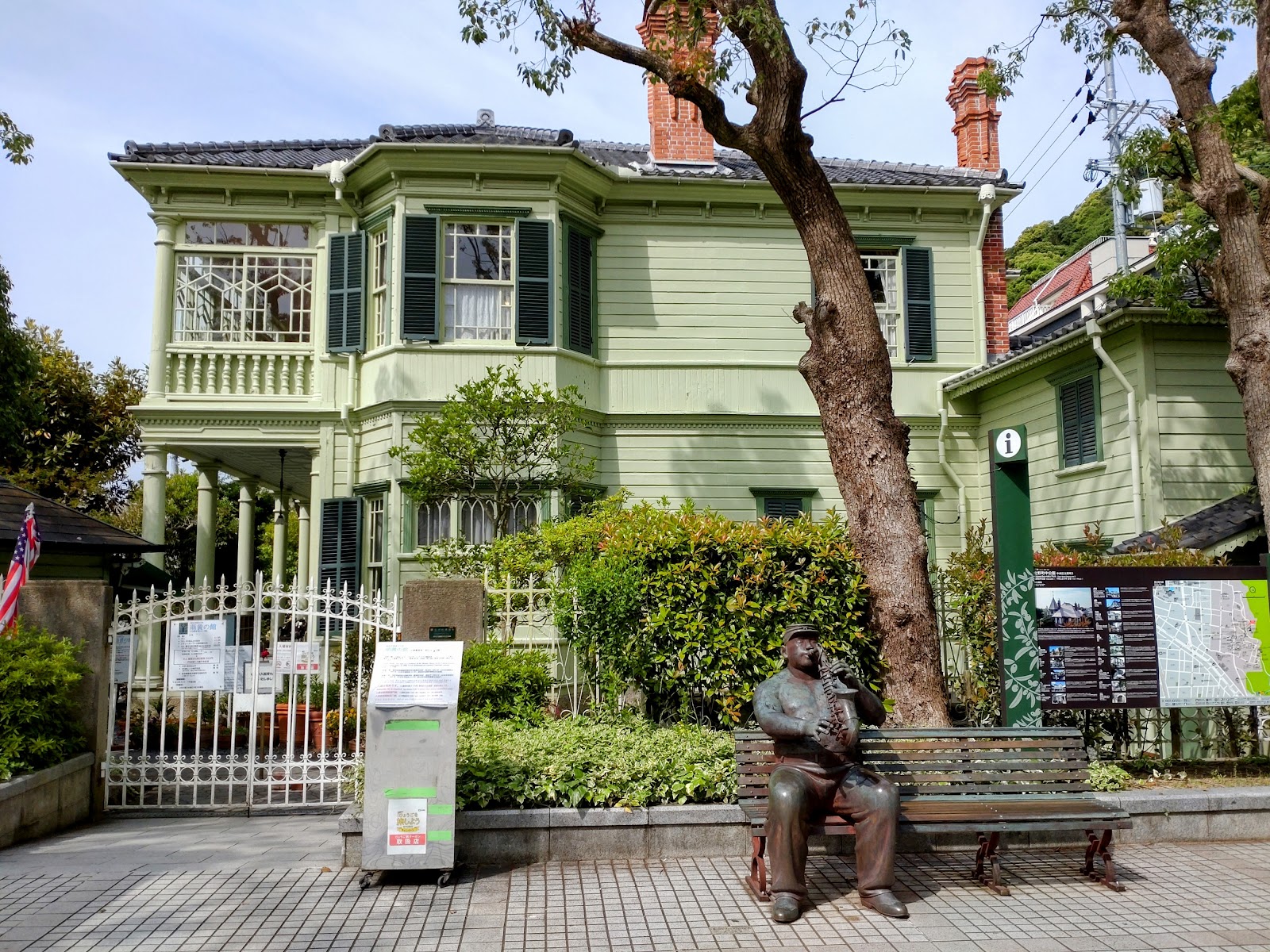
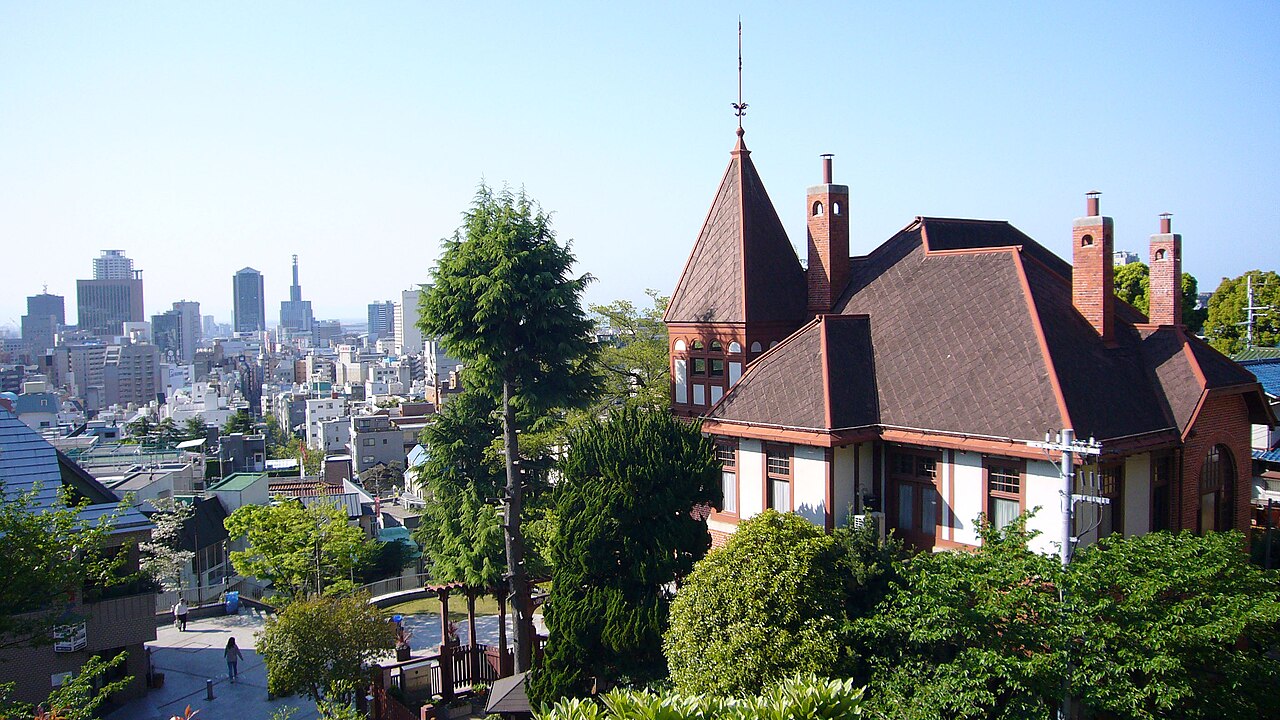
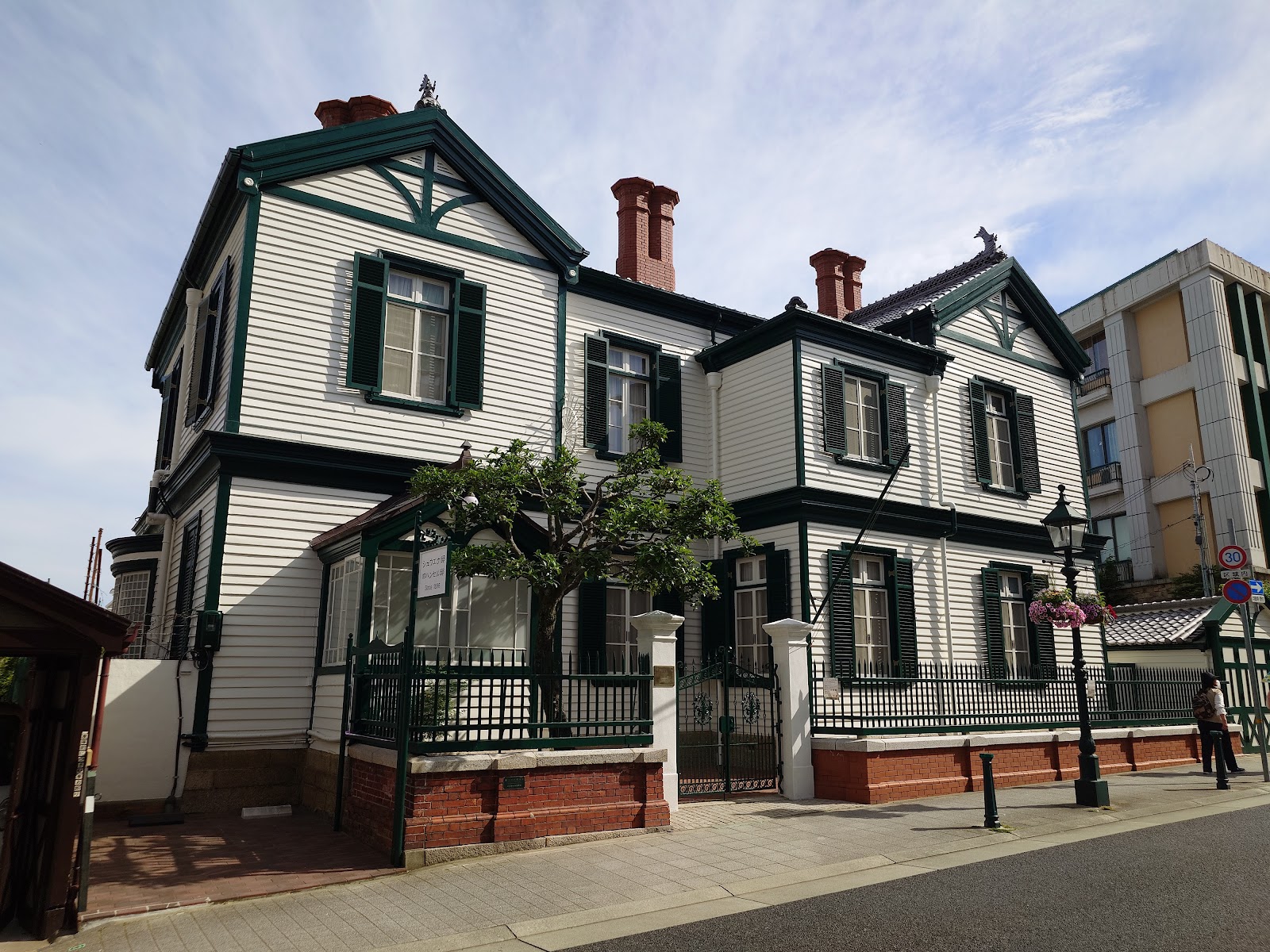
Because the Uroko House sits above most of the other ijinkan, its upper floors and terrace offer the best panorama in Kitano, looking out over the tiled roofs of the district and down across the city to the harbour and sea beyond. It makes a fitting climax to a walk up through the neighbourhood, taking in the brick Weathercock House and the green Moegi House on the way. The steep lanes between the residences, dotted with cafes and boutiques and lined with European architecture, are among the most charming in any Japanese city.
Getting there: the Uroko House is near the top of Kitano-cho, about a sixteen-minute uphill walk from Shin-Kobe Station, served by the Sanyo Shinkansen and the subway, or a slightly longer climb from Sannomiya. It keeps daytime hours with some seasonal variation and charges a higher admission than the smaller houses, reflecting its art collection. Save it for the high point of your Kitano wander, rub the lucky boar, and enjoy both the shimmering house and the finest view in the district.
A local's tip
The facade is clad in thousands of scale-like slate tiles that shimmer in the light — hence the name 'Scale House.' The two boar statues at the entrance are said to bring luck; rub the snout. The upper terrace has the best view in Kitano.
Best time to visit
Any season; the high terrace view is superb on clear days
Getting there
Near the top of the Kitano-cho slope, about 16 minutes uphill from Shin-Kobe Station; it sits above most of the other ijinkan, so visit it as the high point of a Kitano walk.
Good to know
- Restrooms
- Terrace view
- Art collection
- Ticketed interior
Plan the whole trip offline
Uroko House and Museum is one of many places in the Real Japan app — with turn-by-turn directions, nearby spots and full offline maps you can use with no signal.