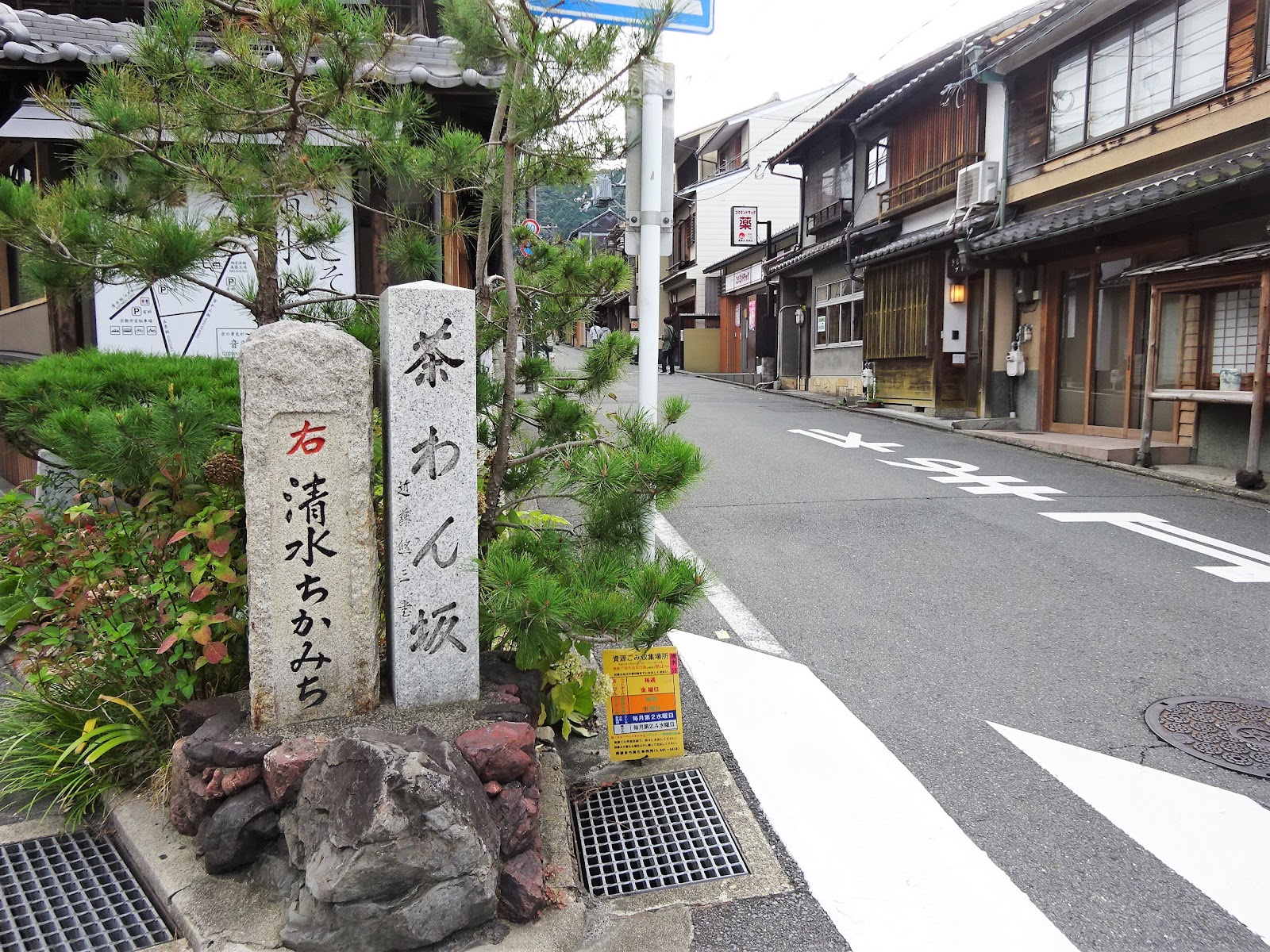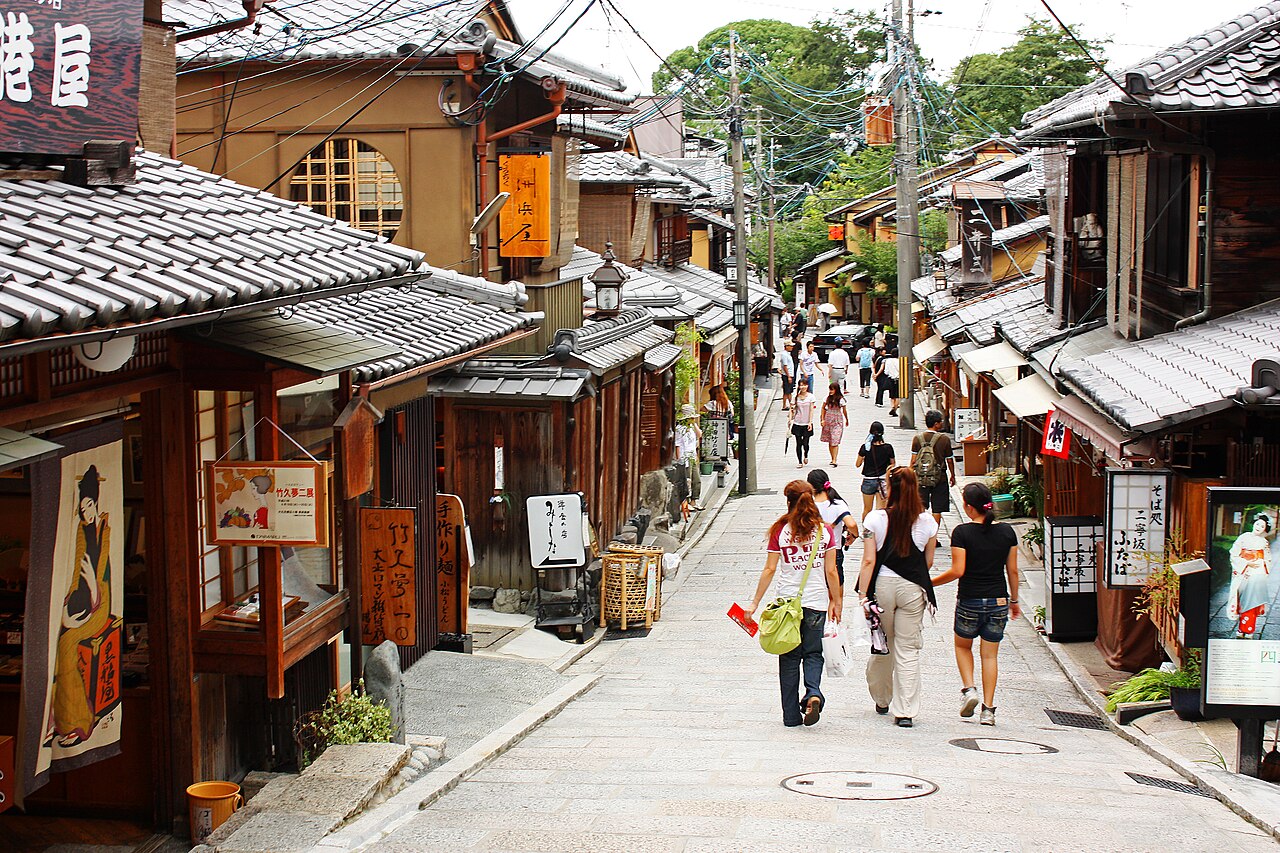
Two sloping stone-paved lanes of preserved wooden machiya climbing toward Kiyomizu-dera — the postcard image of old Kyoto.
Sannenzaka (Three-Year Slope) and Ninenzaka (Two-Year Slope) are two gently stepped, stone-paved lanes that wind up the Higashiyama hillside toward Kiyomizu-dera. Lined almost entirely with two-story wooden machiya townhouses, tea houses, and craft shops, they form the most photographed stretch of traditional streetscape in Kyoto and sit within a nationally designated Preservation District for Groups of Traditional Buildings.
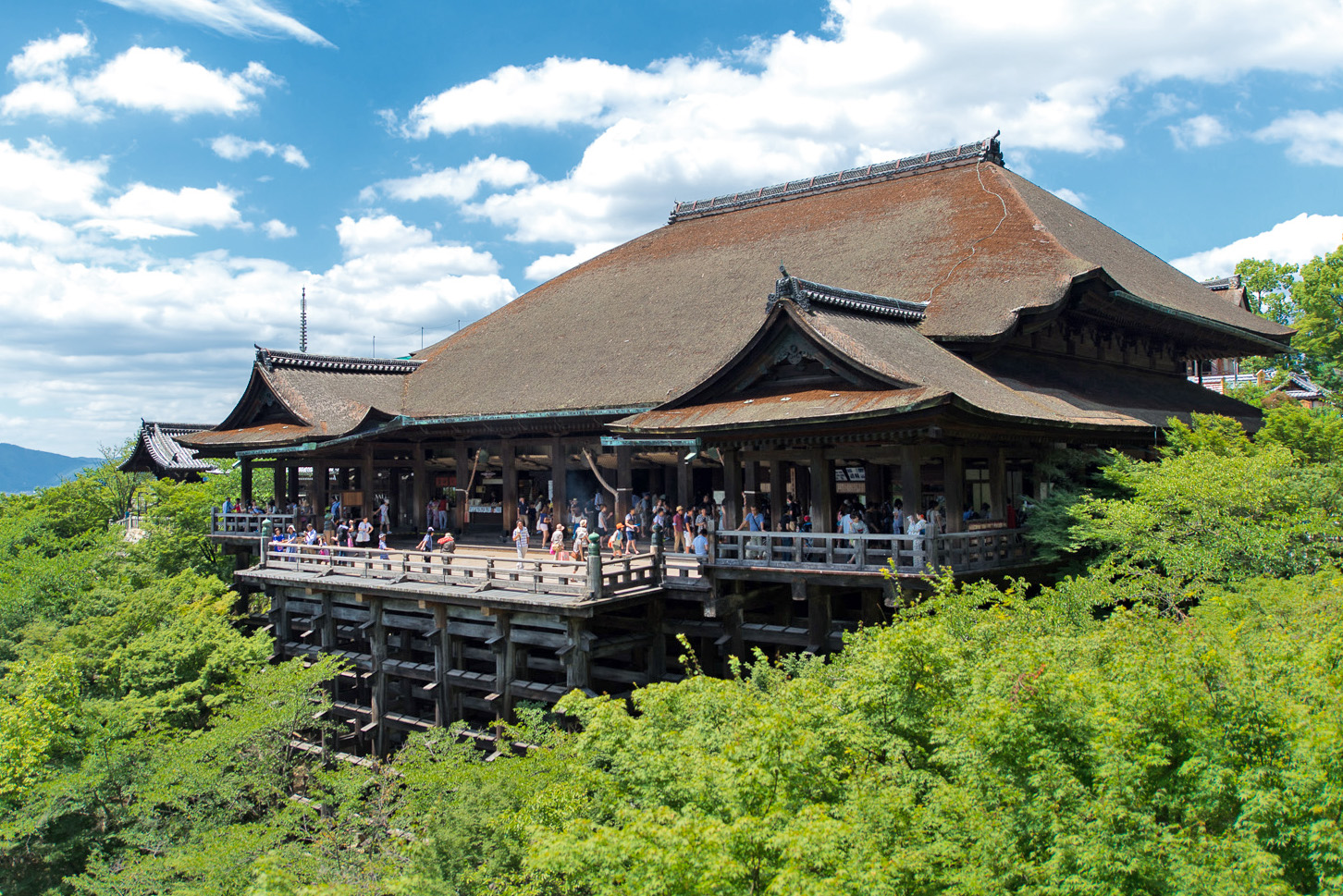
The lanes trace their origins to the pilgrimage routes that carried worshippers up to Kiyomizu-dera and the nearby Kodai-ji and Yasaka Pagoda. Ninenzaka is thought to have been laid out in the early 9th century, with Sannenzaka following. Local lore claims that a stumble on these slopes brings two or three years of misfortune — a superstition that keeps visitors watching their step and gives the streets their names. Whatever the truth of it, the effect is to slow you down, which is exactly how these lanes are best enjoyed.
The architecture is the real attraction. Lattticed facades, tiled roofs, noren curtains, and hanging lanterns create an almost unbroken Edo- and Meiji-era streetscape, carefully protected from modern signage and overhead wires. Shops sell Kiyomizu-yaki pottery, folding fans, incense, pickles, matcha sweets, and Yatsuhashi cinnamon confections; several tea houses offer a quiet cup of matcha in a tatami room overlooking the lane. A famous 100-year-old Starbucks occupies a converted machiya on Ninenzaka, blending into the wooden frontage so completely that many walk past it. The soaring five-story Yasaka Pagoda (Hokan-ji) rises at the top of the slope, framing countless photographs.
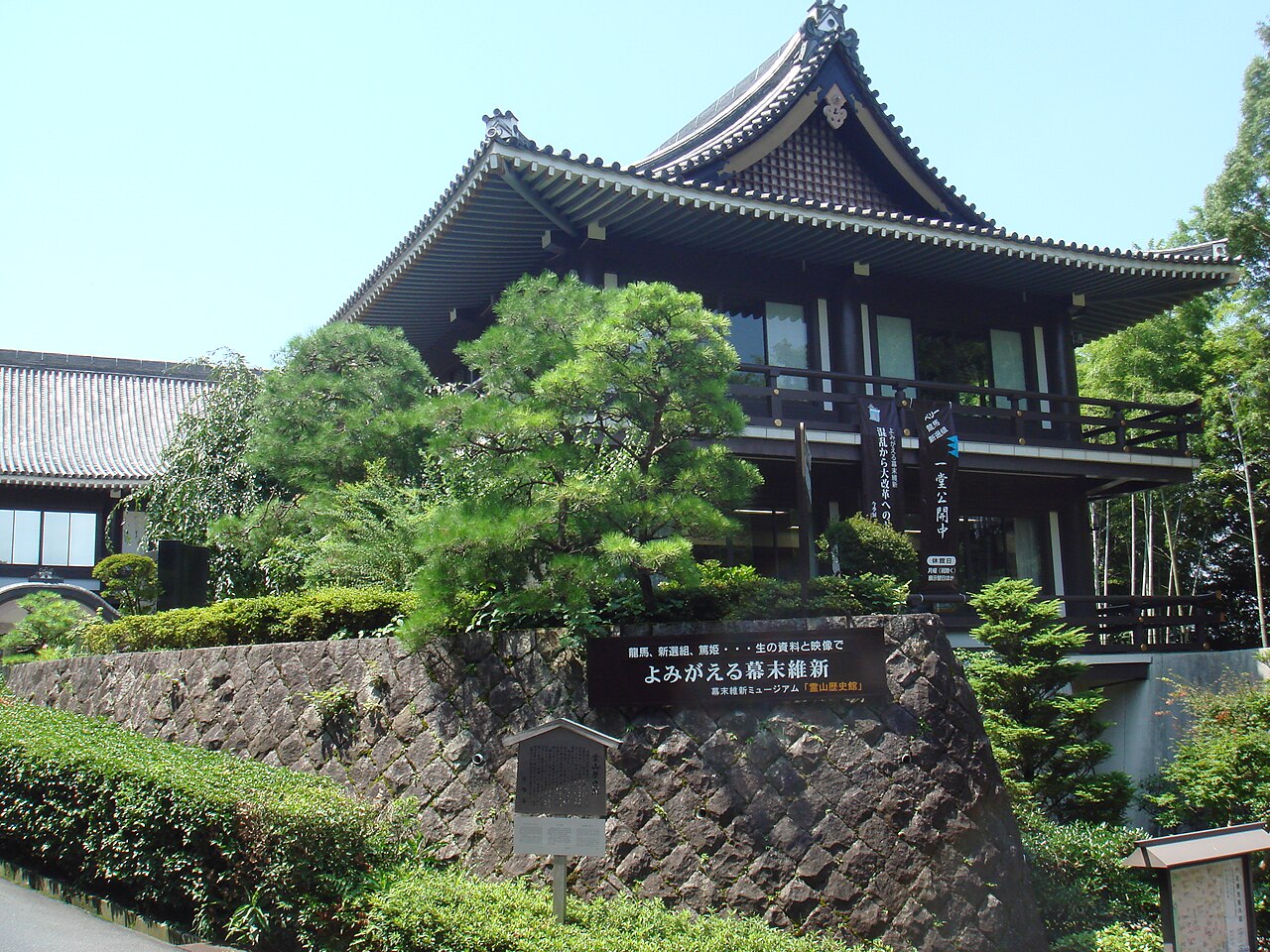
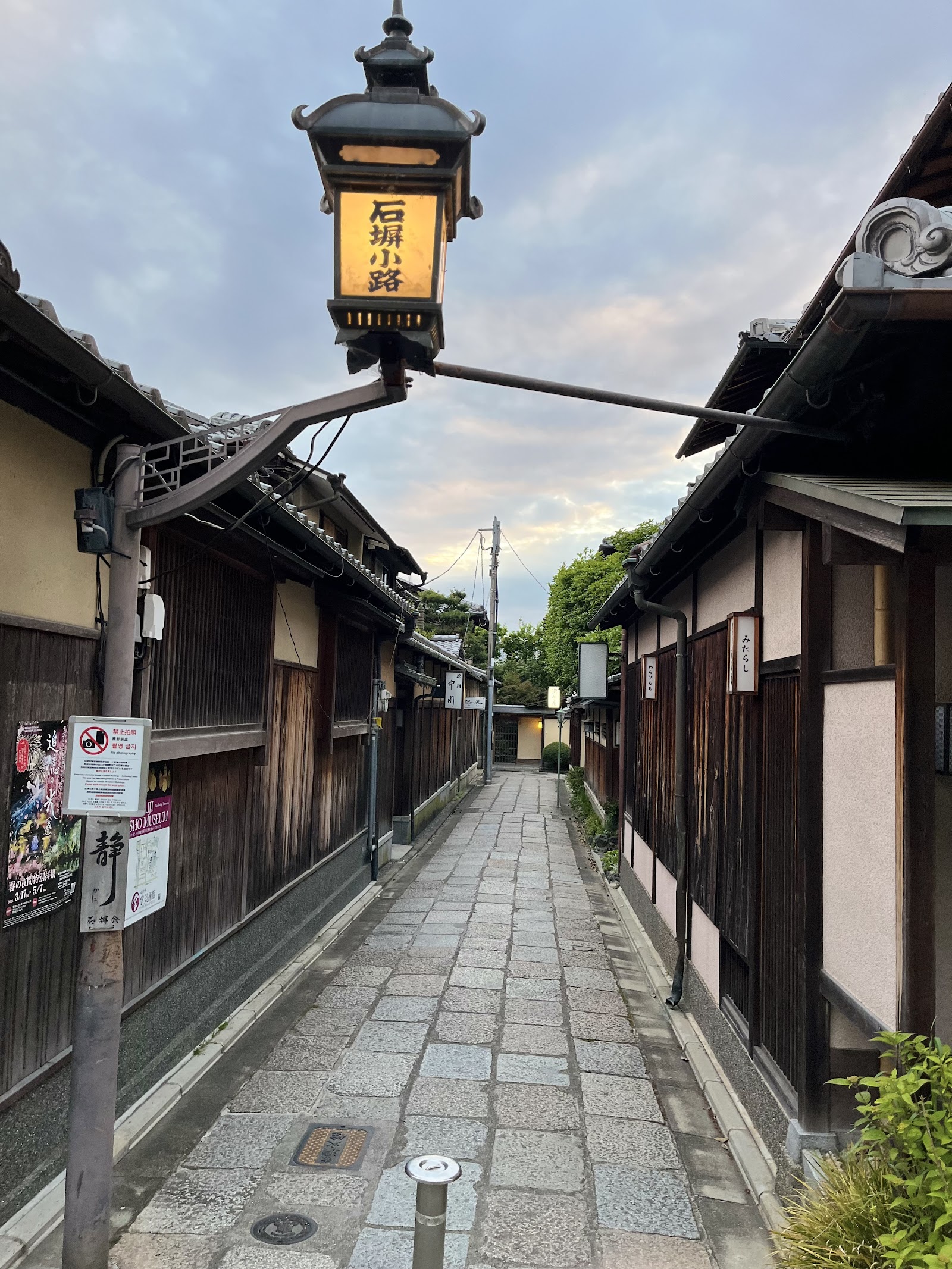
Visiting is a stroll rather than a formal sight — there is no gate and no fee, and the lanes connect naturally into a longer Higashiyama walk taking in Kodai-ji, Nene-no-Michi, Ishibei-koji, and Kiyomizu-dera itself. In cherry-blossom season the weeping tree above Sannenzaka is a landmark in its own right, and autumn brings warm maple color to the hillside. Renting a kimono for the walk is popular and adds to the atmosphere.
The single biggest tip is timing. These are among the most crowded streets in Kyoto, and by late morning they can be packed. Arrive at first light — ideally before 9am — and you may have the empty, mist-softened lanes largely to yourself, with shopkeepers just rolling up their shutters. Evenings after the day-trippers leave are also atmospheric, when lanterns glow against the dark timber.
Getting there is straightforward. From Kiyomizu-Gojo Station on the Keihan Main Line it is about a 15-minute uphill walk east; Kyoto City Buses 100 and 206 stop at Kiyomizu-michi or Gojo-zaka, a short climb below. Wear comfortable shoes, as the entire district is stepped and cobbled, and be mindful that it is a living neighborhood where residents still go about their day.
A local's tip
Arrive before 9am to photograph the stepped lanes empty; by mid-morning they fill shoulder-to-shoulder. Watch your footing on Sannenzaka's steps in the rain.
Best time to visit
Early morning before 09:00
Getting there
From Kiyomizu-Gojo Station on the Keihan Line, walk east and uphill about 15 minutes toward Kiyomizu-dera; the lanes branch off Kiyomizu-zaka. Kyoto City Bus 100 or 206 to Kiyomizu-michi stop is closer.
Good to know
- Shops
- Wi-Fi
- Restrooms
Plan the whole trip offline
Sannenzaka and Ninenzaka is one of many places in the Real Japan app — with turn-by-turn directions, nearby spots and full offline maps you can use with no signal.