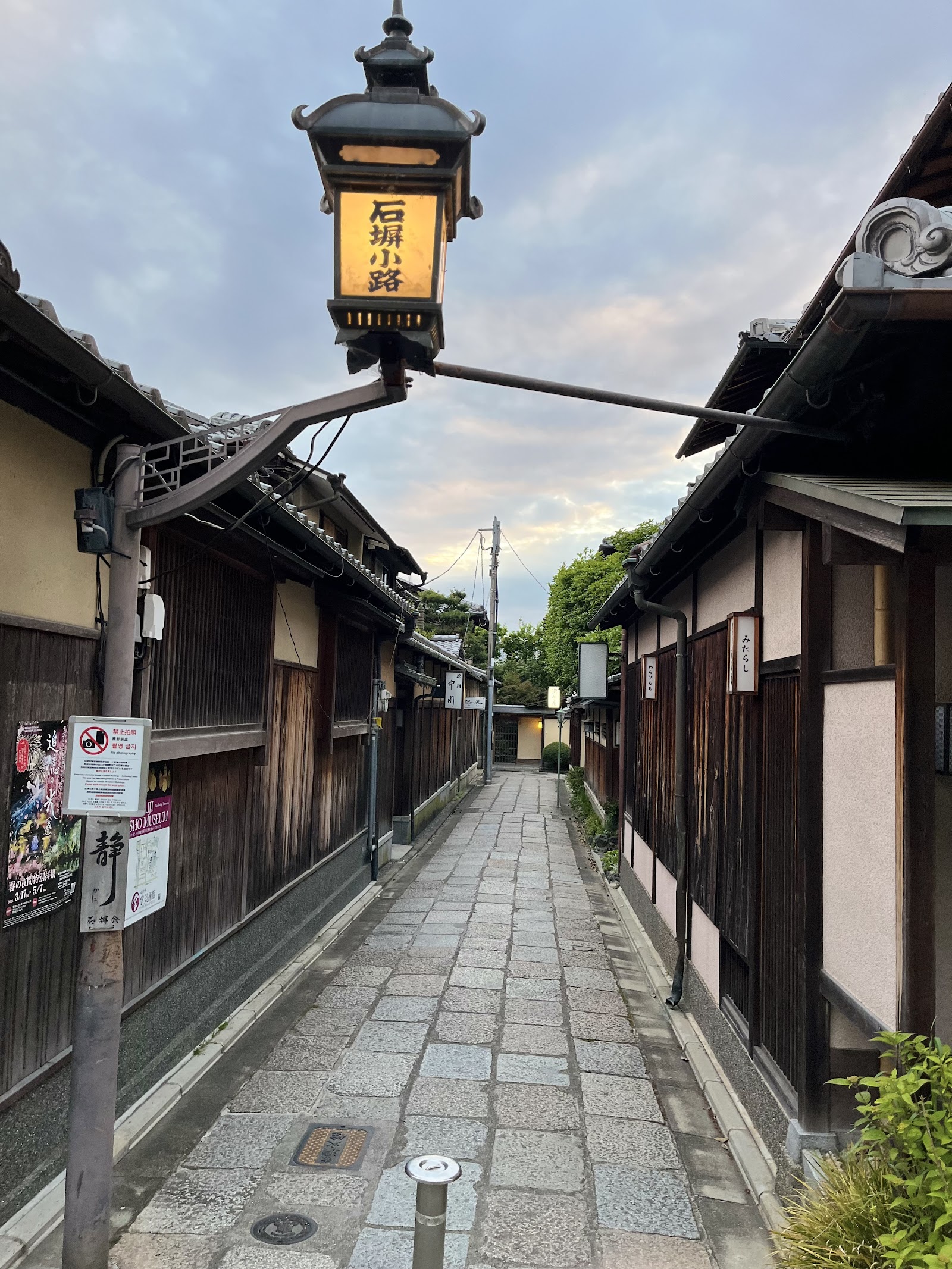
A curving stone-paved backstreet in Higashiyama, often called Kyoto's most beautiful lane, lined with exclusive ryotei and inns.
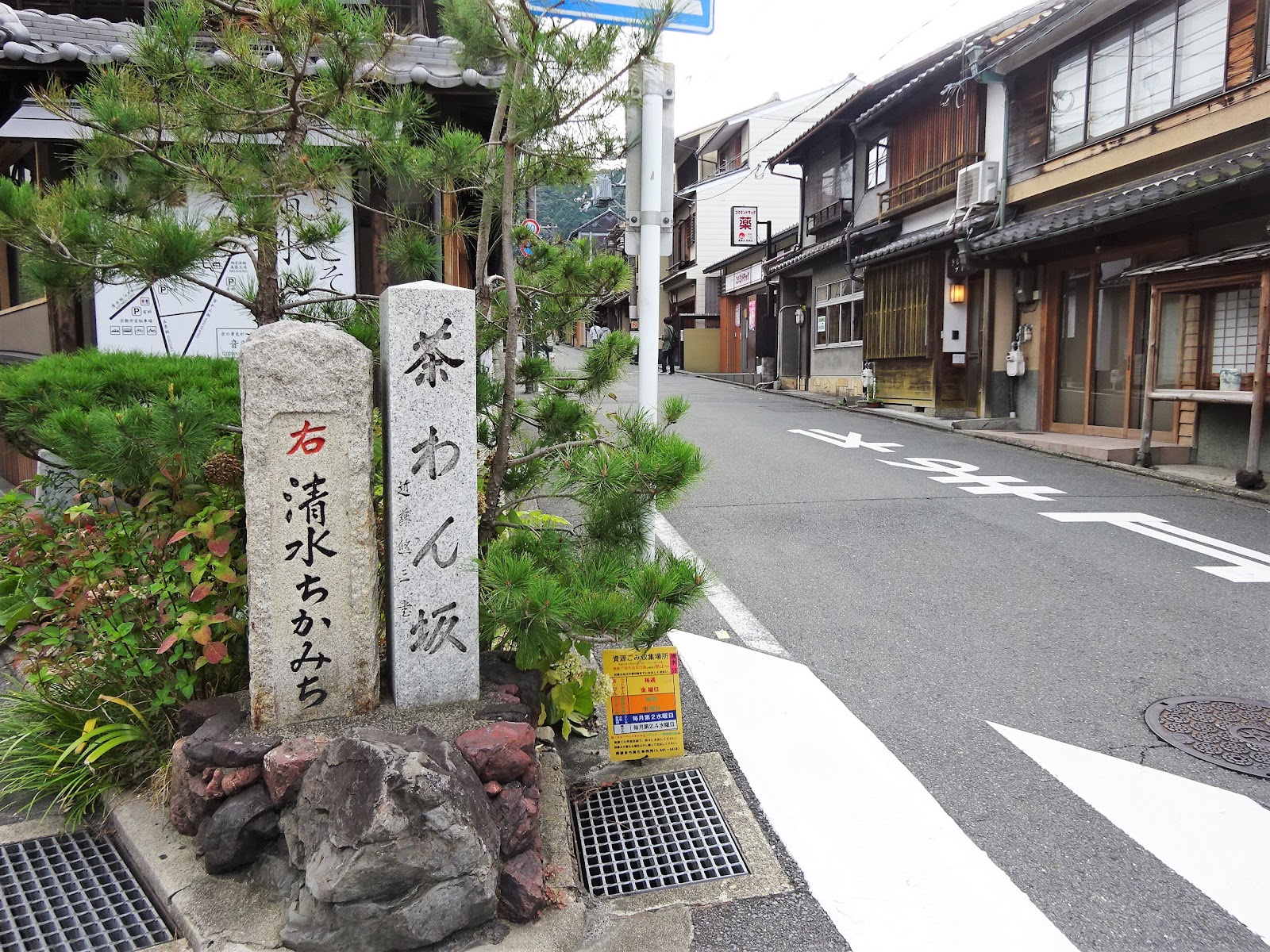
Tucked between the Nene-no-Michi promenade and the approach to Kodai-ji temple, Ishibei-koji is a short, gently curving stone-paved alley widely described as the most beautiful lane in Kyoto. Only a couple of hundred meters long and easy to miss, it rewards travellers who seek it out with an almost untouched vision of early-20th-century Kyoto: warm stone underfoot, timber and plaster walls, wooden lattice screens, and softly glowing lanterns at dusk.
Despite its antique appearance, Ishibei-koji is not medieval. It was laid out in the Taisho era, in the early 1900s, as a district of high-end inns and villas, and the harmonious stone paving and machiya facades were built as a unified ensemble. That coherence is precisely why it photographs so well — there is no jarring modern intrusion, no overhead wiring, and the curve of the lane hides its ends so that at any point you seem enclosed in another century. The district is protected within Higashiyama's preservation zone.
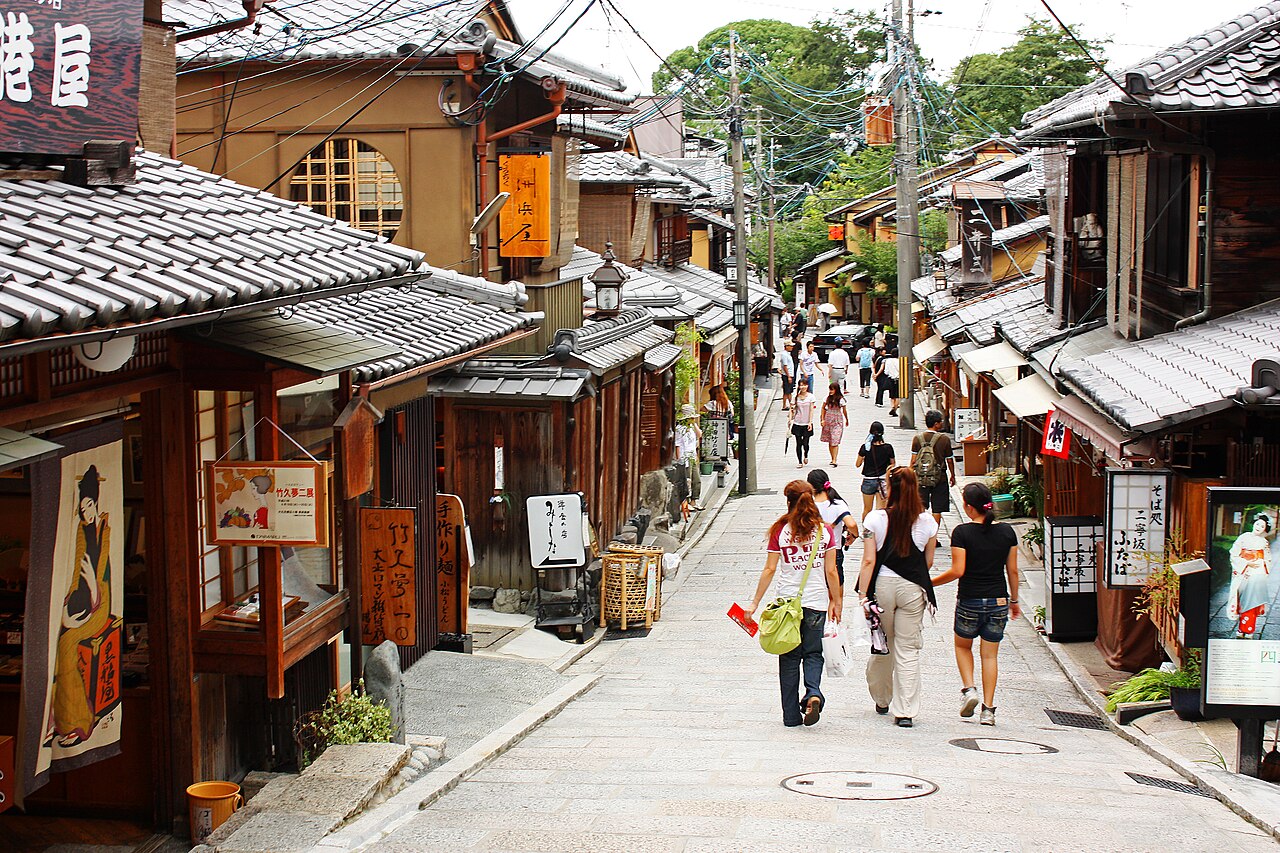
Today the lane is lined with exclusive ryotei (traditional high-end restaurants), ryokan inns, and private residences. Many have no visible menu and admit guests by reservation or introduction only; a few discreet establishments occupy converted teahouses. This exclusivity gives Ishibei-koji its hushed, private character, quite different from the bustle of nearby Sannenzaka. It is a place to walk slowly and quietly rather than to shop or eat on impulse.
Because it is a genuine residential and hospitality lane, visitors are asked to be respectful. Signs request that guests keep noise down and refrain from photographing people entering or leaving the establishments; the stonework, lanterns, and streetscape, however, are yours to enjoy. The lane is especially atmospheric at two times of day: early morning, when it is empty and cool, and dusk, when lanterns flicker on and the wet-look stone catches the last light. A light rain, far from spoiling a visit, deepens the color of the stone and thins the crowds.
Ishibei-koji sits at the heart of the Higashiyama walking route and connects naturally to a longer wander. From here you can drift north along Nene-no-Michi to Kodai-ji and Maruyama Park, or south up to Sannenzaka, Ninenzaka, and Kiyomizu-dera. Cherry blossoms and autumn maples spilling over the walls from surrounding gardens add seasonal color, though the lane's appeal is really year-round and weather-independent.
Getting there takes a little navigation. From Gion-Shijo Station on the Keihan Line, walk southeast through Gion for about 12 minutes toward Kodai-ji; the entrance is an unmarked gap between buildings near Nene-no-Michi, so it helps to have a map pin. Kyoto City Bus 206 stops nearby at Higashiyama-Yasui. Set aside only 15 to 20 minutes for the lane itself, but treat it as one quiet, beautiful bead on a string of Higashiyama sights rather than a destination on its own.
A local's tip
Photography of private guests and interiors is discouraged here — it is a working lane of exclusive ryotei and inns, so shoot the stonework, not the doorways.
Best time to visit
Early morning or dusk
Getting there
From Gion-Shijo Station walk southeast through Gion toward Kodai-ji; the lane hides between Nene-no-Michi and the Kodai-ji approach. Kyoto City Bus 206 to Higashiyama-Yasui is closest.
Good to know
- Restrooms
- Restaurants
Plan the whole trip offline
Ishibei-koji is one of many places in the Real Japan app — with turn-by-turn directions, nearby spots and full offline maps you can use with no signal.