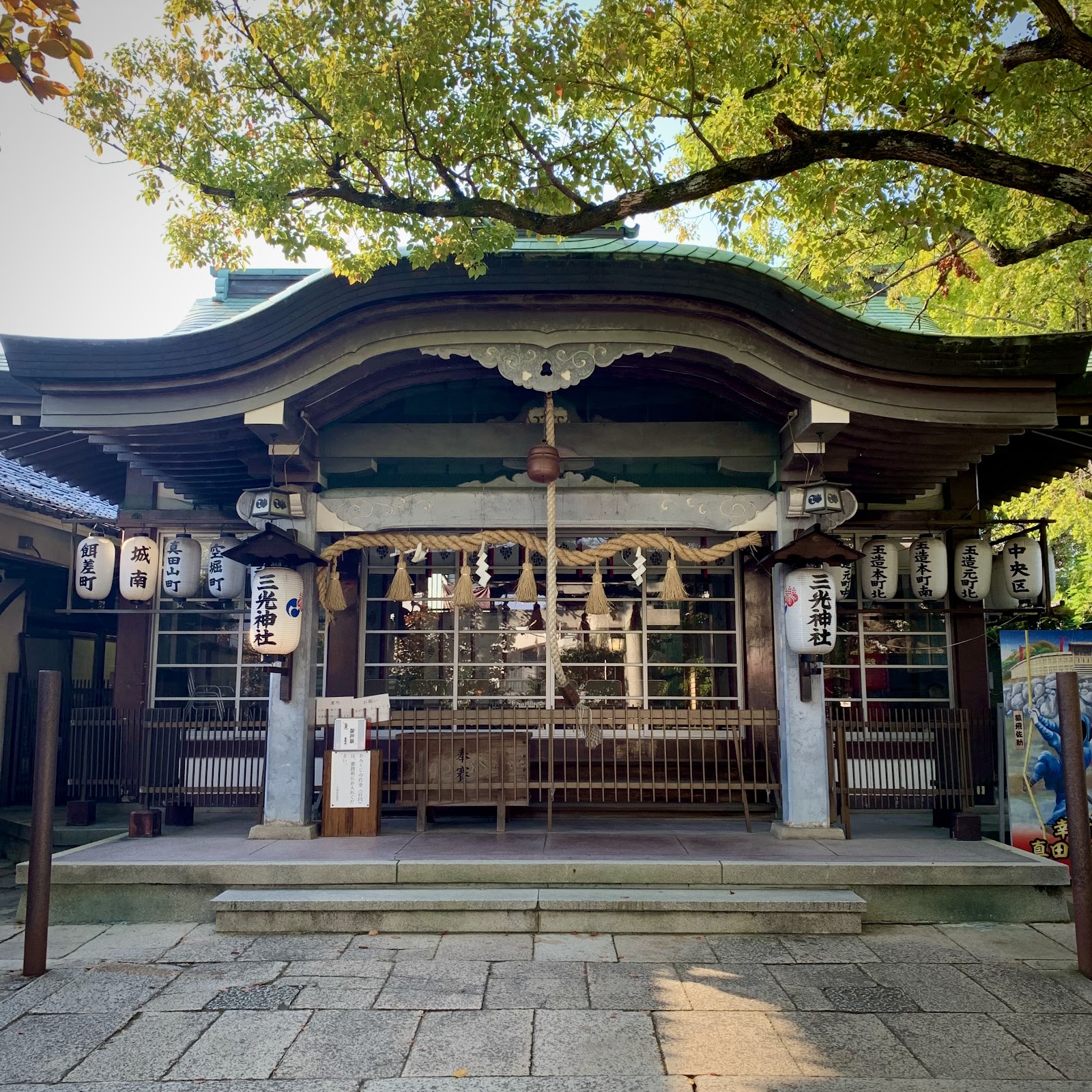
Shrine on the site of the Sanada Maru, the fortress where Sanada Yukimura defended Osaka Castle in 1614-15.
Sanko Shrine stands on a modest wooded rise southeast of Osaka Castle, and though it is a working Shinto shrine, its real fame lies in the ground beneath it, for this is the site of the Sanada Maru, the celebrated fortress bastion built by the samurai Sanada Yukimura during the sieges that ended the Toyotomi clan and sealed Tokugawa rule over Japan. When Tokugawa Ieyasu marched on Osaka Castle in the Winter Siege of 1614, Yukimura recognised that the castle's southern approach was its most vulnerable point, and he threw up a strong detached fortress here, a crescent-shaped earthwork bristling with defences. From the Sanada Maru his outnumbered defenders inflicted a bloody repulse on the Tokugawa army, a feat of arms that made Yukimura a legend and one of the most beloved warriors in Japanese history.
The following year, in the Summer Siege of 1615, the castle fell, Yukimura was killed in a last desperate charge, and the Toyotomi were annihilated, but the memory of the Sanada Maru endured. Today Sanko Shrine and the immediate neighbourhood are dotted with markers, monuments and interpretive signs recalling the fortress and its defenders, and the ubiquitous crest of the Sanada clan, six coins arranged in two rows, symbolising the toll paid to cross the river to the underworld, appears on banners, lanterns and souvenirs throughout the precinct. A statue and reliefs commemorate Yukimura, whose romantic reputation as the last great samurai has been cemented by countless novels, films and television dramas.
Beside the shrine survives an intriguing relic, a section of the Sanada tunnel, an underground passage associated with the fortress and used, according to tradition, to move troops or escape a siege. It is opened to visitors only occasionally, but its existence adds a tangible thrill to a place otherwise reshaped by centuries of city growth. Standing on the low hill, it takes little imagination to see why Yukimura chose this spot to anchor the castle's defence, the ground still rising just enough to command the approaches.
For anyone interested in samurai history, the sieges of Osaka, or the dramatic close of Japan's age of warring states, Sanko Shrine is a compact and atmospheric pilgrimage, and it makes a natural prelude to a visit to Osaka Castle itself a short distance to the north. It draws devoted fans of Sanada Yukimura from across Japan, especially around anniversaries and festivals.
To get there, take the JR Osaka Loop Line or the Metro to Tamatsukuri Station and walk about six minutes uphill to the shrine. The grounds are free to enter, with only a small charge if the tunnel is open, and the shrine office can advise on access and sell Sanada-themed charms. Allow around forty minutes, longer if you follow the neighbourhood history trail, and combine it with Osaka Castle to complete the story of the fortress and the siege that decided the fate of Japan.
A local's tip
Ask at the shrine office about visiting the surviving Sanada tunnel, an escape passage linked to the fortress that is occasionally opened, and look for the crimson six-coin Sanada crest everywhere here.
Best time to visit
Any time; a good stop en route to Osaka Castle
Getting there
Take the JR Osaka Loop Line or the Metro to Tamatsukuri Station and walk about six minutes to Sanko Shrine, which stands on the low hill southeast of Osaka Castle where the Sanada Maru fortress once guarded the castle's weakest flank.
Good to know
- Restrooms
- Shrine office
- Historical markers
Plan the whole trip offline
Sanko Shrine and the Sanada Maru Fortress Site is one of many places in the Real Japan app — with turn-by-turn directions, nearby spots and full offline maps you can use with no signal.