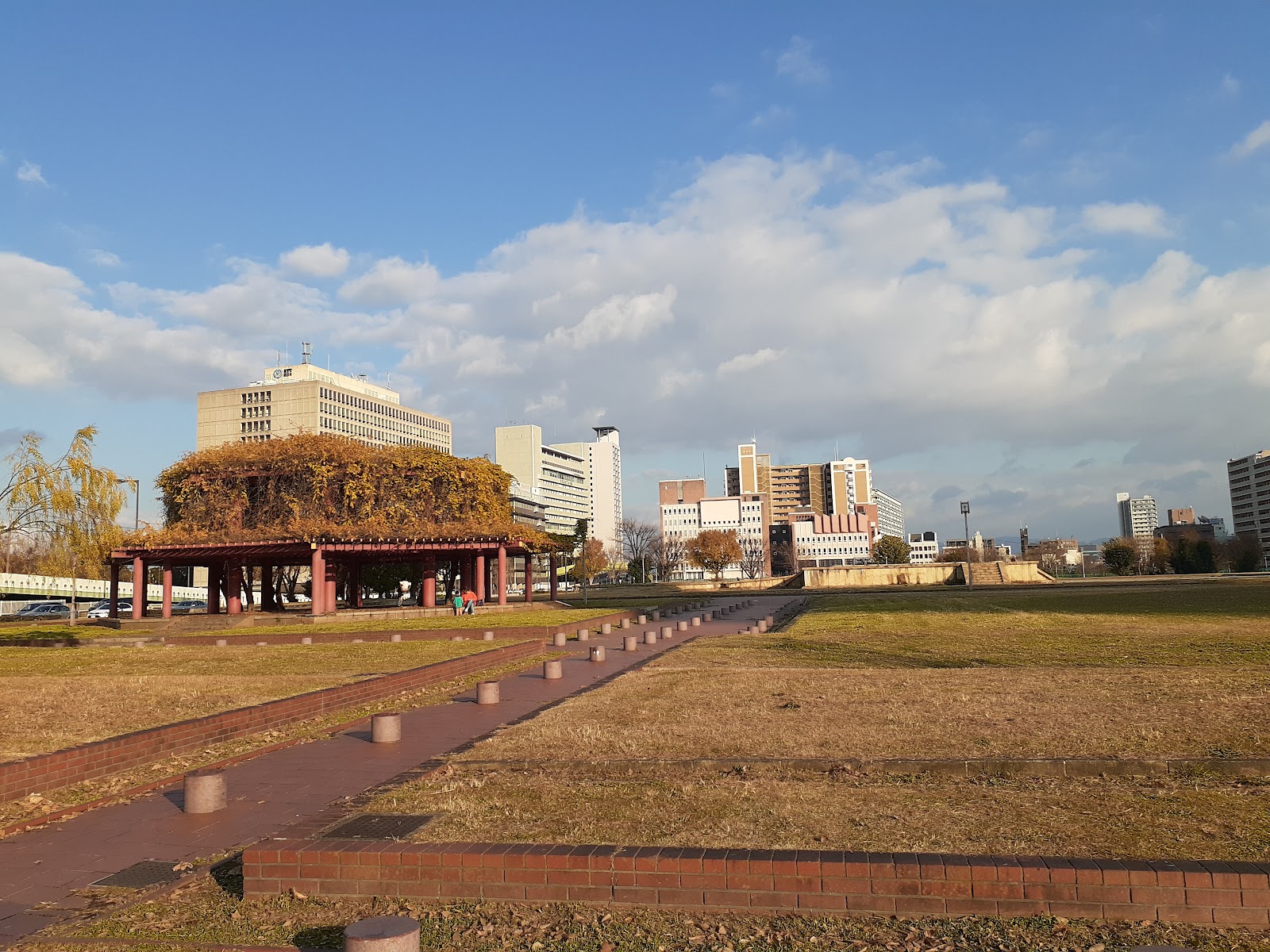
Open historical park on the site of Japan's 7th-8th century Naniwa imperial palace, beside the Osaka Museum of History.
The Naniwa Palace Site, or Naniwanomiya, preserves the ground where one of Japan's earliest imperial capitals once stood, a reminder that Osaka's history as a centre of power reaches back more than thirteen centuries, long before Osaka Castle was ever conceived. In the seventh and eighth centuries, before the courts settled at Nara and Kyoto, the imperial capital was moved several times, and on this raised terrace overlooking the bay the court established the Naniwa Palace. Two successive palaces were built here, an earlier one in the mid-seventh century associated with the Taika Reforms that reshaped the young Japanese state, and a later, grander one in the early eighth century, before the capital was finally fixed elsewhere.
Today the site is an open, grassy historical park where the outlines of the great halls and gates are marked out on the ground, and a reconstructed section of the main audience hall's raised platform lets visitors stand where courtiers once assembled before the throne. It takes some imagination to repopulate the quiet lawns with the vermilion pillars and tiled roofs of an ancient palace, but interpretive signs and the low stone markers trace the footprint of the compound, and the elevated position still commands a sense of why this spot was chosen, close to the river and the sea routes that made Naniwa Japan's gateway to the Asian mainland.
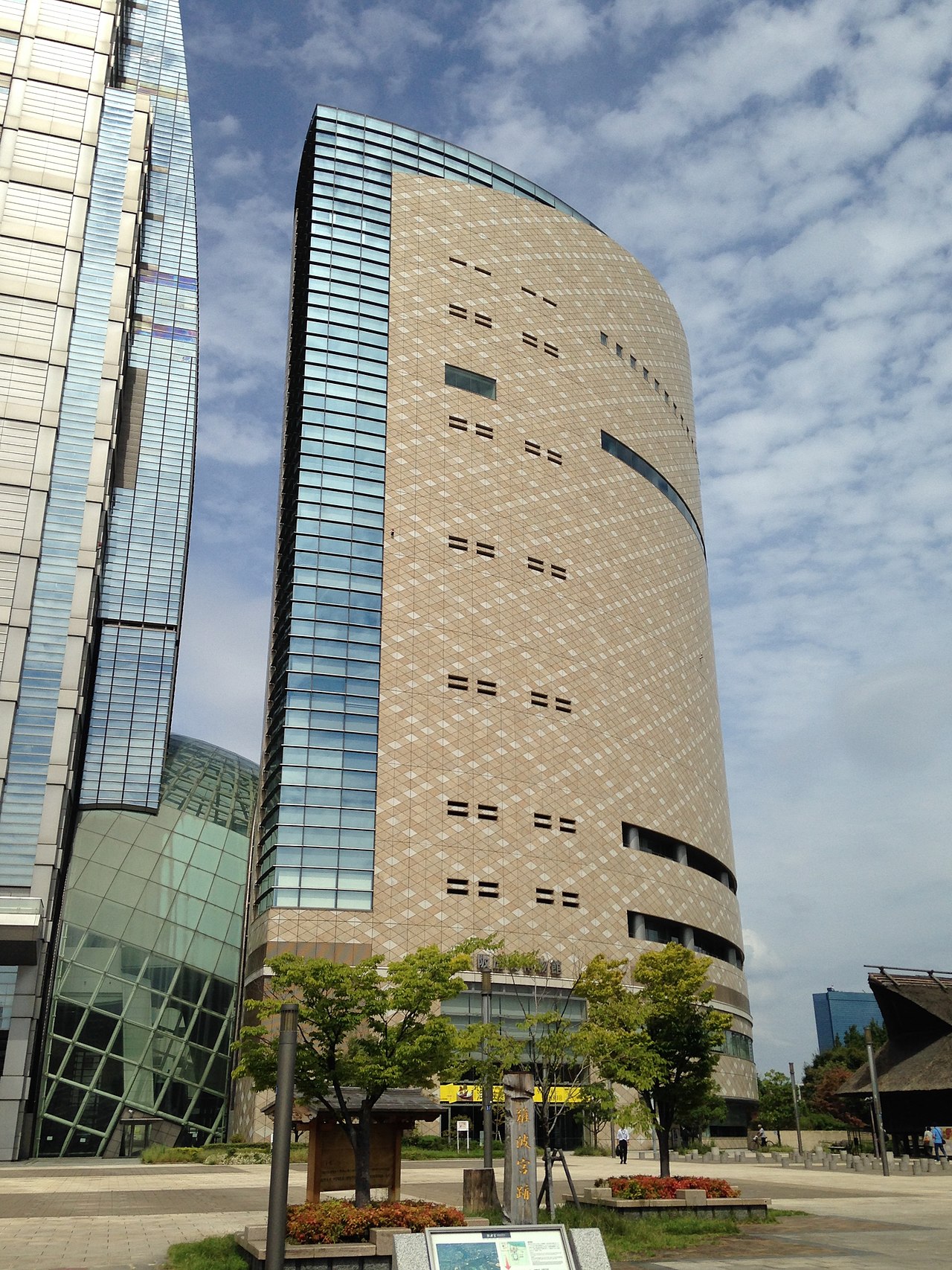
The key to understanding the site lies next door at the Osaka Museum of History, a modern tower whose lower floors are devoted to Naniwa's ancient capital. There, full-scale reconstructions of palace halls, costumed figures and artefacts recovered from the excavations bring the vanished city to life, and windows built into the museum look directly down onto the preserved foundations, so that visitors can look from a lifelike recreation to the real archaeological remains in a single glance. Excavations here have yielded pottery, roof tiles, wooden documents and traces of workshops that have transformed scholars' understanding of early Japanese statecraft.
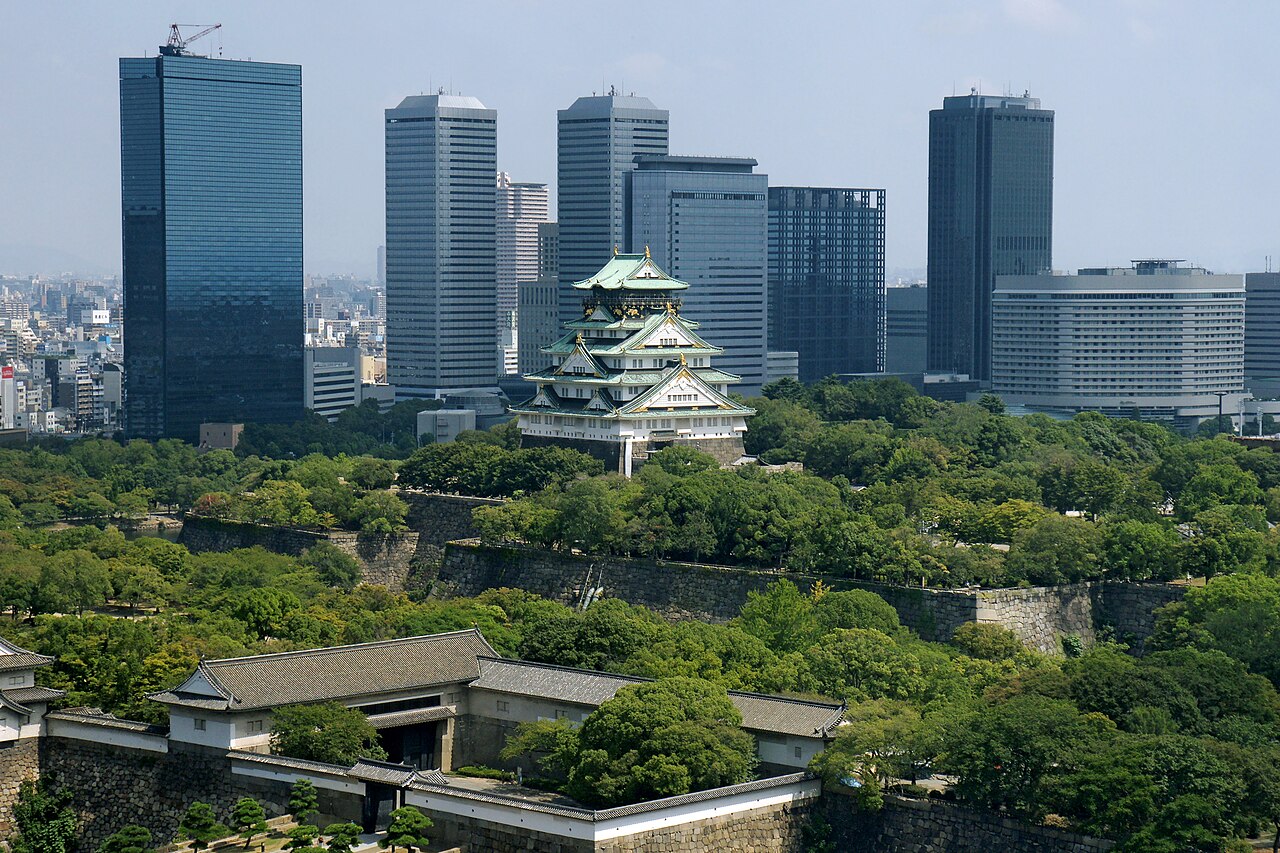
Because the palace site and museum sit immediately south of Osaka Castle Park, the whole area makes a rich half-day of history that spans a thousand years, from the ancient imperial court to the sixteenth-century fortress of the warlord Toyotomi Hideyoshi. For travellers who want to look past the famous castle keep to the deeper roots of the city, Naniwanomiya is a quietly rewarding and uncrowded stop, and its open lawns are a pleasant place to rest under the cherry trees in spring.
To visit, take the Osaka Metro to Tanimachi 4-chome Station and walk five minutes to the park; the grounds are freely open at all hours, with the museum charging separate admission. Start in the museum to see the reconstructions and the overhead view of the foundations, then walk out onto the site itself. Allow around forty-five minutes for the park, or a couple of hours if you fully explore the adjacent museum as well.
A local's tip
Visit the Osaka Museum of History next door first, where windows and exhibits look down onto the excavated palace foundations and bring the empty field to life.
Best time to visit
Spring; combine with Osaka Castle nearby
Getting there
Take the Osaka Metro Tanimachi or Chuo Line to Tanimachi 4-chome Station, from which the historical park is a five-minute walk; it lies just south of Osaka Castle Park and beside the Osaka Museum of History.
Good to know
- Signage
- Restrooms
- Reconstructed platform
Plan the whole trip offline
Naniwa Palace Site (Naniwanomiya Ruins) is one of many places in the Real Japan app — with turn-by-turn directions, nearby spots and full offline maps you can use with no signal.