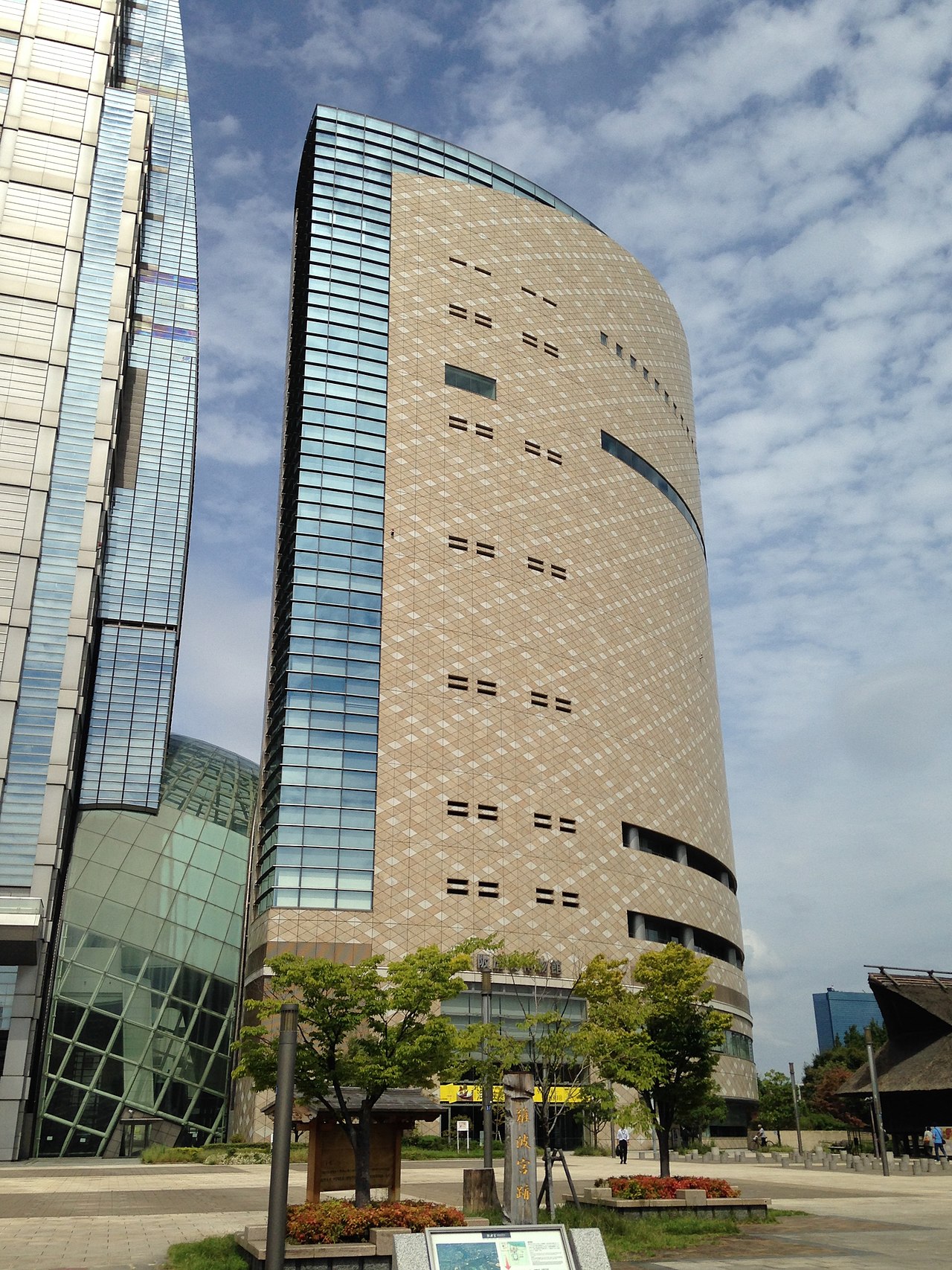
A ten-storey museum tracing 1,400 years of Osaka from the ancient Naniwa capital to the modern metropolis, with the finest indoor view of Osaka Castle.
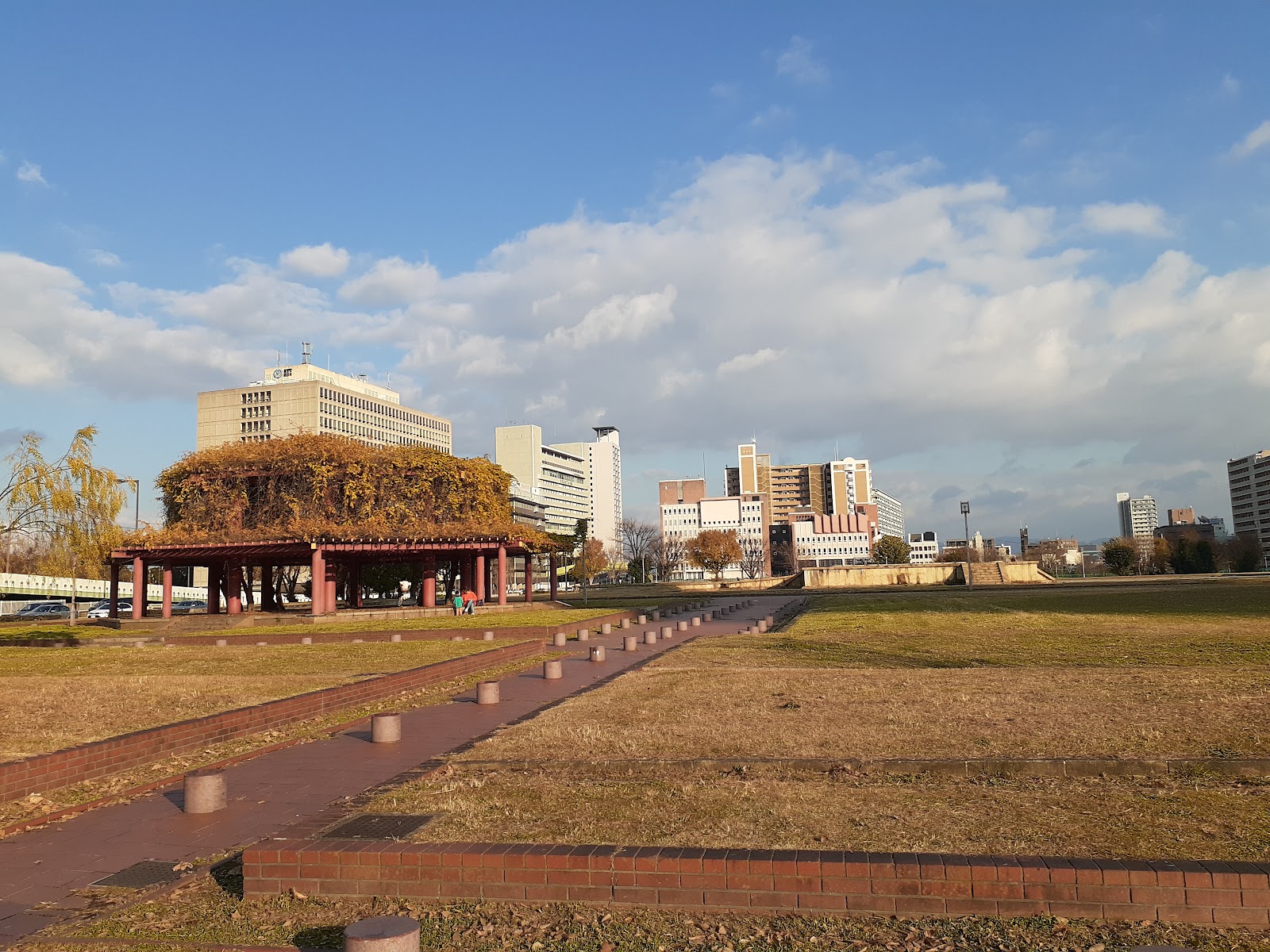
The Osaka Museum of History occupies a striking dark-glass tower beside NHK Osaka, rising ten storeys directly across the moat from Osaka Castle. Opened in 2001, it was built on one of the most important archaeological sites in Japan: beneath the building lie the excavated foundations of the Naniwa Palace, the imperial capital established here in the 7th century when Osaka — then Naniwa — was Japan's gateway to the Asian mainland.
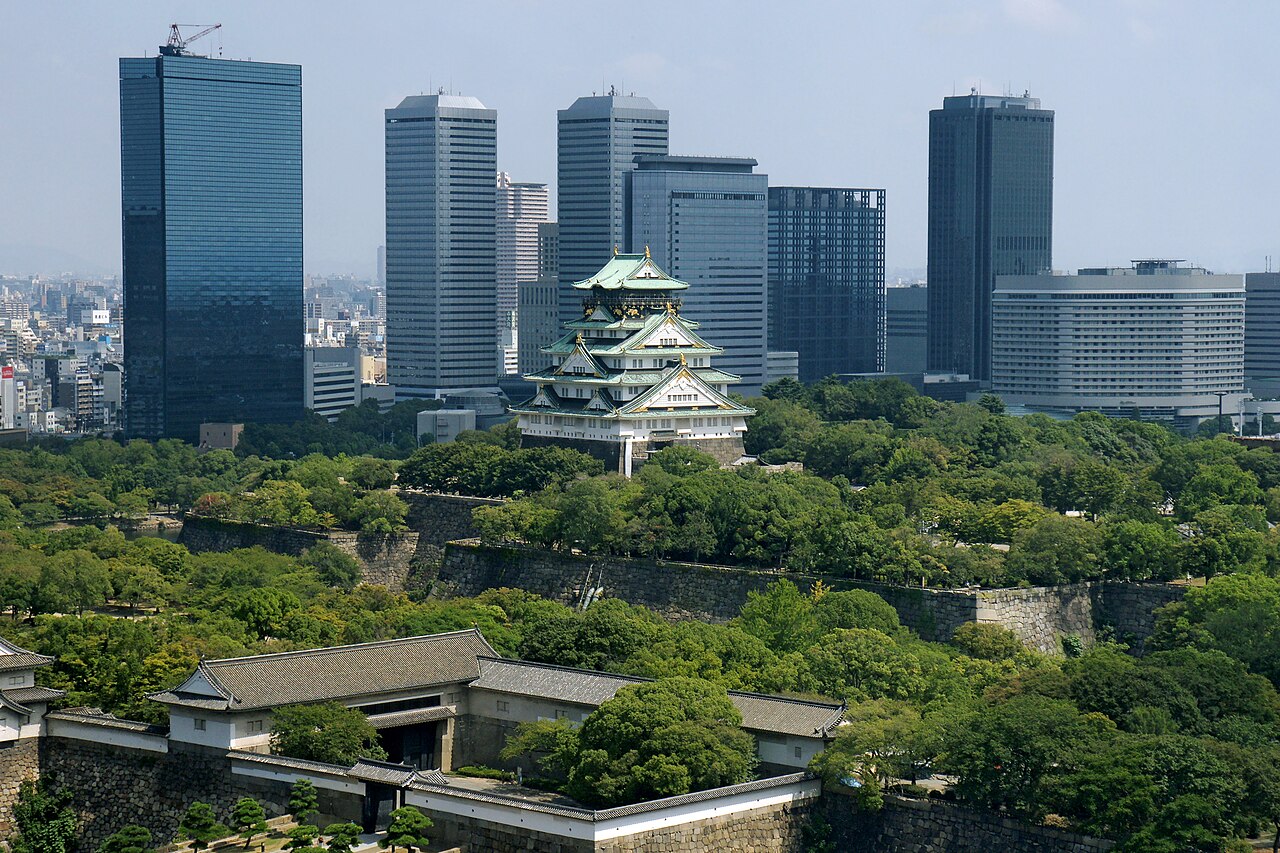
The museum is designed to be experienced top-down. Visitors ride an elevator to the 10th floor and descend through the centuries. The top floor recreates the great audience hall of the ancient Naniwa Palace with life-size vermilion pillars and rows of costumed courtier figures, while panoramic windows frame Osaka Castle and the surrounding park — the single best indoor vantage point on the keep. Lower floors move forward in time: the bustling merchant city of the Edo period, rendered in a detailed diorama of Honmachi's shop-lined streets; the modern era of trams, cinemas and the 1970 World Expo; and the Naniwa-kyo archaeology floor, where a glass panel in the ground reveals actual excavated pit dwellings and storehouse pillar holes.
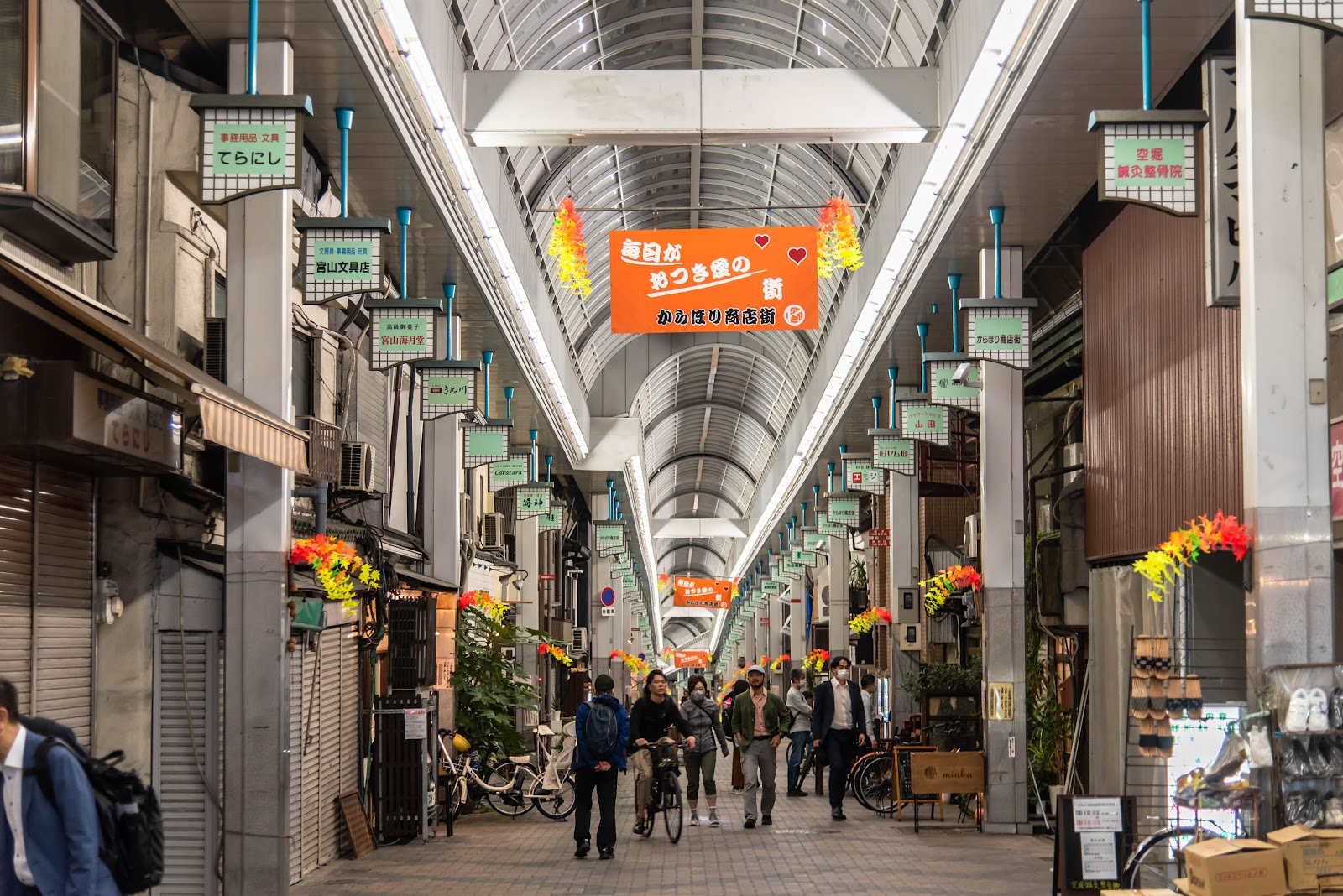
What makes the museum unusually engaging is its use of full-scale reconstructions rather than glass cases alone. You walk through a re-created Taisho-era shopping arcade, peer into a merchant's tenement, and handle replica artefacts at hands-on stations popular with children. Volunteer guides, many of them retired Osakans, are often on hand and clearly proud of the city's mercantile heritage.
A notable story is bound into the very ground here. When workers were preparing the site in the 1950s and 60s, archaeologist Kenji Yamane identified the long-lost Naniwa Palace, confirming ancient texts that placed Japan's capital in Osaka before Nara and Kyoto. That discovery reshaped understanding of early Japanese statehood, and the museum was deliberately built to preserve and display the ruins in situ; the reconstructed foundations in the adjacent plaza can be explored for free.
The visiting experience is comfortable and family-friendly: the building is fully accessible with lifts throughout, English audio guides and panels are available, and a café on the lower floors looks out over the castle grounds. Allow around ninety minutes, more if you linger at the interactive exhibits or combine the visit with the excavation site outside.
The best time to come is a weekday morning, when the galleries are quiet and morning light falls clean on the castle for photographs from the tenth floor. Spring adds cherry blossom across the castle park below. Getting there is simple: Tanimachi 4-chome Station on the Tanimachi and Chuo subway lines sits almost at the door via exits 2 and 9, and the museum pairs naturally with a walk across to Osaka Castle itself, making it an ideal first stop for anyone wanting to understand the city before exploring it.
A local's tip
Start at the 10th floor and work down — the top-floor recreation of the ancient Naniwa Palace has floor-to-ceiling windows framing Osaka Castle, the best free view of the keep in the city.
Best time to visit
Weekday mornings for quiet galleries and clear castle views
Getting there
From Tanimachi 4-chome Station (exits 2 or 9) it is a two-minute walk. The museum shares a plaza with NHK Osaka, directly across from Osaka Castle Park.
Good to know
- Cafe
- Wi-Fi
- English
- Restrooms
Plan the whole trip offline
Osaka Museum of History is one of many places in the Real Japan app — with turn-by-turn directions, nearby spots and full offline maps you can use with no signal.