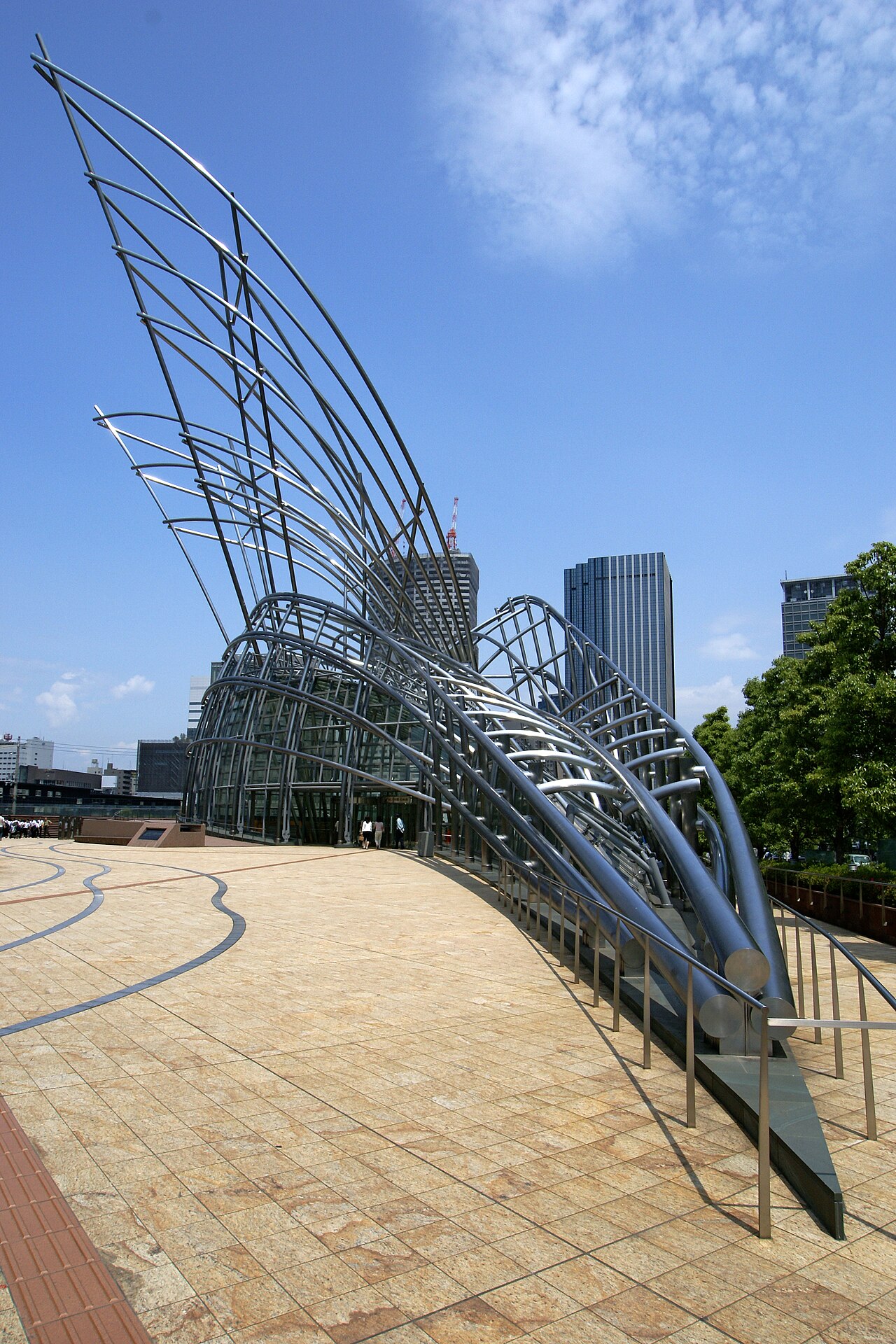
Japan's only fully underground national art museum, its soaring steel-bamboo entrance rising above a subterranean home for modern and contemporary art.
The National Museum of Art, Osaka — known by its initials NMAO — is one of the most architecturally daring museums in Japan, and one of the easiest to walk past without realising it. Almost the entire building lies beneath the ground of western Nakanoshima; all a passer-by sees is a vast sculptural canopy of curving stainless-steel tubes that soars above street level. Designed by Argentine-American architect César Pelli and completed in 2004, the form is said to evoke bamboo swaying in the wind, or the outstretched wings of a reed — a symbol of growth and vitality rising from below.
Descend the escalators and the museum opens into three subterranean floors of light-filled galleries. NMAO began in 1977 in a pavilion left over from the 1970 Osaka World Expo and relocated to this purpose-built home on Nakanoshima, the cultural spine of the city. Its focus is modern and contemporary art from Japan and abroad, and the permanent collection is genuinely international: works by Cézanne, Picasso, Miró, Max Ernst, Warhol and Cy Twombly sit alongside major Japanese postwar figures. The collection is shown in rotation rather than all at once, so the underground galleries are frequently re-hung around a rolling programme of ambitious special exhibitions that are often the real reason to visit.
Because it sits below ground, the museum offers a completely controlled environment — no natural light to fade the works, stable temperature and humidity, and a hushed, cave-like calm that suits contemplative viewing. The lowest level hosts the largest temporary exhibitions, while upper basement floors show the collection and smaller thematic displays. There is a well-stocked art bookshop and a café near the entrance hall.
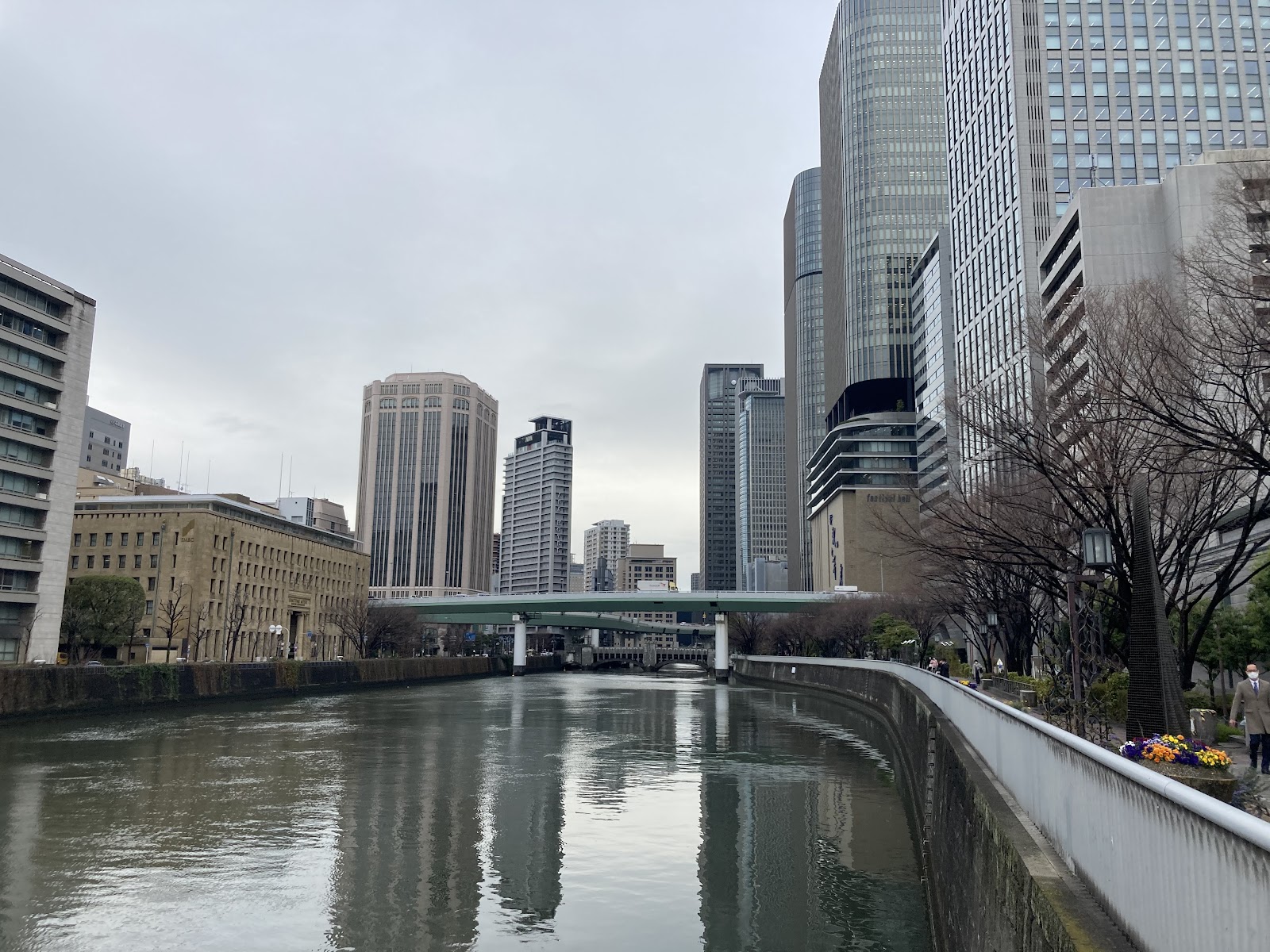
A notable point of pride is the building's engineering: constructing a large fine-art museum entirely underground, in the soft riverine soil between the Dojima and Tosabori channels that wrap Nakanoshima, required extensive waterproofing and climate control, and NMAO is often cited as one of the world's most significant fully subterranean art museums.
The visiting experience is smooth and accessible: lifts connect every level, panels and audio guides are available in English, and the underground layout keeps the whole visit comfortable whatever the weather — a real asset in Osaka's humid summers and rainy season. Allow ninety minutes for the collection and a special show combined.
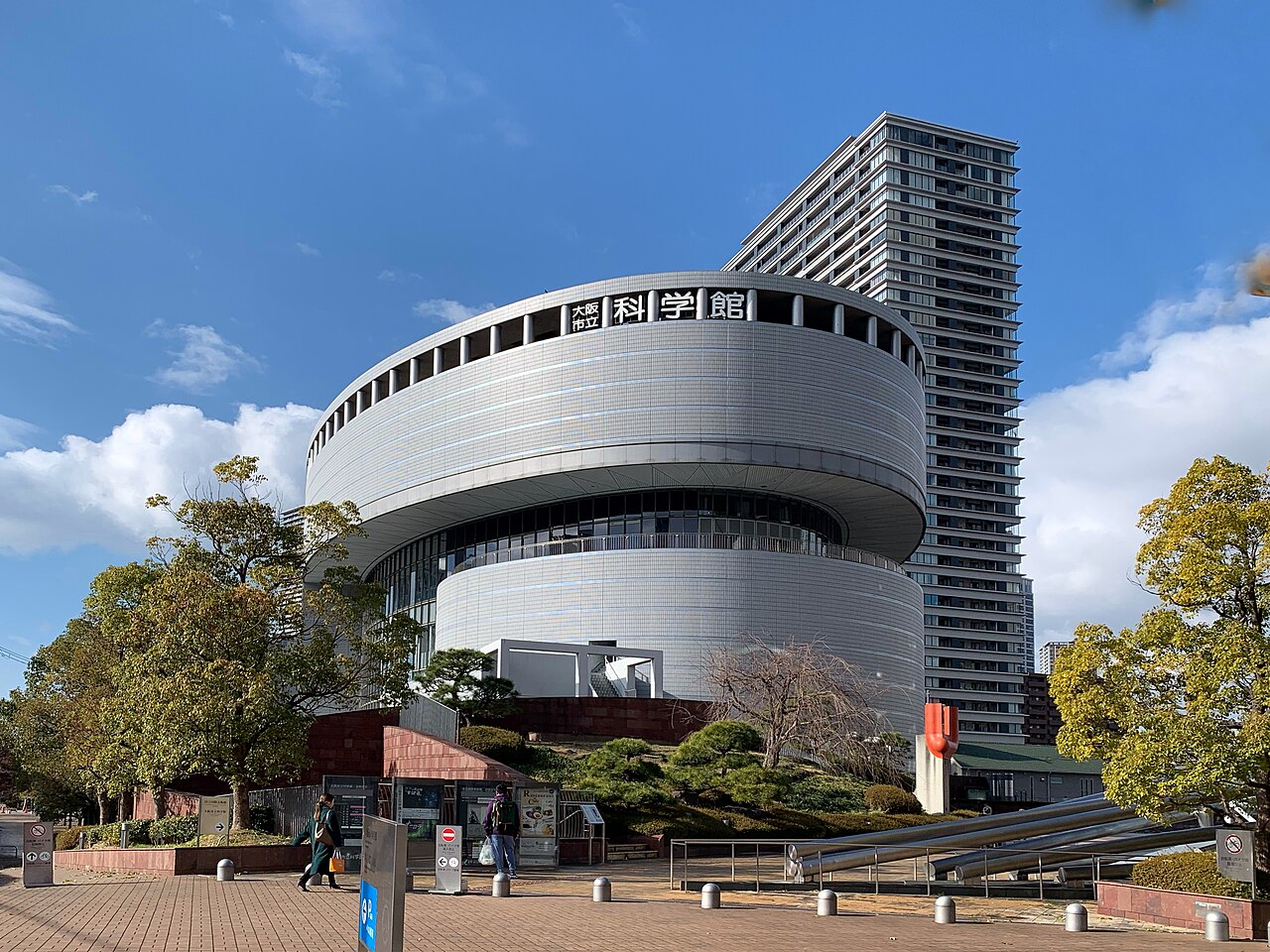
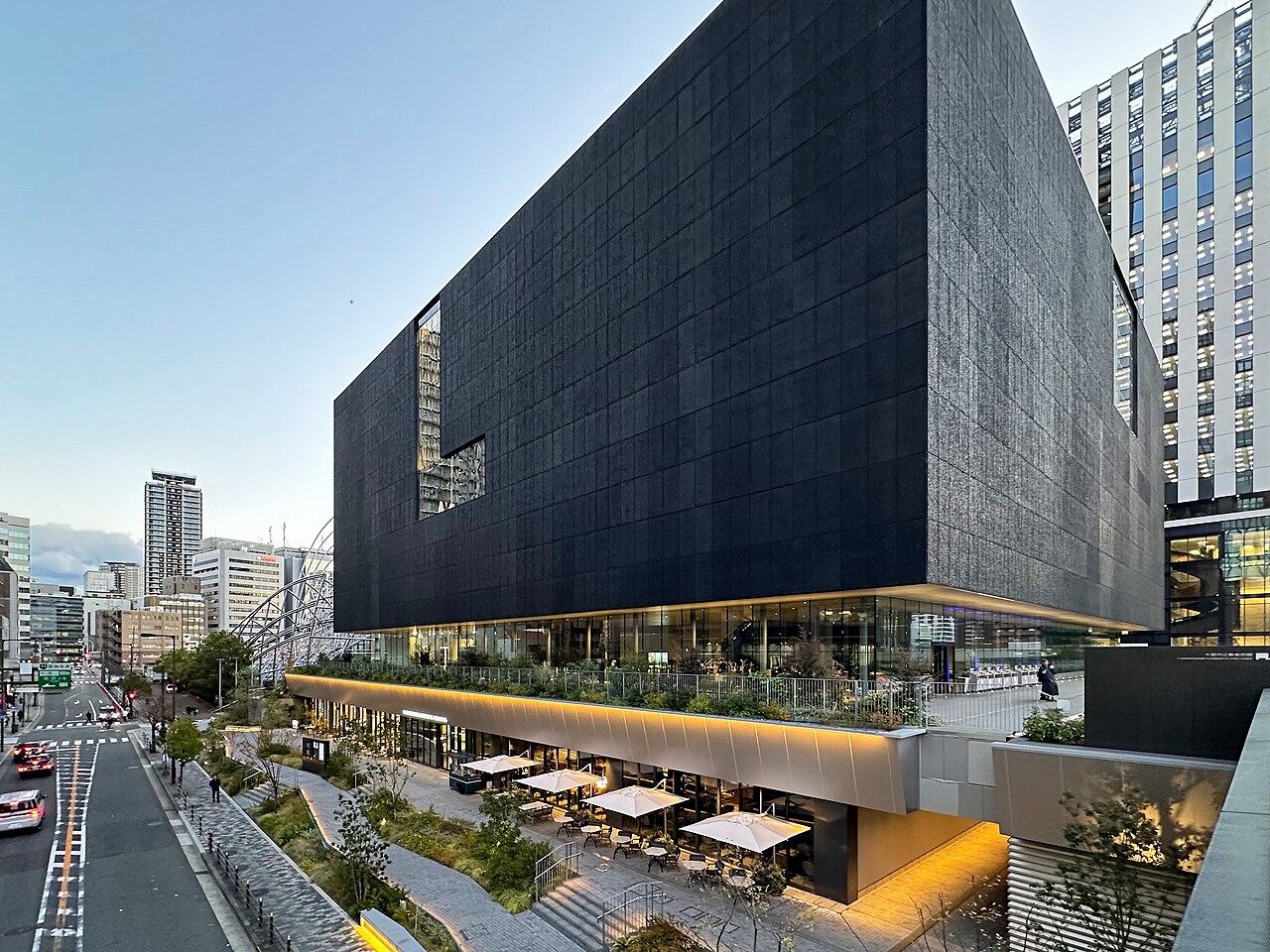
NMAO sits within easy walking distance of the Osaka Science Museum and the Nakanoshima Museum of Art, so art-minded visitors can chain all three in a single afternoon on the island. It is reached in five minutes on foot from Watanabebashi Station on the Keihan Nakanoshima Line, or about ten minutes from Higobashi on the Yotsubashi subway line. Since the draw is often the temporary programme, it is worth checking the exhibition calendar before you go — but the architecture alone rewards the trip at any time of year.
A local's tip
The entire museum is underground — the dramatic steel sculpture above ground is only the entrance canopy, so do not turn back thinking it is closed; the galleries are two and three floors below street level.
Best time to visit
Afternoons; check the special-exhibition calendar before visiting
Getting there
A five-minute walk from Watanabebashi Station on the Keihan Nakanoshima Line, or about ten minutes from Higobashi Station on the Osaka Metro Yotsubashi Line, on the western end of Nakanoshima island.
Good to know
- Cafe
- Shop
- Wi-Fi
- English
- Restrooms
Plan the whole trip offline
National Museum of Art, Osaka is one of many places in the Real Japan app — with turn-by-turn directions, nearby spots and full offline maps you can use with no signal.