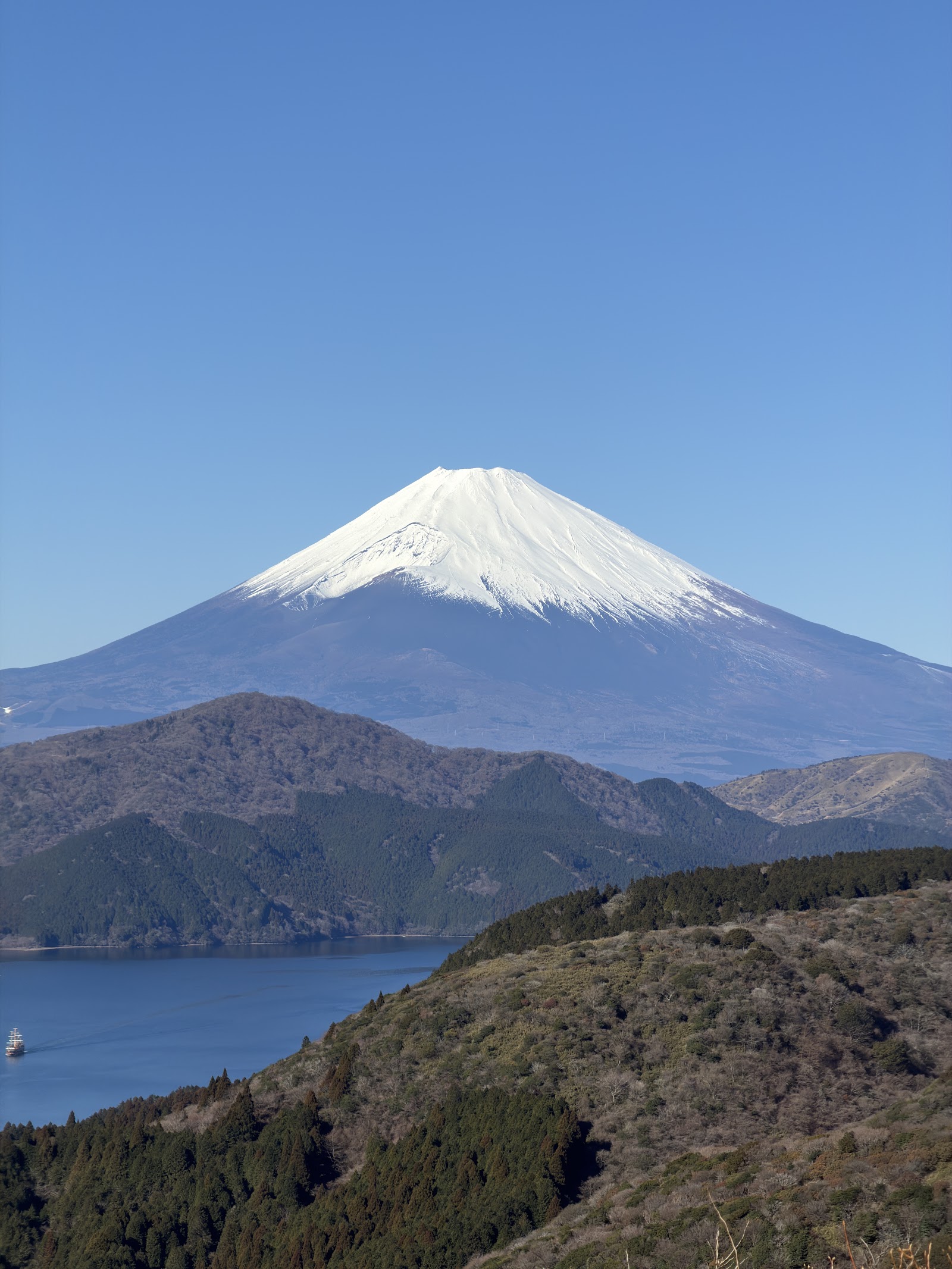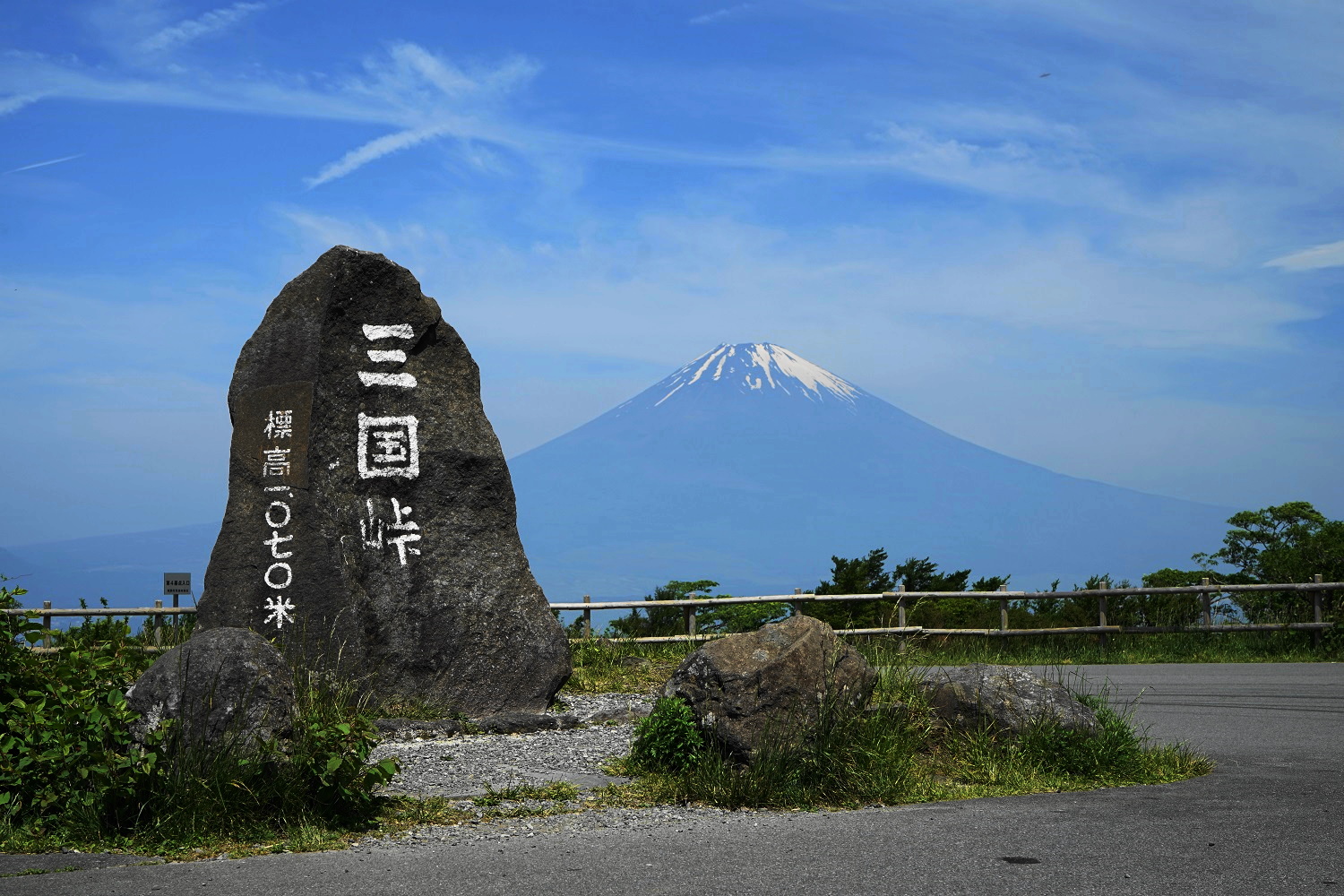
The highest point of the Ashinoko Skyline, with a sweeping view of Mount Fuji rising directly above Lake Ashi.
Mikuni Pass, or Mikunitoge, marks the loftiest point on the Ashinoko Skyline, a panoramic ridge-top toll road that runs along the western rim of the Hakone caldera. At roughly 1,070 metres above sea level, the observation deck here delivers one of the most celebrated views in the region: Mount Fuji rising cleanly above the far shore of Lake Ashi, with the lake's blue waters filling the middle distance and forested mountains rolling away on every side. The pass sits on the boundary between three old provinces — hence the name Mikuni, meaning "three countries" — and the sense of standing on a great dividing ridge is palpable.
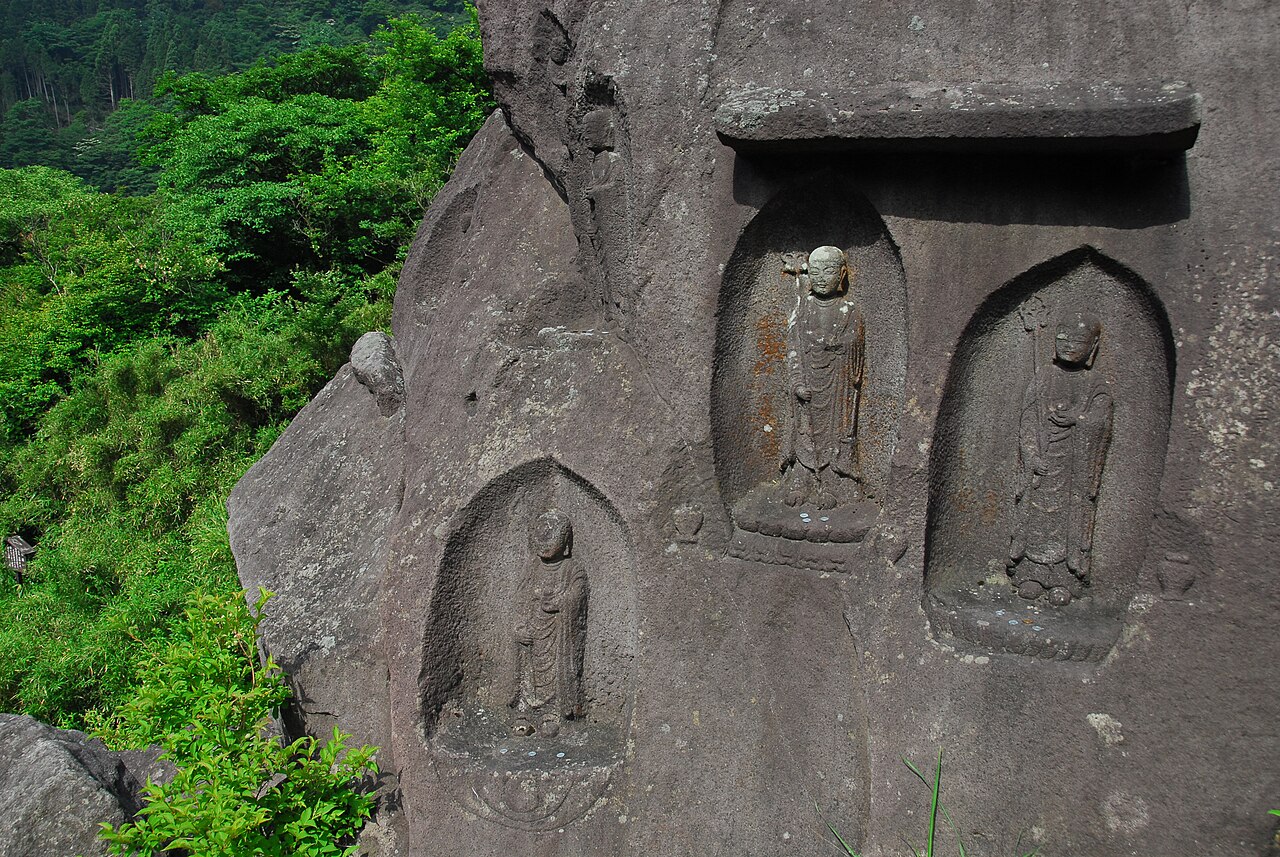
The viewpoint is a simple but well-placed platform beside the road, complete with a car park and an engraved stone marker that has become the traditional foreground for photographs. From here the eye is drawn straight across Lake Ashi to Fuji, and because the pass faces the mountain almost head-on, the composition is about as iconic as Hakone offers. On a clear, cold morning the symmetry of the scene — sacred mountain, still lake, layered ridges — is the kind of view that has inspired Japanese landscape painters and poets for centuries.
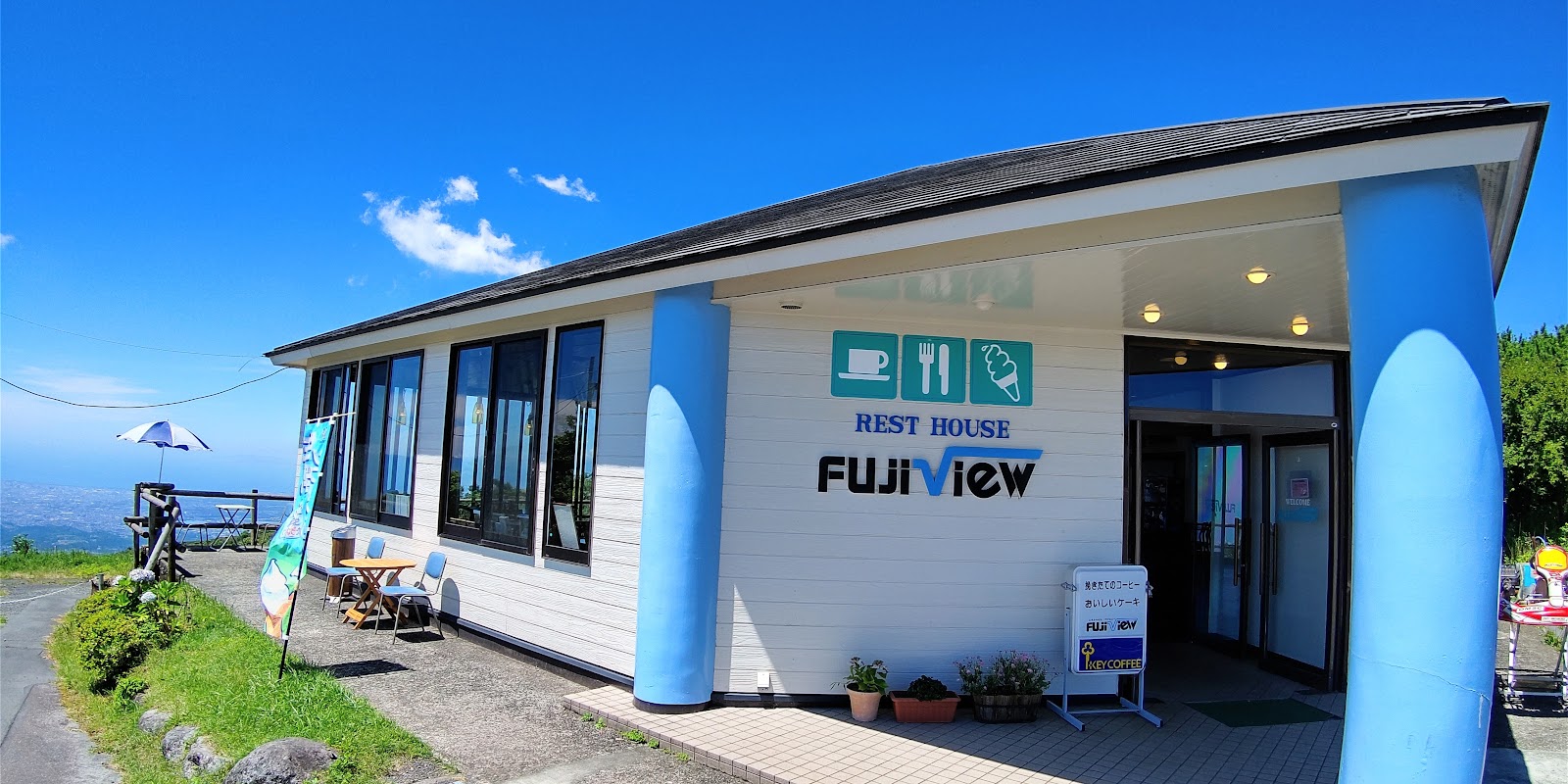
The Ashinoko Skyline itself is a draw for drivers and motorcyclists, a smooth, curving road that traces the caldera rim with a succession of viewpoints, tea houses, and pull-offs. Mikuni Pass is the crown of the route, but the whole drive is scenic, weaving between stands of beech and cedar with glimpses of the lake appearing and disappearing through the trees. Because the road is a toll route reached by car, the pass sees far fewer visitors than Hakone's ropeway attractions, and even on busy days it retains a calm, uncrowded feel.
Visibility is everything here. Fuji is famously shy, wrapping itself in cloud for much of the day and especially in the warmer months, so the reliable strategy is to arrive early on a crisp autumn or winter morning when the air is dry and the mountain stands out sharp against a deep blue sky. Autumn also brings brilliant foliage to the surrounding slopes, layering red and gold beneath the snow-streaked cone. Even without Fuji, the aerial view over Lake Ashi and the green folds of the national park is well worth the short detour.
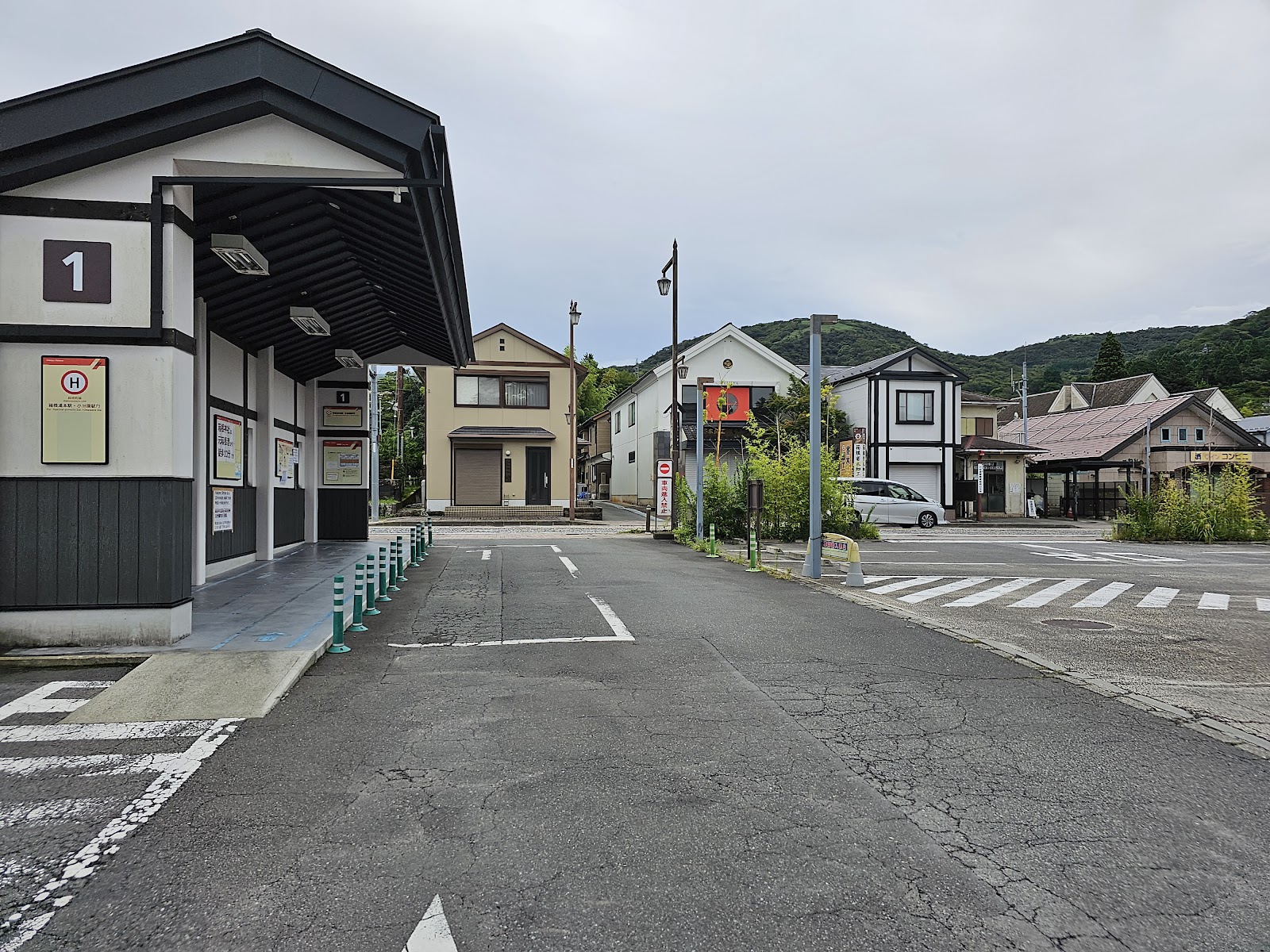
Reaching Mikuni Pass practically requires a car or motorcycle, as there is no public transport along the skyline. Drivers usually approach from the Hakone side, paying the toll at the barrier and following the ridge road south to the pass, or continue on from the connecting Hakone Turnpike and its Daikanzan lookout for a full circuit of the region's grandest panoramas. Allow half an hour to park, walk to the deck, take in the view, and photograph the engraved marker with Fuji behind. Pair it with Daikanzan and the Nagao Pass for a morning devoted entirely to mountain vistas.
A local's tip
The engraved viewpoint rock makes the classic photo; stand slightly to the side to line up Fuji above Lake Ashi.
Best time to visit
Clear mornings
Getting there
Drive the Ashinoko Skyline toll road to its southern end; the Mikuni Pass observation deck and car park sit at the highest point of the route.
Good to know
- Parking
- Restrooms
Plan the whole trip offline
Mikuni Pass Observation Deck is one of many places in the Real Japan app — with turn-by-turn directions, nearby spots and full offline maps you can use with no signal.