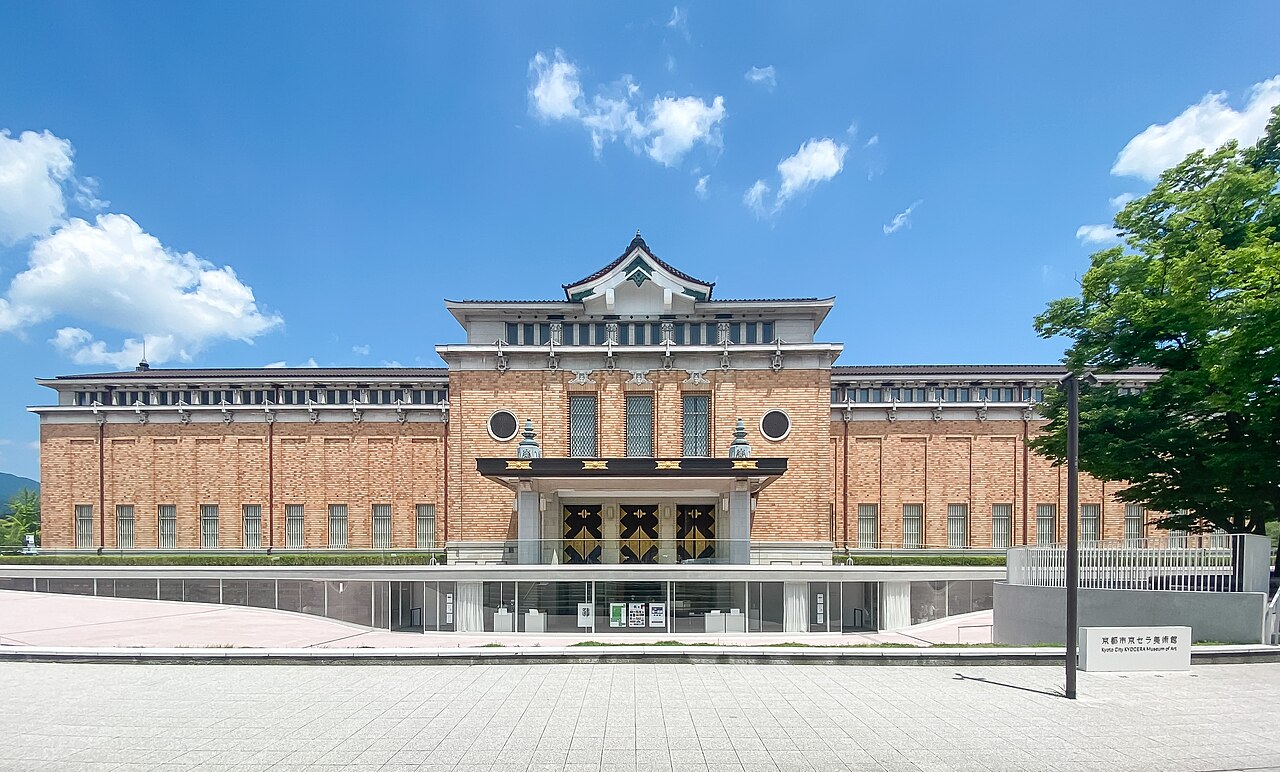
Kyoto's grand civic art museum, a restored 1933 landmark with a bold glass entrance and strong modern Japanese collection.
The Kyoto City Kyocera Museum of Art is the second-oldest public art museum in Japan and, after a dramatic renovation, one of its most beautifully staged. Originally opened in 1933 as the Kyoto Enthronement Memorial Museum of Art to mark the accession of Emperor Showa, its imposing main hall crowns the Okazaki cultural park with a distinctive teikan-yohiki design: a Western neoclassical body topped by a traditional Japanese tiled roof, a hybrid style typical of imperial-era civic architecture. That 1930s facade is a registered landmark and remains gloriously intact.
In 2020 the museum reopened after a major renovation led by architects Jun Aoki and Tezzo Nishizawa, who added one of the most talked-about new spaces in the city. Rather than disturb the historic front, they excavated the sloping forecourt and inserted a sweeping curved-glass entrance, the Glass Ribbon, that draws visitors gently down and under the original building into a luminous new lobby. The result marries 1930s grandeur with contemporary lightness, and the naming rights held by the Kyoto-based Kyocera Corporation funded much of the work.
Inside, the museum holds a collection of around four thousand works with a particular strength in modern and contemporary Japanese art connected to Kyoto: Nihonga (Japanese-style painting), Western-style oil painting, crafts, prints and sculpture from the Meiji era onward. Names associated with the Kyoto art world, such as Takeuchi Seiho and other masters of the local painting circles, feature prominently. The museum is also the city's premier venue for blockbuster travelling exhibitions, which have ranged from Andy Warhol retrospectives to major shows of classical and contemporary art, so there is almost always a headline event on.
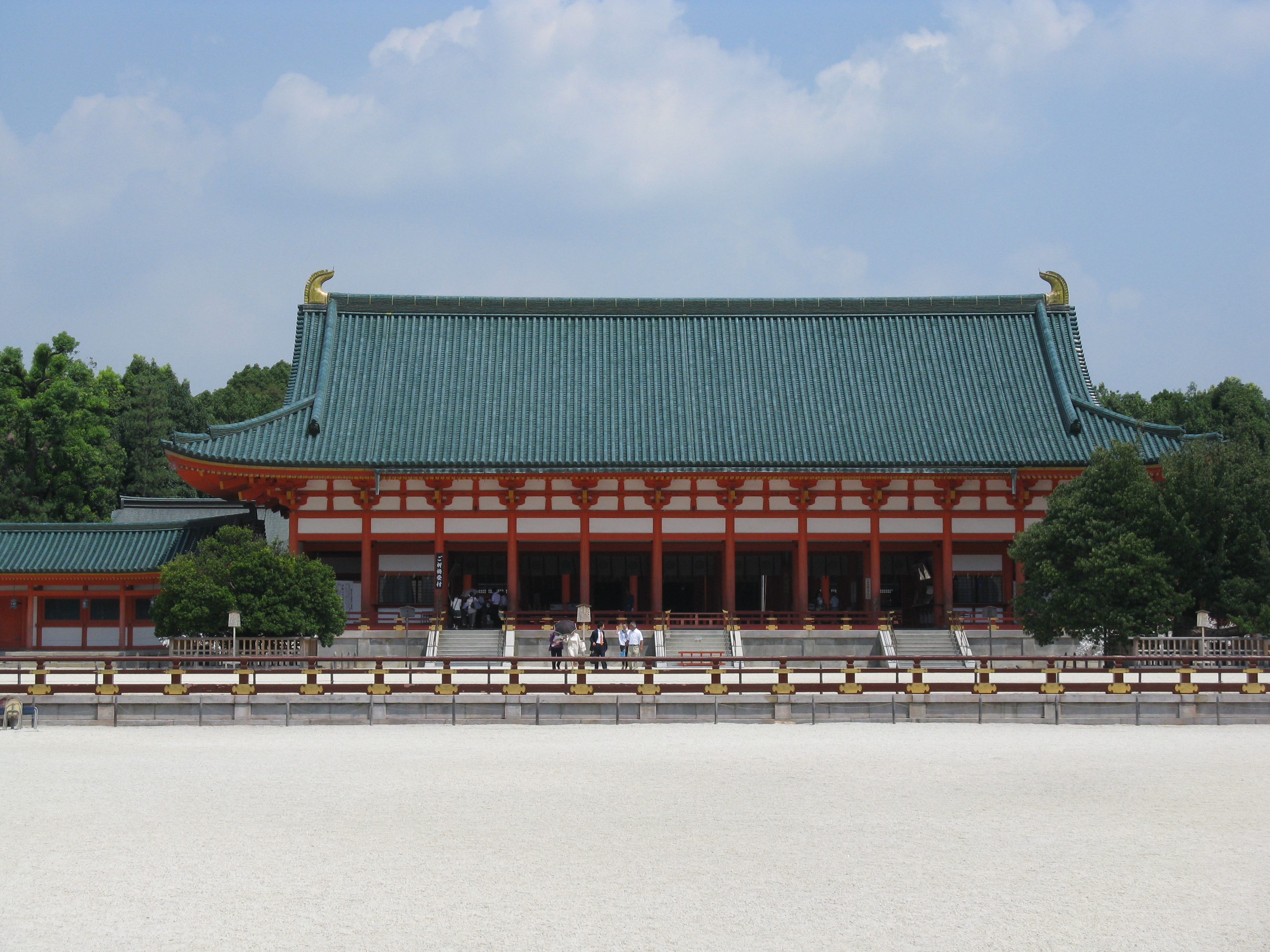
The building rewards wandering even before you buy a ticket. The double-height main hall, the restored staircases and the light-filled central court are architecture worth experiencing, and the rooftop terrace offers a lovely framed view across the Okazaki district toward the enormous vermilion torii gate of Heian Shrine and the green Higashiyama mountains beyond. There is a stylish museum shop and a cafe, and the surrounding park is dotted with the National Museum of Modern Art, the Kyoto Municipal Zoo, the ROHM Theatre and the Heian Shrine gardens, making Okazaki an easy half-day of culture.
Okazaki is at its most magical in spring, when the canal and park erupt in cherry blossom and boats drift beneath the pink canopy, and again in autumn when the maples colour. Allow around two hours for the collection, more if a big special exhibition is running.
To get there, ride the Tozai subway line to Higashiyama Station and walk about eight minutes, or take a city bus from Kyoto Station to the Okazaki-koen stops. The collection galleries cost around 730 yen, while special exhibitions are ticketed separately and can be considerably more. The museum is closed on Mondays and over the New Year period.
A local's tip
The rooftop terrace and the free ground-floor Glass Ribbon entrance hall are worth a look in their own right; the terrace frames a fine view over the Okazaki torii toward the Higashiyama hills.
Best time to visit
Spring for the Okazaki cherry blossoms; any weekday for calm galleries
Getting there
An 8-minute walk from Higashiyama Station on the Tozai subway line, or a short bus ride to Okazaki-koen from Kyoto Station; the museum stands beside the giant vermilion torii of Heian Shrine.
Good to know
- Cafe
- Wi-Fi
- Restrooms
- Museum Shop
- Rooftop Terrace
Plan the whole trip offline
Kyoto City Kyocera Museum of Art is one of many places in the Real Japan app — with turn-by-turn directions, nearby spots and full offline maps you can use with no signal.