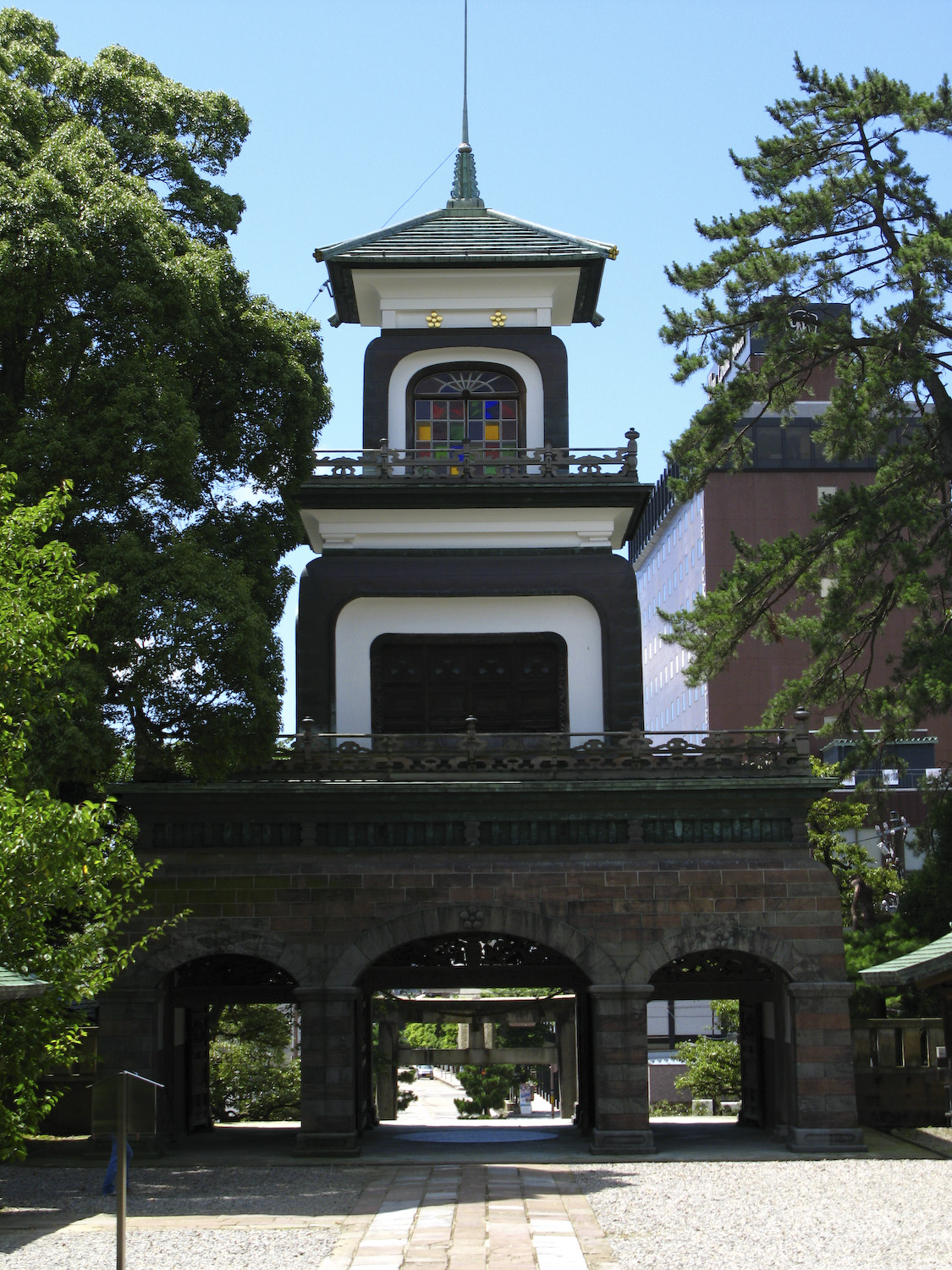
An elegant shrine beside Kenroku-en built by the Maeda lords, dedicated to the deity of learning and much visited by students.
Kanazawa Shrine sits tucked against the southern edge of Kenroku-en, the celebrated garden that anchors the city, yet it is quietly overlooked by many visitors who pass straight through the garden gates. That is a pity, because the shrine is both historically important and one of the most serene corners of central Kanazawa, wrapped in old trees and connected to the ruling Maeda clan who shaped the city over nearly three centuries.
The shrine was founded in 1794 by the eleventh lord of the Kaga Domain as a place to honour Sugawara no Michizane, the Heian-era scholar and statesman revered across Japan as Tenjin, the deity of learning and scholarship. The Maeda family claimed descent from the Sugawara line, so the shrine served both as a clan shrine and as a guardian of the domain. Because of the Tenjin connection, Kanazawa Shrine draws a steady stream of students who come to pray for success in examinations, tying votive plaques inscribed with their wishes to the racks in the precinct, particularly during the winter exam season.
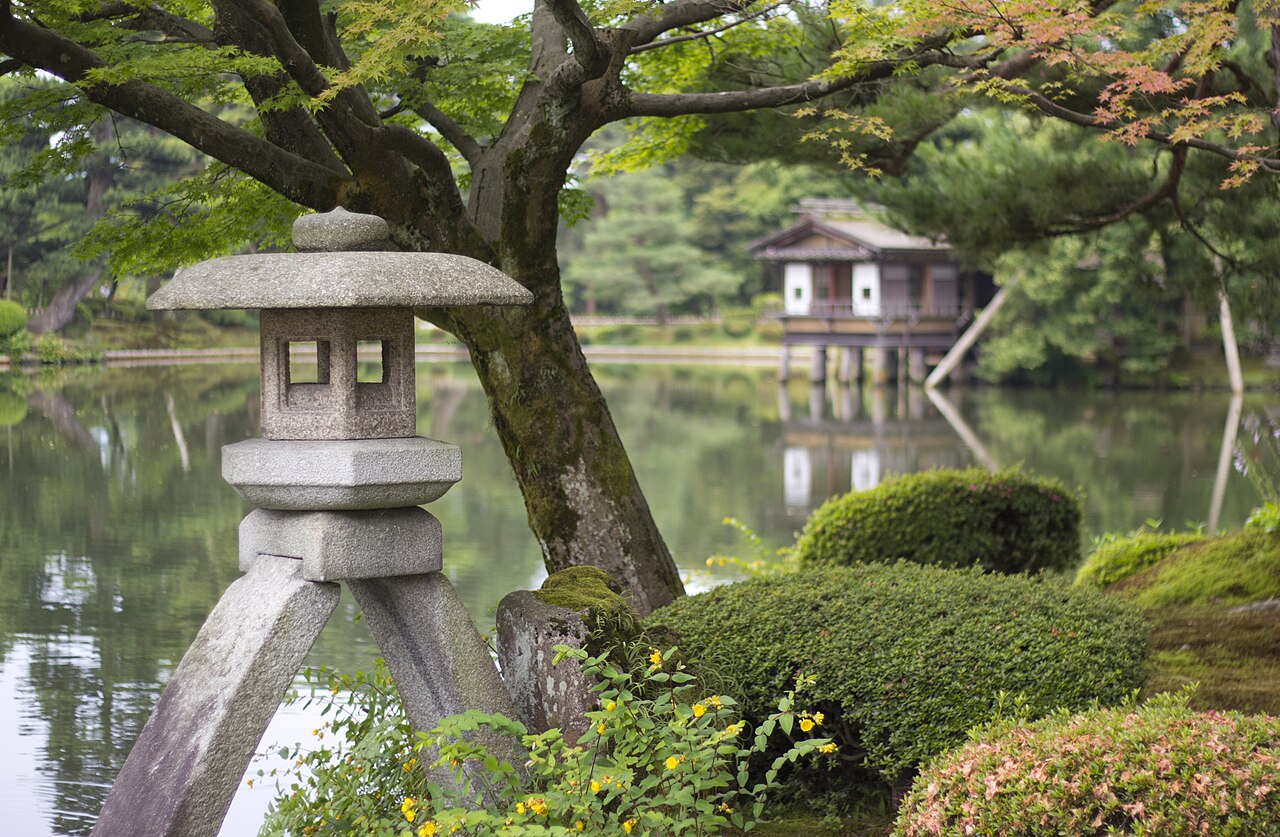
Within the grounds stands the Kinjo Reitaku, a natural spring long associated with the very origin of the city's name. Local legend holds that a peasant named Imohori Togoro once washed potatoes and found gold flakes in a nearby spring, giving rise to the name Kanazawa, literally the marsh of gold. The spring here is celebrated as a symbol of that founding story and of good fortune, and visitors pause to admire its clear water framed by stone and greenery.
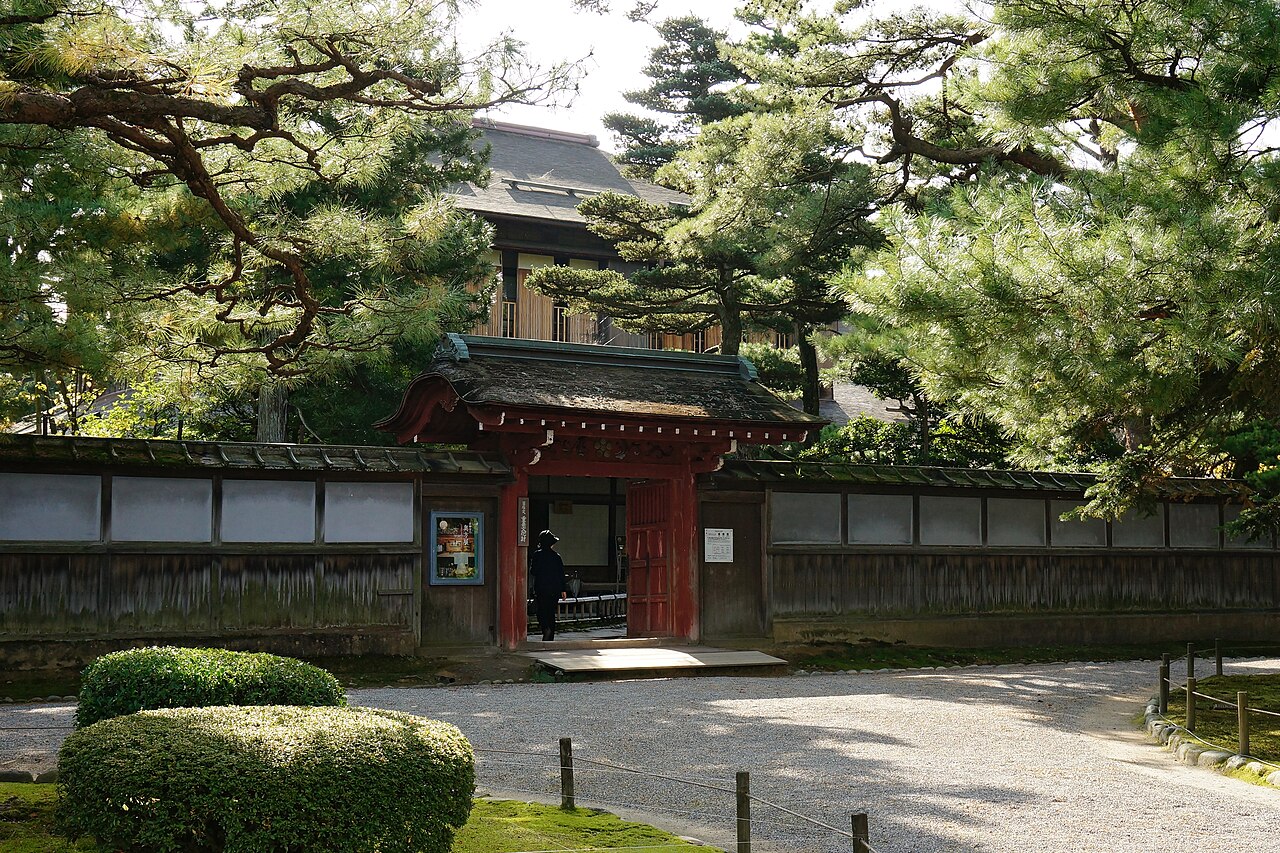
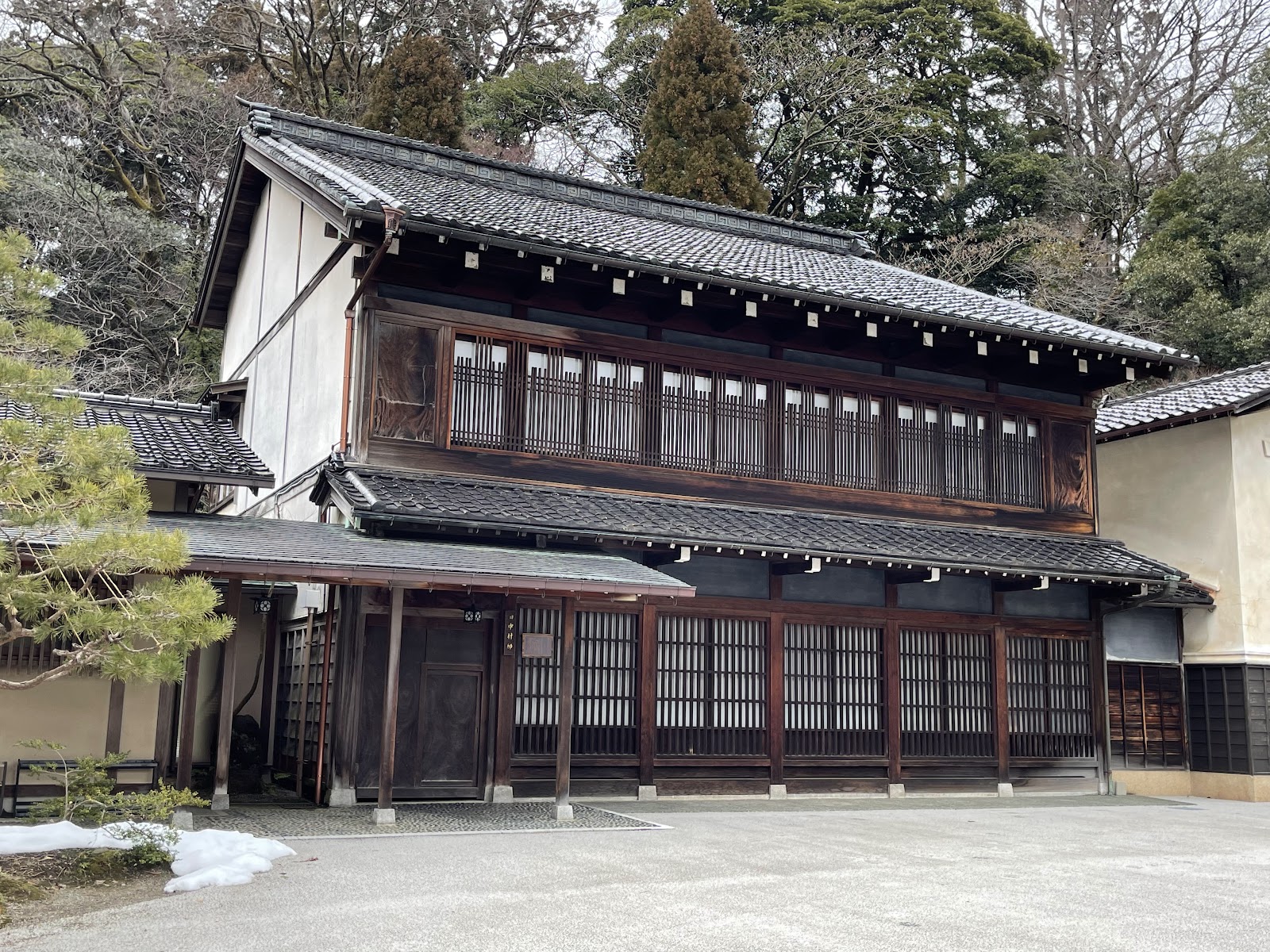
Architecturally the shrine is refined rather than grand, with vermilion and dark timber structures set among mature trees that turn the compound into a pool of shade in summer and a canvas of colour in autumn. Its intimate scale and relative quiet make it a welcome contrast to the busy paths of Kenroku-en just beyond the fence, and a small connecting gate allows visitors to move directly between the garden and the shrine.
Practically, the easiest approach is to visit as part of a Kenroku-en outing. Take the Kanazawa Loop Bus to the Kenrokuen-shita or Hirosaka stop, enter the garden, and make for its southern side near the Seison-kaku villa, where the shrine adjoins the grounds. Admission to the shrine itself is free, though the garden charges a separate entry fee. Spring brings cherry and plum blossom to the surrounding trees, autumn sets the maples alight, and the shrine's calm atmosphere rewards a visit in any season. Pick up an academic-success charm here even if your exam days are behind you; it makes a characterful souvenir with a genuine local story attached.
A local's tip
Slip out of Kenroku-en's quieter southern gate to the shrine to escape the crowds, and look for the Kinjo Reitaku spring, one of the original water sources tied to the naming of Kanazawa.
Best time to visit
Combine with a Kenroku-en visit; exam season for students
Getting there
Take the Kanazawa Loop Bus to Kenrokuen-shita or Hirosaka, enter Kenroku-en at the Zuishin-zaka or Kodatsuno gate, and the shrine adjoins the garden near the Seison-kaku villa; a small gate connects the two.
Good to know
- Restrooms
- Omamori charms
Plan the whole trip offline
Kanazawa Shrine is one of many places in the Real Japan app — with turn-by-turn directions, nearby spots and full offline maps you can use with no signal.