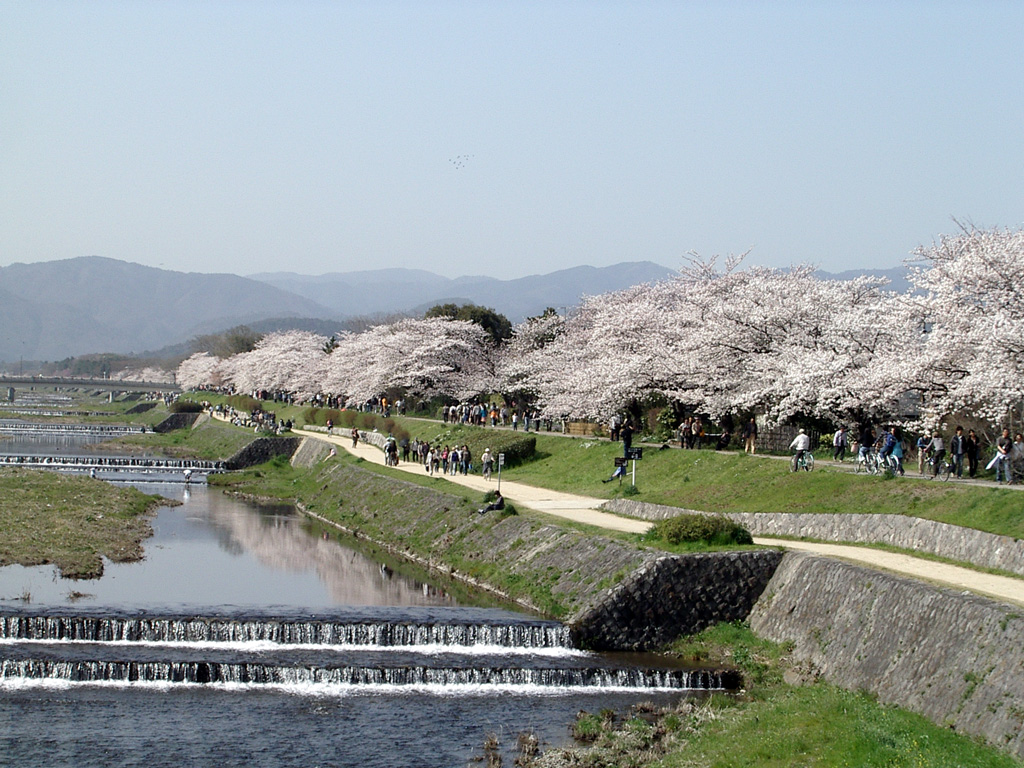
Kyoto's beloved central river, with grassy banks, cherry trees and summer dining platforms.
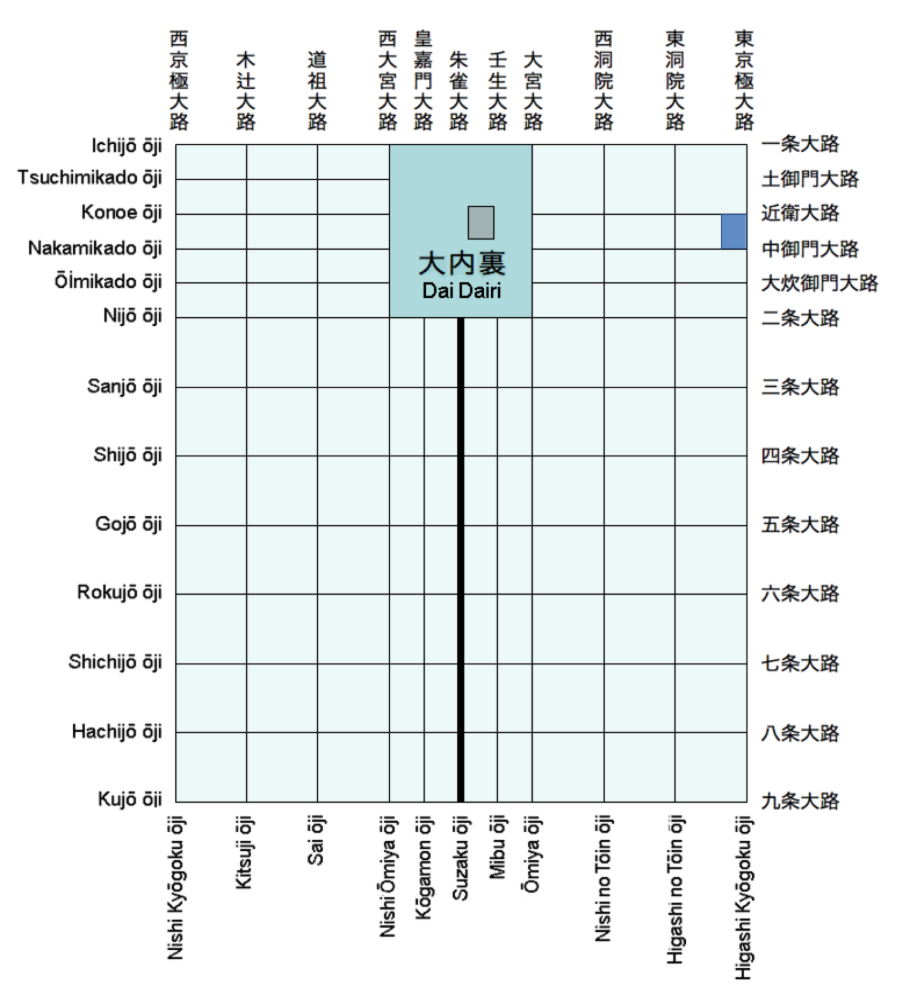
The Kamo River (Kamogawa) is the green-blue spine of Kyoto, a broad, shallow river that flows south through the centre of the city and doubles as its favourite outdoor living room. For more than a thousand years it has shaped the life of the capital, marking the eastern edge of the original grid-planned city, and today its grassy banks and walking paths are where Kyoto comes to relax, exercise, court, picnic and cool off. A stroll or cycle along the Kamo is one of the simplest and most authentic pleasures the city offers, and it costs nothing.
The riverside is lined with continuous paths on both banks, shaded in places by rows of willows and cherry trees. In early April the cherries bloom in a long ribbon of pink, especially lovely along the stretch north of Demachiyanagi where the Kamo splits into two tributaries at a triangular point that families love for picnics and where a line of stepping stones, some shaped like turtles and birds, lets children hop across the water. Herons, egrets, ducks and the occasional cormorant fish in the shallows, and the low weirs create gentle rapids that fill the air with the sound of running water.
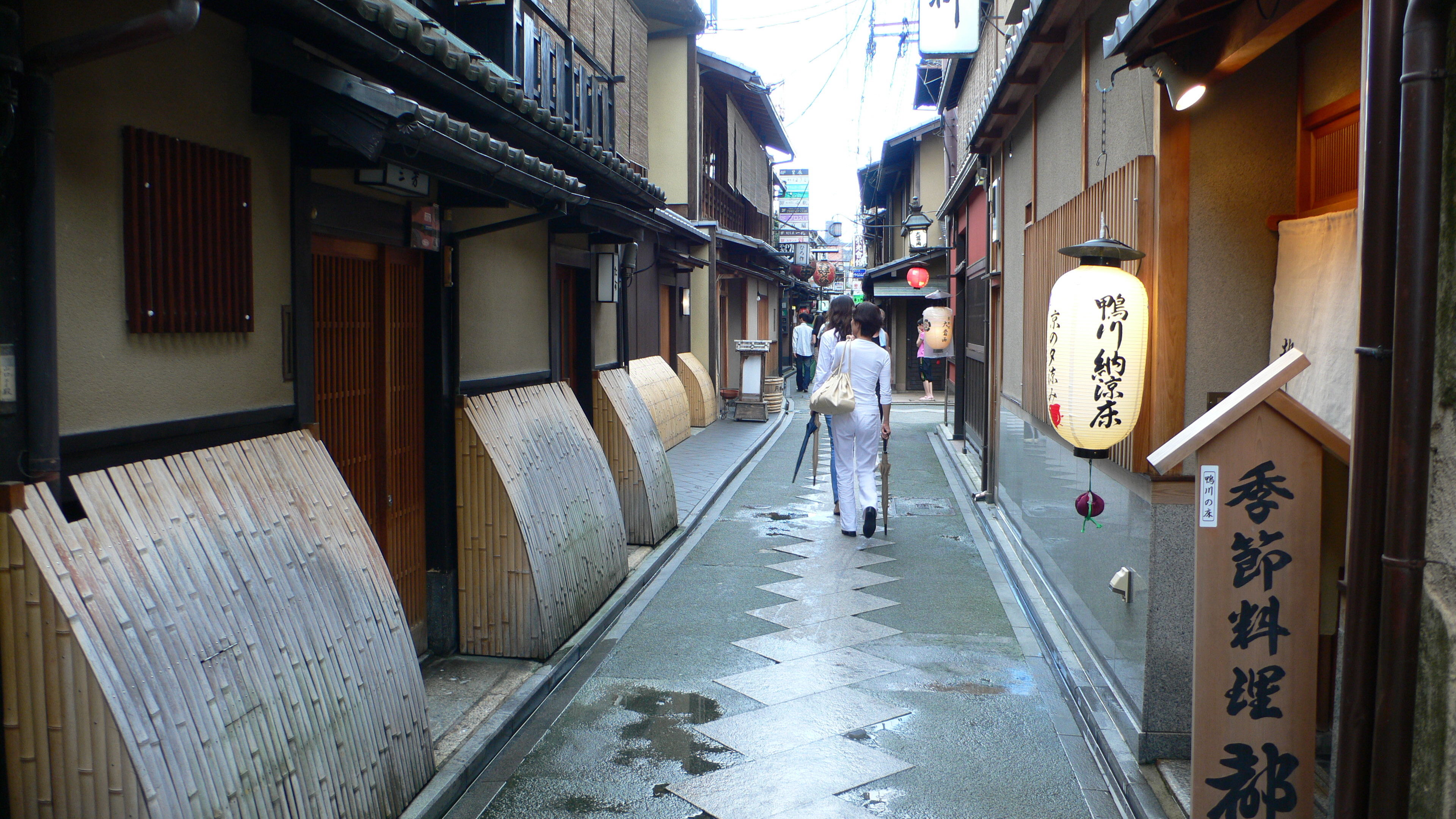
The Kamo is at its most magical on summer evenings. Along the central stretch between Nijo and Gojo, restaurants backing onto the Pontocho alley open their kawadoko, wooden dining platforms built out over the river, so diners can eat and drink in the cool air above the flowing water, a tradition that dates back centuries. Down on the banks, couples famously sit spaced at almost even intervals, students strum guitars, and friends share convenience-store drinks as the sky turns pink behind the western hills. It is informal, democratic and quintessentially Kyoto.
Each season has its own mood. Spring brings blossom and hanami picnics; summer, the dining platforms and cool evening breezes; autumn, clear skies and long walks; and winter, crisp light and migrating birds on the water. Because the river runs the length of central Kyoto, it is never far from wherever you are staying, and it links many major sights, from the temples of Higashiyama on the east bank to the shopping and nightlife of Kawaramachi and Pontocho on the west.
There is nothing to pay and nowhere to close: the banks are open at all hours, dotted with benches and easy ramps down from the bridges. The paths are flat and suitable for walking, jogging, cycling and strollers, and cyclists can follow the river for many kilometres. It is a place to slow down and watch ordinary Kyoto life unfold rather than tick off a monument.
Give it at least an hour to enjoy a proper riverside walk, or a whole evening if you plan to dine on a kawadoko platform in summer. The best-loved central stretch runs between Sanjo and Shijo bridges, steps from Sanjo and Gion-Shijo stations on the Keihan Line and Kawaramachi on the Hankyu Line. Come at sunset in spring or summer for the finest atmosphere, bring something to drink, and simply find a spot on the grass and watch the city go by.
A local's tip
In summer, restaurants along the Pontocho side open kawadoko platforms out over the water for cool evening dining; even without a reservation, the grassy banks near Sanjo are a perfect free spot to watch the sunset.
Best time to visit
Early April for the cherry-lined banks; summer evenings for riverside dining
Getting there
The river runs through central Kyoto and is reached from many stations; Sanjo and Gion-Shijo on the Keihan Line, and Kyoto-Kawaramachi on the Hankyu Line, all sit right beside it.
Good to know
- Benches
- Cycling
- Restaurants
- Walking paths
Plan the whole trip offline
Kamo River is one of many places in the Real Japan app — with turn-by-turn directions, nearby spots and full offline maps you can use with no signal.