The temple of the 'bone Buddhas' — statues cast from the cremated ashes of hundreds of thousands of devotees.
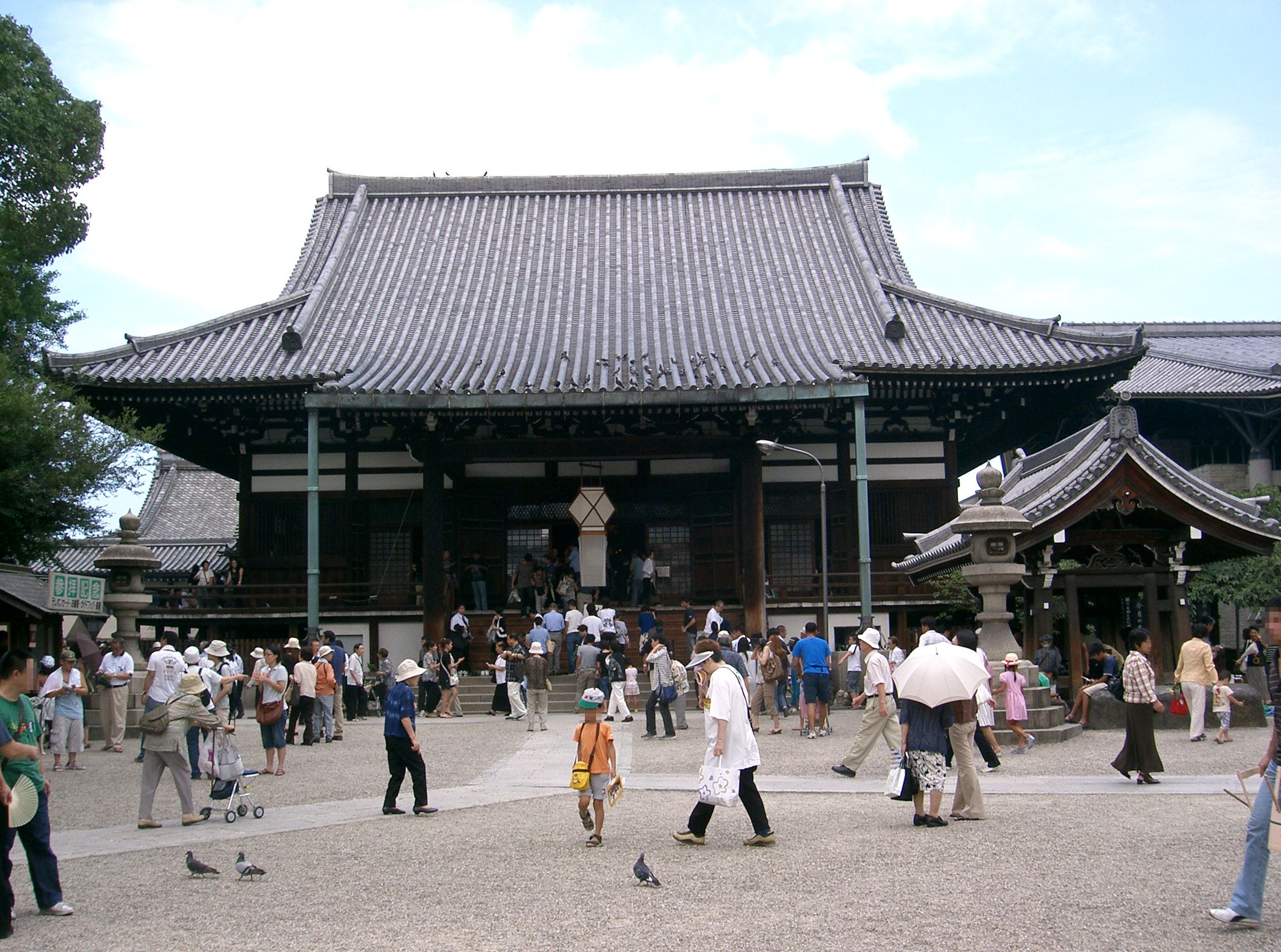
Isshin-ji is one of Osaka's most extraordinary and moving temples, home to the Okotsubutsu, or bone Buddhas, statues of Amida literally formed from the cremated remains of hundreds of thousands of ordinary people. It is a place about death, memory and community, yet it feels neither morbid nor grim; it is warm, busy and deeply human, a temple where the faithful have chosen to become, in a sense, part of the Buddha they venerate.
The temple traces its founding to 1185 and the priest Honen, patriarch of Pure Land Buddhism in Japan, who is said to have practiced here. Its most famous role, though, began in the Meiji era. As urns of ashes accumulated far beyond the space to store them, the head priest in 1887 commissioned an astonishing solution: sculptors skilled in casting combined the cremated remains of tens of thousands of devotees with binder to create a single statue of Amida Buddha. The practice continued, and a new Okotsubutsu has been made roughly every decade since. Air raids in 1945 destroyed the earliest six figures; the surviving and subsequent statues are enshrined in the Nokotsudo hall, each one a congregation of countless individual lives.
The annual memorial ceremony each April 21 draws tens of thousands of worshippers who come to honor family members whose ashes contributed to the figures. To donate one's ashes here is to be remembered collectively and perpetually, a quietly radical idea about what happens to us after death, and one that clearly gives comfort to the enormous number of families connected to the temple.
Isshin-ji's other surprise is architectural. Rather than freezing itself in the past, the temple has embraced bold contemporary design under its late abbot, who was also an artist. The main gate is a startling composition of black granite and curved concrete, flanked by fierce Nio guardian figures cast in steel, and other structures mix modern materials with traditional form. The effect is thought-provoking: a temple that treats living faith as something still being made, not merely preserved. Tokugawa Ieyasu once camped here during the Siege of Osaka and became a patron after his victory, and the Kabuki world adopted the temple as a resting place, adding further layers to its story.
A visit is quiet and free. Enter through the modern gate, pay respects at the main hall, and step into the Nokotsudo to see the bone Buddhas, remembering that the golden figures before you are made of people. Photography is generally not permitted inside the ash halls; be respectful, as this is an active place of mourning. The grounds are compact and level, easy for most visitors, with restrooms and an office on site.
Best visited during daylight, as the Okotsubutsu hall closes around four in the afternoon. The setting is lovely in cherry-blossom season thanks to adjacent Tennoji Park. Getting there is simple: it is a ten-minute walk from the major Tennoji Station hub through the park, and just eight minutes south of Shitenno-ji, with which it pairs naturally for a half-day of Osaka's oldest sacred quarter.
A local's tip
Note the strikingly modern black granite gate and steel Nio guardians; the temple deliberately blends contemporary art with ancient practice.
Best time to visit
Daytime; the Okotsubutsu hall closes mid-afternoon
Getting there
From Tennoji Station walk about 10 minutes northwest through Tennoji Park, or come 8 minutes on foot from Shitenno-ji, which sits just to the north.
Good to know
- Office
- Restrooms
Plan the whole trip offline
Isshin-ji is one of many places in the Real Japan app — with turn-by-turn directions, nearby spots and full offline maps you can use with no signal.