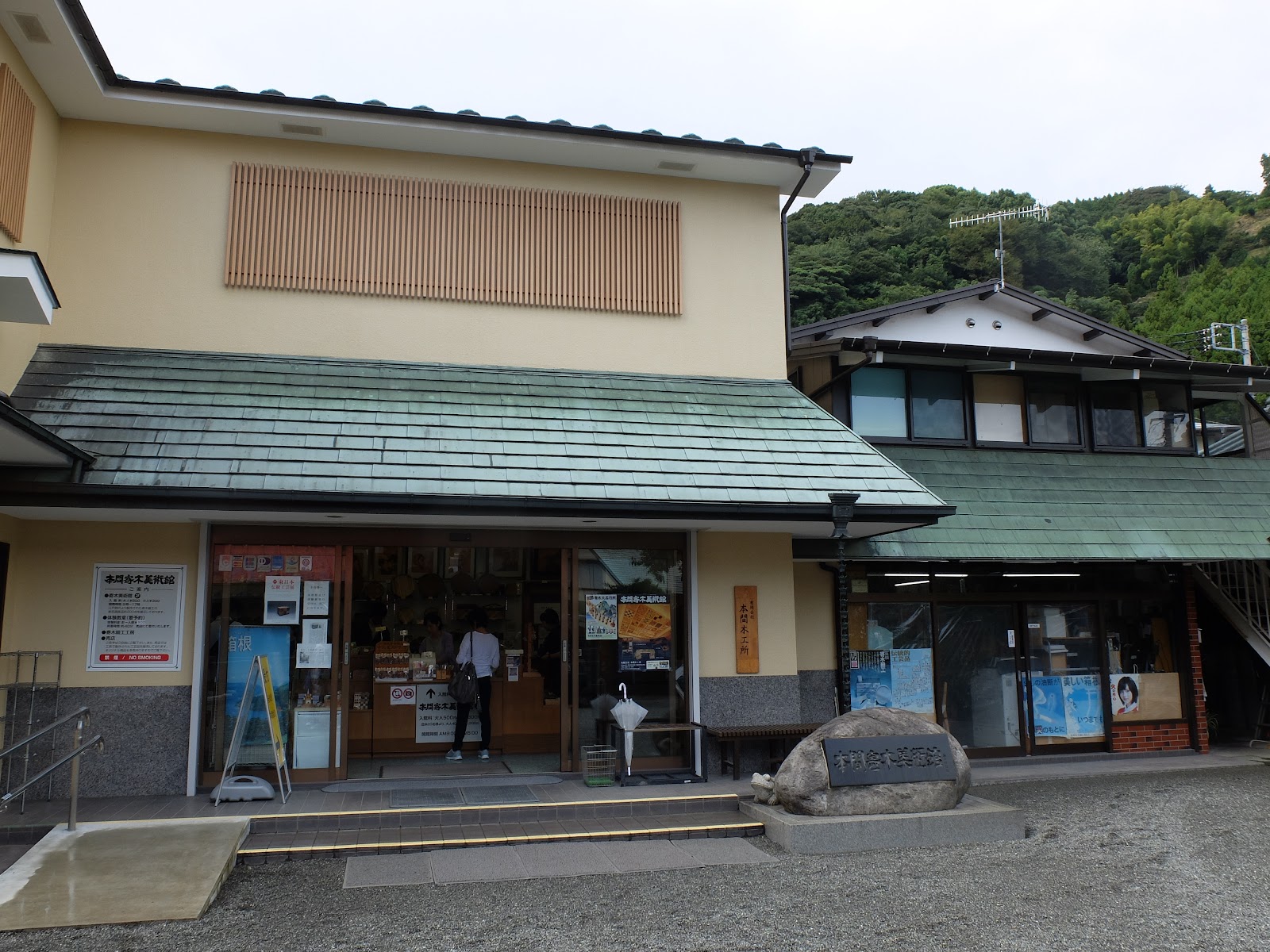
The home of Hakone marquetry, showing centuries of intricate 'yosegi-zaiku' woodwork and secret puzzle boxes.
The Homma Yosegi Museum, in the old post-town of Hatajuku between Hakone-Yumoto and Lake Ashi, is dedicated to the craft that Hakone quietly gave the world: yosegi-zaiku, or Hakone marquetry. Run by the Honma family, who have practised the art across several generations, it is both a museum and a living workshop, and it offers a very different experience from the region's grand art galleries — intimate, hands-on and rooted in local tradition.
Yosegi-zaiku is a form of decorative woodwork in which thin rods of naturally coloured woods — no dyes are used — are bundled and glued into geometric patterns, then sliced into paper-thin sheets and applied to boxes, trays and furniture, or shaved into fine ribbons. The result is dazzling: mosaics of stars, diamonds and waves built entirely from the browns, creams, greens and blacks of different tree species. The craft took root in Hatajuku in the early nineteenth century, feeding the steady stream of travellers on the Tōkaidō highway who wanted a beautiful souvenir of their mountain crossing.
The museum displays antique masterworks alongside contemporary pieces, showing how far the technique can be pushed — from simple patterned coasters to breathtakingly complex panels and the famous 'himitsu-bako', or secret puzzle boxes, which open only after a precise sequence of hidden sliding moves. A collection of tools and half-finished blocks reveals the astonishing patience the craft demands. Best of all, resident craftsmen often work on site, and watching a master plane a glass-smooth ribbon of patterned wood off a block is mesmerising.
The visiting experience is relaxed and refreshingly uncommercial. Admission is modest, the galleries are compact enough to enjoy in about an hour, and there is usually a chance to try a simple craft activity or at least handle finished pieces. The shop is the real draw for many: because Hatajuku is the authentic home of the craft, the boxes, trays and puzzle boxes sold here are the genuine article rather than the mass-produced imitations found in tourist centres — a meaningful, portable souvenir of Hakone.
There is no particular season to target, since everything is indoors, which makes the museum a good rainy-day stop; but it pairs beautifully with a walk along the surviving cedar-lined stretch of the old Tōkaidō road nearby, letting you follow in the footsteps of the Edo-era travellers who first bought these boxes. Note the museum sometimes closes on scattered weekdays, so it is worth checking before a special trip.
To get there, take the Hakone Tozan Bus from Hakone-Yumoto Station toward Moto-Hakone and get off near the 'Hatajuku' stop, from where it is a short walk. The museum sits right on the historic highway. As with all of Hakone, local buses run on the Odakyu-affiliated network rather than JR, so a Japan Rail Pass will not cover the fare — a Hakone Freepass or simple IC card payment is the way to go.
A local's tip
Ask to watch the resident craftsmen at work and pick up a 'himitsu-bako' secret puzzle box in the shop — Hatajuku is the birthplace of the craft, so pieces here are the real thing, not tourist imitations.
Best time to visit
Any time; combine with the old Tōkaidō road walk
Getting there
From Hakone-Yumoto Station take the Hakone Tozan Bus toward Moto-Hakone and get off around 'Hatajuku', then walk a few minutes. It is on the old Tōkaidō highway between Yumoto and Lake Ashi.
Good to know
- Shop
- Workshop
- Restrooms
Plan the whole trip offline
Homma Yosegi Museum is one of many places in the Real Japan app — with turn-by-turn directions, nearby spots and full offline maps you can use with no signal.