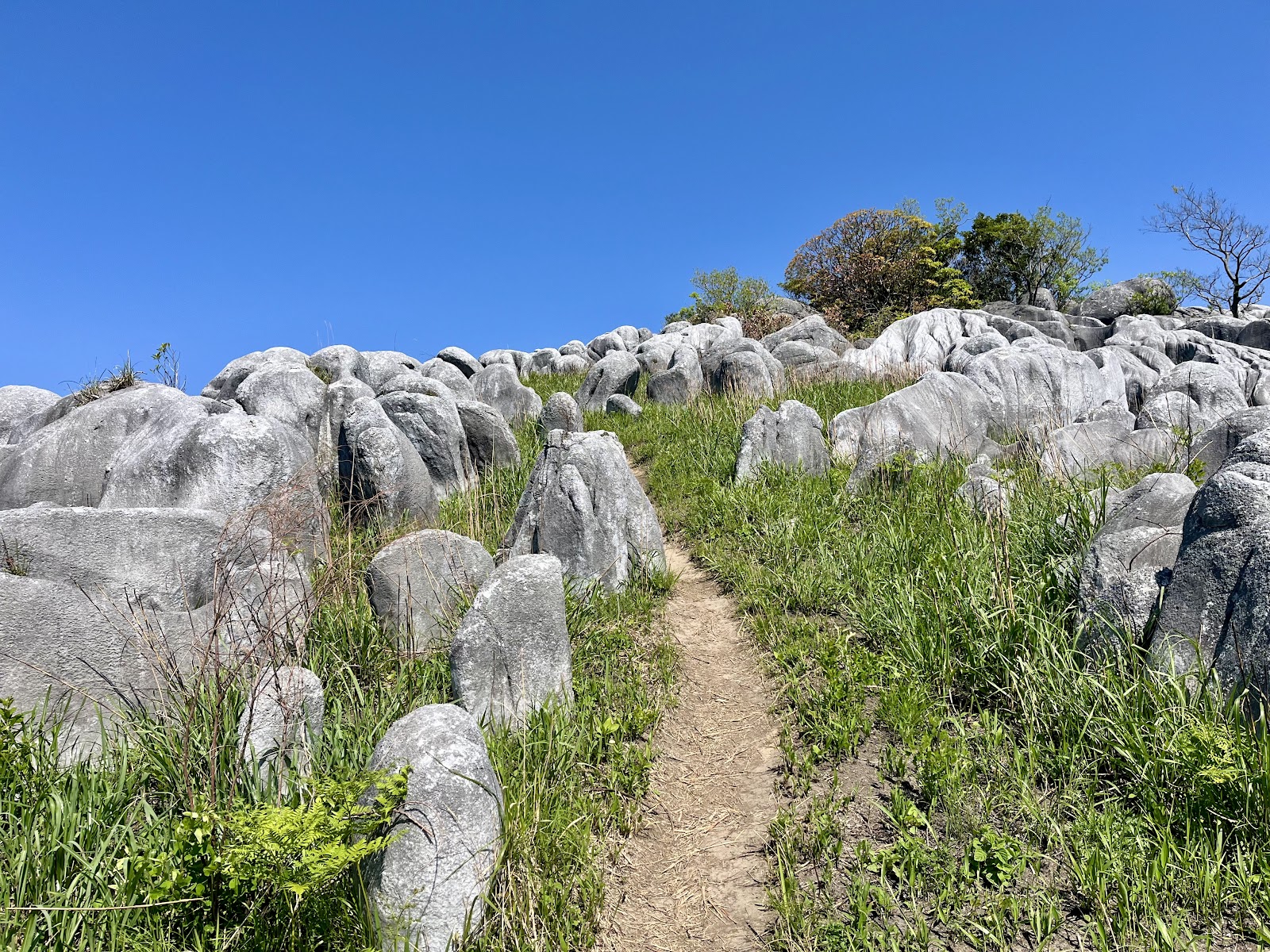
An otherworldly limestone plateau above Kitakyushu, where white rocks scatter across green hills like a flock of grazing sheep.
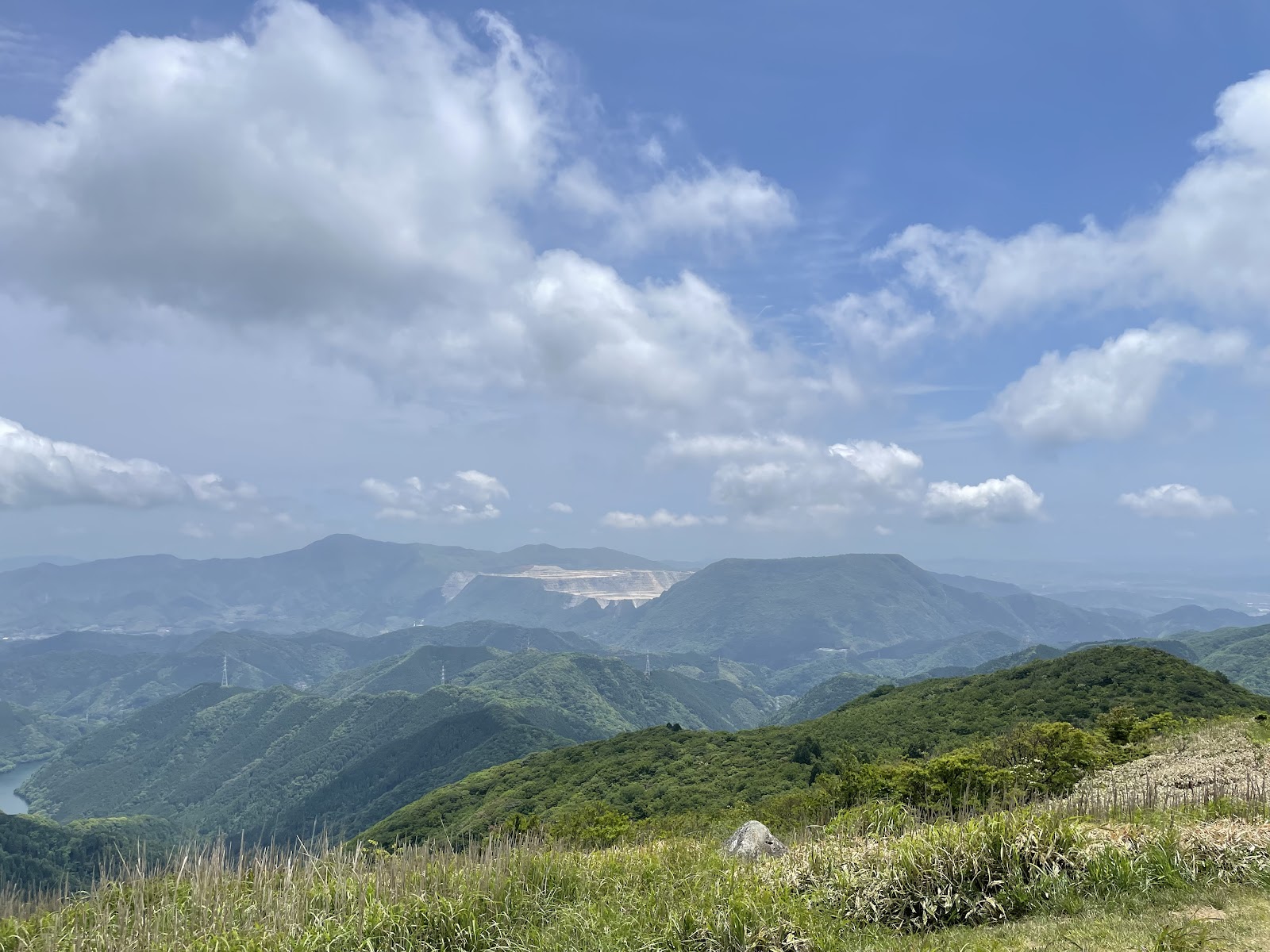
Hiraodai is one of the strangest and most beautiful landscapes in Kyushu - a rolling karst plateau spread across the mountains southeast of Kitakyushu, where thousands of weathered white limestone rocks stud the green grassland like a scattered flock of grazing sheep. Ranked among Japan's three great karst regions, alongside Akiyoshidai in Yamaguchi and the Shikoku Karst, Hiraodai offers a viewpoint experience unlike anywhere else in Fukuoka Prefecture: not a tower or a summit over a city, but a vast, open upland where earth and sky meet in sweeping, elemental scenery.
The plateau sits between roughly 300 and 700 metres above sea level and stretches about six kilometres from north to south. Its distinctive rocks are pinnacles of crystalline limestone, laid down as coral reef on an ancient seabed and slowly exposed and sculpted by rain over millions of years. Walking the grassy trails among them feels almost lunar, and from the higher ground you gaze out over ridge after ridge of the Kitakyushu mountains, with glimpses toward the coast on clear days. In spring and summer the grass is a brilliant green; in autumn it turns tawny gold, and the whole plateau glows in the low light of late afternoon.
Beneath the surface, the same limestone has been dissolved into an extensive cave system. Several caverns can be explored, the most famous being Senbutsu Cave, where visitors can wade along an underground river that still flows through passages hung with formations - a memorable, cooling adventure on a hot day. A nature observation centre near the plateau explains the geology, the rare plants and animals that thrive on the karst, and the slow chemistry of water and stone that created it, making Hiraodai as educational as it is scenic.
This is a place to explore on foot. Well-marked walking trails loop across the plateau, ranging from gentle strolls to longer moderate hikes, so you can tailor the outing to your energy. Wear comfortable shoes, bring water and sun protection - there is little shade among the rocks - and allow a few hours to wander, photograph the outcrops and perhaps combine the surface walk with a cave visit. The scenery is finest in late spring, when the grass is lush, and in autumn, when the plateau turns golden.
Hiraodai lies in the hills southeast of central Kitakyushu. The easiest way to reach it is by car, with a car park serving the plateau and the nature centre; without a car, take the JR Nippo Line toward the Kitakyushu suburbs and continue by local bus or taxi toward Hiraodai, checking timetables carefully as services are infrequent. For travellers seeking a genuinely unusual natural viewpoint - wide horizons, weird white rocks and a hidden underworld of caves - Hiraodai is one of Fukuoka's hidden treasures.
A local's tip
Walk out among the 'grazing sheep' limestone outcrops for the classic view - and if you have time, descend into Senbutsu Cave to see the underground river that carved this landscape.
Best time to visit
Late spring and autumn
Getting there
From central Kitakyushu drive or take a bus toward Hiraodai; the plateau's roads and trails lead to open grassland dotted with white limestone rocks and a nature observation centre.
Good to know
- Parking
- Restrooms
- Nature center
Plan the whole trip offline
Hiraodai Karst Plateau is one of many places in the Real Japan app — with turn-by-turn directions, nearby spots and full offline maps you can use with no signal.