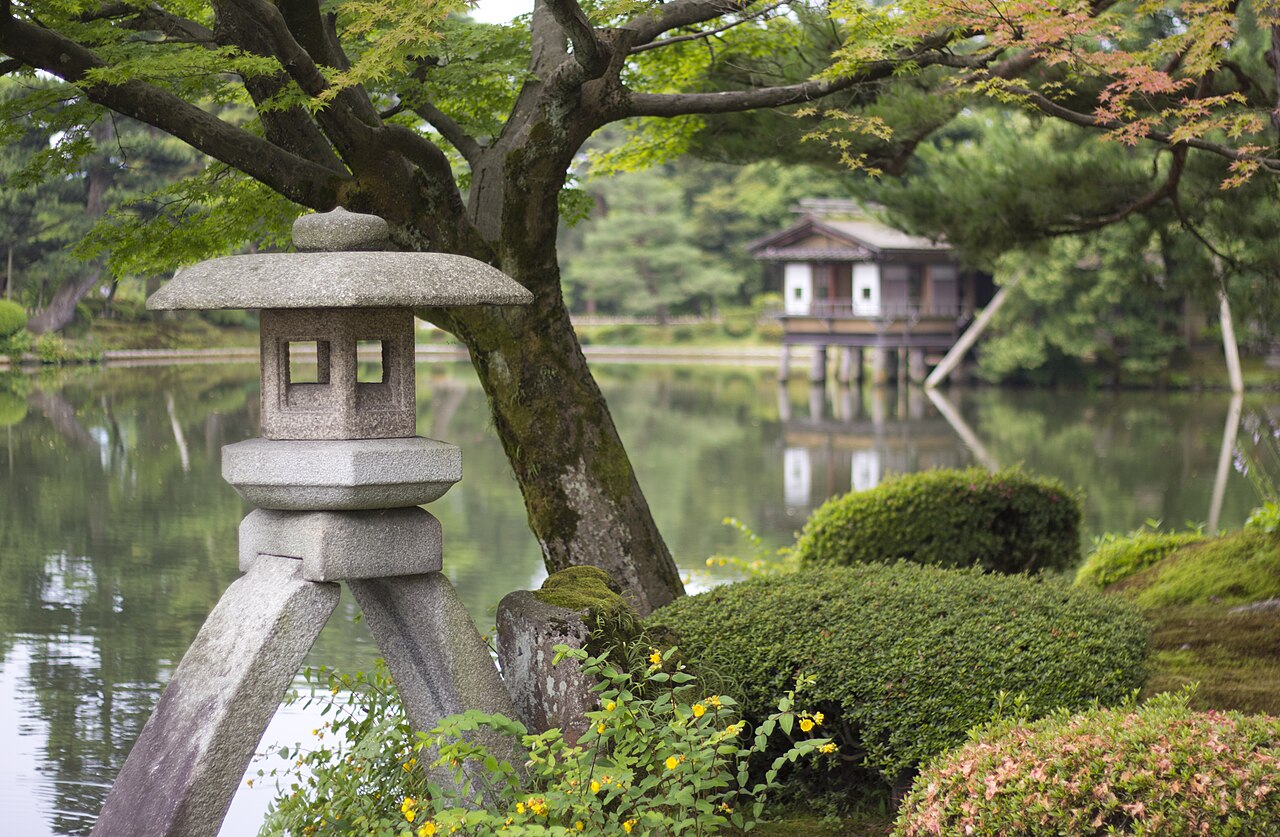
A discreet 400-year-old private pond garden next to Kenroku-en, drawing its water from the famous garden and rewarding visitors with rare tranquillity.
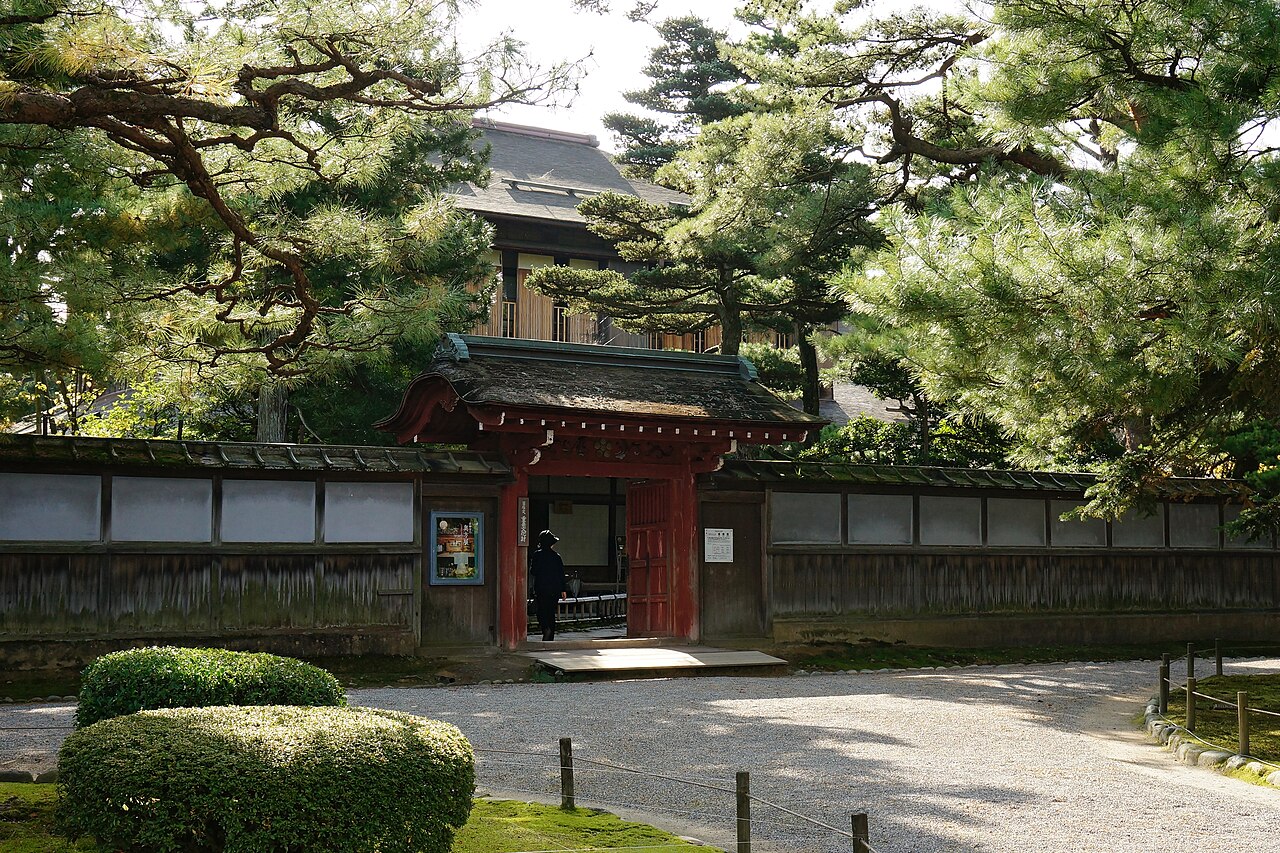
Barely two minutes downhill from the crowds pouring into Kenroku-en, Gyokusen-en is the garden most visitors to Kanazawa walk straight past—and one of the most rewarding for those who don't. Hidden behind an unassuming townhouse gate on Kosho-machi, this compact private garden carries roughly 400 years of history tied to the Kaga domain, yet remained closed to the public until 1971.
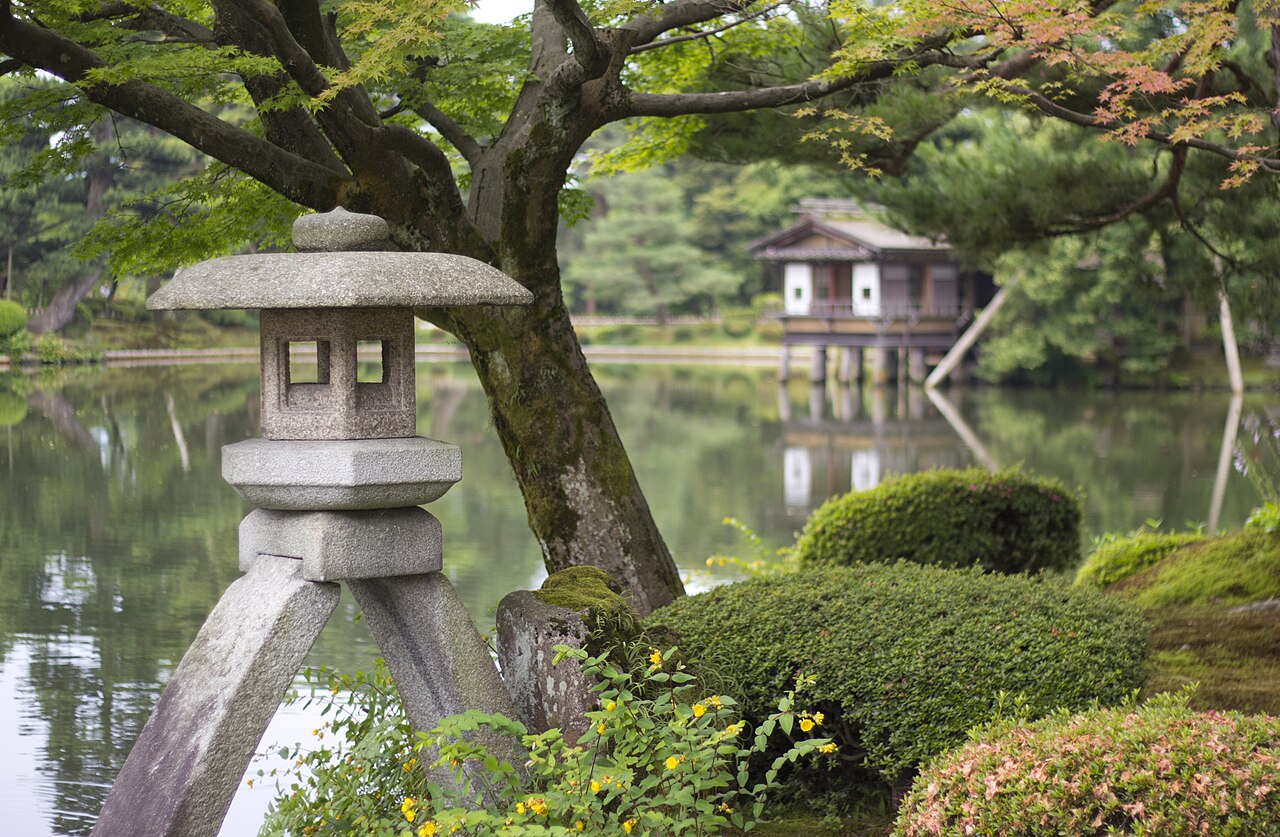
The garden was originally laid out in the early Edo period by the Wakita family, senior retainers of the Maeda lords. Wakita Naokata, the son of a Korean noble and a Maeda daughter, began the garden in the 17th century, and it was developed over generations into a refined stepped pond garden. Crucially, Gyokusen-en borrows both the landscape and the very water of Kenroku-en: its pond is fed by a stream drawn from near the Kotoji lantern of the great garden above it, and the wooded slopes of Kenroku-en form its borrowed backdrop. These connections reflect the close ties between the Kaga clan and the Wakita family. After the Wakita left Kanazawa in the early Meiji period, the Nishida family inherited and preserved the garden, and it bears their name today.
Built into a hillside, Gyokusen-en is arranged as an upper and a lower garden linked by mossy stone steps and paths. Water threads down through the composition in a series of small falls and pools, past carefully set stones, stone lanterns and a rich understorey of moss, ferns and maples. Because it was made to be experienced privately, the design rewards slow, close looking: viewpoints shift constantly as you climb, revealing new framings of the pond, the plantings and the light filtering through the trees. In fresh early-summer green or under autumn's red maples it is quietly spectacular, and the near-absence of crowds gives it a meditative stillness that the neighbouring Kenroku-en, for all its grandeur, cannot match.
The garden's real highlight for many is the Saisetsu-tei tearoom, where visitors can book a tea-ceremony experience and drink matcha in the very room from which the garden was designed to be contemplated. Sitting on tatami with a bowl of whisked green tea, looking out over the mossy pond, offers an intimacy with daimyo-era garden culture that few places in Japan preserve so well.
Practically, allow around forty-five minutes for an unhurried visit; the stepped paths involve some climbing and can be slippery when wet, so sensible shoes help. The garden is closed on Wednesdays. Admission supports the family's ongoing preservation of the site.
Getting there could hardly be easier: from Kanazawa Station take the Kanazawa Loop Bus to Kenrokuen-shita, then walk a few minutes down from Kenroku-en's Kodatsuno gate along Kosho-machi. It slots perfectly into a garden-focused day alongside Kenroku-en, Gyokusen'inmaru and Seisonkaku Villa, offering a contrasting, human-scaled counterpoint to its famous neighbour.
A local's tip
Reserve the tea ceremony experience in the Saiset(su)-tei tearoom—you sip matcha whisked in the same room where the garden was designed to be viewed, a far more intimate encounter with a daimyo-era garden than the crowds next door at Kenroku-en.
Best time to visit
Fresh green early summer; autumn maples
Getting there
On Kosho-machi, a couple of minutes' walk downhill from Kenroku-en's Kodatsuno gate. From Kanazawa Station take the Loop Bus to Kenrokuen-shita and walk a few minutes; the entrance is a discreet townhouse gate easily missed.
Good to know
- Restrooms
- Tea house
- Wheelchair access
Plan the whole trip offline
Gyokusen-en Garden is one of many places in the Real Japan app — with turn-by-turn directions, nearby spots and full offline maps you can use with no signal.