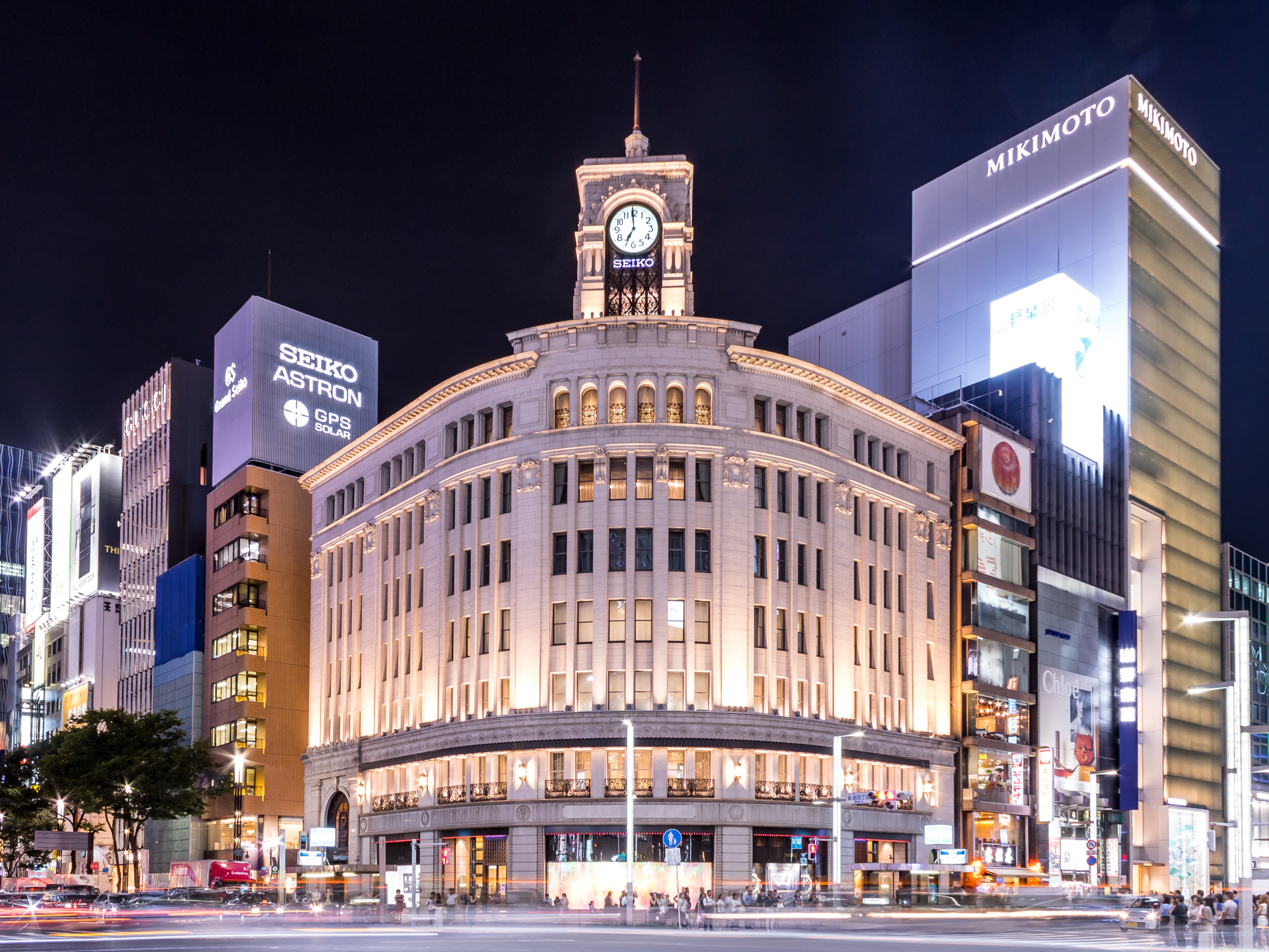
Tokyo's grandest shopping district, a grid of flagship boutiques, department stores and Michelin-starred dining.
Ginza is Tokyo's most prestigious district, a gleaming grid of wide boulevards where the world's luxury houses, historic department stores, and some of the city's finest restaurants sit side by side. The name itself dates to the Edo period, when a silver-coin mint stood here; 'Ginza' literally means 'silver mint'. After a devastating fire in 1872 the area was rebuilt in Western brick as a showcase of Japan's modernisation, and it has been synonymous with sophistication and money ever since.
The district is organised around Chuo-dori, its central spine, which crosses the famous Ginza 4-chome intersection beneath the clock tower of the Wako building, one of Tokyo's most recognisable landmarks. Along and around this axis stand the flagship stores of virtually every global luxury brand, many housed in architecturally daring buildings that are attractions in their own right, their facades wrapped in glass, light, and sculpted metal. Interspersed among them are venerable Japanese department stores such as Mitsukoshi and Matsuya, whose basement food halls (depachika) are a spectacle of exquisitely packaged delicacies.
But Ginza is far more than luxury logos. Tucked into its side streets and vertical buildings is an extraordinary density of dining, from tiny counter sushi bars and centuries-old tempura houses to a remarkable concentration of Michelin-starred restaurants. The historic Kabuki-za theatre, at the district's eastern edge, stages traditional kabuki in a magnificent recreated Momoyama-style hall and offers single-act tickets for visitors who want a taste without committing to a full performance. Art galleries, stationery emporiums like the beloved Itoya, and refined old cafes round out the mix.
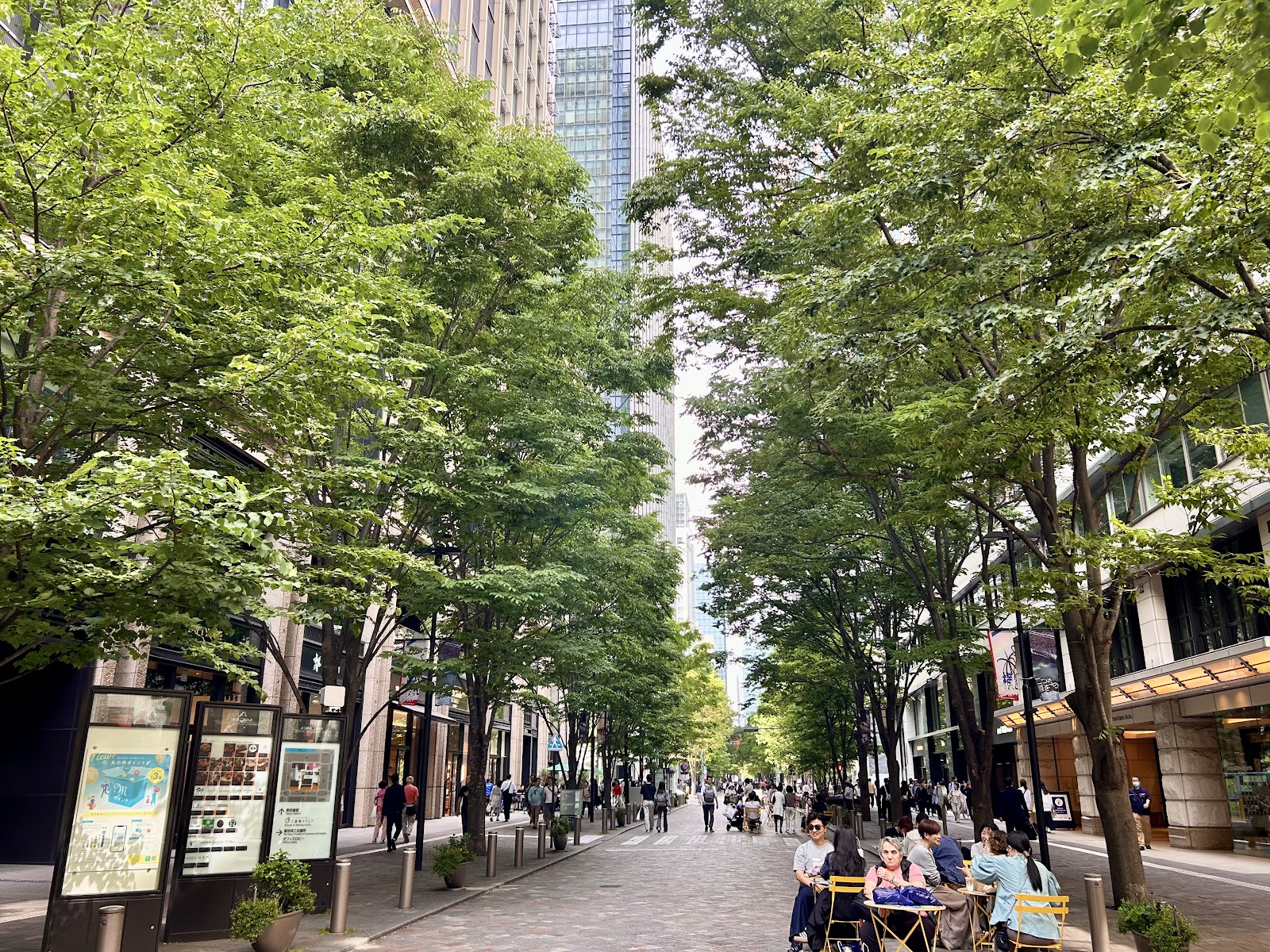
A particular highlight is Ginza's weekend transformation. On Saturday and Sunday afternoons, Chuo-dori is closed to traffic and becomes a 'hokosha tengoku', a pedestrian paradise where cafes place tables in the roadway and shoppers stroll down the middle of Tokyo's grandest avenue. It is the ideal time to appreciate the architecture and the sense of occasion the district projects.
Accessibility is excellent: the area is flat, immaculately maintained, and thoroughly walkable, with department stores offering clean restrooms and rest areas. There is no admission to the district, and while it reads as expensive, much of the pleasure, window-shopping, architecture-gazing, and people-watching, costs nothing.
The best time to visit is a weekend afternoon for the car-free streets, though Ginza is also magical after dark when the facades glow and the crowd shifts to diners. December is special, when the boulevards are strung with elegant illuminations.
Getting there is simple. Ginza Station lies directly under the 4-chome crossing and is served by three Tokyo Metro lines: the Ginza, Marunouchi, and Hibiya. It is also an easy five-minute walk from JR Yurakucho or Shimbashi stations on the Yamanote loop, so the district is reachable from almost anywhere in the city. Note the station itself is on the subway rather than JR, so a Rail Pass covers only the nearby JR approach.
A local's tip
On weekend afternoons Chuo-dori closes to cars and becomes a 'pedestrian paradise'; cafes even set tables in the middle of the road, giving you a rare car-free stroll down Tokyo's grandest avenue.
Best time to visit
Weekend afternoon, when Chuo-dori is closed to traffic
Getting there
Ginza Station sits directly beneath the main crossing and is served by three Tokyo Metro lines. From JR Yurakucho or Shimbashi stations it is a five-minute walk.
Good to know
- Wi-Fi
- Cashless
- Restrooms
Plan the whole trip offline
Ginza is one of many places in the Real Japan app — with turn-by-turn directions, nearby spots and full offline maps you can use with no signal.