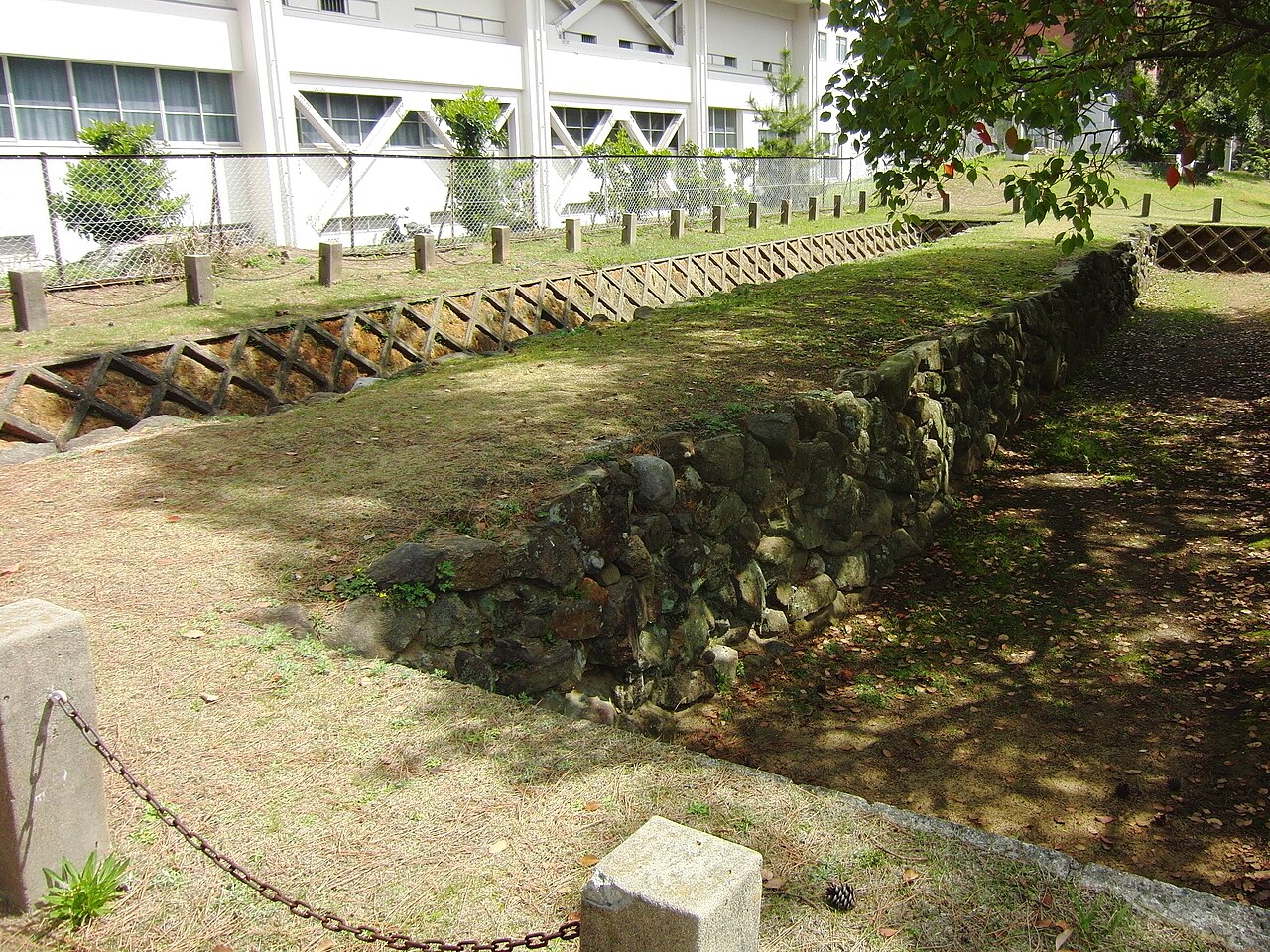
A 13th-century stone sea wall along Hakata Bay, built to repel the Mongol invasions of Kublai Khan.
The Genko Borui, or Mongol Invasion Defence Wall, is one of the most historically resonant sites in Fukuoka, even though what remains is modest to the eye: a long, low line of fitted stones running behind the pine-fringed beaches of Hakata Bay. These weathered ramparts are the physical trace of the two most famous invasions in Japanese history, when the Mongol empire of Kublai Khan twice tried, and twice failed, to conquer Japan.
The story begins in 1274, when a vast Yuan and Goryeo fleet descended on northern Kyushu in the Bun'ei campaign, landing near Hakata and throwing the samurai defenders into a desperate battle before storms and logistics forced the invaders to withdraw. Certain that the Mongols would return, the Kamakura shogunate ordered the coastal domains of Kyushu to build a continuous stone barrier along roughly twenty kilometres of the Hakata Bay shoreline. Constructed from around 1276, the wall stood about two to three metres high, faced with stone and backed by earth, forming a defensive line studded with mounted samurai.
The investment paid off spectacularly in 1281. When the second and far larger invasion, the Koan campaign, arrived, the wall denied the Mongols the easy beachhead they needed. Unable to land in force along the fortified stretches, the invaders were left riding at anchor when a massive typhoon, remembered ever after as the kamikaze or divine wind, tore their fleet apart. Tens of thousands of men were lost, and Japan was never again seriously threatened from the continent for centuries. The humble stone wall thus stands at the centre of a defining national legend.
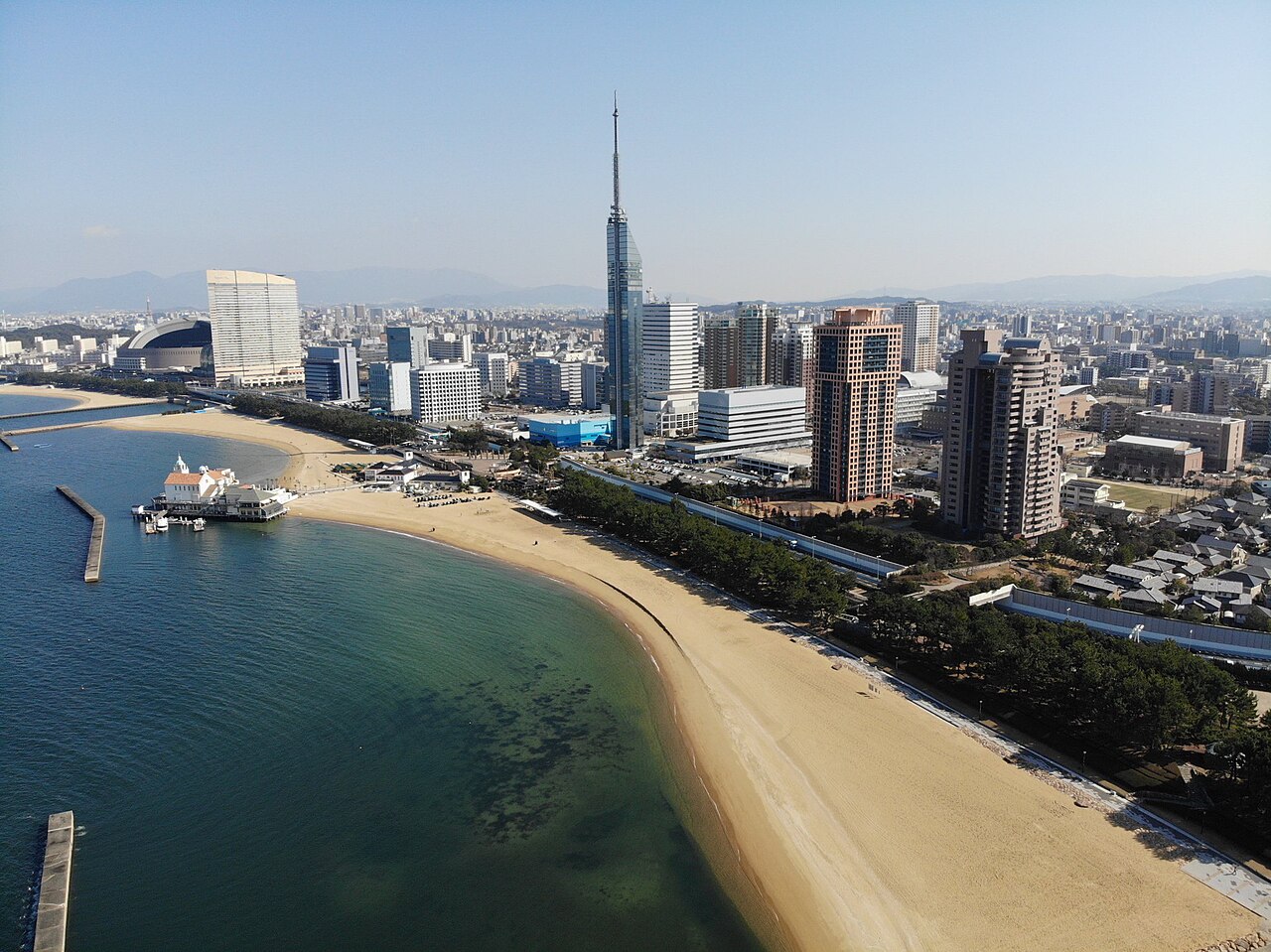
Today the ramparts survive in scattered preserved sections along the modern coastline, protected since 1931 as a National Historic Site. The stretch at Imazu, on the western side of the bay, is among the best places to see it, where a clearly restored run of stonework sits just behind the shore, backed by pines and interpretive signage. Other visible sections lie at Nishijin, closer to the city centre, and at Iki-no-Matsubara. The wall is deliberately understated, and part of its appeal is the imaginative leap required to picture armoured defenders lining these stones as sails filled the horizon.
A visit works best combined with a broader look at the Mongol invasion story. The Genko Historical Museum elsewhere in Fukuoka displays armour, weapons, and a striking statue linked to the campaigns, and the great scrolls commissioned by the samurai Takezaki Suenaga remain the most vivid record of the fighting. Standing at the wall afterward gives that history a tangible anchor.
Entry is free and the site is always open. The Imazu section is reached via the JR Chikuhi Line to Kyudai-gakkentoshi Station, followed by a bus or a walk of around twenty-five minutes toward the coast. Allow under an hour, choose a clear day for the bay views, and treat it as a thoughtful detour that turns a famous legend into something you can reach out and touch.
A local's tip
The stone wall is low and easy to miss among the pines behind the beach, follow the brown historic-site markers, and combine it with a walk along the quiet Imazu coastline.
Best time to visit
Clear days for coastal views across Hakata Bay
Getting there
The best-preserved Imazu section lies on the western shore of Hakata Bay in Nishi Ward, Fukuoka. Take the JR Chikuhi Line to Kyudai-gakkentoshi Station, then a bus or 25-minute walk toward Imazu; sections also survive at Nishijin and Iki-no-Matsubara.
Good to know
- Parking
- Restrooms
Plan the whole trip offline
Genko Borui Mongol Invasion Wall (Imazu) is one of many places in the Real Japan app — with turn-by-turn directions, nearby spots and full offline maps you can use with no signal.