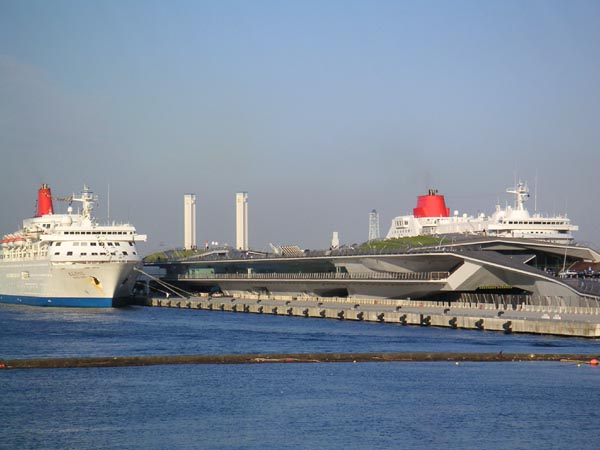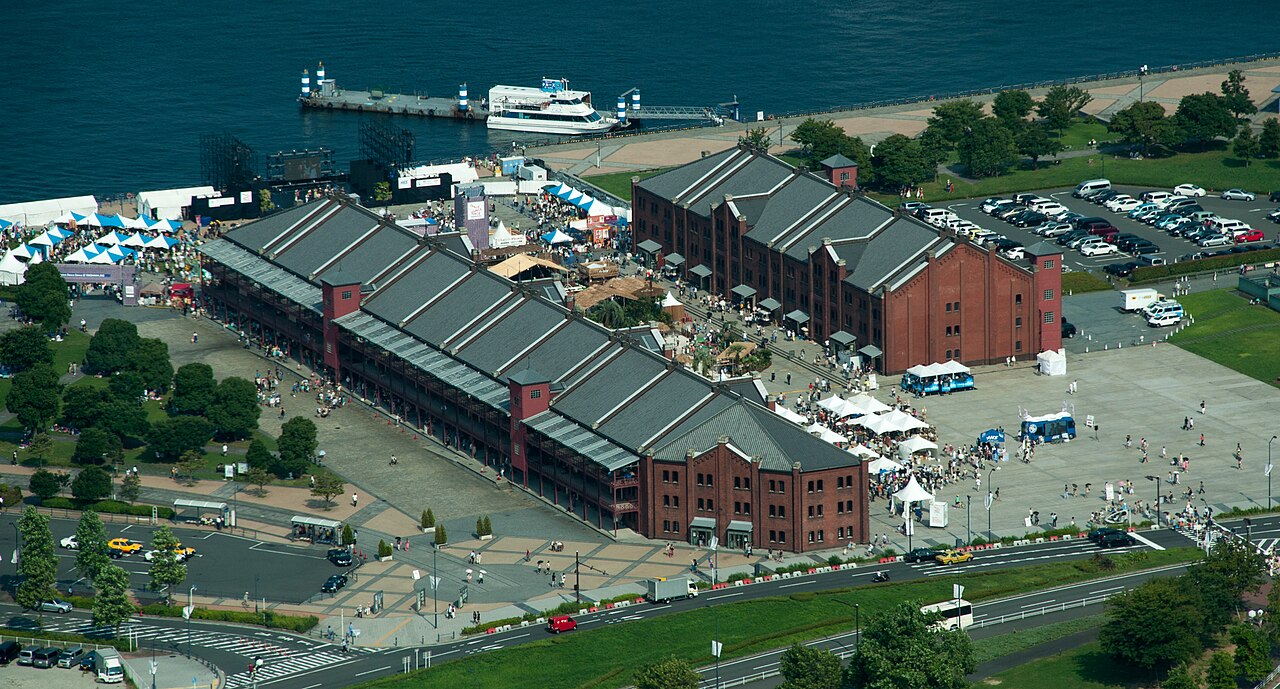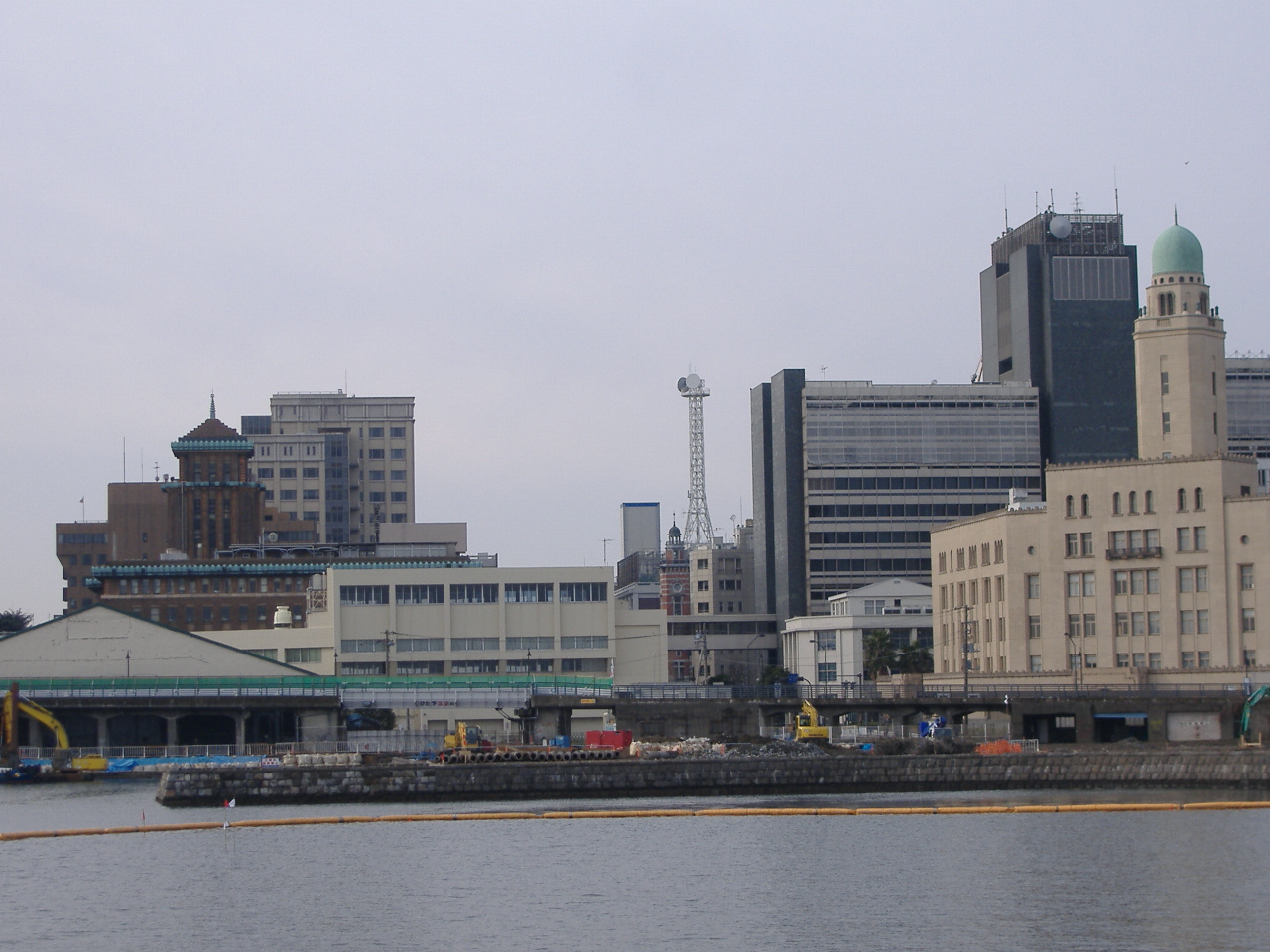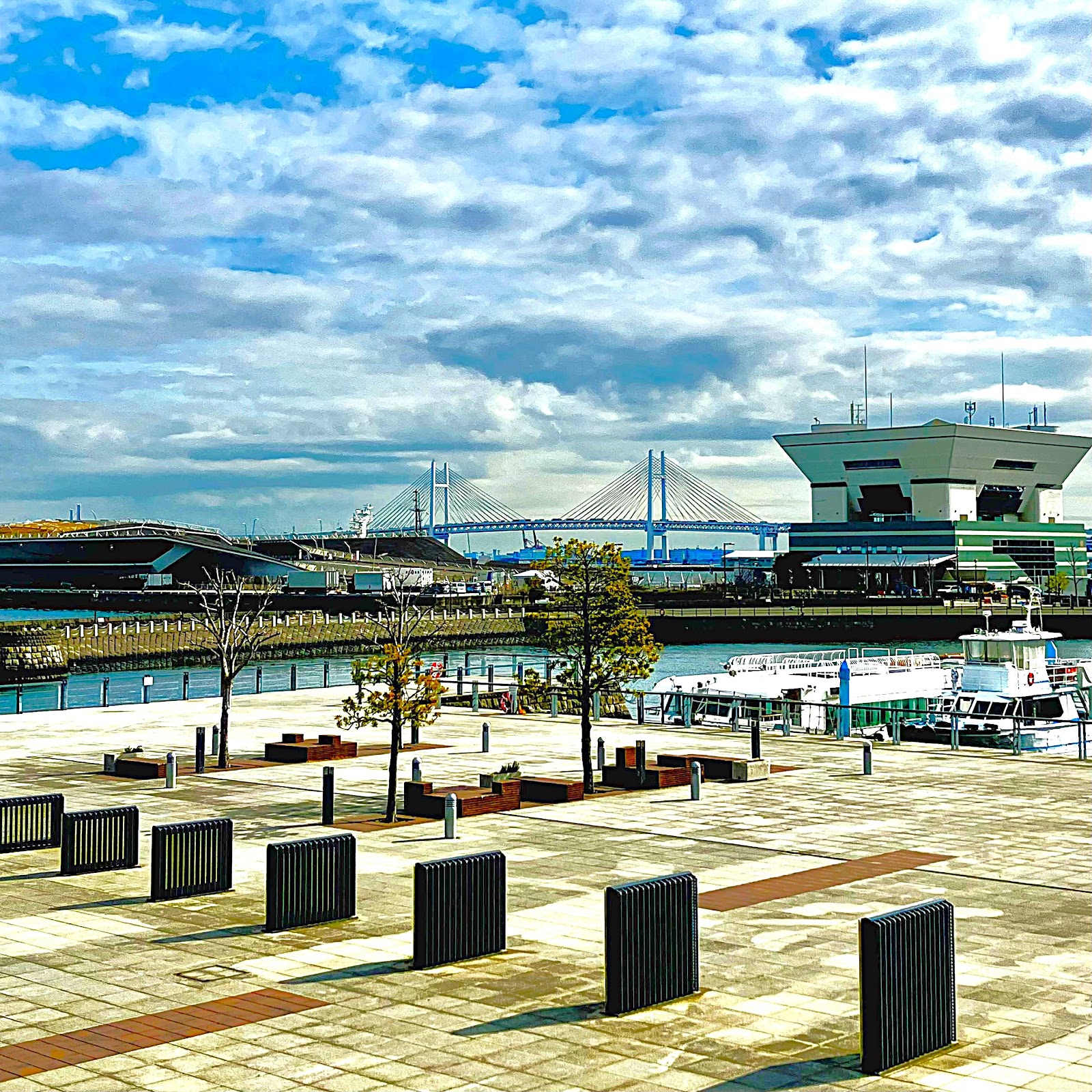
The restored curving pier where Yokohama's modern port began, now a waterfront park and tower-spotting spot.
Zou-no-hana Park occupies the very birthplace of Yokohama's modern harbour, the curving breakwater whose distinctive elephant's-trunk shape gave it its name—Zou-no-hana literally means "elephant's nose." When Yokohama opened as a treaty port in 1859, this was the site of the first Western-style piers, and the curved seawall built here in the 1860s formed the nucleus of what would become one of the world's great ports. After serving industrial roles for over a century and suffering damage in war and earthquake, the site was restored and reopened as a public park in 2009 to mark the 150th anniversary of the port's opening, with the historic curved pier faithfully reconstructed.
The park is an airy waterfront promenade wrapping around the old breakwater, dotted with lawns, benches, art installations and the low-slung Zou-no-hana Terrace, a cafe-and-event pavilion. Interpretive elements recall the site's origins, including remnants and reconstructions of the Meiji-era stonework and rails, so a stroll here is a walk along the literal edge where modern Japan began trading with the world. The open sightlines make it one of the best free vantage points on the central waterfront.
That view is the park's great draw. From the tip of the pier you look across the harbour to Osanbashi Pier, the Red Brick Warehouse and the towers of Minato Mirai, and—crucially—Zou-no-hana is one of the classic spots from which all three of Yokohama's historic towers, the King, Queen and Jack, can be seen together. According to the beloved local legend, glimpsing the three towers at once brings good fortune, and this park is a favourite place to test it. At sunset and after dark the scene is especially beautiful, with the illuminated Ferris wheel and skyline reflected in the water.
The site's significance is hard to overstate: this small curve of reclaimed stone is where Yokohama's transformation from a fishing village into Japan's premier international port physically began. Standing here with the modern city glittering across the bay, you feel the full arc of that history in a single view.
The visiting experience is free, open and relaxed. The park itself is always open, the terrace facility keeps daytime hours with a cafe and restrooms, and the flat, paved promenade is fully accessible—easy for wheelchairs and strollers. Allow around forty minutes to walk the pier and enjoy the views, longer if you settle in for sunset. There is little shade, so summer visitors should bring water and a hat.
To reach it, take the Minatomirai Line to Nihon-Odori Station and walk toward the waterfront between Osanbashi Pier and the Red Brick Warehouse, about six minutes on foot; JR travellers can approach from Kannai Station. Zou-no-hana links seamlessly with the Red Brick Warehouse, Osanbashi Pier and the Three Towers, making it the perfect finale to a half-day tracing the maritime history of old Yokohama—ideally timed for the golden hour when the harbour and its historic towers are at their most photogenic.
A local's tip
This is the classic spot to line up all three towers—King, Queen and Jack—in a single view for the wish-granting legend.
Best time to visit
Sunset and evening for harbour views and tower-spotting
Getting there
From Nihon-Odori Station walk toward the waterfront between Osanbashi Pier and the Red Brick Warehouse; the park occupies the curving old pier, about 6 minutes on foot.
Good to know
- Cafe
- Admission
- Restrooms
Plan the whole trip offline
Zou-no-hana Park is one of many places in the Real Japan app — with turn-by-turn directions, nearby spots and full offline maps you can use with no signal.