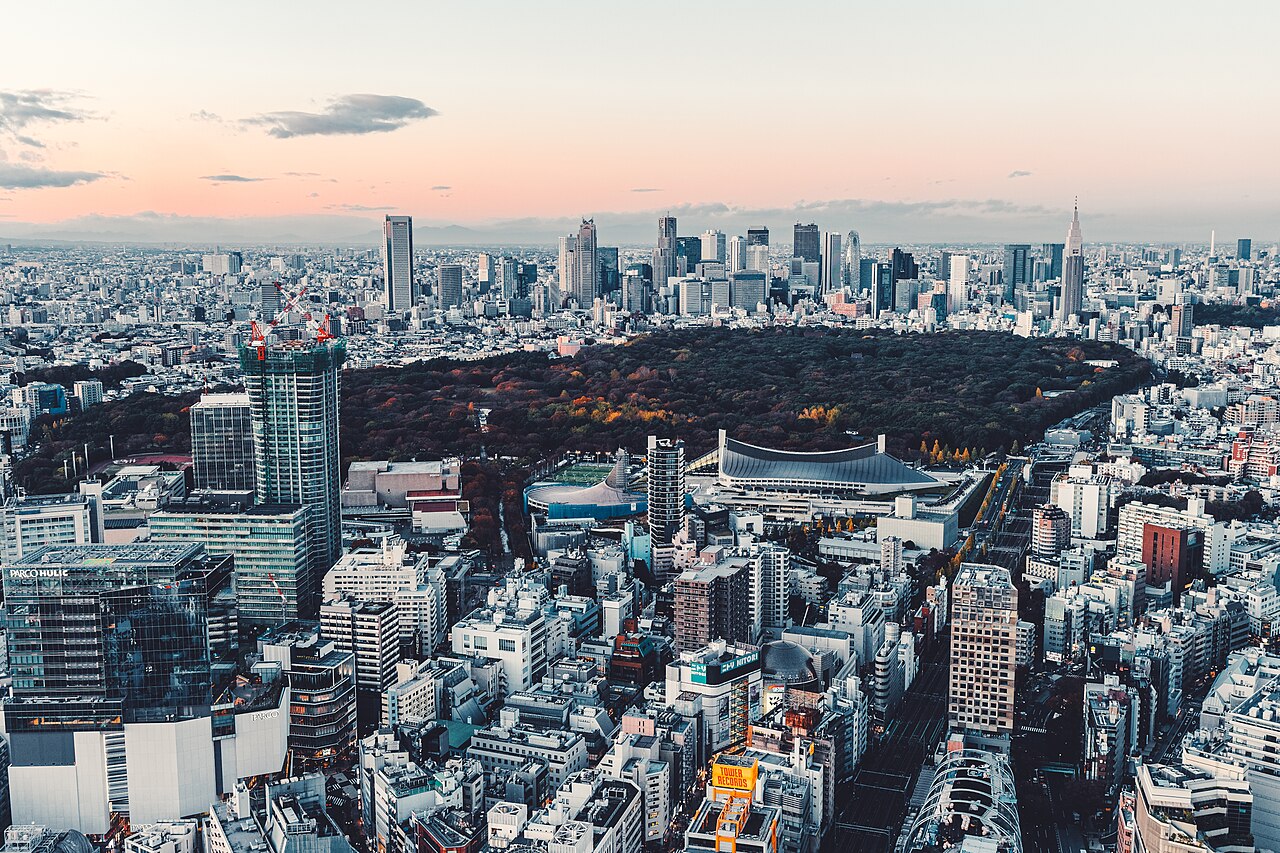
Tokyo's laid-back central park: wide lawns, ginkgo avenues, and a Sunday carnival of drummers, dancers and cosplayers.
Yoyogi Park is central Tokyo's easygoing green heart, a broad expanse of lawns, ponds, and tree-lined avenues right beside the fashion crossroads of Harajuku and Shibuya. Where the neighbouring Meiji Shrine forest is solemn and hushed, Yoyogi is its extroverted twin: a place where Tokyoites come to picnic, jog, cycle, walk their dogs, and above all to gather, especially on Sundays when the park becomes an impromptu stage for the city's subcultures.
The ground beneath the park has an outsized place in modern Japanese history. It was here, on a parade field, that Japan's first successful powered aeroplane flight took place in 1910. After the Second World War the Americans built a housing compound for officers nicknamed "Washington Heights" on the site, and in 1964 it was transformed into the athletes' village for the Tokyo Olympics, crowned by Kenzo Tange's swooping Yoyogi National Gymnasium. When the Games ended the land was reborn as a public park in 1967, and the mature trees planted then have grown into the shady canopy visitors enjoy today.
The park is essentially two halves. The larger forest-and-lawn section is a place to sprawl on the grass, throw a frisbee, or wander the ginkgo-lined paths that blaze gold in late autumn. Cherry trees make it a popular and slightly less frenzied alternative to Ueno for spring hanami, and a central pond with a fountain provides a focal point. The plaza section across the road hosts events, flea markets, and food festivals throughout the year, and has a cycling course with rental bikes and a large dog run.
The real spectacle, though, is the Sunday scene. Near the Harajuku entrance, drum circles thunder, rockabilly greasers dance around a boombox in leather jackets, amateur bands rehearse, jugglers practise, and cosplayers pose—an unscripted, entirely free carnival of self-expression that has become one of Tokyo's signature sights. It is people-watching of the highest order and captures the creative energy of the surrounding Harajuku district better than any shop could.
The visiting experience is relaxed and unstructured; there is no admission fee, the park is open around the clock, and its flat, wide, paved paths make it fully wheelchair- and stroller-friendly. Restrooms, vending machines, and small cafes are dotted throughout, and the sheer size means there is always a quiet patch of grass to be found even on a busy afternoon.
The best time to visit is a Sunday afternoon for the human carnival, or a weekday morning if you prefer peace and a jog under the trees; late March brings cherry blossom and mid-November the golden ginkgos. From Harajuku Station on the JR Yamanote Line or Meiji-jingumae on the metro it is only a few minutes' walk, and it pairs naturally with a visit to the adjoining Meiji Shrine and the boutiques of Takeshita Street, making it a perfect place to decompress between Tokyo's busiest districts.
A local's tip
Come on a Sunday and follow the drumming: near the Harajuku-side entrance the rockabilly dancers, drum circles, and amateur bands turn the plaza into Tokyo's best free open-air show, and it is entirely different from the quiet weekday park.
Best time to visit
Sunday afternoons for the street performers; late March for cherry blossom
Getting there
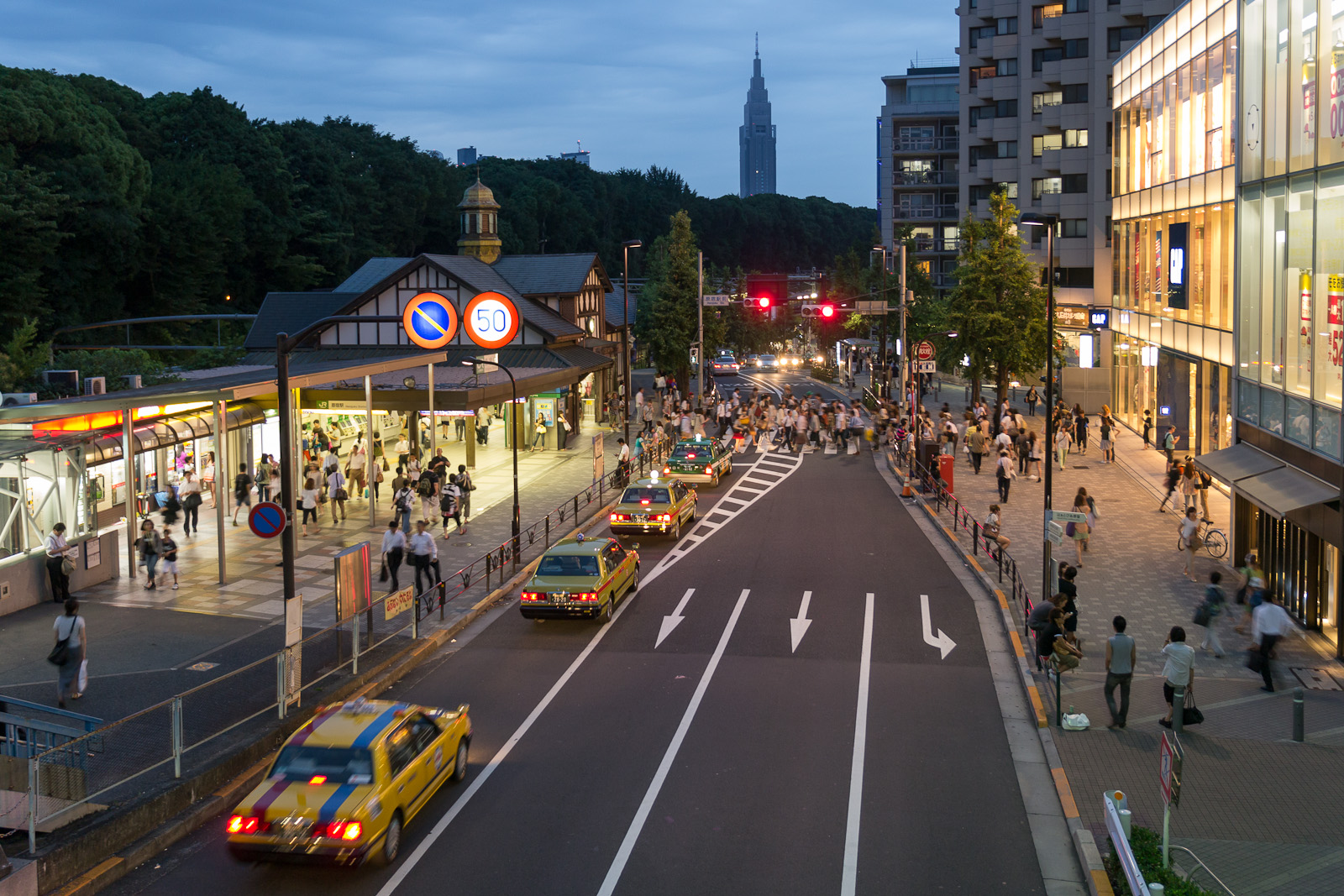
From Harajuku Station (JR Yamanote Line) or Meiji-jingumae Station (Chiyoda and Fukutoshin lines) the park is a 3-4 minute walk. Yoyogi-koen Station (Chiyoda Line) sits at the park's southern edge.
Good to know
- Cafes
- Cycling
- Dog run
- Restrooms
- Wheelchair
Plan the whole trip offline
Yoyogi Park is one of many places in the Real Japan app — with turn-by-turn directions, nearby spots and full offline maps you can use with no signal.