The head shrine of some 2,300 Sumiyoshi shrines, famous for its arched bridge and a purely Japanese pre-Buddhist architecture.
Sumiyoshi Taisha is the grand head shrine of the roughly 2,300 Sumiyoshi shrines across Japan, and one of the country's most historically important Shinto sites. Its founding is traditionally dated to the year 211, tied to the legendary Empress Jingu, who is said to have enshrined the three Sumiyoshi sea-gods here in gratitude for a safe return from a campaign overseas. For most of its history the shrine sat near the shoreline of Osaka Bay, and the Sumiyoshi kami were revered as protectors of sailors, fishermen and sea voyages, later also becoming patrons of poetry.
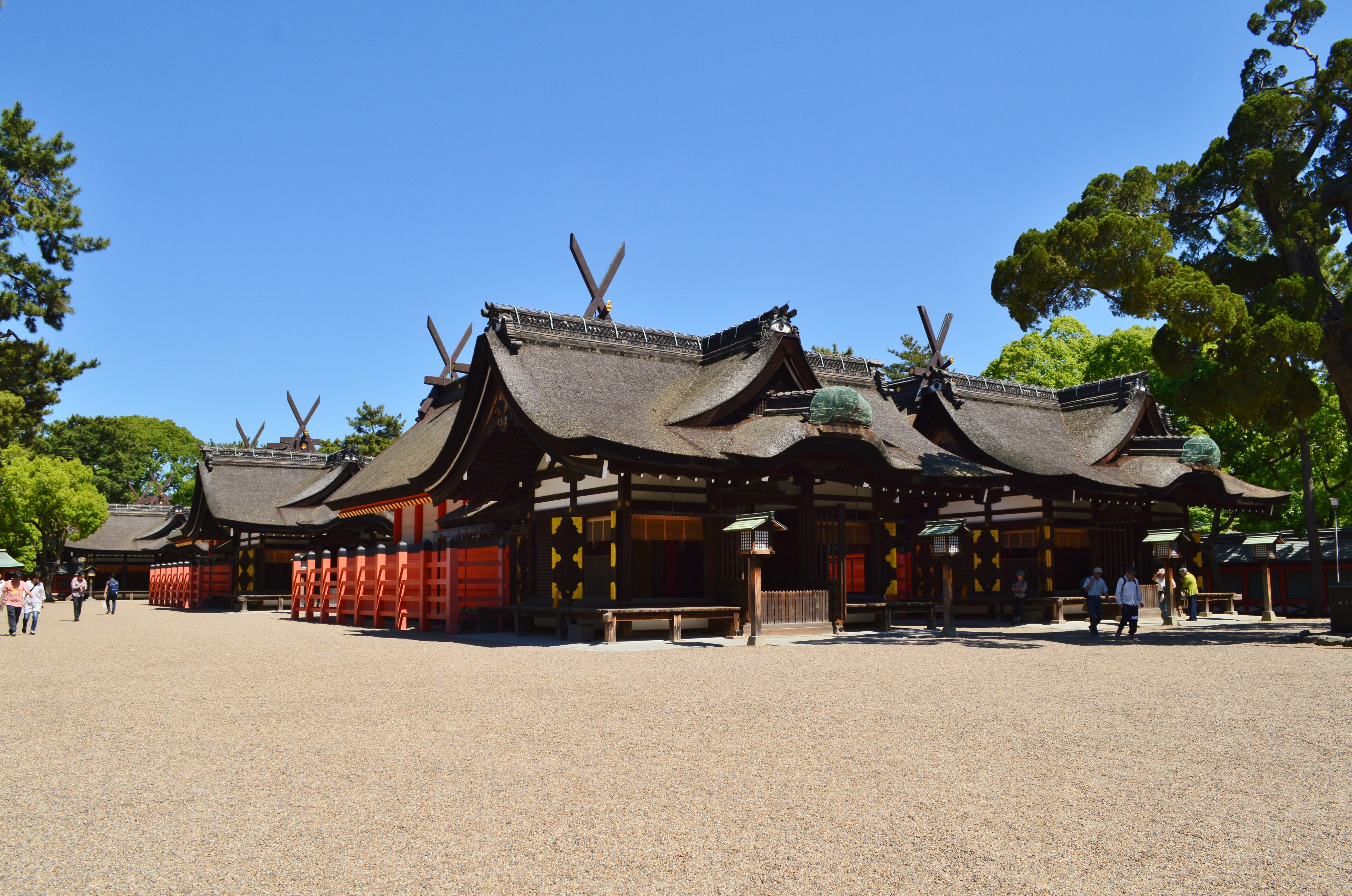
The shrine's chief architectural claim is profound: its four main halls are built in the Sumiyoshi-zukuri style, considered one of the oldest surviving forms of Shinto architecture, predating the arrival of Buddhism and its continental influences. The straight, sharply gabled roofs, the absence of the graceful curves you see at later shrines, and the vermilion-and-white palette give the honden a stark, ancient dignity. The four halls are arranged in an unusual pattern, three in a line and one beside, said to evoke a fleet of ships at sea. They are designated National Treasures.
The image every visitor carries away, though, is the Sorihashi, the steeply arched vermilion drum bridge that rises over a pond at the approach. Its almost vertical curve is beautiful and slightly alarming to climb, and tradition holds that the effort of crossing it purified worshippers before they reached the halls. Reflected in still water on a clear morning, framed by stone lanterns donated by merchants over the centuries, it is one of Osaka's defining images.
A notable story lives in the shrine's calendar. Sumiyoshi Taisha draws one of the largest hatsumode crowds in all of Japan, with well over two million people streaming through during the first three days of the New Year to make their first prayers of the year. In June, the Otaue rice-planting festival, an Important Intangible Folk Cultural Property, fills the sacred paddy with dancers, musicians and planters in a ritual that is centuries old.
The visiting experience is calm and rewarding outside of festival peaks. The grounds are broad, flat and free to enter, dotted with sub-shrines, the small Gokoku shrine, and hundreds of moss-softened stone lanterns. Look for the pair of guardian rabbits rather than the usual lion-dogs, a nod to the shrine's founding day in the Year and Hour of the Rabbit. Restrooms and an omamori charm stall are on site; the level paths make it easy for wheelchairs and strollers.
Best visited at opening around six in the morning for solitude, or during New Year if you want the full electric atmosphere of hatsumode. Cherry blossoms brighten the grounds in early spring. Getting there is effortless and part of the charm: the vintage Hankai streetcar, one of Osaka's last tram lines, rattles to a stop directly in front of the main torii, while Nankai's Sumiyoshitaisha Station is a three-minute walk. Budget about an hour, longer on festival days.
A local's tip
Cross the steep Sorihashi drum bridge slowly; it was said that climbing its arch was itself an act of purification before prayer.
Best time to visit
New Year for hatsumode; early morning otherwise
Getting there
Take the Nankai Main Line to Sumiyoshitaisha Station (about 3 minutes' walk) or ride the retro Hankai tram to Sumiyoshi-toriimae, which stops right at the gate.
Good to know
- Restrooms
- Omamori stall
Plan the whole trip offline
Sumiyoshi Taisha is one of many places in the Real Japan app — with turn-by-turn directions, nearby spots and full offline maps you can use with no signal.