Tokyo's hands-on future-science museum on Odaiba, home to robots, a live Earth globe and a domed planetarium.
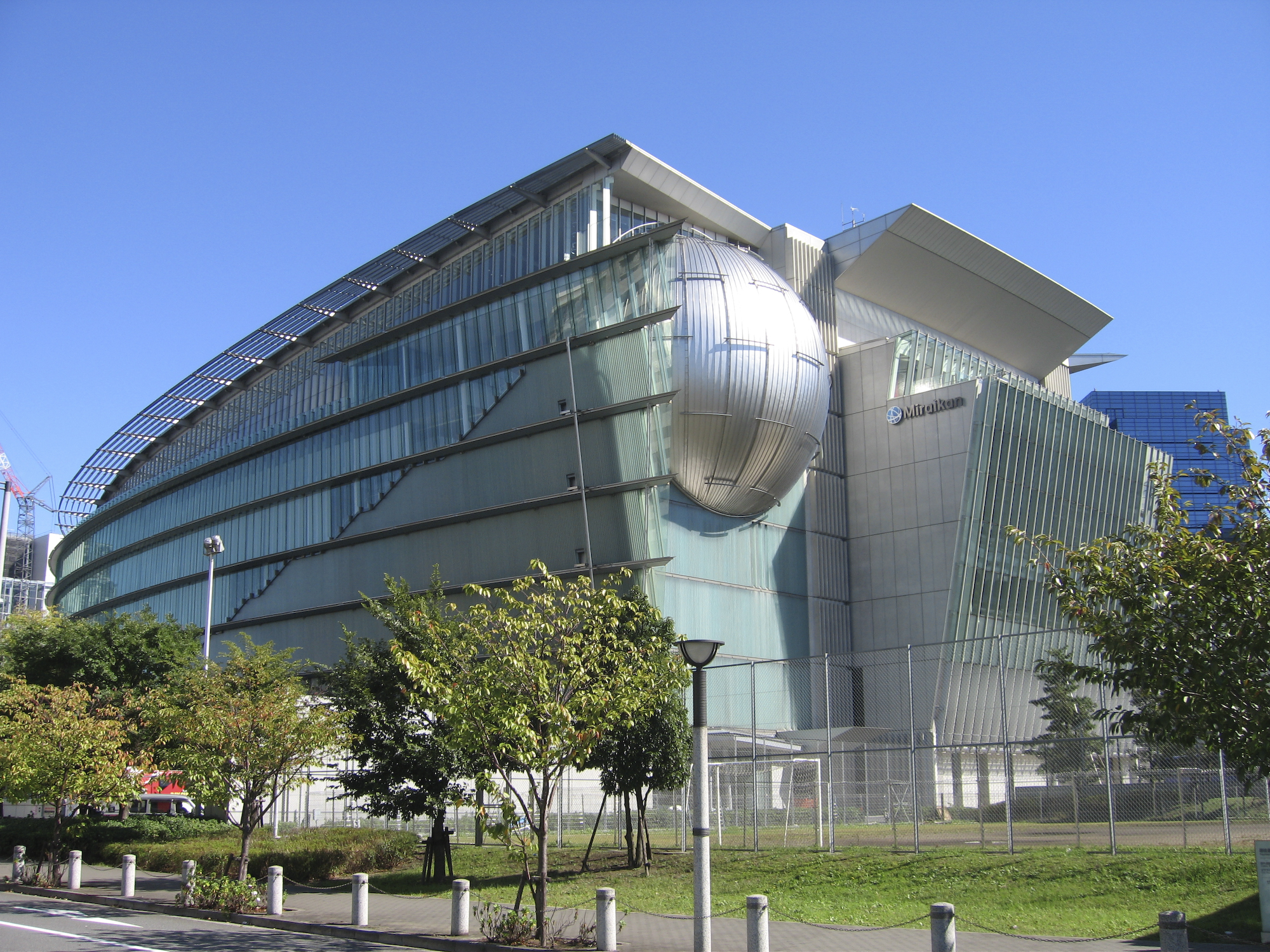
Miraikan, whose name means Hall of the Future, is Tokyo's national museum of emerging science and innovation, and it is where the city looks forward rather than back. Opened in 2001 on the reclaimed island of Odaiba, it presents cutting-edge research in robotics, space exploration, life sciences, the environment and information technology through hands-on, playful exhibits designed to make complex ideas graspable for everyone. Lively, interactive and thoroughly bilingual, it is one of Tokyo's best destinations for families and the scientifically curious, and its founding director was the astronaut Mamoru Mohri, who flew on the Space Shuttle.
The museum's unmistakable icon hangs in the central atrium: the Geo-Cosmos, a huge spherical display suspended through several floors and tiled with more than ten thousand LED panels that show the living Earth in shimmering detail, its clouds and oceans updated from real satellite data. Spiralling ramps let you circle it and look down on the whole planet turning beneath you. From there the permanent galleries branch out. In the robotics zone you can meet humanoid machines, including successors to Honda's famous Asimo, and the eerily lifelike android Otonaroid, with scheduled live demonstrations throughout the day. Other halls explore deep space and a full-scale section of the International Space Station's living quarters, the frontiers of medicine and the human body, disaster science, and the digital systems that quietly run modern life, each explained through games, models and experiments rather than glass cases.
Above it all sits the Dome Theater Gaia, a planetarium and immersive dome cinema whose high-definition films on the cosmos and the natural world are a highlight worth reserving on arrival, as slots are limited. Throughout the museum, communicators, many of them working scientists, are on hand to demonstrate experiments and answer questions, giving the place a warm, human energy that sets it apart from a static collection.
The visiting experience is engaging and unhurried, ideal for children yet substantial enough for adults. Everything is indoors, spacious and fully wheelchair accessible with lifts and ramps throughout, and the exhibits are captioned and often narrated in English. There is a cafe with views over Tokyo Bay and a shop full of clever science gifts. Allow at least two hours, more if you add the planetarium and catch a robot show; enthusiasts and families easily fill a half-day.
Because it is entirely climate-controlled, Miraikan is a dependable plan in any weather and any season, and it combines naturally with Odaiba's other waterfront attractions. Weekday mornings are quietest. General admission to the permanent exhibits is inexpensive, with the Dome Theater and special exhibitions ticketed separately. Getting there is a scenic ride in itself: take the driverless, elevated Yurikamome Line, which glides over Tokyo Bay to Telecom Center Station, a five-minute walk away, or ride the Rinkai Line to Tokyo Teleport Station. Neither line is covered by the Japan Rail Pass, so budget a small IC-card fare for the trip across futuristic Odaiba.
A local's tip
Check the daily schedule for an Asimo-successor robot demonstration and reserve a slot for the Dome Theater planetarium when you arrive; the giant suspended Geo-Cosmos globe of the live Earth is best viewed from the upper ramps looking down.
Best time to visit
Weekday mornings; a great rainy-day and family choice
Getting there
A 5-minute walk from Telecom Center Station on the elevated Yurikamome Line, or about 15 minutes from Tokyo Teleport Station on the Rinkai Line. Both approach across the futuristic waterfront of Odaiba.
Good to know
- Cafe
- Wi-Fi
- Restrooms
- Wheelchair
- Museum Shop
Plan the whole trip offline
Miraikan - National Museum of Emerging Science and Innovation is one of many places in the Real Japan app — with turn-by-turn directions, nearby spots and full offline maps you can use with no signal.