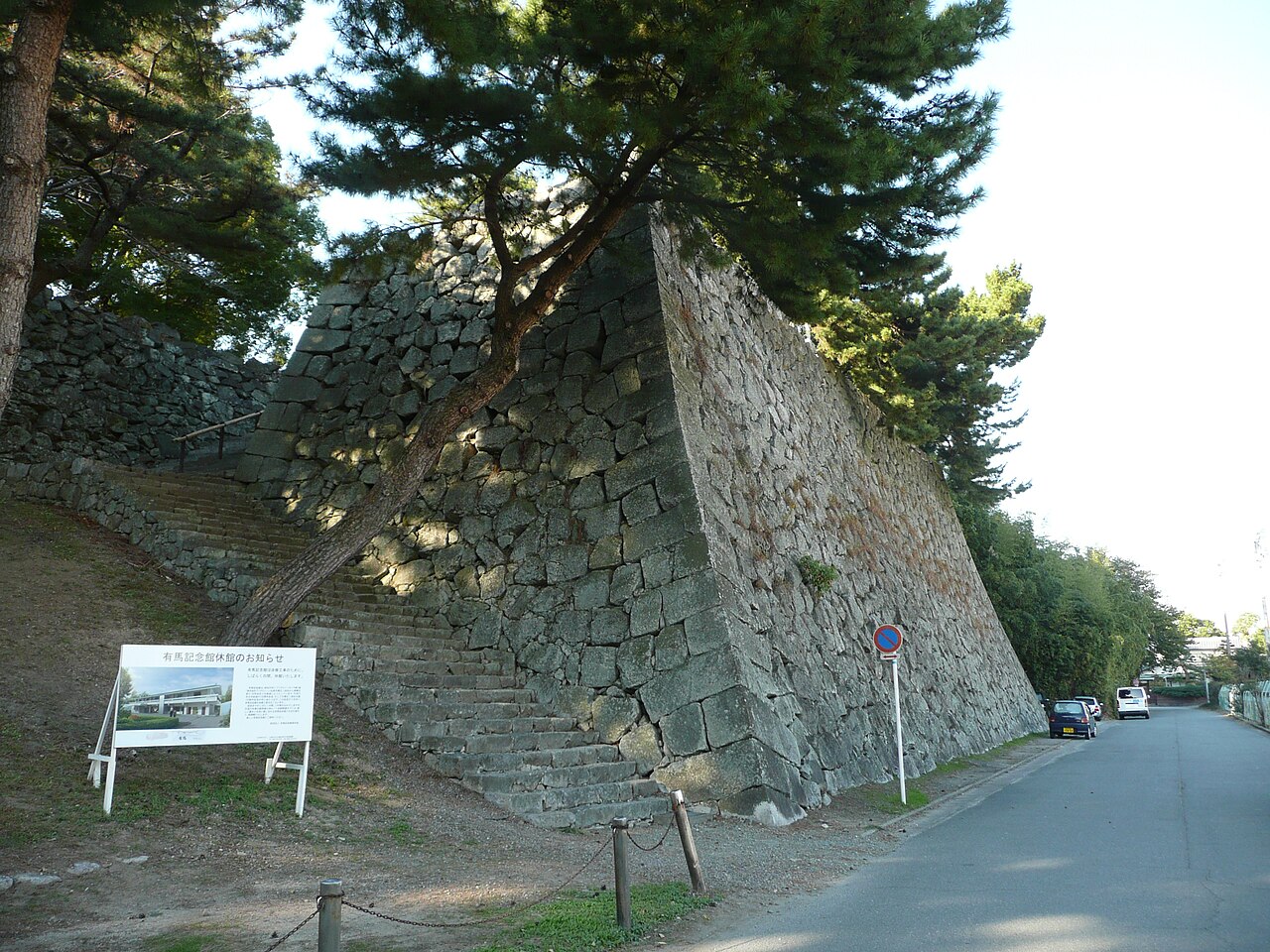
The imposing stone ramparts of the Arima clan's riverside stronghold, now a shrine above the Chikugo River.
Kurume Castle Ruins crown a low bluff above the Chikugo River in the industrial city of Kurume, southern Fukuoka's second great urban centre. Though the towers and palaces are long gone, the castle left behind something durable: massive, beautifully fitted stone ramparts and broad moats that still trace the outline of a powerful feudal stronghold, now wrapped around the quiet precincts of a shrine.
The site's military history reaches back to the early 16th century, but the castle took its mature form under the Arima clan, who were installed as lords of the Kurume domain in 1621 and ruled it for the rest of the Edo period, more than two centuries. They rebuilt Kurume as a proper hirajiro, a castle of the plains relying on water and stone rather than mountain heights, positioned to command the Chikugo River and the fertile lands around it. At its height the castle bristled with corner turrets and a substantial residence, the seat of a domain that grew wealthy on rice, river trade, and later on the textile and rubber industries that still define the city.
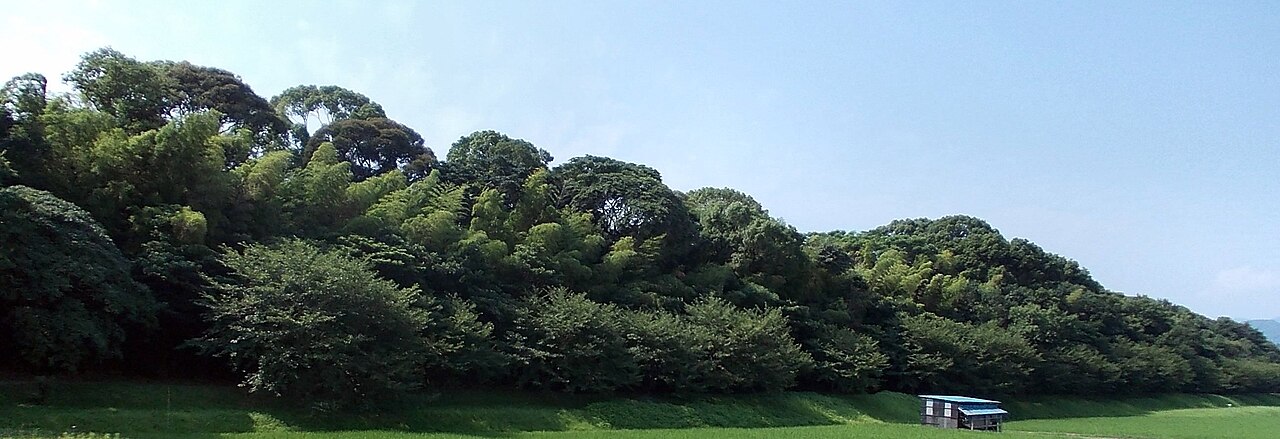
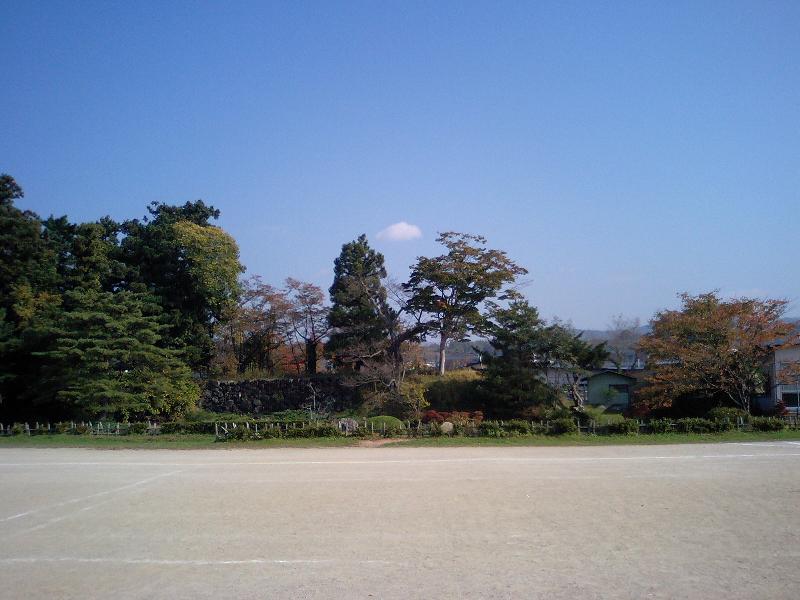
With the abolition of the feudal system in the Meiji era, the castle buildings were dismantled in 1871, a fate shared by most Japanese fortresses. What survived, and survives impressively today, are the honmaru stone walls, some rising steeply from the old moat in tightly interlocked blocks, and the foundation platforms where turrets once stood. Walking the ramparts, you can still read the defensive logic of the place, the way the walls angle above the water and the river guards one flank.
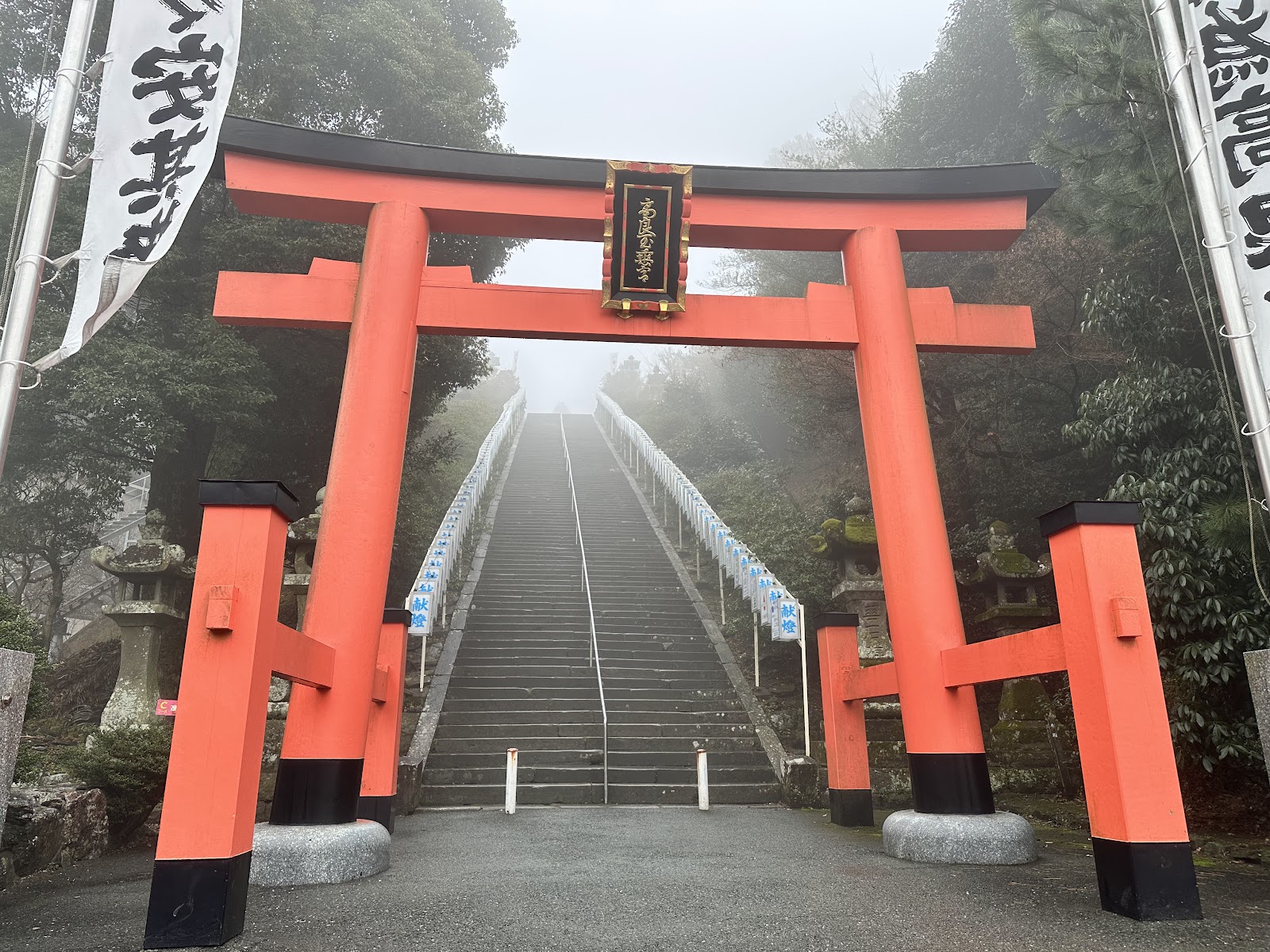
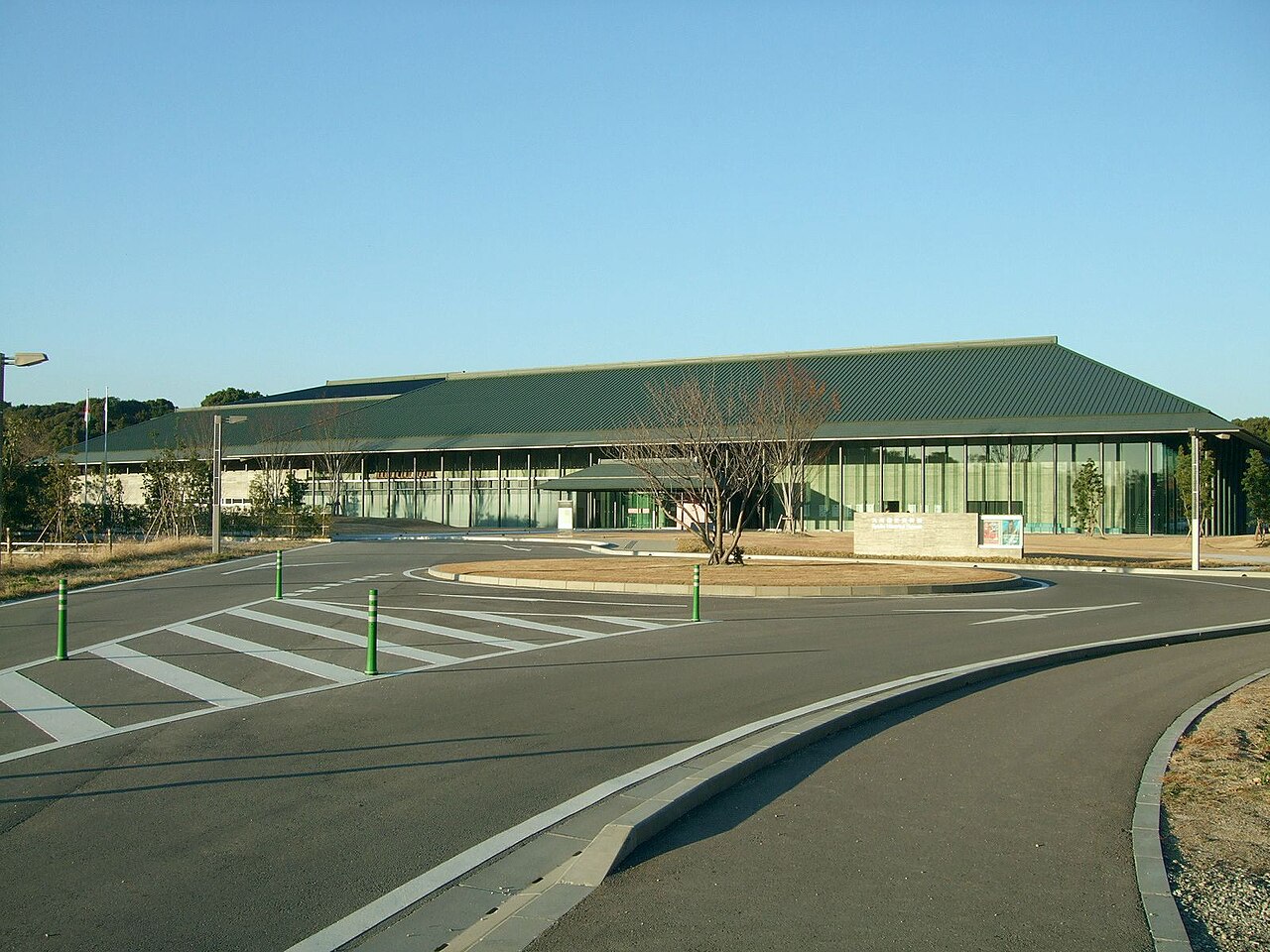
The inner bailey, or honmaru, is now occupied by Sasayama Shrine, dedicated to the ancestral spirits of the Arima lords, which means the core of the castle is open, free, and easy to explore. Ancient trees shade the grounds, and in spring cherry blossoms soften the grey stone, making it the prettiest time to visit. A small local museum nearby preserves relics of the domain, and the atmosphere is peaceful and uncrowded, a local's castle rather than a tourist magnet.
Kurume itself adds context to a visit. The city is the birthplace of major Japanese industry, most famously the tyre and rubber giant Bridgestone, whose original works stand near the castle, and it is renowned for kurume-gasuri, a distinctive indigo-dyed ikat textile, as well as for being one of the reputed cradles of Kyushu's tonkotsu ramen. The castle ruins pair naturally with these threads of local heritage.
Entry is free and the grounds are always accessible. Kurume is an easy stop on the Kyushu Shinkansen and the Kagoshima Main Line, and the ruins lie about fifteen minutes on foot from the station or a short bus ride away. Allow under an hour to walk the walls and shrine, come in cherry blossom season for the best atmosphere, and combine it with a bowl of local ramen or a look at the city's textile heritage for a rounded taste of southern Fukuoka.
A local's tip
The honmaru is now Sasayama Shrine, so you can walk the original ramparts freely, look for the surviving corner turret stone bases along the river-facing wall.
Best time to visit
Spring for cherry blossoms along the stone walls
Getting there
About a 15-minute walk or short bus ride from JR Kurume Station on the Kyushu Shinkansen and Kagoshima Main Line. The ruins sit on a bluff above the Chikugo River beside the Bridgestone works.
Good to know
- Parking
- Restrooms
Plan the whole trip offline
Kurume Castle Ruins is one of many places in the Real Japan app — with turn-by-turn directions, nearby spots and full offline maps you can use with no signal.