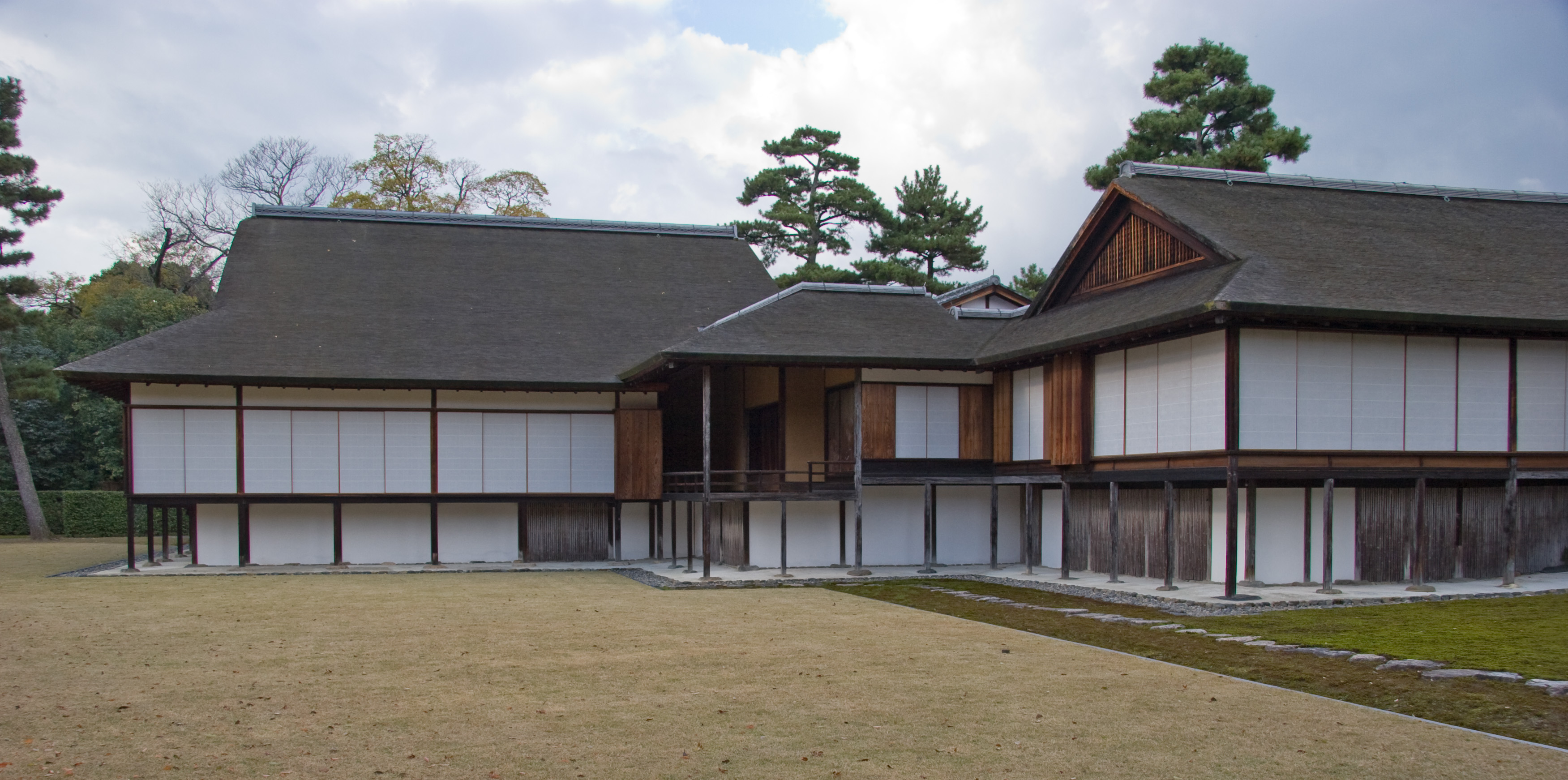
A seventeenth-century imperial villa whose strolling pond garden is considered a masterpiece of Japanese design.
Katsura Imperial Villa (Katsura Rikyu) is regarded by architects and garden designers around the world as one of the supreme achievements of Japanese aesthetics. Built in the seventeenth century as a country retreat for Prince Toshihito of the Hachijo-no-miya imperial family and later refined by his son Prince Toshitada, it sits on the western bank of the Katsura River in the quiet Nishikyo ward, about eight kilometres from the old Imperial Palace. The villa and its grounds are nationally protected as an Important Cultural Property.
The genius of Katsura lies in its stroll garden, a form designed to be experienced on foot rather than viewed from a single vantage point. A large central pond, dotted with islands and spanned by earthen, stone and wooden bridges, is encircled by a carefully choreographed path. As you walk, the designers control exactly what you see: a stepping stone forces you to pause and look down, then the path turns and a framed view of a teahouse or a distant lantern suddenly opens up. Rocks, moss, clipped hedges, borrowed views of the hills and the shifting reflections on the water are all composed with extraordinary restraint. The result is a landscape that feels natural yet is entirely deliberate, revealing itself scene by scene.
Dotted around the pond are several teahouses, each positioned for a particular season or mood, with names evoking pine, flowers, laughter and the moon. The main Shoin residence, built in the understated shoin and sukiya styles, steps down toward the water in a staggered line that the modernist architect Bruno Taut famously praised in the 1930s, helping to spread Katsura's reputation among twentieth-century designers who saw in it a timeless simplicity. The Gepparo pavilion, with its raised floor and open view, was made for viewing the moon rising over the pond, a reminder that the villa was as much about refined leisure and poetry as about architecture.
Because it remains an imperial property, Katsura can only be visited on a guided tour, and numbers are strictly limited. Tours are free of charge but require advance reservation through the Imperial Household Agency, either online or in person, and visitors follow a set route with staff; an English audio guide is provided. This controlled access is a blessing in disguise: the garden never feels crowded, and you experience it much as its aristocratic owners intended, at a measured, contemplative pace. Note that a small tour fee applies for adult visitors.
A tour lasts around an hour, covering the pond circuit, the teahouses and the exterior of the residence; interiors are viewed from outside. Autumn is the most celebrated season, when maples flame red and orange against the pond, but spring greenery and the crisp light of winter are equally beautiful. To visit, reserve your slot well in advance, then take the Hankyu Kyoto Line to Katsura Station and walk about twenty minutes, or catch a bus to the Katsura Rikyu-mae stop. Arrive early for your timed entry, as latecomers may be turned away, and note the villa is closed on Mondays.
A local's tip
Book the free guided tour well ahead through the Imperial Household Agency; tours run in Japanese with an English audio guide, and the strict timed entry means the garden is blissfully uncrowded.
Best time to visit
Autumn for maples reflected in the pond; spring for fresh greenery
Getting there
Take the Hankyu Kyoto Line to Katsura Station and walk about 20 minutes to the villa entrance, or ride a city bus to the Katsura Rikyu-mae stop. Reservations for the guided tour should be made in advance online or at the Imperial Household Agency office.
Good to know
- Restrooms
- Audio guide
- Reservation required
Plan the whole trip offline
Katsura Imperial Villa is one of many places in the Real Japan app — with turn-by-turn directions, nearby spots and full offline maps you can use with no signal.