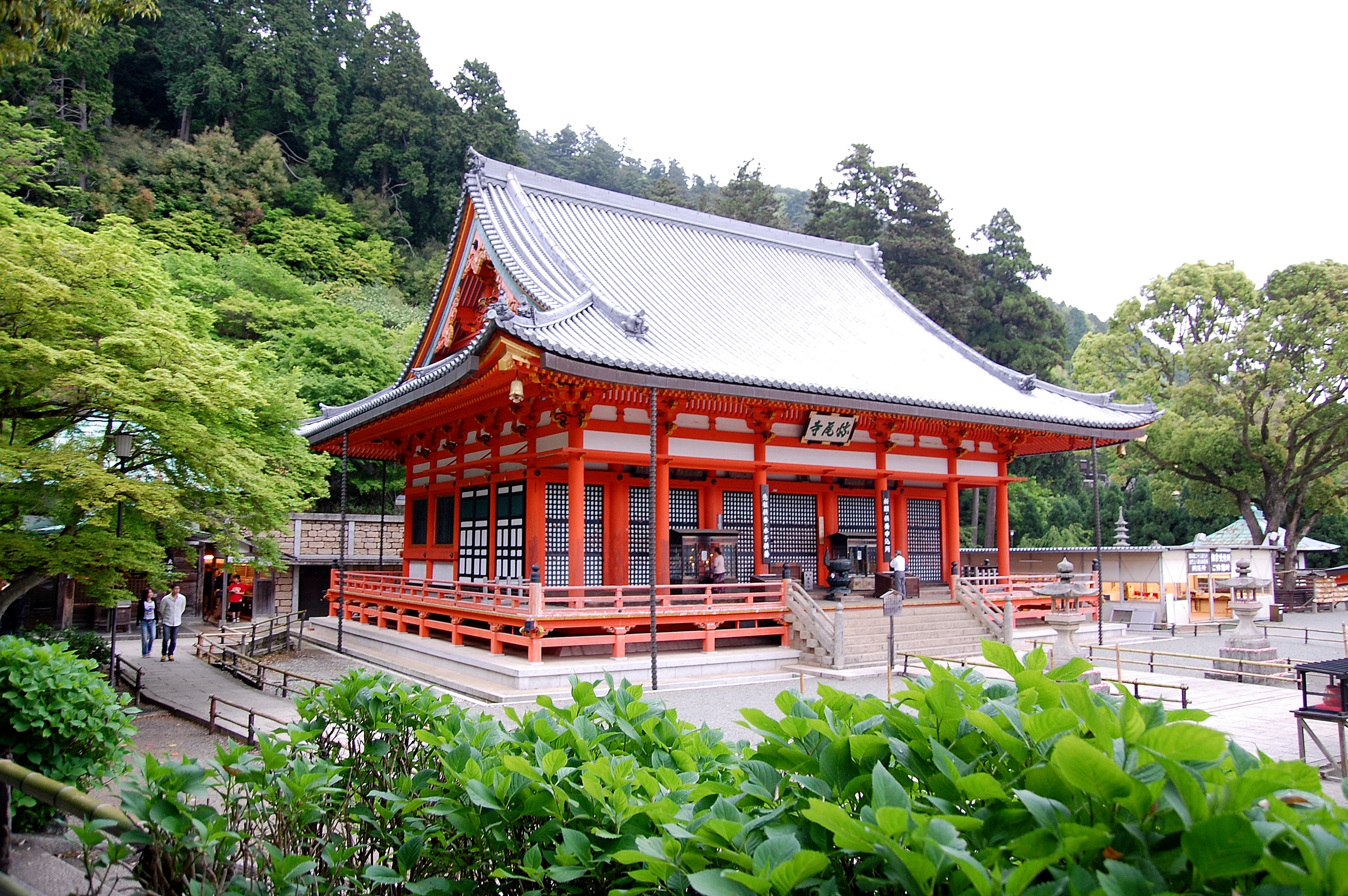
The 'temple of winners,' its misty mountain grounds strewn with thousands of little red daruma dolls left by wish-makers.
High in the forested Minoh hills north of Osaka, Katsuo-ji is a temple devoted, quite literally, to winning. Its name is written with characters meaning to win over, and for more than a thousand years it has been visited by emperors, samurai and ordinary people seeking victory, over illness, over rivals, over their own limits. Today its misty valley grounds are famous for a joyful sight: thousands upon thousands of tiny round red daruma dolls, tucked into every nook, ledge, tree root and lantern across the mountainside.
The temple was founded in the eighth century; tradition credits its origins to the brothers Zenchu and Zensan around 727 and its formal establishment to the priest Kaisei by 765, who completed a monumental transcription of the six-hundred-volume Great Perfection of Wisdom Sutra here. It belongs to the Koyasan Shingon school, and its principal image is a thousand-armed Kannon; it is the twenty-third stop on the ancient Saigoku Kannon pilgrimage of thirty-three temples. Its precincts, with their intact medieval boundary markers, are a designated National Historic Site.
The name and the daruma come from a celebrated episode. In the ninth century the temple's prayers were credited with restoring the health of Emperor Seiwa, who bestowed on it a name meaning that it had prevailed over the emperor's misfortune; over time this evolved into Katsuo-ji, the temple of winning. The daruma doll, modeled on Bodhidharma, the founder of Zen, embodies the proverb of falling down seven times and rising eight, the spirit of never giving up. Visitors buy a Katsu-daruma, paint in one eye while making a wish or setting a goal, and keep it at home; when the wish is fulfilled they paint the second eye and return the doll to the temple in thanks. The result is one of Japan's most photogenic scenes, an entire mountainside decorated with the small red faces of realized dreams.
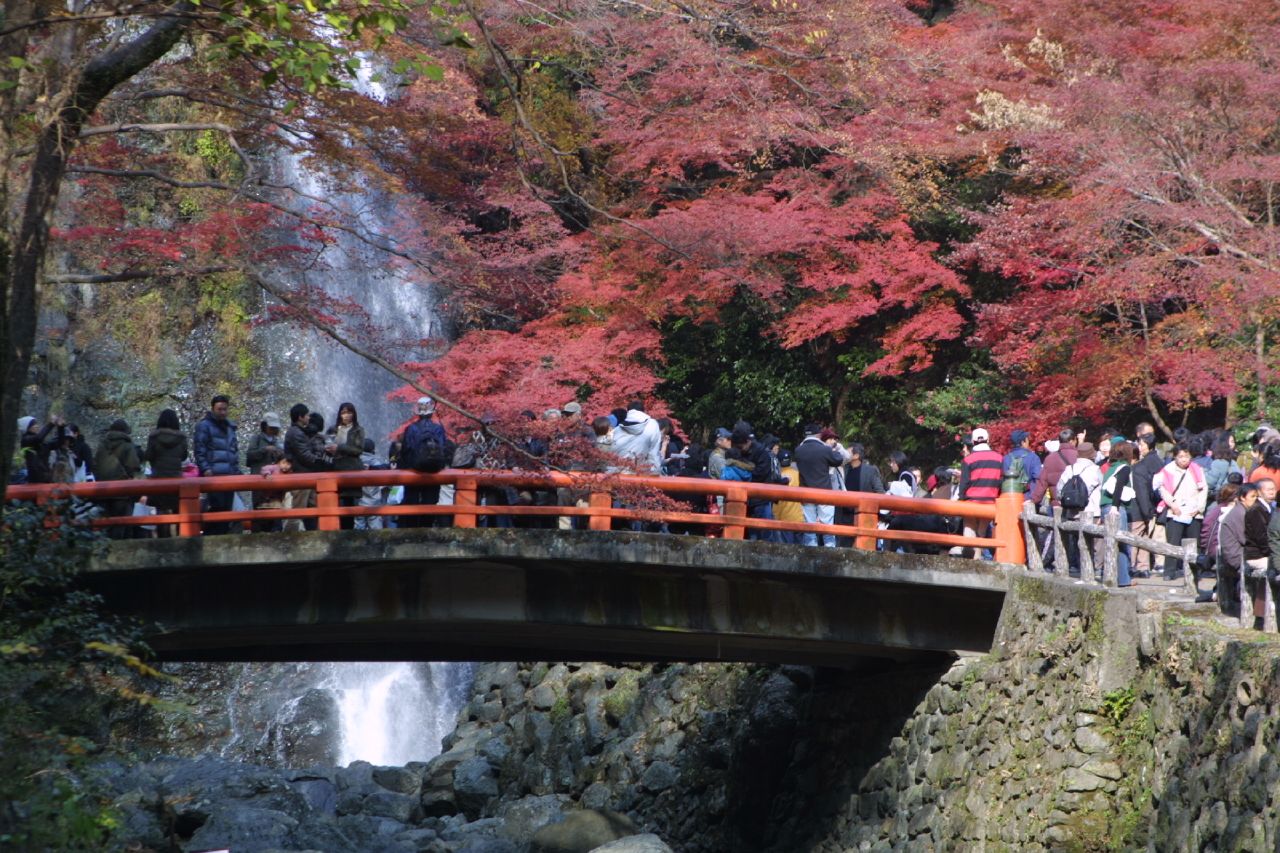
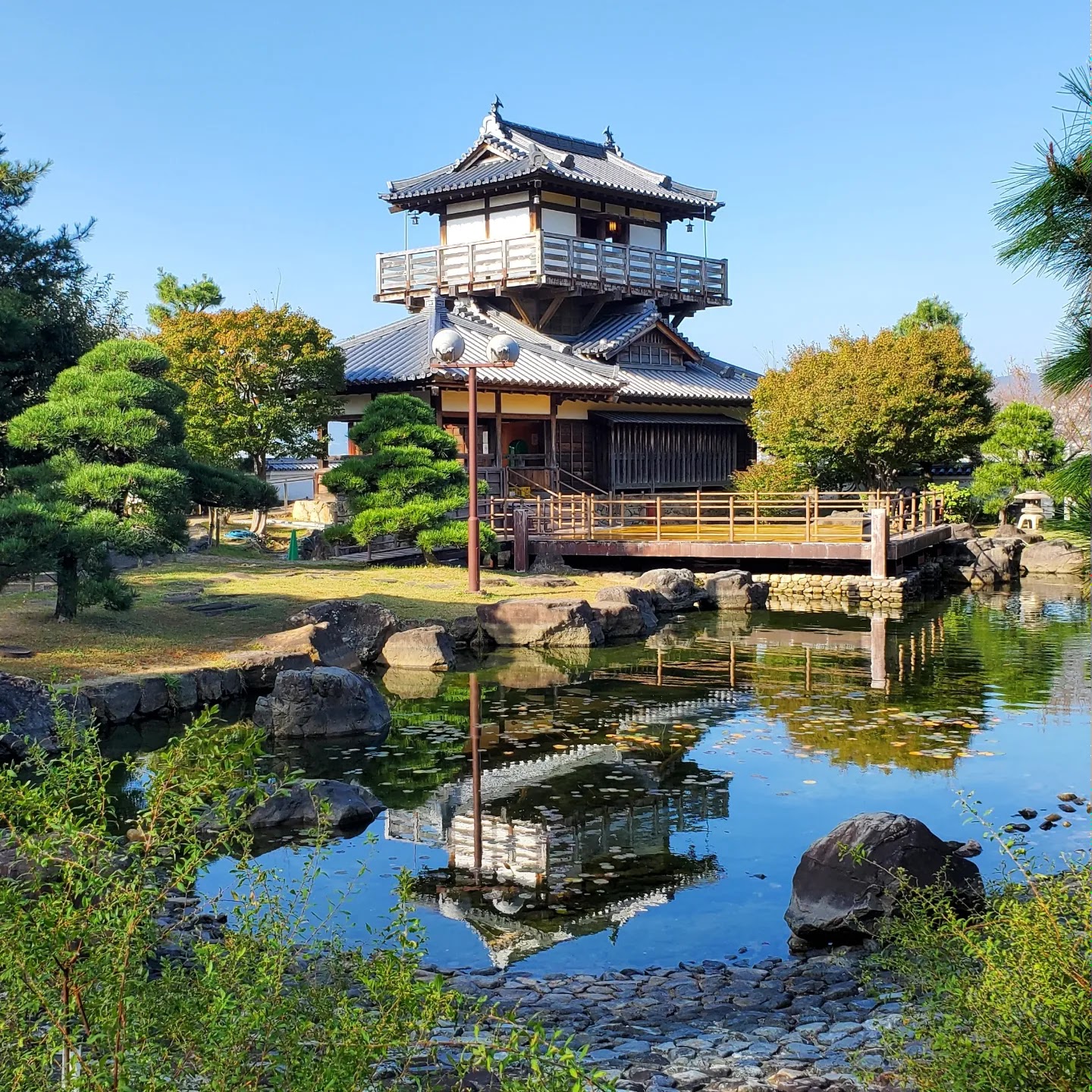
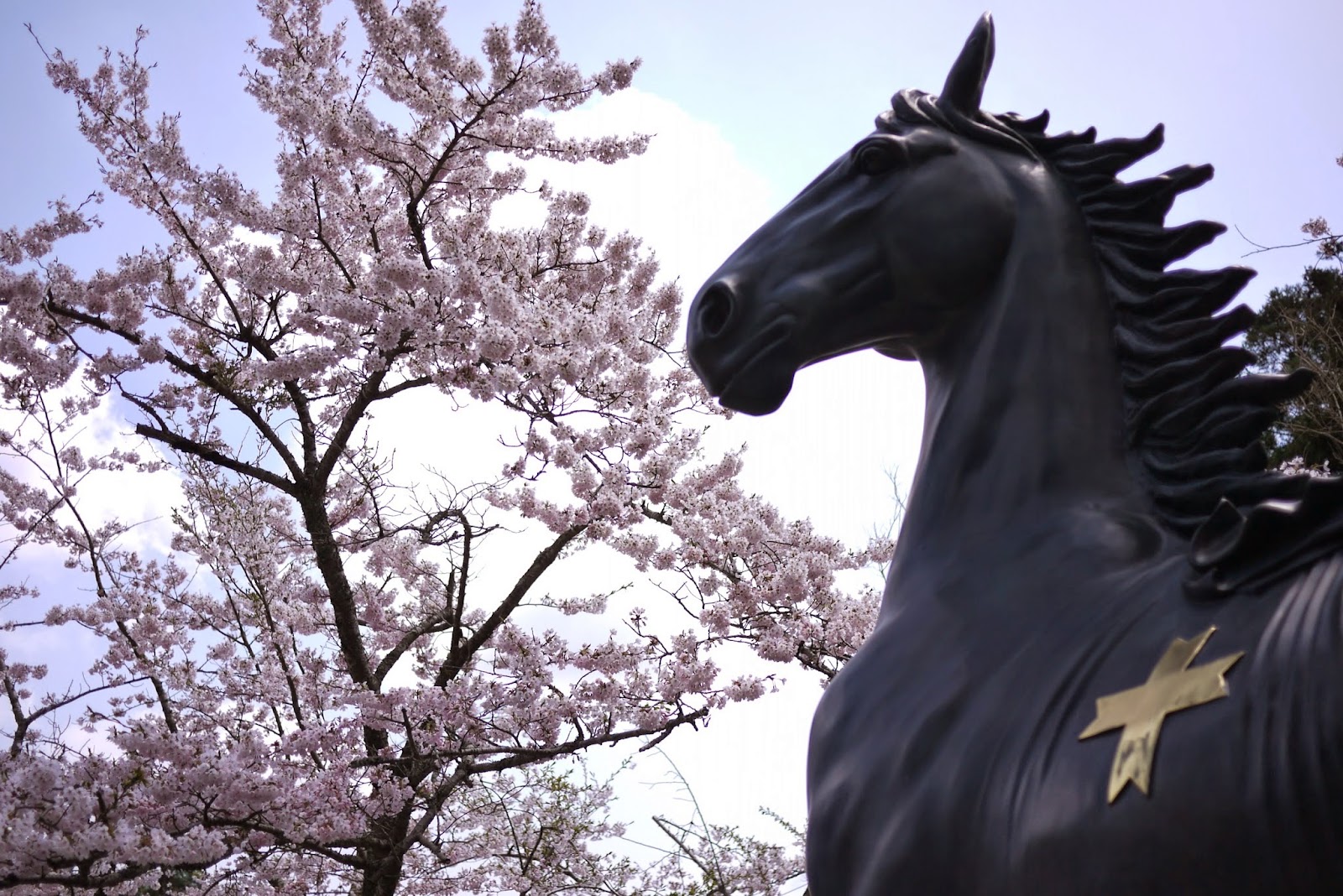
The visiting experience is as much about the landscape as the faith. The grounds spread across a steep, wooded valley, with vermilion bridges over ponds that fill with drifting mist and, in autumn, with brilliant reflections of red and gold maples. Katsuo-ji is one of the finest koyo foliage spots near Osaka, and it is lovely in cherry-blossom spring and lush high summer too. There are halls to explore, a Kannon hall, a two-story pagoda, incense and offering points, and a cafe, so it comfortably fills an hour and a half.
Be aware the site is hilly, with plenty of steps and slopes; sturdy shoes help, and it is more of a workout than the city shrines. There is an admission fee, restrooms, parking and a cafe on site. Best visited in mid-November for peak autumn color, when it can be busy but spectacular.
Getting there takes effort, which keeps the crowds thinner than central Osaka. From Senri-Chuo Station, the northern terminus reached via the Midosuji subway, a Hankyu bus climbs to the temple gate in about half an hour; a car makes the scenic drive into the Minoh hills simple. Budget a good half-day round trip, and pair it with the nearby Minoh waterfall if you have time.
A local's tip
Buy a Katsu-daruma doll, make a wish, and if it comes true bring the doll back; the temple's slopes are famously covered with thousands of returned daruma.
Best time to visit
Mid-November for autumn foliage; spring for greenery
Getting there
From Senri-Chuo Station take a Hankyu bus toward Katsuo-ji (about 30-35 minutes) to the temple gate; by car it is a scenic drive up into the Minoh hills north of the city.
Good to know
- Cafe
- Parking
- Restrooms
Plan the whole trip offline
Katsuo-ji is one of many places in the Real Japan app — with turn-by-turn directions, nearby spots and full offline maps you can use with no signal.